

Patient Basics: Shin Splints
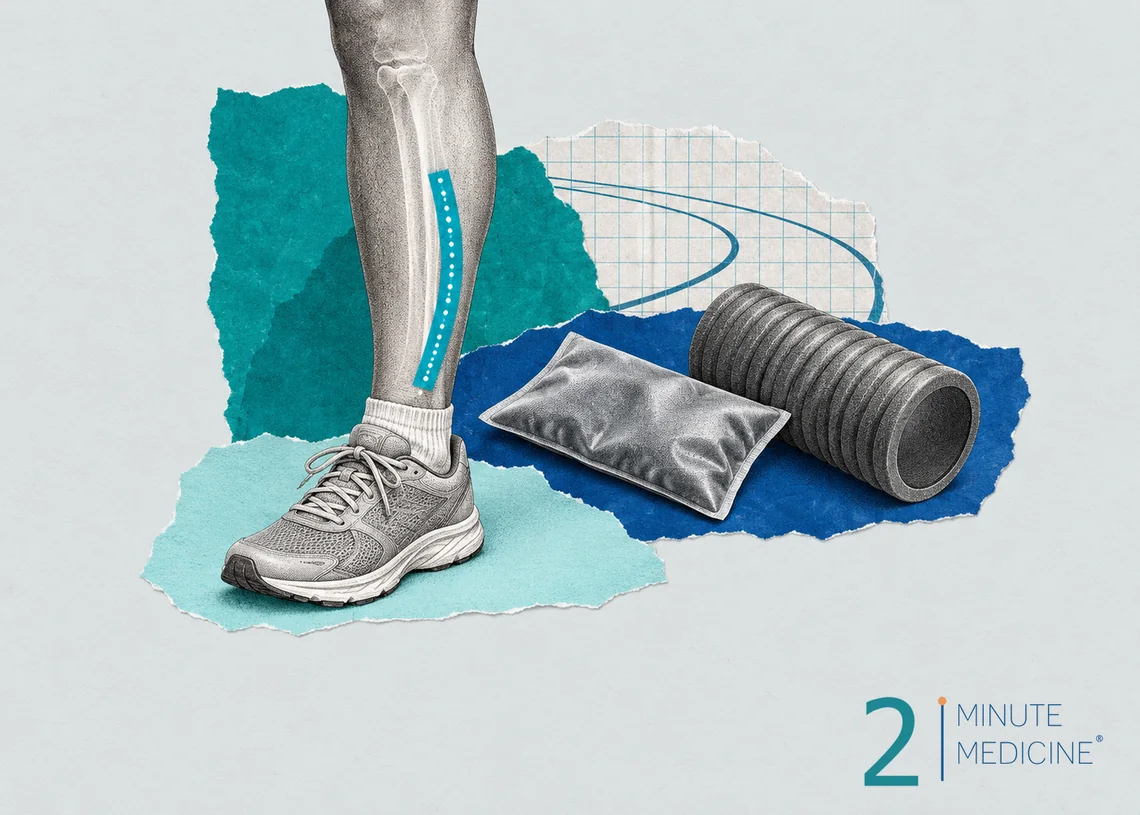
Shin splints is pain along the inner edge of the shinbone (tibia) that comes from overuse, usually from running or jumping more than your legs are ready for. Doctors call it medial tibial stress syndrome. It almost always gets better with a break from the activity that caused it, followed by a slow return. Pain in one small spot, or pain that keeps going at rest, can mean a stress fracture and needs a doctor’s check.
Key points
- Shin splints are among the most common leg injuries in runners, dancers, military recruits and athletes starting a new season.
- The usual cause is increasing training too fast.
- Rest from impact, ice and pain relievers ease symptoms. Low-impact exercise keeps you fit while you heal.
- Most people recover in a few weeks. Pain that has built up over months can take longer.
- Better shoes, strength work and building up slowly help prevent them.
What causes shin splints
Each time your foot strikes the ground, the shinbone bends a tiny amount and the muscles attached to it pull on its lining. Bone normally gets stronger with this stress, but only if it has time to adapt. When the load rises faster than the bone can keep up, the lining and the bone underneath get irritated and sore.
Things that raise the risk:
- A sudden jump in distance, speed, hills or number of workouts
- Running on hard or slanted surfaces
- Worn-out or poorly fitting shoes
- Flat feet or feet that roll inward a lot
- Tight calves and weak hip, core or calf muscles
- A past bout of shin splints
- Not eating enough to match your training, low vitamin D, or weak bones
- In female athletes, missed or irregular periods, which can be a sign of low energy and weaker bones
Shin splints symptoms
- A dull ache along the inner side of the lower half of the shin, spread over a few inches
- Soreness when you press along the edge of the bone
- Pain at the start of exercise that may ease as you warm up, then returns afterward or the next morning
- Mild swelling in some people
If you keep training through it, the pain can come on sooner in each workout and eventually linger during walking or at rest.
Shin splints or a stress fracture?
A stress fracture is a small crack in the bone from repeated stress. It needs a longer break and sometimes a boot. Signs that point to a stress fracture rather than shin splints:
- Pain you can point to with one finger, rather than along a stretch of bone
- Pain that gets worse with each step and doesn’t warm up
- Pain at rest or at night
- Pain when you hop on that leg
Other causes of lower leg pain include a strained calf muscle and chronic exertional compartment syndrome, where the muscles swell during exercise and cause tightness, burning or numbness that eases soon after stopping. A blood clot in the calf (deep vein thrombosis) causes swelling, warmth and redness, and needs urgent care.
How it’s diagnosed
A doctor or physical therapist can usually diagnose shin splints by asking about your training and pressing along your shin. X-rays are often normal. If a stress fracture is likely, you may need an MRI, which shows bone stress much earlier than an X-ray.
How shin splints are treated
- Cut back on impact. Stop or greatly reduce running and jumping for about 2 to 4 weeks, or until walking is pain-free. Stay fit with swimming, cycling, an elliptical machine or running in a pool.
- Ice. Apply a cold pack wrapped in a thin towel for 15 to 20 minutes a few times a day, especially after activity.
- Pain relievers. Over-the-counter tablets such as ibuprofen, naproxen or acetaminophen can ease pain for a short time. Follow the label, and check with a doctor if you have stomach, kidney or heart problems. Pain medicine helps you feel better but doesn’t heal the bone, so don’t use it to keep training through pain.
- Stretch and strengthen. Calf stretches, plus exercises for the calves, hips and core, help your legs handle the load. A physical therapist can set up a plan and check your running form.
- Check your shoes. Replace running shoes that are worn down. Arch supports can help if you have flat feet.
Getting back to running
Start when you can walk briskly and hop on the sore leg without pain. Begin with short, easy runs on soft, flat surfaces, maybe mixing walking and running. Add a little distance or time each week rather than jumping back to your old routine. Mild soreness that fades by the next day is OK. Pain during a run means you should scale back.
Most shin splints settle in 2 to 6 weeks. Pain that has been building for months can take 3 months or more.
Preventing shin splints
- Increase mileage, speed and hills slowly.
- Mix running with low-impact exercise and take rest days.
- Run on softer surfaces such as trails, tracks or grass when you can.
- Replace running shoes every 300 to 500 miles or when the soles look worn.
- Do strength exercises for your calves, hips and core two or three times a week.
- Eat enough to fuel your training, with enough calcium and vitamin D.
When to see a doctor
- Pain doesn’t improve after 2 to 3 weeks of rest
- Pain is in one small spot, or you have pain at rest or at night
- Your shin is swollen, red or warm
- You have numbness, tingling or weakness in the foot
- You have had more than one stress injury, or your periods have stopped
Get urgent care for a swollen, warm, red calf, and call 911 if leg swelling comes with chest pain or shortness of breath. These can be signs of a blood clot.
Common questions about shin splints
How common are shin splints?
Very common. Shin splints are one of the leading causes of lower leg pain in people who run, dance or march. They are especially likely in new runners, people returning after a break, and military recruits in basic training, because their training load rises quickly.
Can I keep running with shin splints?
It is better to stop or cut back sharply until walking is pain-free. Running through the pain can turn shin splints into a stress fracture, which takes longer to heal. Swimming, cycling and pool running let you keep your fitness while the shin recovers.
What is the best medicine for shin splint pain?
Ibuprofen or naproxen, taken as directed on the label for a few days, can ease pain and swelling. Acetaminophen is an option if you can’t take those. No tablet heals shin splints. Rest from impact, ice and a gradual return to activity do the real work.
Questions to ask your doctor
- Do I have shin splints or a stress fracture?
- Do I need an X-ray or MRI?
- How long should I stop running or jumping?
- Would a physical therapist or arch supports help me?
- Should my bone health or vitamin D be checked?
Learn more
- Shin splints: self-care (MedlinePlus, U.S. National Library of Medicine)
- Shin splints (NHS)
This guide is general information and doesn’t replace advice from your own doctor. Last updated October 2026.






 Get the app