• About
  • Masthead
  • License Content
  • Advertise
  • Submit Press Release
  • RSS/Email List
  • 2MM Podcast
  • Write for us
  • Contact Us
2 Minute Medicine
No Result
View All Result

No products in the cart.

SUBSCRIBE
  • About
  • Specialties
    • All Specialties, All Recent Reports
    • Cardiology
    • Chronic Disease
    • Dermatology
    • Emergency
    • Endocrinology
    • Gastroenterology
    • Imaging and Intervention
    • Infectious Disease
    • Nephrology
    • Neurology
    • Obstetrics
    • Oncology
    • Ophthalmology
    • Pediatrics
    • Pharma
    • Preclinical
    • Psychiatry
    • Public Health
    • Pulmonology
    • Rheumatology
    • Surgery
  • Tools+
    • EvidencePulse™
    • HypeCheck™
    • NPI Registry Lookup
    • RVU Search
  • Pharma
  • AI Roundup
  • The Scan+
  • Classics™+
    • 2MM+ Online Access
    • Paperback and Ebook
  • Rewinds
  • Partners
    • License Content
    • Submit Press Release
    • Advertise with Us
  • Account
    • Subscribe
    • My account
    • Cart
    • Sign in
2 Minute Medicine
  • About
  • Specialties
    • All Specialties, All Recent Reports
    • Cardiology
    • Chronic Disease
    • Dermatology
    • Emergency
    • Endocrinology
    • Gastroenterology
    • Imaging and Intervention
    • Infectious Disease
    • Nephrology
    • Neurology
    • Obstetrics
    • Oncology
    • Ophthalmology
    • Pediatrics
    • Pharma
    • Preclinical
    • Psychiatry
    • Public Health
    • Pulmonology
    • Rheumatology
    • Surgery
  • Tools+
    • EvidencePulse™
    • HypeCheck™
    • NPI Registry Lookup
    • RVU Search
  • Pharma
  • AI Roundup
  • The Scan+
  • Classics™+
    • 2MM+ Online Access
    • Paperback and Ebook
  • Rewinds
  • Partners
    • License Content
    • Submit Press Release
    • Advertise with Us
  • Account
    • Subscribe
    • My account
    • Cart
    • Sign in
SUBSCRIBE
2 Minute Medicine
Subscribe
EvidencePulse™ by 2 Minute Medicine 2026 evidence scan 3 reports You asked top stroke trials 2026 Synthesizing medical evidence... Top 2026 stroke trial results: OCEANIC — ischemic stroke: 6.2% vs 8.4% OPTION* — mRS 0–1: 43.6% vs 34.2% ORIENTAL* — mRS 0–2: 58.6% vs 46.6% *Higher sICH in intervention arms Participants randomizedN OCEANIC 12,327 OPTION 570 ORIENTAL 564 Ask about guidelines or landmark trials... ↑ Try EvidencePulse™ Ask the evidence.
Get the signal.
Try it now → Physician-trained medical AI by 2 Minute Medicine
Home All Specialties Imaging and Intervention

Susceptibility-weighted imaging improves diagnostic accuracy of rotator cuff tendonitis
byXiaofan PanandDylan Wolman
September 18, 2015
in Imaging and Intervention
Reading Time: 3 mins read
Time from symptom onset may not predict infarct volume in stroke
Share on FacebookShare on Twitter

1. In patients with calcific tendonitis, the addition of susceptibility-weighted imaging (SWI) to conventional shoulder joint magnetic resonance imaging (MRI) sequences provides more robust spatial information to localize calcifications with respect to the rotator cuff tendons without radiation exposure.

2. While combined SWI and MRI improved detection of calcific tendonitis compared to detection by MRI alone, it yielded slightly overestimated calcifications diameters.

Evidence Rating Level: 2 (Good)

Study Rundown: Calcific tendonitis refers to the deposition of calcium—predominantly hydroxyapatite—in a tendon, most often in those of the rotator cuff, causing a great deal of shoulder pain. Calcific tendonitis is typically diagnosed using MRI to locate the calcium deposits while ruling out other shoulder pathologies which may clinically present similarly. SWI is an emerging MRI technique which reflects the magnetic susceptibility of tissues and is much more sensitive to paramagnetic deoxygenated blood, allowing it to characterize not only magnitude-but also phase information in the tissue. Although SWI detection of calcium deposits in other diseases have shown great promise, exploration of this technique in identifying rotator cuff calcifications is not well studied. The present study compared the diagnostic performance of SWI and conventional radiographic evaluations of the rotator cuff in patients with calcific tendonitis. Imaging of the rotator cuff via standard MR sequences and SWI were compared to conventional radiography to identify calcified lesions in patients with suspected calcific tendonitis. The results showed that SWI-detection yielded significantly greater sensitivity in discerning calcifications and resulted in greater inter-observer agreement when compared with conventional MRI sequences. These findings suggest that addition of SWI to standard imaging may advance diagnostic capability and may potentially improve patient care by providing more anatomic detail. Major limitations of this study were that SWI findings were not directly shown with histopathologic examinations and that SWI findings were not examined for correlation to patient symptomatology in any manner. While these findings represent a major step forward for understanding the potential of SWI in calcific tendonitis detection, future studies are warranted before SWI is incorporated in clinical practice to identify calcifications of the rotator cuff.

Click to read the study in Radiologyn

Relevant Reading: Intracranial calcifications and hemorrhages: characterization with quantitative susceptibility mapping

RELATED REPORTS

Body composition measures from magnetic resonance imaging scans may be associated with adverse health outcomes

Molecular imaging non-inferior to adrenal vein sampling in detecting aldosterone-producing adrenal adenomas

The Scan by 2 Minute Medicine®: Kate Middleton’s Hair: Chemo Mysteries, MRI Screening: Is It Useful?, Biden’s COVID Amid Variant Surge, Avoiding Microplastics

In-Depth [prospective cohort]: Fifty-four patients clinically suspected of having calcific tendonitis of the rotator cuff were included in the study. Half of the subjects were positive for calcium deposits on radiographic imaging while the other subjects had no calcifications in the shoulder. On traditional radiography, a total of 56 calcifications were detected in the 27 positive subjects, all of whom underwent standard MRI and SWI, including magnitude and phase imaging. On SWI, 55 out of 56 calcifications (98%) were identifiable (95%CI 0.943, 1) with specificity of 96% (95%CI 0.886, 1), while 33 (59%) were identifiable using standard T1- and T2-MRI weighted sequences (95%CI 0.422, 0.758) with a specificity of 67% (95%CI 0.493, 0.847). Calcification diameter was used to assess correlation between imaging methods and SWI was found to be highly correlated with radiography (R2 = 0.90), though lesion diameter was slightly overestimated with SWI (on SWI: 7.6 mm ± 5.4; on radiography: 5.3 mm ± 5.1). Higher interobserver agreement (R2 = 0.99, p < .001; 95%CI 0.989, 0.996) was established on SWI than on standard magnetic resonance sequences (R2 = 0.67, p = .62; 95%CI 0.703, 0.899).

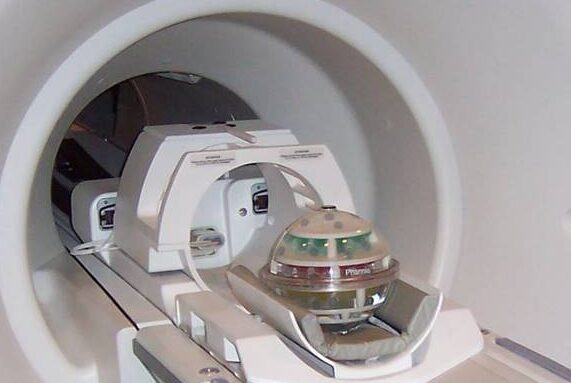
Image: PD

©2015 2 Minute Medicine, Inc. All rights reserved. No works may be reproduced without expressed written consent from 2 Minute Medicine, Inc. Inquire about licensing here. No article should be construed as medical advice and is not intended as such by the authors or by 2 Minute Medicine, Inc.
Tags: Magnetic Resonance Imaging (MRI)susceptibility weighted imaging (SWI)Tendonitis
Previous Post

Mediterranean diet may reduce the incidence of breast cancer

Next Post

Late gestation antidepressant use linked to postpartum hemorrhage

RelatedReports

Time from symptom onset may not predict infarct volume in stroke
Cardiology

Body composition measures from magnetic resonance imaging scans may be associated with adverse health outcomes

September 29, 2025
PET/MRI is viable for tracking small lung nodules in cancer patients
Endocrinology

Molecular imaging non-inferior to adrenal vein sampling in detecting aldosterone-producing adrenal adenomas

March 3, 2025
The Scan by 2 Minute Medicine®:  Ultra-Trail du Mont-Blanc, Taylor Swift, NBA rookie Chet Holmgren and Magic Mushrooms!
The Scan by 2 Minute Medicine®

The Scan by 2 Minute Medicine®: Kate Middleton’s Hair: Chemo Mysteries, MRI Screening: Is It Useful?, Biden’s COVID Amid Variant Surge, Avoiding Microplastics

July 23, 2024
Pre-operative magnetic resonance imaging may not improve contralateral breast cancer detection
Cardiology

Non-MRI conditional implantable defibrillator systems have normal function post-MRI

February 15, 2023
Next Post
Late gestation antidepressant use linked to postpartum hemorrhage

Late gestation antidepressant use linked to postpartum hemorrhage

Nivolumab may be effective in platinum-resistant ovarian cancer

Nivolumab may be effective in platinum-resistant ovarian cancer

Nurses working extended shifts report greater burnout and job dissatisfaction

Nurses working extended shifts report greater burnout and job dissatisfaction

EvidencePulse™ by 2 Minute Medicine 2026 evidence scan 3 reports You asked top stroke trials 2026 Synthesizing medical evidence... Top 2026 stroke trial results: OCEANIC — ischemic stroke: 6.2% vs 8.4% OPTION* — mRS 0–1: 43.6% vs 34.2% ORIENTAL* — mRS 0–2: 58.6% vs 46.6% *Higher sICH in intervention arms Participants randomizedN OCEANIC 12,327 OPTION 570 ORIENTAL 564 Ask about guidelines or landmark trials... ↑ Try EvidencePulse™ Get the signal. Try it now → Physician-trained medical AI by 2 Minute Medicine

2MM+ All Access

Full details →
$4.99 /month

3-day free trial · cancel anytime

  • ✓100+ physician-written reports
  • ✓EvidencePulse™ + HypeCheck™
  • ✓Ad-free reading + newsletters
Start 3-day free trial

Then $4.99/month. Manage renewal in your account.

2 Minute Medicine® is an award winning, physician-run, expert medical media company. Our content is curated, written and edited by practicing health professionals who have clinical and scientific expertise in their field of reporting. Our editorial management team is comprised of highly-trained MD physicians. Join numerous brands, companies, and hospitals who trust our licensed content.

Recent Reports

  • A machine-learning diet score identifies eating patterns associated with lower aging-related mortality
  • Deep-learning model achieved high diagnostic performance for detecting cardiac enlargement using electrocardiograms
  • Frailty in older adults with atrial fibrillation is multifactorial and associated with metabolic and cognitive factors
License Content
Terms of Use | Disclaimer
Cookie Policy
2MM+ All Access Full details →

The medical literature, distilled daily.

Monthly plan selected: $4.99 /month.

$4.99/month

3-day free trial · cancel anytime

Start 3-day free trial

Then $4.99/month. Manage renewal in your account.

Yearly plan selected: $49.90 /year.

$49.90/year

2 months free

Start 3-day free trial

Then $49.90/year.

Membership benefits

  • ✓100+ physician-written reports
  • ✓AI EvidencePulse™ + HypeCheck™
  • ✓Ad-free reading + newsletters

Already a member? Sign in

  • About
  • Specialties
    • All Specialties, All Recent Reports
    • Cardiology
    • Chronic Disease
    • Dermatology
    • Emergency
    • Endocrinology
    • Gastroenterology
    • Imaging and Intervention
    • Infectious Disease
    • Nephrology
    • Neurology
    • Obstetrics
    • Oncology
    • Ophthalmology
    • Pediatrics
    • Pharma
    • Preclinical
    • Psychiatry
    • Public Health
    • Pulmonology
    • Rheumatology
    • Surgery
  • Tools
    • EvidencePulse™
    • HypeCheck™
    • NPI Registry Lookup
    • RVU Search
  • Pharma
  • AI Roundup
  • The Scan
  • Classics™
    • 2MM+ Online Access
    • Paperback and Ebook
  • Rewinds
  • Partners
    • License Content
    • Submit Press Release
    • Advertise with Us
  • Account
    • Subscribe
    • My account
    • Cart
    • Sign in
No Result
View All Result

© 2026 2 Minute Medicine, Inc. - Physician-written medical news.