

• About
  • Masthead
  • License Content
  • Advertise
  • Submit Press Release
  • RSS/Email List
  • 2MM Podcast
  • Write for us
  • Contact Us
2 Minute Medicine
No Result
View All Result

No products in the cart.

SUBSCRIBE
  • Specialties
    • All Specialties, All Recent Reports
    • Cardiology
    • Chronic Disease
    • Dermatology
    • Emergency
    • Endocrinology
    • Gastroenterology
    • Imaging and Intervention
    • Infectious Disease
    • Nephrology
    • Neurology
    • Obstetrics
    • Oncology
    • Ophthalmology
    • Pediatrics
    • Pharma
    • Preclinical
    • Psychiatry
    • Public Health
    • Pulmonology
    • Rheumatology
    • Surgery
  • Tools
    • EvidencePulse™
    • RVU Search
    • NPI Registry Lookup
  • Pharma
  • AI News
  • The Scan+
  • Classics™+
    • 2MM+ Online Access
    • Paperback and Ebook
  • Rewinds
  • Partners
    • License Content
    • Submit Press Release
    • Advertise with Us
  • Account
    • Subscribe
    • Sign-in
    • My account
2 Minute Medicine
  • Specialties
    • All Specialties, All Recent Reports
    • Cardiology
    • Chronic Disease
    • Dermatology
    • Emergency
    • Endocrinology
    • Gastroenterology
    • Imaging and Intervention
    • Infectious Disease
    • Nephrology
    • Neurology
    • Obstetrics
    • Oncology
    • Ophthalmology
    • Pediatrics
    • Pharma
    • Preclinical
    • Psychiatry
    • Public Health
    • Pulmonology
    • Rheumatology
    • Surgery
  • Tools
    • EvidencePulse™
    • RVU Search
    • NPI Registry Lookup
  • Pharma
  • AI News
  • The Scan+
  • Classics™+
    • 2MM+ Online Access
    • Paperback and Ebook
  • Rewinds
  • Partners
    • License Content
    • Submit Press Release
    • Advertise with Us
  • Account
    • Subscribe
    • Sign-in
    • My account
SUBSCRIBE
2 Minute Medicine
Subscribe
Home All Specialties Pediatrics

Parents’ TV viewing time is strongly associated with child viewing time

bys25qthea
July 15, 2013
in Pediatrics, Public Health
Reading Time: 3 mins read
0
Share on FacebookShare on Twitter

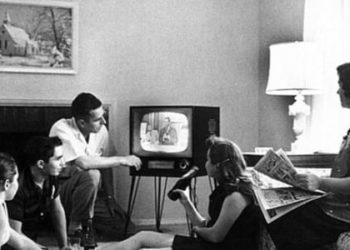
Image: PD

1. Parents’ television viewing (TVV) was significantly correlated with child TVV. 

2. Children with more televisions at home had increased TVV. 

Evidence Rating Level: 2 (Good) 

Study Rundown: While shared television viewing (TVV) among parents and children can promote positive family interactions, excessive TVV in childhood has been associated with obesity, inactivity, and poor academic performance. Results from the current study indicated that parent TVV was significantly associated with child TVV, regardless of child age. Parent TVV had a stronger relationship with child TVV than parental restrictions or coviewing practices. Furthermore, the number of televisions in the home contributed to increased child TVV, while adolescents who had a bedroom computer with Internet had decreased TVV. TVV, bedroom television, and Internet access all increased with child age. Limitations of this study include self-report and parent-report bias, particularly for parents of younger children. Nonetheless, these results suggest that efforts to reduce screen time among children may be strengthened by parent education regarding how guardian viewing habits influence their viewing.

Click to read the study, published today in Pediatrics

RELATED REPORTS

Television CPR scripts undercut bystander response in real emergencies

Unhealthy food cues prominent in children’s programming in the UK and Ireland

Potential association between toddler behavior and infant media exposure

Relevant Reading: American Academy of Pediatrics Policy Statement: Media Education

Study Author, Dr. Amy Bleakley, PhD, MPH, talks to 2 Minute Medicine: Annenberg Public Policy Center, University of Pennsylvania, Philadelphia, PA. 

“In general we found that across children of all ages, the amount of time a parent spends watching television is strongly associated with their child’s television time.  A lot of research in this area has focused on children’s access to televisions in the home and in their bedroom.  We were able to demonstrate that a parents’ influence seems to be a stronger correlate than access. Parents may not realize how their media habits shape their children’s habits, and that what they do with regards to watching television on their own and as a family influences their child’s behavior as well.  

As clinicians, it is critical to recognize the impact of media on children’s health, and to counsel parents about the consequences of excessive media use and the important role they play in shaping their children’s media habits.”

In-Depth [cross-sectional study]: A total of 1550 parents were randomly surveyed along with their children regarding media use. Parents reported 4.07 hours of TVV daily, while child TVV was 2.81 hours. Parents also reported an average of 3 televisions in the home, with 70% of parents and 46% of children having bedroom televisions. TVV and bedroom access to a television/computer increased significantly with age. Parent TVV was significantly correlated with child TVV across all age groups (r = 0.54 – 0.71). The number of televisions in the home was also associated with increased child TVV (*β = .06), while adolescents with a bedroom computer with Internet had decreased TVV (β = -.12). Female (β = .12) and African American (β = .15) adolescents reported increased TVV. Coviewing was positively correlated with TVV (β = .11) except among 6-11 year olds, while parental restrictions on TVV were linked to decreased TVV in this age group only (β = -.15).

* β values were used as a representation of the predictive value of the data, with higher β values being more predictive. 

By Cordelia Y. Ross and Leah H. Carr

More from this author: Pediatric chronic pain patients typically Caucasian, female adolescents; Previous concussion linked to prolonged symptoms following second concussion; Plastic bags reduce hypothermia among premature newborns; Untreated breast milk linked to CMV transmission; Early, limited formula supplementation associated with prolonged breastfeeding

© 2013 2minutemedicine.com. All rights reserved. No works may be reproduced without written consent from 2minutemedicine.com. Disclaimer: We present factual information directly from peer reviewed medical journals. No post should be construed as medical advice and is not intended as such by the authors or by 2minutemedicine.com. PLEASE SEE A HEALTHCARE PROVIDER IN YOUR AREA IF YOU SEEK MEDICAL ADVICE OF ANY SORT. Content is produced in accordance with fair use copyrights solely and strictly for the purpose of teaching, news and criticism. No benefit, monetary or otherwise, is realized by any participants or the owner of this domain. 

Tags: televisionTV
Previous Post

2 Minute Medicine Rewind July 8 – July 14, 2013

Next Post

Algorithm effective in identifying at-risk infants for becoming overweight

RelatedReports

Bystander CPR positively associated with cardiac arrest survival
Cardiology

Television CPR scripts undercut bystander response in real emergencies

February 3, 2026
TV associated with higher BMI in teens
Pediatrics

Unhealthy food cues prominent in children’s programming in the UK and Ireland

July 5, 2014
TV associated with higher BMI in teens
Pediatrics

Potential association between toddler behavior and infant media exposure

April 14, 2014
TV associated with higher BMI in teens
Pediatrics

AAP policy statement addresses influence of media on children

October 28, 2013
Next Post
High BMI linked to reduced risk of endometriosis

Algorithm effective in identifying at-risk infants for becoming overweight

Classics Series, Landmark Trials in Medicine

The MELD score: Predicting survival in end-stage liver disease [Classics Series]

Obtaining consent for c-section during labor may be suboptimal

Adjusted neonatal care coincides with decreased morbidity and mortality

2 Minute Medicine® is an award winning, physician-run, expert medical media company. Our content is curated, written and edited by practicing health professionals who have clinical and scientific expertise in their field of reporting. Our editorial management team is comprised of highly-trained MD physicians. Join numerous brands, companies, and hospitals who trust our licensed content.

Recent Reports

  • Ketorolac administration after cesarean delivery may reduce postoperative opioid use
  • One Big Beautiful Bill could impact half of Medicaid beneficiaries
  • Fluvoxamine improves fatigue and quality of life in long COVID
License Content
Terms of Use | Disclaimer
Cookie Policy
Privacy Statement (EU)
Disclaimer

© 2025 2 Minute Medicine, Inc. - Physician-written medical news.

  • Specialties
    • All Specialties, All Recent Reports
    • Cardiology
    • Chronic Disease
    • Dermatology
    • Emergency
    • Endocrinology
    • Gastroenterology
    • Imaging and Intervention
    • Infectious Disease
    • Nephrology
    • Neurology
    • Obstetrics
    • Oncology
    • Ophthalmology
    • Pediatrics
    • Pharma
    • Preclinical
    • Psychiatry
    • Public Health
    • Pulmonology
    • Rheumatology
    • Surgery
  • Tools
    • EvidencePulse™
    • RVU Search
    • NPI Registry Lookup
  • Pharma
  • AI News
  • The Scan
  • Classics™
    • 2MM+ Online Access
    • Paperback and Ebook
  • Rewinds
  • Partners
    • License Content
    • Submit Press Release
    • Advertise with Us
  • Account
    • Subscribe
    • Sign-in
    • My account
No Result
View All Result

© 2025 2 Minute Medicine, Inc. - Physician-written medical news.