• About
  • Masthead
  • License Content
  • Advertise
  • Submit Press Release
  • RSS/Email List
  • 2MM Podcast
  • Write for us
  • Contact Us
2 Minute Medicine
No Result
View All Result

No products in the cart.

SUBSCRIBE
  • About
  • Specialties
    • All Specialties, All Recent Reports
    • Cardiology
    • Chronic Disease
    • Dermatology
    • Emergency
    • Endocrinology
    • Gastroenterology
    • Imaging and Intervention
    • Infectious Disease
    • Nephrology
    • Neurology
    • Obstetrics
    • Oncology
    • Ophthalmology
    • Pediatrics
    • Pharma
    • Preclinical
    • Psychiatry
    • Public Health
    • Pulmonology
    • Rheumatology
    • Surgery
  • Tools+
    • EvidencePulse™
    • HypeCheck™
    • NPI Registry Lookup
    • RVU Search
  • Pharma
  • AI Roundup
  • The Scan+
  • Classics™+
    • 2MM+ Online Access
    • Paperback and Ebook
  • Rewinds
  • Partners
    • License Content
    • Submit Press Release
    • Advertise with Us
  • Account
    • Subscribe
    • My account
    • Cart
    • Sign-in
2 Minute Medicine
  • About
  • Specialties
    • All Specialties, All Recent Reports
    • Cardiology
    • Chronic Disease
    • Dermatology
    • Emergency
    • Endocrinology
    • Gastroenterology
    • Imaging and Intervention
    • Infectious Disease
    • Nephrology
    • Neurology
    • Obstetrics
    • Oncology
    • Ophthalmology
    • Pediatrics
    • Pharma
    • Preclinical
    • Psychiatry
    • Public Health
    • Pulmonology
    • Rheumatology
    • Surgery
  • Tools+
    • EvidencePulse™
    • HypeCheck™
    • NPI Registry Lookup
    • RVU Search
  • Pharma
  • AI Roundup
  • The Scan+
  • Classics™+
    • 2MM+ Online Access
    • Paperback and Ebook
  • Rewinds
  • Partners
    • License Content
    • Submit Press Release
    • Advertise with Us
  • Account
    • Subscribe
    • My account
    • Cart
    • Sign-in
SUBSCRIBE
2 Minute Medicine
Subscribe
EvidencePulse™ by 2 Minute Medicine 2026 evidence scan 3 reports You asked top stroke trials 2026 Synthesizing medical evidence... Top 2026 stroke trial results: OCEANIC — ischemic stroke: 6.2% vs 8.4% OPTION* — mRS 0–1: 43.6% vs 34.2% ORIENTAL* — mRS 0–2: 58.6% vs 46.6% *Higher sICH in intervention arms Participants randomizedN OCEANIC 12,327 OPTION 570 ORIENTAL 564 Ask about guidelines or landmark trials... ↑ Try EvidencePulse™ Ask the evidence.
Get the signal.
Try it now → Physician-trained medical AI by 2 Minute Medicine
Home All Specialties Oncology

Stereotactic radiosurgery did not outperform conventional external beam radiotherapy in patients with localized vertebral metastatic lesions
byKassandra McFarlaneandSze Wah Samuel Chan
May 1, 2023
in Chronic Disease, Oncology
Reading Time: 3 mins read
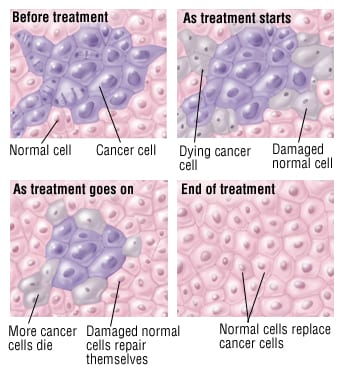
Patient Basics: Radiation Therapy
Share on FacebookShare on Twitter

1. Pain response at 3 months post-treatment show no advantage of stereotactic radiosurgery vs. conventional external beam radiotherapy

2. Adverse events were similar between treatment groups

Evidence Rating Level: 1 (Excellent)

Study Rundown: Pain from vertebral metastatic lesions is commonplace in patients with advanced cancer. Conventional external beam radiotherapy (cEBRT) has historically been used for lesions that are not appropriate for surgical resection. Results from previous studies imply that stereotactic radiosurgery (SRS) may outperform cEBRT for pain relief and local tumour control.

This study examined whether treatment with SRS provided greater patient-reported pain relief compared to cEBRT. The primary outcome of this study was a patient reported pain score out of 10 (on the Numerical Rating Pain Scale (NRPS)) 3 months post-treatment. A pain level of 0 was considered a ‘complete response’, whereas improvement of the pain score by at least 3 points was considered a ‘partial response’. A ‘stable response’ was no improvement or within 2 points of the original pain score. Secondary outcomes were the duration and rapidity of the response to treatment, survival at 12 and 24 months, as well as adverse events (AE). Pain response results at 3 months post-treatment with SRS showed no advantage over cEBRT. At 12 months post-treatment, SRS pain response improved while the response to cEBRT had plateaued, but this result was insignificant. Survival rates for the SRS group were 44.3% at 12 months and 31.5% at 24 months. In the cEBRT group, the survival rates were 53.1% and 31.5%, respectively. AEs were similar between groups, with no differences at 3 months or beyond. Limitations to this study include low patient adherence to pain reporting (less than half of patients at 12 months provided NRPS scores and less than 1/3 provided scores at 24 months), which could contribute to a bias in pain response interpretation. Additionally, there was a significantly higher proportion of patients in the SRS group with a functional status of Zubrod level 2; these patients had lower NRPS reporting adherence than patients with a greater functional status (Zubrod 0 to 1), contributing to an imbalance between groups. This study excluded patients with vertebral compression fractures sustaining a greater than 50% height loss or having bony retropulsion, so the results should be applied conservatively in this demographic of patients. Overall, the results from this study suggest that SRS is not a superior treatment compared with cEBRT in the management of vertebral metastatic lesions.

Click to read the study in JAMA Oncology

RELATED REPORTS

Brepocitinib becomes first oral therapy approved for adult dermatomyositis

An ultrasound-guided percutaneous method of vagal nerve stimulation may be effective for refractory chronic pain

Daraxonrasib extends survival in metastatic pancreatic cancer

Relevant Reading: Stereotactic body radiotherapy versus conventional external beam radiotherapy in patients with painful spinal metastases: an open-label, multicentre, randomised, controlled, phase 2/3 trial.

In-Depth [randomized controlled trial]: This non-blinded, randomized controlled trial study randomly assorted 339 adult patients with a minimum pain score of 5/10 on the NRPS in a 2:1 fashion to receive either SRS or cEBRT. Stratification was based on metastatic tumour load, SRS target dose (16 Gy vs. 18 Gy), and whether the cancers were radioresistant. At 3 months post-treatment, there was no evidence of an advantage of SRS vs. cEBRT with a between-group difference score of -19% points (95% confidence interval (CI), -32.9 to -5.5), suggesting a worse pain response in the SRS group. There was no difference in the mean change from the baseline of pain in either group at 3 months (SRS: -2.98 [3.34] vs. cEBRT: -3.83 [2.97]). While the post-SRS treatment pain response had improved at 12 months compared to the plateaued pain response to cEBRT in the same period, the difference was insignificant (57.6% vs. 55.5%, respectively). At 12 months post-treatment, survival rates for the SRS group were 44.3% and 31.5% at 24 months. Survival rates in the cEBRT group were 53.1% and 31.5%, respectively (hazard ratio [HR], 0.91; 95% CI, 0.69-1.20). AEs were not different between treatment groups, with 7.7% of all patients in either group having any AE at 3 months, 5.6% of patients in the SRS group, and 3.4% of patients in the cEBRT group having late effects. No patients reported spinal cord complications from either treatment modality.

Image: PD

©2023 2 Minute Medicine, Inc. All rights reserved. No works may be reproduced without expressed written consent from 2 Minute Medicine, Inc. Inquire about licensing here. No article should be construed as medical advice and is not intended as such by the authors or by 2 Minute Medicine, Inc.


Previous Post

Youth engagement enhances several aspects of mental health research

Next Post

Long-Term Outcomes of Sotorasib in KRAS-G12C Non–Small-Cell Lung Cancer

RelatedReports

Chronic Disease

Brepocitinib becomes first oral therapy approved for adult dermatomyositis

September 18, 2026
Chronic Disease

An ultrasound-guided percutaneous method of vagal nerve stimulation may be effective for refractory chronic pain

September 17, 2026
Oncology

Daraxonrasib extends survival in metastatic pancreatic cancer

September 17, 2026
Artificial Intelligence

Artificial intelligence (AI) scribes showed mixed effects on documentation time and improvements in physician well-being

September 16, 2026
Next Post
Macitentan better than placebo for preventing progression of pulmonary arterial hypertension [SERAPHIN Trial]

Long-Term Outcomes of Sotorasib in KRAS-G12C Non–Small-Cell Lung Cancer

The REACH trial: hydroxyurea safe and effective for sickle cell anemia in African children

Donor sex has no effect on survival in patients receiving red blood cell transfusions

Increasing C-section room temperature linked to reduced neonatal, maternal hypothermia

Cerebral oximetry monitoring in extremely preterm infants does not reduce mortality

EvidencePulse™ by 2 Minute Medicine 2026 evidence scan 3 reports You asked top stroke trials 2026 Synthesizing medical evidence... Top 2026 stroke trial results: OCEANIC — ischemic stroke: 6.2% vs 8.4% OPTION* — mRS 0–1: 43.6% vs 34.2% ORIENTAL* — mRS 0–2: 58.6% vs 46.6% *Higher sICH in intervention arms Participants randomizedN OCEANIC 12,327 OPTION 570 ORIENTAL 564 Ask about guidelines or landmark trials... ↑ Try EvidencePulse™ Ask the evidence.
Get the signal.
Try it now → Physician-trained medical AI by 2 Minute Medicine

2MM+ All Access

Full details →
$4.99 /month

5-day free trial · cancel anytime

  • ✓100+ physician-written reports
  • ✓EvidencePulse™ + HypeCheck™
  • ✓Ad-free reading + newsletters
Start 5-day free trial

Then $4.99/month. Manage renewal in your account.

2 Minute Medicine® is an award winning, physician-run, expert medical media company. Our content is curated, written and edited by practicing health professionals who have clinical and scientific expertise in their field of reporting. Our editorial management team is comprised of highly-trained MD physicians. Join numerous brands, companies, and hospitals who trust our licensed content.

Recent Reports

  • Brepocitinib becomes first oral therapy approved for adult dermatomyositis
  • An ultrasound-guided percutaneous method of vagal nerve stimulation may be effective for refractory chronic pain
  • Daraxonrasib extends survival in metastatic pancreatic cancer
License Content
Terms of Use | Disclaimer
Cookie Policy
Cleantalk Pixel
2MM+ All Access Full details →

The medical literature, distilled daily.

Monthly plan selected: $4.99 /month.

$4.99/month

5-day free trial · cancel anytime

Start 5-day free trial

Then $4.99/month. Manage renewal in your account.

Yearly plan selected: $49.90 /year.

$49.90/year

2 months free · only $4.16/month

Start 5-day free trial

Then $49.90/year. Manage renewal in your account.

Membership benefits

  • ✓100+ physician-written reports
  • ✓AI EvidencePulse™ + HypeCheck™
  • ✓Ad-free reading + newsletters

Already a member? Sign in

  • About
  • Specialties
    • All Specialties, All Recent Reports
    • Cardiology
    • Chronic Disease
    • Dermatology
    • Emergency
    • Endocrinology
    • Gastroenterology
    • Imaging and Intervention
    • Infectious Disease
    • Nephrology
    • Neurology
    • Obstetrics
    • Oncology
    • Ophthalmology
    • Pediatrics
    • Pharma
    • Preclinical
    • Psychiatry
    • Public Health
    • Pulmonology
    • Rheumatology
    • Surgery
  • Tools
    • EvidencePulse™
    • HypeCheck™
    • NPI Registry Lookup
    • RVU Search
  • Pharma
  • AI Roundup
  • The Scan
  • Classics™
    • 2MM+ Online Access
    • Paperback and Ebook
  • Rewinds
  • Partners
    • License Content
    • Submit Press Release
    • Advertise with Us
  • Account
    • Subscribe
    • My account
    • Cart
    • Sign-in
No Result
View All Result

© 2026 2 Minute Medicine, Inc. - Physician-written medical news.