

• About
  • Masthead
  • License Content
  • Advertise
  • Submit Press Release
  • RSS/Email List
  • 2MM Podcast
  • Write for us
  • Contact Us
2 Minute Medicine
No Result
View All Result

No products in the cart.

Sign in
SUBSCRIBE
  • About
  • Specialties
    • All Specialties, All Recent Reports
    • Cardiology
    • Chronic Disease
    • Dermatology
    • Emergency
    • Endocrinology
    • Gastroenterology
    • Imaging and Intervention
    • Infectious Disease
    • Nephrology
    • Neurology
    • Obstetrics
    • Oncology
    • Ophthalmology
    • Pediatrics
    • Pharma
    • Preclinical
    • Psychiatry
    • Public Health
    • Pulmonology
    • Rheumatology
    • Surgery
  • Tools+
    • EvidencePulse™
    • HypeCheck™
    • NPI Registry Lookup
    • RVU Search
  • Pharma
  • AI Roundup
  • The Scan+
  • Classics™+
    • 2MM+ Online Access
    • Paperback and Ebook
  • Rewinds
  • Partners
    • License Content
    • Advertise with Us
2 Minute Medicine
  • About
  • Specialties
    • All Specialties, All Recent Reports
    • Cardiology
    • Chronic Disease
    • Dermatology
    • Emergency
    • Endocrinology
    • Gastroenterology
    • Imaging and Intervention
    • Infectious Disease
    • Nephrology
    • Neurology
    • Obstetrics
    • Oncology
    • Ophthalmology
    • Pediatrics
    • Pharma
    • Preclinical
    • Psychiatry
    • Public Health
    • Pulmonology
    • Rheumatology
    • Surgery
  • Tools+
    • EvidencePulse™
    • HypeCheck™
    • NPI Registry Lookup
    • RVU Search
  • Pharma
  • AI Roundup
  • The Scan+
  • Classics™+
    • 2MM+ Online Access
    • Paperback and Ebook
  • Rewinds
  • Partners
    • License Content
    • Advertise with Us
Sign in
SUBSCRIBE
2 Minute Medicine
Sign in
Subscribe
EvidencePulse™ by 2 Minute Medicine 2026 evidence scan 3 reports You asked top stroke trials 2026 Synthesizing medical evidence... Top 2026 stroke trial results: OCEANIC — ischemic stroke: 6.2% vs 8.4% OPTION* — mRS 0–1: 43.6% vs 34.2% ORIENTAL* — mRS 0–2: 58.6% vs 46.6% *Higher sICH in intervention arms Participants randomizedN OCEANIC 12,327 OPTION 570 ORIENTAL 564 Ask about guidelines or landmark trials... ↑ Try EvidencePulse™ Ask the evidence.
Get the signal.
Try it now → Physician-trained medical AI by 2 Minute Medicine
Home All Specialties Cardiology

Complete revascularization guided by fractional flow reserve not superior to angiography
byBoaz WongandHarsh Shah
August 5, 2021
in Cardiology, Chronic Disease, Imaging and Intervention
Reading Time: 3 mins read
Drug-coated balloons are noninferior to drug-eluting stents for treatment of small vessel coronary artery disease
Share on FacebookShare on Twitter

1. Revascularization guided by fractional flow reserve (FFR) was shown not to have significant benefit compared to angiography for patients with ST segment-elevated myocardial infarction.

2. The wide confidence intervals for the estimate of treatment effect were unable to conclusively interpret the study’s findings.

Evidence Rating Level: 1 (Excellent)

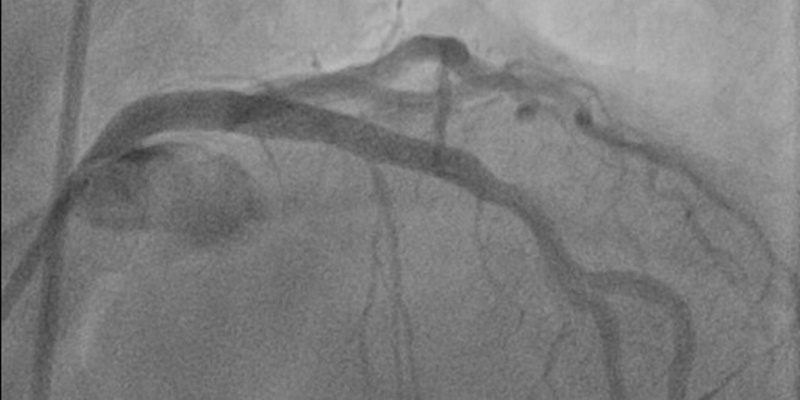
Study Rundown: Percutaneous coronary intervention (PCI) is a common procedure for patients experiencing ST segment-elevated myocardial infarction (STEMI). Complete vascularization of all lesions after the first successful PCI procedure has been demonstrated to reduce the risk for relapse, but the clinical difference between fractional flow reserve (FFR)-guided and angiography-guided is unknown. In a randomized control trial, patients who had received PCI for a STEMI and had multivessel disease underwent complete revascularization of non-culprit lesions either guided by FFR or angiography. The measured primary clinical outcomes were death from any cause, non-fatal myocardial infarction, or hospitalization requiring revascularization within one year. No significant differences were found between the FFR-guided and angiography-guided groups for all three of these measures. Moreover, there were no differences in all secondary outcome measures including procedure complexity, hospitalization outcomes, or improvements in patient functional status. This study’s conclusions were limited by relatively low sample size and large confidence intervals, making it difficult to draw statistically significant conclusions between the datasets. While the differences appear non-significant, further comparative studies are warranted to validate these findings.

Click to read the study in NEJM

Relevant Reading: Complete Revascularization with Multivessel PCI for Myocardial infarction

RELATED REPORTS

The preoperative combination of evolocumab and rosuvastatin may not reduce major adverse cardiovascular events

Late ventricular fibrillation following myocardial infarction is associated with increased risk of 1-year mortality

2 Minute Medicine Rewind January 5, 2026

In-Depth [randomized controlled trial]: In this open-label, multicenter, randomized control trial, 1,163 patients were enrolled in the study. Patients at least 18 years of age who previously underwent PCI to resolve a STEMI and multivessel disease were included in the study. Patients with less than 50% stenosis in a major side branch at least 2.0 millimeters in diameter were excluded from the study. The patients were randomized in a 1:1 ratio to either receive complete revascularization guided by fractional flow reserve (FFR) or by angiography, respectively. The primary outcomes were death from any cause, non-fatal myocardial infarction, or hospitalization requiring revascularization within one year. Patients were followed for up to 36 months at subsequent clinical visits. The data found that there were no significant differences in any of the primary outcomes that were assessed: incidence of death from any cause (hazard ratio, [HR], 0.89; 95% confidence interval [CI], 0.36 to 2.20), non-fatal myocardial infarction (HR, 1.77; 95%CI, 0.82 to 3.84) or unplanned hospitalization requiring urgent revascularization (HR, 1.34; 95%CI, 0.62 to 2.92). The study also found no significant improvements from the FFR-guided group in secondary outcomes of future revascularization, hospitalization, or functional status. Finally, a Kaplan-Meier survival curve analysis found that both procedures had a similar ability to prevent the primary outcomes (P=0.31). The study notes that given the smaller sample size and large confidence intervals, the statistical power may not have been great enough to detect significant differences, and further studies are needed before any conclusions can be drawn. Overall, FFR-guided revascularization did not show significant benefits compared to angiography-guided revascularization.

Image: PD

©2021 2 Minute Medicine, Inc. All rights reserved. No works may be reproduced without expressed written consent from 2 Minute Medicine, Inc. Inquire about licensing here. No article should be construed as medical advice and is not intended as such by the authors or by 2 Minute Medicine, Inc.
Tags: angiographyfractional flow reserve (FFRpercutaneous coronary intervention (PCI)revascularizationSTEMI
Previous Post

Insufficient evidence for using muscle relaxants to effectively relieve lower back pain

Next Post

Wellness Check: Mental Health

RelatedReports

Using HEART score to risk stratify patients with chest pain is safe but underutilized in the ED
Cardiology

The preoperative combination of evolocumab and rosuvastatin may not reduce major adverse cardiovascular events

January 12, 2026
Using HEART score to risk stratify patients with chest pain is safe but underutilized in the ED
Cardiology

Late ventricular fibrillation following myocardial infarction is associated with increased risk of 1-year mortality

January 12, 2026
Using HEART score to risk stratify patients with chest pain is safe but underutilized in the ED
Weekly Rewinds

2 Minute Medicine Rewind January 5, 2026

January 13, 2026
Using HEART score to risk stratify patients with chest pain is safe but underutilized in the ED
Cardiology

Use of ticagrelor may provide improved myocardial protection compared to clopidogrel in pharmaco-invasive ST-segment elevation myocardial infarction

January 13, 2026
Next Post
Shared decision-making tool for antidepressants improves patient and physician satisfaction

Wellness Check: Mental Health

#VisualAbstract Sporotrichosis-associated cutaneous hypersensitivity reactions occur more frequently in the fixed cutaneous form

#VisualAbstract Sporotrichosis-associated cutaneous hypersensitivity reactions occur more frequently in the fixed cutaneous form

Leadless pacemakers associated with higher rates of pericardial effusion and perforation but lower rates of other device-related complications

EvidencePulse™ by 2 Minute Medicine 2026 evidence scan 3 reports You asked top stroke trials 2026 Synthesizing medical evidence... Top 2026 stroke trial results: OCEANIC — ischemic stroke: 6.2% vs 8.4% OPTION* — mRS 0–1: 43.6% vs 34.2% ORIENTAL* — mRS 0–2: 58.6% vs 46.6% *Higher sICH in intervention arms Participants randomizedN OCEANIC 12,327 OPTION 570 ORIENTAL 564 Ask about guidelines or landmark trials... ↑ Try EvidencePulse™ Get the signal. Try it now → Physician-trained medical AI by 2 Minute Medicine

2MM+ All Access

Full details →
$4.99 /month

3-day free trial · cancel anytime

  • ✓100+ physician-written reports
  • ✓EvidencePulse™ + HypeCheck™
  • ✓Ad-free reading + newsletters
Start 3-day free trial

Then $4.99/month. Manage renewal in your account.

2 Minute Medicine® is an award winning, physician-run, expert medical media company. Our content is curated, written and edited by practicing health professionals who have clinical and scientific expertise in their field of reporting. Our editorial management team is comprised of highly-trained MD physicians. Join numerous brands, companies, and hospitals who trust our licensed content.

Recent Reports

  • The rate of urethrocutaneous fistula formation may be similar between caudal and penile blocks
  • 2 Minute Medicine Rewind October 12, 2026
  • Gepotidacin (Blujepa) is safe and effective in women with uncomplicated urinary tract infections
License Content
Terms of Use | Disclaimer
Cookie Policy
Cleantalk Pixel
2MM+ All Access Full details →

The medical literature, distilled daily.

Monthly plan selected: $4.99 /month.

$4.99/month

3-day free trial · cancel anytime

Start 3-day free trial

Then $4.99/month. Manage renewal in your account.

Yearly plan selected: $49.90 /year.

$49.90/year

2 months free

Start 3-day free trial

Then $49.90/year.

Membership benefits

  • ✓100+ physician-written reports
  • ✓AI EvidencePulse™ + HypeCheck™
  • ✓Ad-free reading + newsletters

Already a member? Sign in

  • About
  • Specialties
    • All Specialties, All Recent Reports
    • Cardiology
    • Chronic Disease
    • Dermatology
    • Emergency
    • Endocrinology
    • Gastroenterology
    • Imaging and Intervention
    • Infectious Disease
    • Nephrology
    • Neurology
    • Obstetrics
    • Oncology
    • Ophthalmology
    • Pediatrics
    • Pharma
    • Preclinical
    • Psychiatry
    • Public Health
    • Pulmonology
    • Rheumatology
    • Surgery
  • Tools
    • EvidencePulse™
    • HypeCheck™
    • NPI Registry Lookup
    • RVU Search
  • Pharma
  • AI Roundup
  • The Scan
  • Classics™
    • 2MM+ Online Access
    • Paperback and Ebook
  • Rewinds
  • Partners
    • License Content
    • Advertise with Us
No Result
View All Result

© 2026 2 Minute Medicine, Inc. - Physician-written medical news.