2 Minute Medicine Rewind January 5, 2026
Management of Dyspnea With High-Flow Nasal Air or Fan-A Randomized Controlled Crossover Trial
1. In patients with advanced cancer who are not hypoxemic, high-flow nasal therapy using room air and simple fan therapy provide safe, similar, and modest relief of dyspnea.
2. Because both treatments are safe, feasible, and equally effective, the choice of therapy should be guided by patient comfort, preference, and ease of use.
Evidence Rating Level: 2 (Good)
Dyspnea is a common and distressing symptom in patients with advanced cancer, and while airflow-based therapies can provide relief, the comparative role of high-flow nasal therapy (HFNT) with room air versus simple fan therapy in nonhypoxemic patients remains uncertain. This prospective, randomized, controlled crossover trial evaluated the efficacy and feasibility of HFNT with air compared with fan therapy in relieving dyspnea among adults with incurable cancer and oxygen saturation ≥88%. Thirty-six patients with moderate dyspnea (numeric rating scale [NRS] ≥3) were enrolled, and 28 completed both interventions. Participants received 30 minutes of HFNT with room air and 30 minutes of fan therapy in randomized order, separated by a washout period. Both interventions resulted in statistically significant but modest reductions in dyspnea. Median dyspnea scores decreased from 5.0 to 3.5 with HFNT and from 5.0 to 2.5 with fan therapy. The median change in dyspnea was −1.0 NRS points for both treatments, with no significant difference between them. Over half of patients reported subjective dyspnea relief and good adaptation to each therapy. Adverse events were minimal, and no serious events occurred. The study concludes that HFNT with room air offers no advantage over fan therapy for dyspnea relief in nonhypoxemic patients with advanced cancer. Both modalities are feasible, safe, and provide mild symptom relief, supporting individualized, preference-based selection.
1. Preoperative evolocumab combined with rosuvastatin did not significantly reduce six-month major adverse cardiovascular events but improved several clinically relevant secondary outcomes.
2. Early intensive lipid-lowering was associated with reduced angina, faster low-density lipoprotein cholesterol reduction, improved myocardial reperfusion, and attenuated inflammation after ST-elevation myocardial infarction.
Evidence Rating Level: 1 (Excellent)
Early lipid-lowering and attenuation of inflammation may improve myocardial reperfusion and symptoms in patients with ST-elevation myocardial infarction undergoing primary percutaneous coronary intervention. This prospective, randomized, single-center trial evaluated whether a single preoperative dose of evolocumab combined with rosuvastatin improves clinical and biological outcomes compared with rosuvastatin alone. Eighty statin-naïve patients with acute ST-elevation myocardial infarction were randomized to receive evolocumab 140 mg subcutaneously plus rosuvastatin 10 mg before intervention, followed by rosuvastatin maintenance, or rosuvastatin initiated after intervention alone. The primary endpoint was major adverse cardiovascular events at six months. Secondary endpoints included angina incidence, serial low-density lipoprotein cholesterol measurements, inflammatory markers, and ST-segment resolution after intervention. At six months, the incidence of major adverse cardiovascular events was lower in the combination therapy group, but did not reach statistical significance. However, patients receiving preoperative evolocumab experienced significantly fewer angina episodes, more rapid and greater reductions in low-density lipoprotein cholesterol during the early post-intervention period, improved ST-segment resolution, and lower postoperative interleukin-6 and interleukin-17 levels. Differences in lipid levels were no longer significant beyond one month. No excess hepatic, renal, or muscular adverse events were observed. Overall, preoperative evolocumab combined with rosuvastatin improved early lipid, inflammatory, and reperfusion markers and reduced angina burden, supporting further investigation of early intensive lipid-lowering strategies in acute ST-elevation myocardial infarction.
1. Ultrasound-guided stellate ganglion block significantly reduces early postoperative visceral pain after laparoscopic hysterectomy.
2. Stellate ganglion block provides an opioid-sparing effect without increasing clinically significant complications.
Evidence Rating Level: 1 (Excellent)
Postoperative visceral pain remains a major contributor to morbidity after laparoscopic hysterectomy and is often inadequately controlled with standard regional techniques such as the transversus abdominis plane block, which primarily addresses incisional pain. This prospective, single-center randomized controlled trial evaluated whether ultrasound-guided stellate ganglion block could reduce early postoperative visceral pain and opioid requirements. Ninety patients undergoing laparoscopic hysterectomy were randomized to receive stellate ganglion block plus transversus abdominis plane block, transversus abdominis plane block alone, or no nerve block. Visceral and incisional pain were assessed using visual analogue scale scores at rest and with movement at 1, 3, 6, 24, and 48 hours postoperatively, and rescue opioid use and complications were recorded. Patients receiving stellate ganglion block had significantly lower visceral pain scores at rest and with movement at 1, 3, and 6 hours compared with both comparator groups, with no differences observed at later time points. The proportion of patients requiring rescue analgesia and total opioid consumption was also significantly reduced in the stellate ganglion block group. There were no significant differences in incisional pain, postoperative nausea and vomiting, gastrointestinal recovery, or length of stay. Minor transient Horner syndrome occurred in a small number of patients and resolved spontaneously. The authors conclude that ultrasound-guided stellate ganglion block effectively attenuates early postoperative visceral pain and reduces opioid demand after laparoscopic hysterectomy, supporting its role as an adjunct in multimodal analgesia protocols.
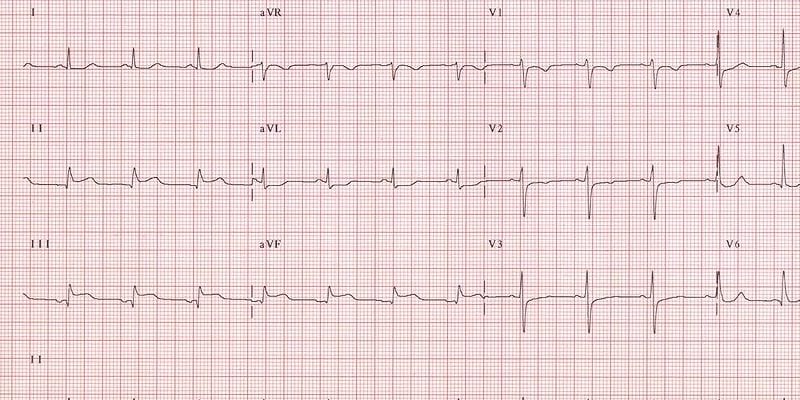
1. Late ventricular fibrillation after acute myocardial infarction is associated with a markedly increased risk of 1-year mortality among patients who survive to hospital discharge.
2. This excess mortality risk is significant in ST-segment elevation myocardial infarction but not clearly demonstrated in non-ST-segment elevation myocardial infarction.
Evidence Rating Level: 2 (Good)
Late ventricular fibrillation, defined as ventricular fibrillation occurring more than 48 hours after acute myocardial infarction, is uncommon in the contemporary reperfusion era, but its prognostic significance after hospital discharge remains uncertain. This nationwide retrospective cohort study used data from the Israeli Acute Coronary Syndrome Survey between 2000 and 2018 to evaluate the incidence of late in-hospital ventricular fibrillation and its association with 1-year mortality among patients with acute myocardial infarction who survived the index hospitalization. Among 14,280 patients with ST-segment elevation and non-ST-segment elevation myocardial infarction admitted to cardiac intensive care units, 118 patients developed late ventricular fibrillation, of whom 68 survived to discharge. Patients with late ventricular fibrillation had more severe clinical profiles, including higher Killip class, lower left ventricular ejection fraction, and more frequent cardiogenic shock and acute renal failure. Overall, 1-year mortality was substantially higher in patients with late ventricular fibrillation compared with those without. After multivariable adjustment, late ventricular fibrillation was independently associated with increased 1-year mortality, with this association remaining statistically significant in patients with ST-segment elevation myocardial infarction but not in those with non-ST-segment elevation myocardial infarction. These findings suggest that late ventricular fibrillation identifies a particularly high-risk subgroup of myocardial infarction survivors, especially among ST-segment elevation myocardial infarction patients, and highlight the need for improved post-discharge risk stratification and evaluation of preventive strategies.
1. A guided mobile application can validly and efficiently assess frailty and sarcopenia with results comparable to a comprehensive geriatric assessment.
2. The Fit-Frailty App enables standardized, multidimensional frailty assessment by non-specialists within routine clinical workflows.
Evidence Rating Level: 2 (Good)
Frailty and sarcopenia are prevalent, prognostically important geriatric syndromes, yet systematic assessment is limited by time, training, and access to specialist care. Kennedy and colleagues evaluated the clinical validity, feasibility, and usability of the Geras Fit-Frailty App, a guided mobile health tool designed to provide a multidimensional assessment of frailty and sarcopenia at the point of care. In this cross-sectional validation study, 75 community-dwelling adults aged 65 years or older attending an outpatient geriatric clinic completed the Fit-Frailty App during routine visits. The app assesses physical performance, cognition, nutrition, daily function, psychosocial factors, and medical history, generating a cumulative deficits frailty index score. Criterion validity was evaluated by comparison with a frailty index derived from comprehensive geriatric assessment, while construct validity was assessed against established measures of cognition, mood, physical frailty, and disability. The mean Fit-Frailty score was 0.33, with 73% of participants classified as frail or severely frail. The app demonstrated moderate to good agreement with the frailty index based on comprehensive geriatric assessment (intraclass correlation coefficient 0.65) and a strong correlation between measures. Higher app scores aligned with worsening cognition, depression, physical frailty phenotype, and Clinical Frailty Scale levels. The app achieved a 100% completion rate, required 15 minutes or less to administer, and had no safety events. Overall, the Fit-Frailty App is a feasible and valid tool for comprehensive frailty and sarcopenia assessment that can be used by non-geriatric clinicians in clinical and research settings.
Image: PD
©2026 2 Minute Medicine, Inc. All rights reserved. No works may be reproduced without expressed written consent from 2 Minute Medicine, Inc. Inquire about licensing here. No article should be construed as medical advice and is not intended as such by the authors or by 2 Minute Medicine, Inc.