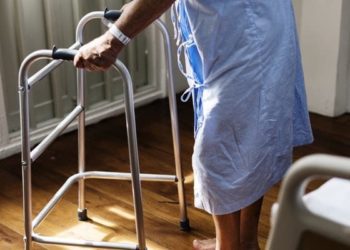
A multidisciplinary home-based intervention may reduce risk of falls after stroke
1. The tailored, multidisciplinary home‑based program significantly reduced the rate of falls after stroke by about one‑third, while also improving mobility, balance, self‑efficacy, and community participation.
Evidence Rating Level: 1 (Excellent)
People recovering from stroke experience falls at more than twice the rate of the general older population, often with serious and repeated consequences for their long‑term health. Despite this high risk, previous trials have not identified an effective way to prevent falls, especially because earlier interventions relied on home modifications or exercises that were separate from daily life. This study set out to test a new approach: a multidisciplinary, home‑based program that embeds habit‑forming exercise into everyday activities while also addressing home safety and community mobility goals. To evaluate its impact, researchers conducted a large phase 3 randomized trial involving community‑dwelling adults over 50 who had experienced a stroke within the past five years and could walk at least 10 meters, recruiting participants across three Australian regions and following them for one year. Over the study period, 370 stroke survivors were enrolled. After 12 months, the intervention group showed a 33% reduction in the rate of falls compared with usual care (incidence rate ratio 0.67, 95% CI 0.48–0.94; P=0.02), although the proportion of participants who fell did not differ significantly between groups (absolute risk reduction 0.03, 95% CI −0.07 to 0.13; P=0.52). The intervention also led to meaningful improvements in community participation (3% increase, 95% CI 1%–6%; P=0.02), self‑efficacy (mean difference 0.6, 95% CI 0.2–1.0; P=0.004), mobility (fast walking speed +0.13 m/s, 95% CI 0.06–0.19; P<0.001; preferred speed +0.06 m/s, 95% CI 0.02–0.10; P=0.02), and balance (Step Test +0.06 steps/s, 95% CI 0.01–0.12; P=0.03). These findings show that a structured, individualized home‑based intervention can meaningfully reduce fall rates and enhance functional confidence and participation for community‑dwelling people recovering from stroke.
Click here to read this study in the BMJ
Image: PD
©2026 2 Minute Medicine, Inc. All rights reserved. No works may be reproduced without expressed written consent from 2 Minute Medicine, Inc. Inquire about licensing here. No article should be construed as medical advice and is not intended as such by the authors or by 2 Minute Medicine, Inc.