




• About
  • Masthead
  • License Content
  • Advertise
  • Submit Press Release
  • RSS/Email List
  • 2MM Podcast
  • Write for us
  • Contact Us
2 Minute Medicine
No Result
View All Result

No products in the cart.

SUBSCRIBE
  • Specialties
    • All Specialties, All Recent Reports
    • Cardiology
    • Chronic Disease
    • Dermatology
    • Emergency
    • Endocrinology
    • Gastroenterology
    • Imaging and Intervention
    • Infectious Disease
    • Nephrology
    • Neurology
    • Obstetrics
    • Oncology
    • Ophthalmology
    • Pediatrics
    • Pharma
    • Preclinical
    • Psychiatry
    • Public Health
    • Pulmonology
    • Rheumatology
    • Surgery
  • Tools
    • EvidencePulse™
    • RVU Search
    • NPI Registry Lookup
  • Pharma
  • AI News
  • The Scan+
  • Classics™+
    • 2MM+ Online Access
    • Paperback and Ebook
  • Rewinds
  • Partners
    • License Content
    • Submit Press Release
    • Advertise with Us
  • Account
    • Subscribe
    • Sign-in
    • My account
2 Minute Medicine
  • Specialties
    • All Specialties, All Recent Reports
    • Cardiology
    • Chronic Disease
    • Dermatology
    • Emergency
    • Endocrinology
    • Gastroenterology
    • Imaging and Intervention
    • Infectious Disease
    • Nephrology
    • Neurology
    • Obstetrics
    • Oncology
    • Ophthalmology
    • Pediatrics
    • Pharma
    • Preclinical
    • Psychiatry
    • Public Health
    • Pulmonology
    • Rheumatology
    • Surgery
  • Tools
    • EvidencePulse™
    • RVU Search
    • NPI Registry Lookup
  • Pharma
  • AI News
  • The Scan+
  • Classics™+
    • 2MM+ Online Access
    • Paperback and Ebook
  • Rewinds
  • Partners
    • License Content
    • Submit Press Release
    • Advertise with Us
  • Account
    • Subscribe
    • Sign-in
    • My account
SUBSCRIBE
2 Minute Medicine
Subscribe
Home All Specialties Infectious Disease

Detection of respiratory viruses in febrile infants suggests lower risk of bacterial infection

byShyam AkulaandCordelia Ross
January 17, 2018
in Infectious Disease, Pediatrics, Pulmonology
Reading Time: 2 mins read
0
Share on FacebookShare on Twitter

1. Respiratory viruses were identified in 55% of febrile infants; those older than 28 days had a lower risk of bacterial infection when they tested positive for a respiratory virus.

2. Human rhinovirus (HRV) detection in well-appearing febrile infants did not affect risk of concurrent urinary tract infection or risk of concurrent bacterial infection in infants younger than 28 days old.

Evidence Rating Level: 2 (Good)

Study Rundown: The evaluation of a febrile infant is a clinical challenge that often involves cultures and empiric antibiotic treatment due to the vulnerability of infants in their first few months of life. There is an increasing role for the clinical detection of a variety of respiratory viruses, including the common HRV, with polymerase chain reaction (PCR). In this study, researchers examined records of febrile infants who presented to the emergency room or were admitted from an outpatient setting. Authors analyzed the results of testing for respiratory viruses with the presence of a bacterial infection in infants. The results show that viruses were detected in more than half (55%) of febrile infants tested. Infants without respiratory viruses detected were more than 3 times more likely to have a bacterial infection than those in whom a non-HRV respiratory virus was detected. Infants in whom HRV was identified also had a reduced risk of bacterial infection to a lesser degree (about 2 fold), excluding urinary tract infections. Together, these results support previous studies showing decreased risk of bacterial infections in infants with documented viral infection. These findings suggest that respiratory virus, and specifically HRV, detection in infants older than 28 days has predictive value that can influence the clinical evaluation and management of a febrile infant. The limitations of this study include difficulty distinguishing virus colonization from invasive infection, and lack of information about specific symptomalogy.

Relevant Reading: Timing of First Respiratory Virus Detections in Infants: A Community-Based Birth Cohort Study

In-Depth [retrospective cohort]: Participants included 10 964 well-appearing febrile infants who presented to the emergency room or were admitted directly after outpatient evaluation. 37% of these infants had PCR testing for respiratory viruses (RVPCR). Of those tested, 55% (2212/4037) of infants were positive for a respiratory virus, with HRV the most commonly detected (35% of infants with virus detected). A variety of other viruses were detected at low rates. Infants from 28-90 days old were more likely to have a respiratory virus identified than infants younger than 29 days (61% vs. 39% P <0.001). Bacterial infections — including meningitis, bloodstream infection, and UTIs — were identified more frequently in younger infants compared to older ones (11.5 vs, 8.8% P=0.01). Infants without any respiratory virus detected were 3.66 times more likely to have a bacterial infection identified than those with a non-HRV virus detected (95% CI: 2.53-5.31). Infants in whom no respiratory virus was identified were 2.1 times more likely to have a bacterial infection than those with HRV (95% CI: 1.43-3.15).

RELATED REPORTS

Iterum’s Sulopenem receives FDA approval for treatment of uncomplicated urinary tract infections

The Scan by 2 Minute Medicine®: Powerful Phages, Vanishing Vaping, AirPods and the Ear, and Signs of Stroke:

Past infection with pre-omicron variants of COVID-19 protects against re-infection

Image: CC

©2018 2 Minute Medicine, Inc. All rights reserved. No works may be reproduced without expressed written consent from 2 Minute Medicine, Inc. Inquire about licensing here. No article should be construed as medical advice and is not intended as such by the authors or by 2 Minute Medicine, Inc.

Tags: bacterial infectionfebrile neonaterespiratory virusesviral infection
Previous Post

A structured exercise program provides mobility benefits to all older patients, regardless of frailty status

Next Post

2 Minute Medicine Rewind January 15, 2018

RelatedReports

Implementation of pneumococcal vaccine programs linked to decreased antibiotic prescription
Pharma

Iterum’s Sulopenem receives FDA approval for treatment of uncomplicated urinary tract infections

November 11, 2024
The Scan by 2 Minute Medicine®:  Ultra-Trail du Mont-Blanc, Taylor Swift, NBA rookie Chet Holmgren and Magic Mushrooms!
The Scan by 2 Minute Medicine®

The Scan by 2 Minute Medicine®: Powerful Phages, Vanishing Vaping, AirPods and the Ear, and Signs of Stroke:

September 17, 2024
Decreased expression of nasal ACE2 may be correlated with lower prevalence of COVID-19 in children
Chronic Disease

Past infection with pre-omicron variants of COVID-19 protects against re-infection

March 28, 2023
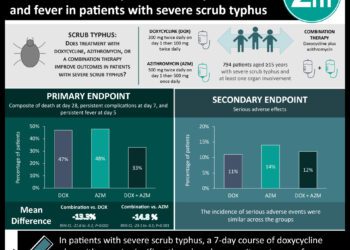
#VisualAbstract: Doxycycline plus azithromycin was superior in reduction of death, persistent complications, and fever in patients with severe scrub typhus
StudyGraphics

#VisualAbstract: Doxycycline plus azithromycin was superior in reduction of death, persistent complications, and fever in patients with severe scrub typhus

May 1, 2023
Next Post
General anesthesia exposure in infants not linked to impaired cognitive development

2 Minute Medicine Rewind January 15, 2018

Retinopathy of prematurity associated with nonvisual impairment in childhood

Growth hormone releasing hormone (GHRH) agonists protects against diabetic retinopathy in animal model

Intensive rehabilitation not superior to traditional therapy for arm function after stroke

Percutaneous patent foramen ovale closure is superior to medical treatment alone in preventing recurrent stroke

2 Minute Medicine® is an award winning, physician-run, expert medical media company. Our content is curated, written and edited by practicing health professionals who have clinical and scientific expertise in their field of reporting. Our editorial management team is comprised of highly-trained MD physicians. Join numerous brands, companies, and hospitals who trust our licensed content.

Recent Reports

  • The modified reverse valsalva for supraventricular tachycardia
  • Acupuncture may reduce pain and improve function in patients with migraine without aura
  • Psychotherapy identified as most effective treatment for grief
License Content
Terms of Use | Disclaimer
Cookie Policy
Privacy Statement (EU)
Disclaimer

© 2025 2 Minute Medicine, Inc. - Physician-written medical news.

  • Specialties
    • All Specialties, All Recent Reports
    • Cardiology
    • Chronic Disease
    • Dermatology
    • Emergency
    • Endocrinology
    • Gastroenterology
    • Imaging and Intervention
    • Infectious Disease
    • Nephrology
    • Neurology
    • Obstetrics
    • Oncology
    • Ophthalmology
    • Pediatrics
    • Pharma
    • Preclinical
    • Psychiatry
    • Public Health
    • Pulmonology
    • Rheumatology
    • Surgery
  • Tools
    • EvidencePulse™
    • RVU Search
    • NPI Registry Lookup
  • Pharma
  • AI News
  • The Scan
  • Classics™
    • 2MM+ Online Access
    • Paperback and Ebook
  • Rewinds
  • Partners
    • License Content
    • Submit Press Release
    • Advertise with Us
  • Account
    • Subscribe
    • Sign-in
    • My account
No Result
View All Result

© 2025 2 Minute Medicine, Inc. - Physician-written medical news.