

Patient Basics: Acute Prostatitis
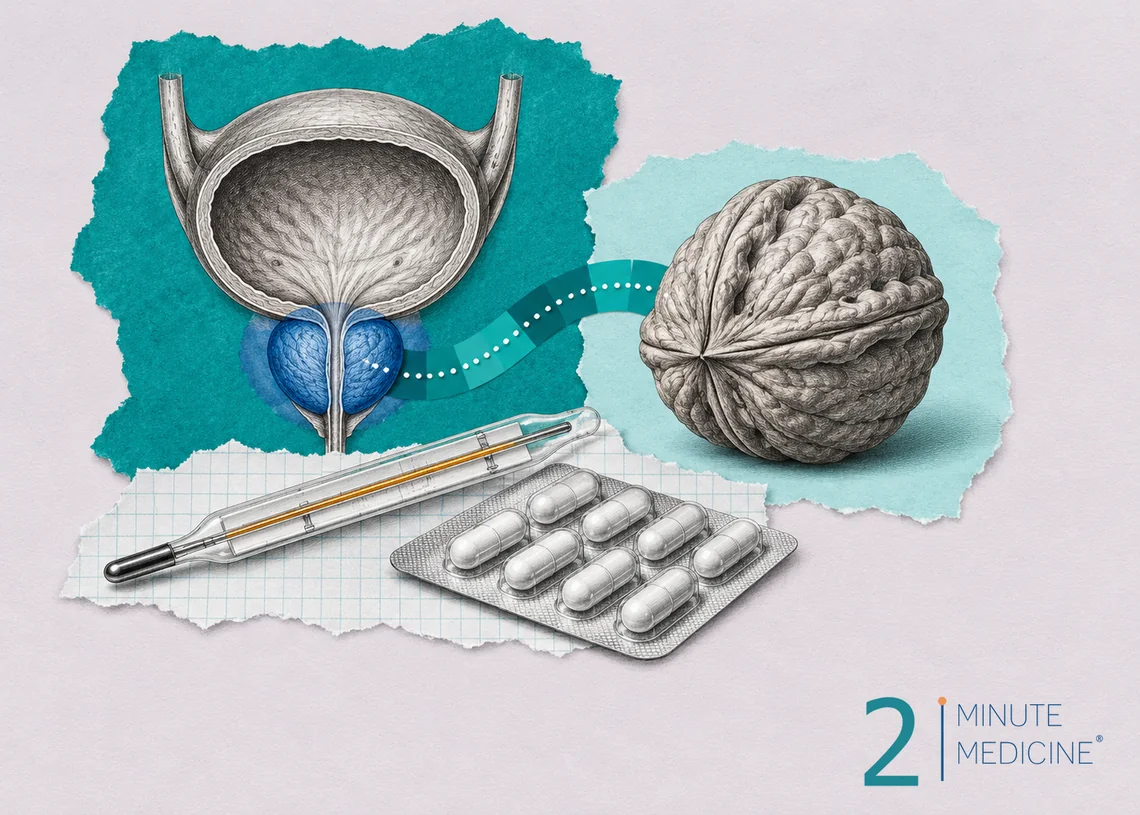
Acute prostatitis is a sudden bacterial infection of the prostate. This gland, about the size of a walnut, lies under the bladder in men. It usually starts quickly, with fever, chills, pain low in the pelvis and trouble passing urine. It needs antibiotics right away, and most men recover fully when it’s treated promptly.
Key points
- Most cases are caused by the same gut bacteria that cause bladder infections, such as E. coli.
- Fever with painful or difficult urination in a man should be checked by a doctor the same day.
- Treatment is a course of antibiotics, usually for two to four weeks. Finish every dose.
- If no urine will come out, that’s an emergency.
- Acute prostatitis is different from chronic pelvic pain in men, which is not usually caused by infection.
Where the prostate is and what it does
The prostate wraps around the urethra, the channel urine flows through on its way out of the body. It makes part of the fluid in semen. An infection makes the prostate swell, which can pinch the urethra and slow or block the flow of urine.
Doctors describe several kinds of prostatitis. This guide covers the acute bacterial type. Chronic bacterial prostatitis means infections that keep coming back. Chronic prostatitis/chronic pelvic pain syndrome is the most common kind. It causes long-lasting pelvic pain without a clear infection, and it’s treated differently.
What causes acute prostatitis
Bacteria usually reach the prostate from the urine. Things that make this more likely include:
- A recent bladder infection
- An enlarged prostate or other problem that keeps the bladder from emptying fully
- A urinary catheter, or a procedure such as a prostate biopsy or a scope test of the bladder
- Sexually transmitted infections such as gonorrhea or chlamydia, more often in younger men
- Diabetes or a weak immune system
Symptoms
Symptoms often come on over hours to a day or two:
- Fever, chills and body aches, like the flu
- Pain between the scrotum and the anus, in the groin, lower belly or lower back, or in the penis or testicles
- Burning or pain when passing urine
- Needing to urinate often or urgently, including at night
- A weak stream, or feeling that the bladder hasn’t emptied
- Cloudy or bloody urine
- Pain when ejaculating or when having a bowel movement
- Sometimes a discharge from the penis, which can point to a sexually transmitted infection
How it’s diagnosed
- Exam. Your doctor will check your belly and may gently feel the prostate with a gloved finger in the rectum. An infected prostate is usually swollen and tender. The doctor won’t press hard or massage it, because that can push bacteria into the blood.
- Urine tests. A urine sample is checked for infection, and a culture shows which bacteria are growing and which antibiotics will work.
- Blood tests look for signs of a serious infection. Blood cultures may be taken if you are very unwell.
- Bladder scan. A quick ultrasound of the lower belly shows whether urine is being left in the bladder.
- Tests for STIs may be done, depending on your age and sexual history.
- Imaging. A CT scan or ultrasound through the rectum can look for a pocket of pus (abscess) if you aren’t getting better.
The infection often raises the PSA (prostate-specific antigen) level in the blood for a while. A PSA test for cancer screening is best put off until a couple of months after you’ve recovered.
How acute prostatitis is treated
Antibiotics
Antibiotics are the main treatment. Common choices include ciprofloxacin, levofloxacin and trimethoprim-sulfamethoxazole. The choice may change once the urine culture is back. Treatment usually lasts two to four weeks, because the prostate is harder for antibiotics to reach than the bladder. Stopping early raises the chance that the infection comes back or becomes chronic.
Men who are very ill, can’t keep fluids down, or can’t pass urine are treated in the hospital with antibiotics through a vein (IV) at first.
Other care
- Pain relief with ibuprofen or naproxen, if your doctor says they’re right for you
- Alpha-blockers, such as tamsulosin, which relax muscle around the prostate and help urine flow
- A catheter if you can’t pass urine. It is sometimes placed through the lower belly instead of the penis, to avoid irritating the prostate.
- Drainage of an abscess, if one forms
- Plenty of fluids, rest and a stool softener, since straining can be painful
Recovery
Fever and pain usually start to ease within two or three days of starting antibiotics. Call your doctor if you aren’t improving by then. Some urinary symptoms can take a few weeks to settle. Your doctor may check your urine again after treatment. If prostatitis keeps coming back, you may need a longer course of antibiotics and tests to look for a cause, such as a bladder that doesn’t empty well.
Lowering your risk
- Get bladder infections treated promptly.
- Use condoms to lower your risk of sexually transmitted infections.
- If you have an enlarged prostate, ask about treatment that helps the bladder empty.
- Before a prostate biopsy, follow the antibiotic plan your doctor gives you.
When to see a doctor
See a doctor the same day if you have fever or chills along with pain when urinating, urinating often, or pain low in the pelvis.
Get emergency care if no urine will come out, or if you have a high fever with shaking chills, a fast heartbeat, confusion, dizziness when standing, or you feel very ill. These can be signs that the infection has spread to the blood.
While you take antibiotics, call your doctor if you get a rash, hives, watery diarrhea, or pain or swelling in a tendon such as the back of the ankle. Ciprofloxacin and levofloxacin can rarely harm tendons.
Common questions about acute prostatitis
Is acute prostatitis contagious?
Usually not. Most cases come from gut bacteria that travel up the urinary tract, and these don’t spread to partners. When a sexually transmitted infection such as gonorrhea or chlamydia is the cause, it can pass to partners, so both of you should be tested and treated before having sex again.
Does acute prostatitis go away?
Yes, in most men. They feel much better within a few days of starting antibiotics, but the full course lasts two to four weeks. Some urinary symptoms can linger for a few weeks after that. If symptoms keep coming back, the infection may have become chronic bacterial prostatitis, which needs longer treatment.
Can I have sex with acute prostatitis?
It’s best to wait until the fever and pain have settled, since ejaculation can hurt during the infection. If a sexually transmitted infection could be the cause, avoid sex until you and your partner have both finished treatment. Ask your doctor when it’s fine for you to start again.
Questions to ask your doctor
- Which bacteria caused my infection, and is my antibiotic the right one for it?
- How long do I need to take the antibiotic?
- When should I start to feel better, and what should I do if I don’t?
- Do I need a follow-up urine test?
- Is there something, such as an enlarged prostate, that made this more likely?
Learn more
- Prostatitis: inflammation of the prostate (National Institute of Diabetes and Digestive and Kidney Diseases)
- Prostate diseases (MedlinePlus, U.S. National Library of Medicine)
This guide is general information and doesn’t replace advice from your own doctor. Last updated October 2026.






 Get the app