

Patient Basics: Bladder Infection (Cystitis)
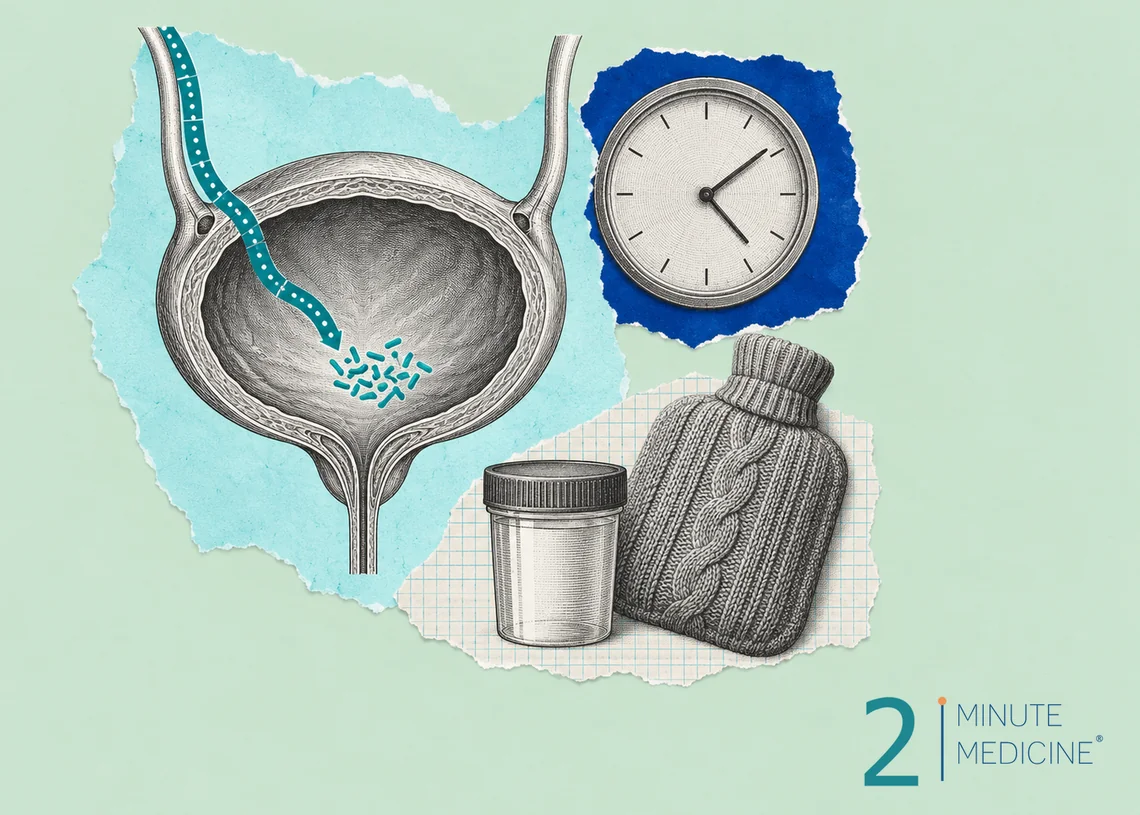
A bladder infection (cystitis) happens when bacteria get into the bladder and multiply. It is the most common type of urinary tract infection (UTI), and it usually causes burning when you pee and a frequent, urgent need to go. Antibiotics clear most bladder infections within a few days. Fever, back pain or vomiting can mean the infection has reached the kidneys and needs care the same day.
Key points
- Women get bladder infections far more often than men. About half of women have at least one UTI in their lifetime.
- Most are caused by E. coli, bacteria that normally live in the bowel.
- A urine test confirms the infection, and a urine culture shows which antibiotic will work.
- Drinking plenty of water and peeing soon after sex can help prevent repeat infections.
- Pregnant women, men, children and anyone with fever or back pain should see a doctor promptly.
What causes a bladder infection
Bacteria from the skin around the anus and genitals travel up the urethra, the short tube that carries urine out of the body, and into the bladder. A woman’s urethra is short and close to the anus, which is why women are affected more often. Things that raise the risk include:
- Sex, especially with a new partner or after a break
- Spermicides and diaphragms used for birth control
- Menopause, because lower estrogen changes the tissue and the healthy bacteria around the urethra
- Pregnancy
- A bladder that doesn’t empty fully, from an enlarged prostate, nerve problems or a bulging bladder (prolapse)
- Kidney stones or a urinary catheter
- Diabetes
- Earlier UTIs
E. coli causes most infections. Others come from bacteria such as Klebsiella, Enterococcus or Staphylococcus saprophyticus. People who often take antibiotics, live in care homes or use catheters are more likely to have drug-resistant bacteria, such as VRE (vancomycin-resistant Enterococcus). A urine culture helps find a medicine that works against them.
Bladder infection symptoms
- Burning or stinging when you pee
- Needing to pee often and urgently, but passing only a little
- Pressure or cramping low in the belly
- Cloudy or strong-smelling urine
- Pink, red or brown urine from blood
- Leaking urine, or a bladder that suddenly feels weak
Older adults may not have burning. They may instead seem confused, tired or unsteady. Still, cloudy or smelly urine on its own is not a reliable sign of infection in older people.
Signs the infection may have spread to the kidneys
- Fever or shaking chills
- Pain in the back or side, below the ribs
- Nausea or vomiting
How it’s diagnosed
Women with typical symptoms and no warning signs are often treated after a phone or video visit, or a quick urine check. Common tests are:
- Dipstick test. A strip dipped in urine changes color with signs of infection, such as white blood cells and nitrites.
- Urinalysis. A lab counts white blood cells, red blood cells and bacteria under a microscope. Results are often written per high-power field (hpf).
- Urine culture. Bacteria are grown from the sample over one to two days to name them and test which antibiotics work. It’s used for men, pregnant women, repeat infections, and infections that don’t clear.
People with frequent infections, kidney infections, or blood in the urine that stays after treatment may need an ultrasound, a CT scan or a look inside the bladder with a thin scope (cystoscopy).
How a bladder infection is treated
Antibiotics are the main treatment. Common choices are nitrofurantoin, trimethoprim-sulfamethoxazole, fosfomycin and cephalexin. A course usually lasts one to seven days, depending on the drug and on whether you are a man, pregnant, or have a more complicated infection. Symptoms usually ease within a day or two. Finish the full course even when you feel better.
Things that help while you recover:
- Drink plenty of water.
- Put a heating pad on your lower belly.
- Take ibuprofen or acetaminophen for pain, if they’re right for you.
- Phenazopyridine, sold over the counter, numbs burning for a day or two. It turns urine bright orange and doesn’t treat the infection.
- Skip coffee, alcohol and fizzy drinks for a few days if they make the urge worse.
Doctors usually don’t treat bacteria found in urine when there are no symptoms, because antibiotics then do more harm than good. Pregnancy is the main exception.
Preventing repeat infections
About 1 in 4 women who have one bladder infection get another within six months. These steps can help:
- Drink more water, especially if you don’t drink much now.
- Pee soon after sex.
- Use a different birth control method if you use spermicide or a diaphragm.
- After menopause, ask about vaginal estrogen cream or tablets.
- Cranberry products may lower the risk a little for some women, but they don’t treat an active infection.
- For frequent infections, your doctor may suggest a low-dose antibiotic taken daily or after sex, or a non-antibiotic medicine called methenamine.
Common questions about bladder infections
Can a bladder infection go away on its own?
Sometimes. A mild bladder infection in a healthy woman can clear without antibiotics, but the infection may spread to the kidneys instead. Antibiotics shorten symptoms and lower that risk, so most doctors recommend them. Men, pregnant women and children should always be checked and treated.
Is a bladder infection the same as a UTI?
A bladder infection is one kind of UTI. A urinary tract infection can affect any part of the urinary tract, including the urethra, bladder and kidneys. Bladder infections are the most common kind. Kidney infections are more serious and usually cause fever, back or side pain, and nausea.
Why is my urine cloudy if I have no pain?
Cloudy urine without burning, urgency or fever is usually not an infection. Common causes are not drinking enough, harmless crystals in the urine after meals, or vaginal discharge mixing with urine. See a doctor if it doesn’t clear after a few days of drinking more, or if other symptoms appear.
Is group B strep in urine serious?
Group B strep is a common germ that lives harmlessly in many people’s bowel and vagina. In pregnancy, finding it in urine means you’ll get IV antibiotics during labor to protect the baby, and large amounts are also treated right away. Outside pregnancy, it’s treated only if it causes symptoms.
Why do I dribble urine after I pee?
A few drops after you finish (post-micturition dribble) is common, especially in men as they age, and isn’t a sign of infection. A little urine stays in the urethra and leaks out later. Pressing gently behind the scrotum and sweeping forward, or waiting a moment longer before you stand, usually helps.
When to see a doctor
- Symptoms of a bladder infection, especially if you are pregnant, a man, or have diabetes
- A child with fever, pain when peeing or new wetting
- Blood in your urine, even if it goes away
- Symptoms that aren’t better after two days of antibiotics, or come back soon after
- Three or more infections in a year
Get emergency care for a high fever with shaking chills, vomiting so you can’t keep fluids or pills down, confusion, or feeling faint. These can mean a severe kidney infection or an infection in the blood.
Questions to ask your doctor
- Do I need a urine culture?
- Which antibiotic are you prescribing, and what side effects should I watch for?
- What should I do if I’m not better in two days?
- What can I do to prevent another infection?
- Do I need tests to look for a cause of repeat infections?
Learn more
- Bladder infection (urinary tract infection) in adults (National Institute of Diabetes and Digestive and Kidney Diseases)
- Urinary tract infection in adults (MedlinePlus, U.S. National Library of Medicine)
This guide is general information and doesn’t replace advice from your own doctor. Last updated October 2026.






 Get the app