
• About
  • Masthead
  • License Content
  • Advertise
  • Press Releases
  • Newsroom
  • RSS/Email List
  • 2MM Podcast
  • Write for us
  • Contact Us
2 Minute Medicine
No Result
View All Result

No products in the cart.

Sign in
SUBSCRIBE
  • About
  • Specialties
    • All Specialties, All Recent Reports
    • Cardiology
    • Chronic Disease
    • Dermatology
    • Emergency
    • Endocrinology
    • Gastroenterology
    • Imaging and Intervention
    • Infectious Disease
    • Nephrology
    • Neurology
    • Obstetrics
    • Oncology
    • Ophthalmology
    • Pediatrics
    • Pharma
    • Preclinical
    • Psychiatry
    • Public Health
    • Pulmonology
    • Rheumatology
    • Surgery
    • Rewinds
    • The Scan
  • EvidencePulse™
  • HypeCheck™
  • AI News
  • Classics™
    • 2MM+ Online Access
    • Paperback and Ebook
  • Tools
    • NPI Registry Lookup
    • RVU Search
    • Physician Pay by Specialty
    • ICD-10 Code Lookup
    • FDA Drug Approvals
    • Drug Safety for Breastfeeding/Pregnancy
    • Clinical Guidelines
    • Medical Calculators
    • ECG Reference
      • QTc Calculator
      • Sgarbossa Criteria
      • ECG Axis Calculator
      • AV Block Helper
  • Rankings
    • Medical School Rankings
    • Residency Rankings
  • Partners
    • License Content
    • Advertise with Us
2 Minute Medicine
  • About
  • Specialties
    • All Specialties, All Recent Reports
    • Cardiology
    • Chronic Disease
    • Dermatology
    • Emergency
    • Endocrinology
    • Gastroenterology
    • Imaging and Intervention
    • Infectious Disease
    • Nephrology
    • Neurology
    • Obstetrics
    • Oncology
    • Ophthalmology
    • Pediatrics
    • Pharma
    • Preclinical
    • Psychiatry
    • Public Health
    • Pulmonology
    • Rheumatology
    • Surgery
    • Rewinds
    • The Scan
  • EvidencePulse™
  • HypeCheck™
  • AI News
  • Classics™
    • 2MM+ Online Access
    • Paperback and Ebook
  • Tools
    • NPI Registry Lookup
    • RVU Search
    • Physician Pay by Specialty
    • ICD-10 Code Lookup
    • FDA Drug Approvals
    • Drug Safety for Breastfeeding/Pregnancy
    • Clinical Guidelines
    • Medical Calculators
    • ECG Reference
      • QTc Calculator
      • Sgarbossa Criteria
      • ECG Axis Calculator
      • AV Block Helper
  • Rankings
    • Medical School Rankings
    • Residency Rankings
  • Partners
    • License Content
    • Advertise with Us
Sign in
SUBSCRIBE
2 Minute Medicine
Sign in
Subscribe
2 Minute MedicineFree on Google PlayGet
✦EvidencePulse™by 2 Minute Medicine3 reportsYou askedtop stroke trials 2026Synthesizing medical evidence...Top 2026 stroke trial results:OCEANIC — ischemic stroke: 6.2% vs 8.4%OPTION* — mRS 0–1: 43.6% vs 34.2%ORIENTAL* — mRS 0–2: 58.6% vs 46.6%*Higher sICH in intervention armsParticipants randomizedNOCEANIC12,327OPTION570ORIENTAL564Ask about guidelines or landmark trials...↑Try EvidencePulse™Ask the evidence. Get the signal.Try it now →
Home Health A to Z

Patient Basics: Creutzfeldt-Jakob Disease (CJD)
by2 Minute Medicine
October 30, 2026
in Health A to Z
Reading Time: 5 mins read
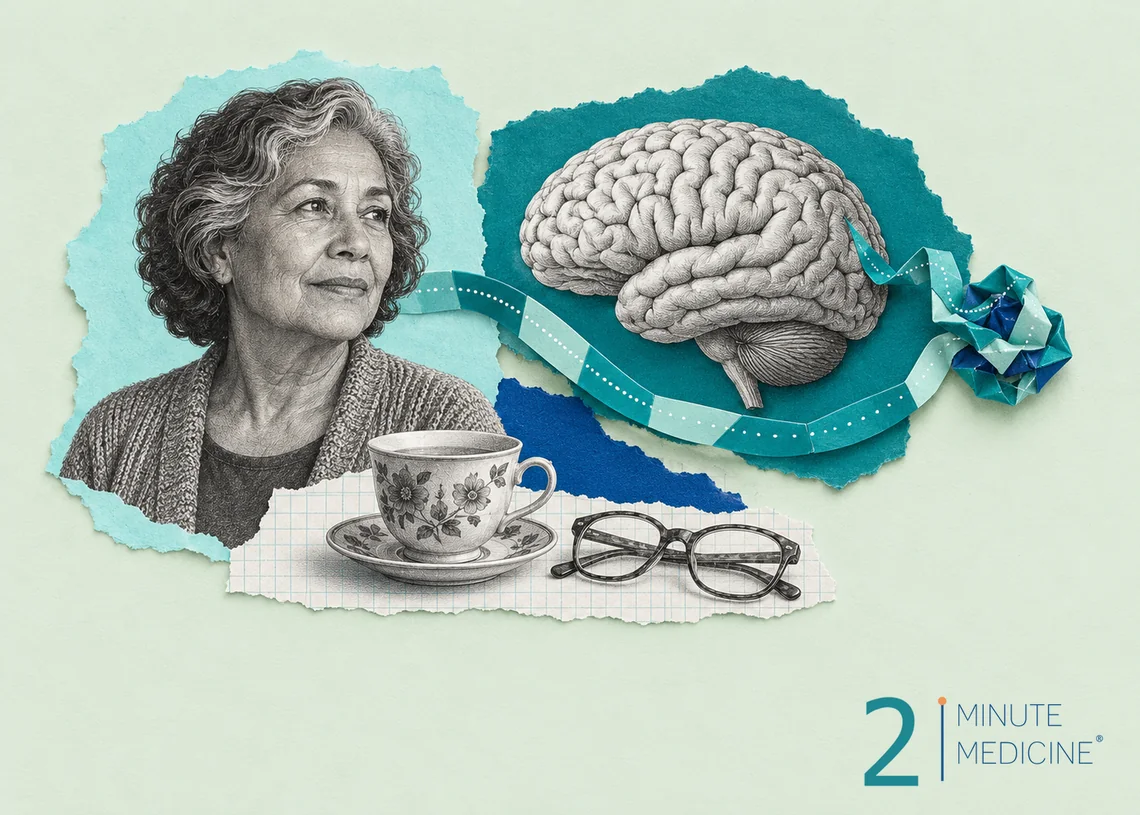
Creutzfeldt-Jakob disease collage of an older woman, an engraved brain with a tangled teal ribbon, a teacup and glasses
Share on FacebookShare on TwitterShare on LinkedIn

Creutzfeldt-Jakob disease (CJD) is an uncommon, fast-moving illness of the brain that causes memory loss, confusion, unsteadiness and muscle jerks. It is caused by prions, abnormal proteins that damage brain cells. There is no cure, and most people live less than a year after symptoms start, so care focuses on comfort and support for the person and their family.

Key points

  • CJD affects about 1 in a million people each year, most often people in their 60s.
  • Most cases happen for no known reason. A smaller number are inherited, and very few are passed on by medical procedures or infected beef.
  • It doesn’t spread through everyday contact, caring for someone, or the air.
  • An MRI and a spinal fluid test can usually confirm it while the person is alive.
  • Doctors check carefully for other, treatable conditions that can look like CJD.

What causes Creutzfeldt-Jakob disease

Everyone has a normal protein in the brain called prion protein. In CJD, some of this protein folds into the wrong shape. The misfolded protein makes nearby normal proteins fold wrongly too, in a chain reaction. The bad proteins clump together, brain cells die, and tiny holes form, so the brain tissue looks like a sponge under a microscope. CJD belongs to a group of illnesses called prion diseases.

Types of CJD

  • Sporadic CJD is the most common type, about 85 out of 100 cases. The protein seems to misfold by chance. There is no known way to prevent it.
  • Genetic (familial) CJD accounts for most of the rest. It comes from a change in the prion protein gene (PRNP). Each child of a person with the gene change has a 1 in 2 chance of inheriting it. Related inherited prion diseases include Gerstmann-Sträussler-Scheinker syndrome (GSS) and fatal familial insomnia.
  • Acquired CJD is very rare. It has happened after brain surgery with contaminated instruments, certain tissue grafts, and growth hormone made from human glands before the 1980s. Hospitals now take special steps to prevent this.
  • Variant CJD came from eating meat from cows infected with “mad cow disease.” Most cases were in the United Kingdom in the 1990s and 2000s, and it has become extremely rare since cattle feed rules changed.

Symptoms

Symptoms usually start subtly and then worsen over weeks to months, much faster than in Alzheimer’s disease.

  • Memory loss, confusion and trouble thinking
  • Changes in personality or behavior, anxiety or depression
  • Clumsiness, unsteady walking and falls
  • Vision problems, such as blurred or double vision
  • Sudden muscle jerks, often when startled
  • Trouble speaking and swallowing
  • Sleep problems

Over time, the person loses the ability to move, speak and care for themselves, and may fall into a coma. Pneumonia and other infections are common causes of death. Variant CJD tends to affect younger adults and often begins with mood changes and painful skin sensations before memory problems appear.

How Creutzfeldt-Jakob disease is diagnosed

A neurologist (a doctor who treats brain and nerve conditions) will examine the person and order tests:

  • MRI of the brain often shows a typical pattern of changes.
  • Spinal tap (lumbar puncture). A sample of the fluid around the spine is tested. A test called RT-QuIC can detect misfolded prion protein and is very accurate.
  • EEG, a recording of the brain’s electrical activity, may show a pattern seen in CJD.
  • Blood tests and other studies look for treatable illnesses that can mimic CJD, such as brain inflammation from the immune system, infections, vitamin deficiencies and thyroid problems.
  • Genetic testing may be offered, with counseling, to look for the inherited form.

A brain autopsy after death confirms the diagnosis and the type. In the United States, the National Prion Disease Pathology Surveillance Center can arrange this at no cost to the family. The results can help relatives who are deciding about genetic testing.

RELATED REPORTS

No Content Available

Treatment and care

No treatment can stop or slow CJD yet, though research trials are testing new drugs. Care aims to keep the person comfortable and safe:

  • Medicines such as clonazepam or valproate to ease muscle jerks
  • Treatment for pain, anxiety, restlessness and sleep problems
  • Help with eating and swallowing, skin care, and preventing falls
  • Palliative care and hospice, which support the person and family at home or in a care setting

Because the disease moves fast, it helps to talk early about goals of care, feeding tubes, and where the person would want to be cared for. Family members may also want counseling, respite care and support groups. The CJD Foundation offers support for families in the United States.

Preventing spread in health care

There’s no vaccine, and sporadic CJD can’t be prevented. Hospitals use special cleaning steps for instruments used on people who may have CJD. People with CJD, or at higher risk because of family history or past exposure, can’t donate blood, organs or tissue. Families and caregivers don’t need special precautions for everyday care.

Common questions about Creutzfeldt-Jakob disease

Is CJD contagious?

Not through everyday contact. You can’t catch it by touching, kissing, sharing meals or caring for someone with CJD, and it doesn’t spread through the air. In rare cases it has passed through contaminated surgical instruments, certain tissue grafts, and hormone treatments made from human glands, which are no longer used.

Is CJD the same as mad cow disease?

Not exactly. Mad cow disease (bovine spongiform encephalopathy) is a prion disease of cattle. Eating infected beef caused a different human illness called variant CJD, mostly in the United Kingdom. Sporadic CJD, by far the most common type, has no link to eating beef.

How long do people live with CJD?

Most people with sporadic CJD live a few months to a year after symptoms begin. Some genetic forms and variant CJD move more slowly, sometimes over a year or two. Throughout that time, care teams focus on comfort, safety and support for the family.

When to see a doctor

See a doctor promptly for memory loss, confusion, personality change or unsteadiness that is getting worse over weeks. Most people with these symptoms don’t have CJD, and many causes can be treated. Call 911 for sudden confusion, weakness on one side, a seizure or trouble breathing.

Questions to ask your doctor

  • How sure are you that this is CJD, and what else could it be?
  • Which type of CJD is it, and should our family consider genetic counseling?
  • What symptoms should we expect next, and how can we keep them comfortable?
  • Can you refer us to palliative care or hospice?
  • Should we arrange a brain autopsy, and how do we do that?

Learn more

  • Creutzfeldt-Jakob disease (National Institute of Neurological Disorders and Stroke)
  • Classic Creutzfeldt-Jakob disease (CDC)

This guide is general information and doesn’t replace advice from your own doctor. Last updated October 2026.

Tags: Creutzfeldt - Jakob disease
Previous Post

Patient Basics: Dermatofibroma

Next Post

Patient Basics: Cystic Fibrosis

RelatedReports

No Content Available
Next Post
VATS collage: a pair of engraved lungs with a slim thoracoscope beside them, an incentive spirometer and a teal ribbon

Patient Basics: Video-Assisted Thoracic Surgery (VATS)

Wire localization collage: a blank mammogram film, a fine hook-tipped guide wire, a sprig of flowers and a teacup

Patient Basics: Wire Localization Biopsy of the Breast

Coronary artery disease collage: a calm man in his 50s, an engraved heart with coronary arteries, a stethoscope and shoes

Patient Basics: Coronary Artery Disease

✦ EvidencePulse™ by 2 Minute Medicine 3 reports You asked top stroke trials 2026 Synthesizing medical evidence... Top 2026 stroke trial results: OCEANIC — ischemic stroke: 6.2% vs 8.4% OPTION* — mRS 0–1: 43.6% vs 34.2% ORIENTAL* — mRS 0–2: 58.6% vs 46.6% *Higher sICH in intervention arms Participants randomizedN OCEANIC 12,327 OPTION 570 ORIENTAL 564 Ask about guidelines or landmark trials... Try EvidencePulse™ Get the signal. Try it now → Physician-trained medical AI by 2 Minute Medicine

2MM+ All Access

Full details →
$4.99 /month

3-day free trial · cancel anytime

  • ✓100+ physician-written reports
  • ✓EvidencePulse™ + HypeCheck™
  • ✓Ad-free reading + newsletters
Start 3-day free trial

Then $4.99/month. Manage renewal in your account.

2 Minute Medicine® is an award winning, physician-run, expert medical media company. Our content is curated, written and edited by practicing health professionals who have clinical and scientific expertise in their field of reporting. Our editorial management team is comprised of highly-trained MD physicians. Join numerous brands, companies, and hospitals who trust our licensed content.

Recent Reports

  • Pelacarsen lowers lipoprotein(a) but does not reduce major cardiovascular events in patients with established cardiovascular disease
  • Durvalumab plus enfortumab vedotin was approved for perioperative treatment of muscle-invasive bladder cancer
  • CDC reports 5,412 confirmed measles cases in the United States in 2026
License Content
Terms of Use | Disclaimer
Cookie Policy

Get the app

Read 2 Minute Medicine on iPhone, iPad and Android.

Download on the App StoreGet it on Google Play
QR code for www.2minutemedicine.com/app
On a computer? Scan this with your phone’s camera.
2MM+ All Access Full details →

The medical literature, distilled daily.

Monthly plan selected: $4.99 /month.

$4.99/month

3-day free trial · cancel anytime

Start 3-day free trial

Then $4.99/month. Manage renewal in your account.

Yearly plan selected: $49.90 /year.

$49.90/year

2 months free

Start 3-day free trial

Then $49.90/year.

Membership benefits

  • ✓100+ new physician-written study summaries monthly, 12,000+ searchable
  • ✓AI EvidencePulse™ + HypeCheck™
  • ✓Ad-free reading + newsletters
  • ✓FDA drug approvals + clinical calculators

Already a member? Sign in

  • Get the app
  • About
  • Specialties
    • All Specialties, All Recent Reports
    • Cardiology
    • Chronic Disease
    • Dermatology
    • Emergency
    • Endocrinology
    • Gastroenterology
    • Imaging and Intervention
    • Infectious Disease
    • Nephrology
    • Neurology
    • Obstetrics
    • Oncology
    • Ophthalmology
    • Pediatrics
    • Pharma
    • Preclinical
    • Psychiatry
    • Public Health
    • Pulmonology
    • Rheumatology
    • Surgery
    • Rewinds
    • The Scan
  • EvidencePulse™
  • HypeCheck™
  • AI News
  • Classics™
    • 2MM+ Online Access
    • Paperback and Ebook
  • Tools
    • NPI Registry Lookup
    • RVU Search
    • Physician Pay by Specialty
    • ICD-10 Code Lookup
    • FDA Drug Approvals
    • Drug Safety for Breastfeeding/Pregnancy
    • Clinical Guidelines
    • Medical Calculators
    • ECG Reference
      • QTc Calculator
      • Sgarbossa Criteria
      • ECG Axis Calculator
      • AV Block Helper
  • Rankings
    • Medical School Rankings
    • Residency Rankings
  • Partners
    • License Content
    • Advertise with Us
No Result
View All Result

© 2026 2 Minute Medicine, Inc. - Physician-written medical news.


