

Patient Basics: Heart-Lung Transplant
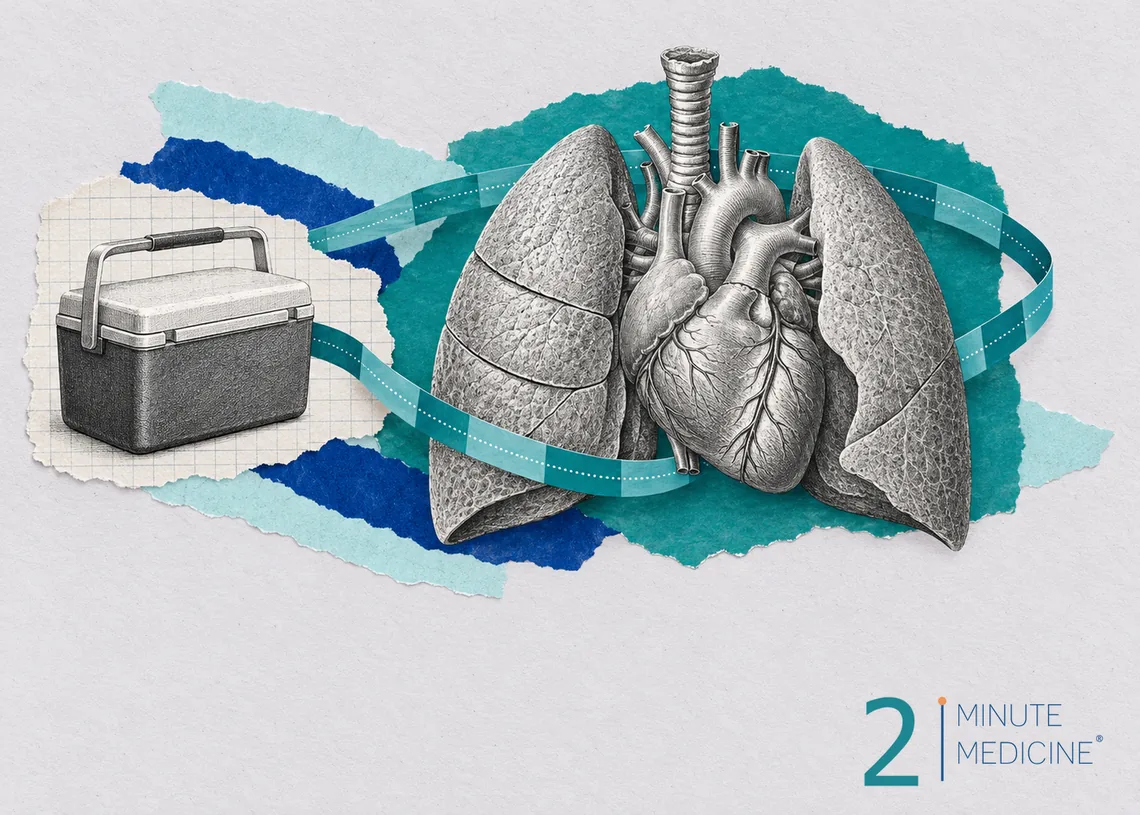
A heart-lung transplant replaces a person’s failing heart and both lungs with donor organs, all taken from one person who has died. It is used only when both the heart and lungs are too damaged for any other treatment. It is a rare operation, done at a small number of specialist centers, and it means lifelong medicines and close follow-up.
Key points
- Only a few dozen heart-lung transplants are done in the US each year. Most people with lung disease need only a lung transplant, and most with heart disease need only a heart transplant.
- Common reasons include birth defects of the heart with severe lung damage (Eisenmenger syndrome) and very high blood pressure in the lungs that has worn out the heart.
- The donor heart and lungs are moved together as one unit, sometimes called a heart-lung block.
- After surgery, people take medicines every day for life to keep the immune system from rejecting the new organs.
- Rejection and infection are the main risks, so regular checkups and quick reporting of symptoms matter.
Who needs a heart-lung transplant
Doctors consider this transplant when a person has end-stage disease of both the heart and the lungs, and medicines and other surgery no longer help. Conditions that may lead to it include:
- Eisenmenger syndrome, where a heart defect present from birth has caused lasting damage to the blood vessels in the lungs
- Pulmonary arterial hypertension with severe failure of the right side of the heart
- Complex heart defects that can’t be repaired
- Severe lung disease, such as cystic fibrosis, together with serious heart failure
Symptoms at this stage often include shortness of breath at rest or with very little activity, bluish lips or fingertips, fainting, swollen legs and belly, and deep tiredness. Many people with pulmonary hypertension now receive a double-lung transplant instead, because the right side of the heart often recovers once the lungs are replaced.
Getting on the waiting list
A transplant team checks whether a transplant is likely to help and whether you are strong enough for it. This involves heart catheterization, CT scans, breathing tests, blood typing and tissue matching, screening for infections and cancer, and dental and mental health checks. The team will also want to know you have people to help you through recovery.
You’ll need to have stopped smoking and vaping, and to be free of alcohol and drug misuse. A transplant may not be possible for people with active cancer, serious disease of other organs or an infection that can’t be cleared.
In the US, donor organs are matched through a national system by blood type, body size and medical need. The wait can last months or longer. While waiting, you’ll keep your phone on, stay ready to travel to the hospital at short notice, and often attend pulmonary rehab to stay as fit as possible.
How a heart-lung transplant is done
The surgery is done under general anesthesia and usually takes several hours. The surgeon opens the chest, either through the breastbone or with a cut across the front of the chest. A heart-lung machine takes over pumping blood and adding oxygen to it, so the failing heart and lungs can be removed.
The new organs go in as one connected unit. The surgeon joins them to your windpipe, to the large veins that return blood to the heart, and to the aorta. When everything is connected, the new heart is started, the heart-lung machine is gradually turned off, and the new lungs take over breathing. Tubes are left in the chest to drain fluid.
Recovery after a heart-lung transplant
Most people spend several days in intensive care, at first on a breathing machine. A typical hospital stay is a few weeks. For the first months, you’ll stay near the transplant center for frequent visits, blood tests, breathing tests and bronchoscopies, in which a thin tube is passed into the lungs to look for rejection or infection.
The breastbone takes about 6 to 8 weeks to heal, so avoid heavy lifting until your team says it’s fine. Rehab helps you rebuild strength and stamina. Many people return to work, school, travel and exercise within 6 to 12 months.
Two changes are worth knowing about. The nerves to the new lungs are cut, so you may not feel the urge to cough when mucus builds up. Your team will teach you to cough on purpose. The new heart also speeds up more slowly with exercise, so warm up and cool down gradually.
Lifelong medicines
- Anti-rejection medicines such as tacrolimus, mycophenolate and prednisone, taken every day at set times
- Medicines to prevent infections from germs such as viruses, fungi and Pneumocystis, especially in the first year
- Medicines for side effects, such as high blood pressure, high blood sugar, high cholesterol or thinning bones
Never skip or change a dose on your own. Many other drugs, supplements and even grapefruit can change anti-rejection medicine levels, so check with your team before starting anything new.
Possible risks
- Bleeding and problems with the new organs working right away
- Rejection. Sudden (acute) rejection can usually be treated. Chronic rejection of the lungs slowly narrows the small airways and is the main long-term problem.
- Infections, because the immune system is kept low
- Kidney damage, diabetes and high blood pressure from the medicines
- Narrowing of the arteries of the new heart over time
- A higher risk of skin cancer and lymphoma
When to call your transplant team
- Fever or chills
- New or worse cough, shortness of breath or mucus
- A drop in your home breathing-test readings
- Unusual tiredness, swelling, fast weight gain or a racing heartbeat
- Vomiting or diarrhea that stops you taking your medicines
Call 911 for severe trouble breathing, chest pain or fainting.
Common questions about heart-lung transplants
Can you get a lung transplant without a new heart?
Yes, and that is far more common. People with lung diseases such as COPD, pulmonary fibrosis or cystic fibrosis usually receive one or both lungs alone. A combined heart-lung transplant is saved for people whose heart is also too damaged to recover.
What is a heart-lung machine?
A heart-lung machine (cardiopulmonary bypass) does the work of the heart and lungs during surgery. Blood is drained through tubes into the machine, which adds oxygen, removes carbon dioxide and pumps the blood back into the body. Surgeons use it in many open-heart operations, including transplants.
How long can you live after a heart-lung transplant?
It varies widely. Survival has improved, and many people live for years with a much better quality of life. Long-term results are lower than for a heart transplant alone, mainly because of chronic lung rejection. Your team can give you figures based on your condition and their own center’s results.
Questions to ask your doctor
- Is a heart-lung transplant my only option, or could a lung or heart transplant alone work?
- How many heart-lung transplants does this center do, and what are its results?
- How long might I wait, and what should I do while waiting?
- What will my daily medicines be, and what side effects should I expect?
- How soon can I go home, drive and return to work?
Learn more
- Lung transplantation (MedlinePlus, U.S. National Library of Medicine)
- Heart transplant (MedlinePlus, U.S. National Library of Medicine)
This guide is general information and doesn’t replace advice from your own doctor. Last updated October 2026.






 Get the app