
• About
  • Masthead
  • License Content
  • Advertise
  • Press Releases
  • Newsroom
  • RSS/Email List
  • 2MM Podcast
  • Write for us
  • Contact Us
2 Minute Medicine
No Result
View All Result

No products in the cart.

Sign in
SUBSCRIBE
  • About
  • Specialties
    • All Specialties, All Recent Reports
    • Cardiology
    • Chronic Disease
    • Dermatology
    • Emergency
    • Endocrinology
    • Gastroenterology
    • Imaging and Intervention
    • Infectious Disease
    • Nephrology
    • Neurology
    • Obstetrics
    • Oncology
    • Ophthalmology
    • Pediatrics
    • Pharma
    • Preclinical
    • Psychiatry
    • Public Health
    • Pulmonology
    • Rheumatology
    • Surgery
    • Rewinds
    • The Scan
  • EvidencePulse™
  • HypeCheck™
  • AI News
  • Classics™
    • 2MM+ Online Access
    • Paperback and Ebook
  • Tools
    • NPI Registry Lookup
    • RVU Search
    • Physician Pay by Specialty
    • ICD-10 Code Lookup
    • FDA Drug Approvals
    • Drug Safety for Breastfeeding/Pregnancy
    • Clinical Guidelines
    • Medical Calculators
    • ECG Reference
      • QTc Calculator
      • Sgarbossa Criteria
      • ECG Axis Calculator
      • AV Block Helper
  • Rankings
    • Medical School Rankings
    • Residency Rankings
  • Partners
    • License Content
    • Advertise with Us
2 Minute Medicine
  • About
  • Specialties
    • All Specialties, All Recent Reports
    • Cardiology
    • Chronic Disease
    • Dermatology
    • Emergency
    • Endocrinology
    • Gastroenterology
    • Imaging and Intervention
    • Infectious Disease
    • Nephrology
    • Neurology
    • Obstetrics
    • Oncology
    • Ophthalmology
    • Pediatrics
    • Pharma
    • Preclinical
    • Psychiatry
    • Public Health
    • Pulmonology
    • Rheumatology
    • Surgery
    • Rewinds
    • The Scan
  • EvidencePulse™
  • HypeCheck™
  • AI News
  • Classics™
    • 2MM+ Online Access
    • Paperback and Ebook
  • Tools
    • NPI Registry Lookup
    • RVU Search
    • Physician Pay by Specialty
    • ICD-10 Code Lookup
    • FDA Drug Approvals
    • Drug Safety for Breastfeeding/Pregnancy
    • Clinical Guidelines
    • Medical Calculators
    • ECG Reference
      • QTc Calculator
      • Sgarbossa Criteria
      • ECG Axis Calculator
      • AV Block Helper
  • Rankings
    • Medical School Rankings
    • Residency Rankings
  • Partners
    • License Content
    • Advertise with Us
Sign in
SUBSCRIBE
2 Minute Medicine
Sign in
Subscribe
2 Minute MedicineFree on Google PlayGet
✦EvidencePulse™by 2 Minute Medicine3 reportsYou askedtop stroke trials 2026Synthesizing medical evidence...Top 2026 stroke trial results:OCEANIC — ischemic stroke: 6.2% vs 8.4%OPTION* — mRS 0–1: 43.6% vs 34.2%ORIENTAL* — mRS 0–2: 58.6% vs 46.6%*Higher sICH in intervention armsParticipants randomizedNOCEANIC12,327OPTION570ORIENTAL564Ask about guidelines or landmark trials...↑Try EvidencePulse™Ask the evidence. Get the signal.Try it now →
Home Health A to Z

Patient Basics: Heat Stroke (Hyperthermia)
by2 Minute Medicine
October 30, 2026
in Health A to Z
Reading Time: 5 mins read
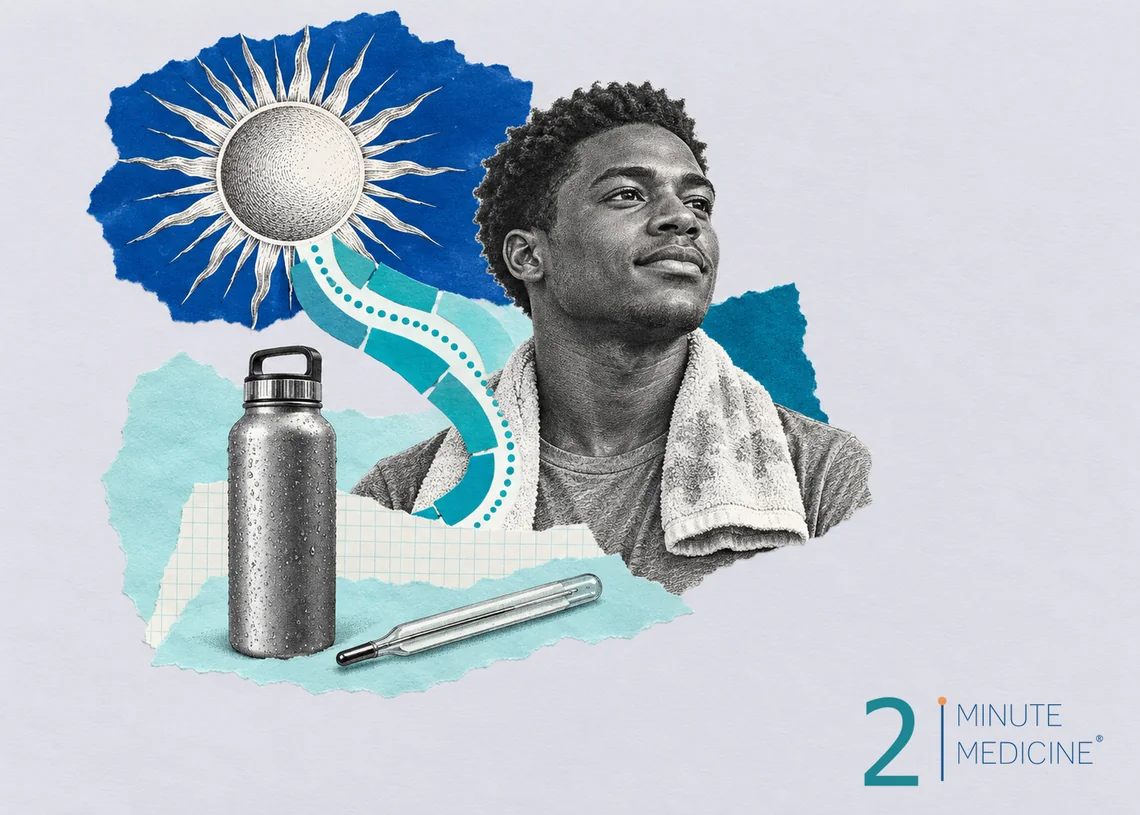
Heat stroke collage: a blazing sun, a young man with a cool towel around his neck, a water bottle and a thermometer
Share on FacebookShare on TwitterShare on LinkedIn

Heat stroke is the most serious form of heat illness. The body gets so hot, usually 104°F (40°C) or higher, that the brain stops working normally, causing confusion, slurred speech, seizures or passing out. It can kill or cause lasting damage within hours. If you think someone has heat stroke, call 911 and start cooling them right away.

Key points

  • Heat stroke is an emergency. Cooling the body fast saves lives.
  • Confusion or odd behavior in the heat is the key warning sign. The skin may be hot and dry or still sweaty.
  • Heat exhaustion comes first for many people. It causes heavy sweating, weakness, dizziness and nausea, and gets better with rest and cooling.
  • Older adults, babies and young children, people with long-term illness, outdoor workers and athletes face the most risk.
  • Air conditioning, water, shade and rest breaks prevent most heat illness.

Hyperthermia, fever and heat illness

Hyperthermia means the body is too hot because it takes in or makes more heat than it can get rid of. Normally, sweating and blood flow to the skin cool you down. Hot, humid air, hard work and dehydration can overwhelm those systems.

Hyperthermia is different from a fever. With a fever, the brain raises its own temperature setting to fight an infection, and medicines like acetaminophen bring it down. With hyperthermia, that setting is normal but the body can’t keep up, so fever medicines don’t help. The fix is to cool the body from the outside.

Heat illness ranges from mild to life-threatening:

  • Heat rash: small, itchy red bumps where sweat gets trapped
  • Heat cramps: painful muscle spasms during or after heavy sweating
  • Heat syncope: fainting after standing a long time in the heat
  • Heat exhaustion: the body is struggling but the brain still works normally
  • Heat stroke: body temperature soars and the brain is affected

Heat stroke symptoms

  • Confusion, agitation, strange behavior or slurred speech
  • Body temperature of 104°F (40°C) or higher
  • Hot skin, which may be red and dry or still sweating
  • Fast heartbeat and fast breathing
  • Headache, nausea or vomiting
  • Stumbling or loss of balance
  • Seizures
  • Passing out or not waking up

Heat exhaustion vs. heat stroke

Heat exhaustion causes heavy sweating, cool and clammy skin, weakness, dizziness, headache, thirst, nausea, a fast weak pulse and muscle cramps. The person is tired but thinking clearly.

Move them somewhere cool, have them lie down with legs raised, loosen clothes, apply cool wet cloths and give sips of water or a sports drink. They should feel better within an hour. If they get worse, become confused, start vomiting or don’t improve, treat it as heat stroke and call 911.

RELATED REPORTS

No Content Available

What causes heat stroke

There are two main kinds:

  • Classic heat stroke builds over several days during a heat wave. It mostly affects older adults, people with chronic illness and people without air conditioning. Children left in hot cars are also at risk.
  • Exertional heat stroke comes on within hours during hard exercise or physical work, even in healthy young people. Athletes, soldiers and outdoor workers are most often affected.

Other things that raise the risk:

  • Being over 65, or being a baby or young child
  • Heart, lung or kidney disease, diabetes, or obesity
  • Not drinking enough fluids, or drinking alcohol
  • Medicines such as water pills (diuretics), some blood pressure drugs, antihistamines, some antidepressants and antipsychotics, and stimulants
  • Drugs such as cocaine and methamphetamine
  • Heavy clothing or sports gear, and not being used to the heat
  • A past episode of heat stroke

How to treat heat stroke

Call 911. While you wait:

  1. Move the person into shade or air conditioning.
  2. Remove extra clothing.
  3. Cool them as fast as you can. Immersing the body up to the neck in cold or ice water works best. If you can’t, soak them with cool water and fan them, or cover them with cold wet towels or sheets and change them often.
  4. Put ice packs on the neck, armpits and groin.
  5. Don’t give anything to drink if they’re confused, drowsy or vomiting.
  6. Don’t give acetaminophen or aspirin. They don’t lower heat stroke temperatures.

At sports events with medical staff on site, the team often cools the person in an ice-water tub first and then takes them to the hospital. The sooner the body temperature drops, the better the chance of full recovery.

In the hospital, doctors keep cooling and give IV fluids. They watch closely for damage to the kidneys, liver, muscles, heart and blood clotting. Some people need intensive care.

Preventing heat illness

  • Stay in air conditioning on hot days. If you don’t have it, visit a cooling center, library or mall. Fans help less once it’s very hot.
  • Drink water often, before you feel thirsty. Ask your doctor how much to drink if you have heart or kidney disease.
  • Wear light, loose, light-colored clothing and a wide-brimmed hat.
  • Plan outdoor work and exercise for early morning or evening, and take breaks in the shade.
  • Get used to the heat slowly over 1 to 2 weeks before hard exercise.
  • Never leave a child, a pet or anyone else in a parked car, even for a few minutes.
  • Check on older neighbors and relatives during heat waves.
  • Pay attention to heat advisories and extreme heat warnings from the National Weather Service.

Common questions about heat stroke

What temperature is heat stroke?

Heat stroke usually means a body temperature of 104°F (40°C) or higher along with confusion or other brain symptoms. A home thermometer in the mouth may read low, so don’t wait for a number. Confusion in the heat is reason enough to call 911 and start cooling.

How long does heat stroke last?

With fast cooling, many people recover within a day or two. Others spend days in the hospital, and some feel weak or sensitive to heat for weeks or months afterward. If cooling is delayed, damage to the brain, kidneys or other organs can be permanent.

Can you have heat stroke and still be sweating?

Yes. People with exertional heat stroke, such as athletes and workers, often keep sweating. Dry skin is more typical of classic heat stroke in older adults. Confusion, not the skin, is the key sign that heat illness has become heat stroke.

What is heat intolerance?

Heat intolerance means feeling unusually unwell in warm weather. You may sweat too much or too little, feel weak or have a racing heart. It can come from an overactive thyroid, some medicines, multiple sclerosis, menopause or dehydration. See your doctor if it’s new.

Questions to ask your doctor

  • Do any of my medicines raise my risk of heat illness?
  • How much should I drink on hot days?
  • When can I safely go back to sports or outdoor work?
  • Do I need tests for my kidneys or liver after heat stroke?
  • Could a health problem be making me sensitive to heat?

Learn more

  • Heat emergencies (MedlinePlus, U.S. National Library of Medicine)
  • Heat illness (MedlinePlus, U.S. National Library of Medicine)

This guide is general information and doesn’t replace advice from your own doctor. Last updated October 2026.

Tags: Heat Stroke (Hyperthermia)
Previous Post

Patient Basics: Head Injury in Children

Next Post

Patient Basics: Glomerulonephritis

RelatedReports

No Content Available
Next Post
Glomerulonephritis collage: an engraved kidney with a magnified filter under a lens, a urine sample cup and a salt shaker

Patient Basics: Glomerulonephritis

Gonorrhea collage: a microscope beside a dish of paired round bacteria, a capped sample cup and a sealed pill packet

Patient Basics: Gonorrhea

Guillain-Barre syndrome collage: a calm man, a nerve fiber in a segmented teal sheath, a reflex hammer and a walker

Patient Basics: Guillain-Barre Syndrome

✦ EvidencePulse™ by 2 Minute Medicine 3 reports You asked top stroke trials 2026 Synthesizing medical evidence... Top 2026 stroke trial results: OCEANIC — ischemic stroke: 6.2% vs 8.4% OPTION* — mRS 0–1: 43.6% vs 34.2% ORIENTAL* — mRS 0–2: 58.6% vs 46.6% *Higher sICH in intervention arms Participants randomizedN OCEANIC 12,327 OPTION 570 ORIENTAL 564 Ask about guidelines or landmark trials... Try EvidencePulse™ Get the signal. Try it now → Physician-trained medical AI by 2 Minute Medicine

2MM+ All Access

Full details →
$4.99 /month

3-day free trial · cancel anytime

  • ✓100+ physician-written reports
  • ✓EvidencePulse™ + HypeCheck™
  • ✓Ad-free reading + newsletters
Start 3-day free trial

Then $4.99/month. Manage renewal in your account.

2 Minute Medicine® is an award winning, physician-run, expert medical media company. Our content is curated, written and edited by practicing health professionals who have clinical and scientific expertise in their field of reporting. Our editorial management team is comprised of highly-trained MD physicians. Join numerous brands, companies, and hospitals who trust our licensed content.

Recent Reports

  • Nipocalimab patient interviews identify mouth dryness as the most important symptom to improve in phase 2 Sjögren’s disease data
  • CDC reports 5,182 confirmed measles cases in the United States in 2026
  • In selected patients with anterior-circulation large-vessel stroke 24-72 hours after onset, thrombectomy improved 90-day function but increased hemorrhage and death
License Content
Terms of Use | Disclaimer
Cookie Policy

Get the app

Read 2 Minute Medicine on iPhone, iPad and Android.

Download on the App StoreGet it on Google Play
QR code for www.2minutemedicine.com/app
On a computer? Scan this with your phone’s camera.
2MM+ All Access Full details →

The medical literature, distilled daily.

Monthly plan selected: $4.99 /month.

$4.99/month

3-day free trial · cancel anytime

Start 3-day free trial

Then $4.99/month. Manage renewal in your account.

Yearly plan selected: $49.90 /year.

$49.90/year

2 months free

Start 3-day free trial

Then $49.90/year.

Membership benefits

  • ✓100+ physician-written reports
  • ✓AI EvidencePulse™ + HypeCheck™
  • ✓Ad-free reading + newsletters
  • ✓FDA drug approvals + clinical calculators

Already a member? Sign in

  • Get the app
  • About
  • Specialties
    • All Specialties, All Recent Reports
    • Cardiology
    • Chronic Disease
    • Dermatology
    • Emergency
    • Endocrinology
    • Gastroenterology
    • Imaging and Intervention
    • Infectious Disease
    • Nephrology
    • Neurology
    • Obstetrics
    • Oncology
    • Ophthalmology
    • Pediatrics
    • Pharma
    • Preclinical
    • Psychiatry
    • Public Health
    • Pulmonology
    • Rheumatology
    • Surgery
    • Rewinds
    • The Scan
  • EvidencePulse™
  • HypeCheck™
  • AI News
  • Classics™
    • 2MM+ Online Access
    • Paperback and Ebook
  • Tools
    • NPI Registry Lookup
    • RVU Search
    • Physician Pay by Specialty
    • ICD-10 Code Lookup
    • FDA Drug Approvals
    • Drug Safety for Breastfeeding/Pregnancy
    • Clinical Guidelines
    • Medical Calculators
    • ECG Reference
      • QTc Calculator
      • Sgarbossa Criteria
      • ECG Axis Calculator
      • AV Block Helper
  • Rankings
    • Medical School Rankings
    • Residency Rankings
  • Partners
    • License Content
    • Advertise with Us
No Result
View All Result

© 2026 2 Minute Medicine, Inc. - Physician-written medical news.


