

Patient Basics: Hyperkeratosis
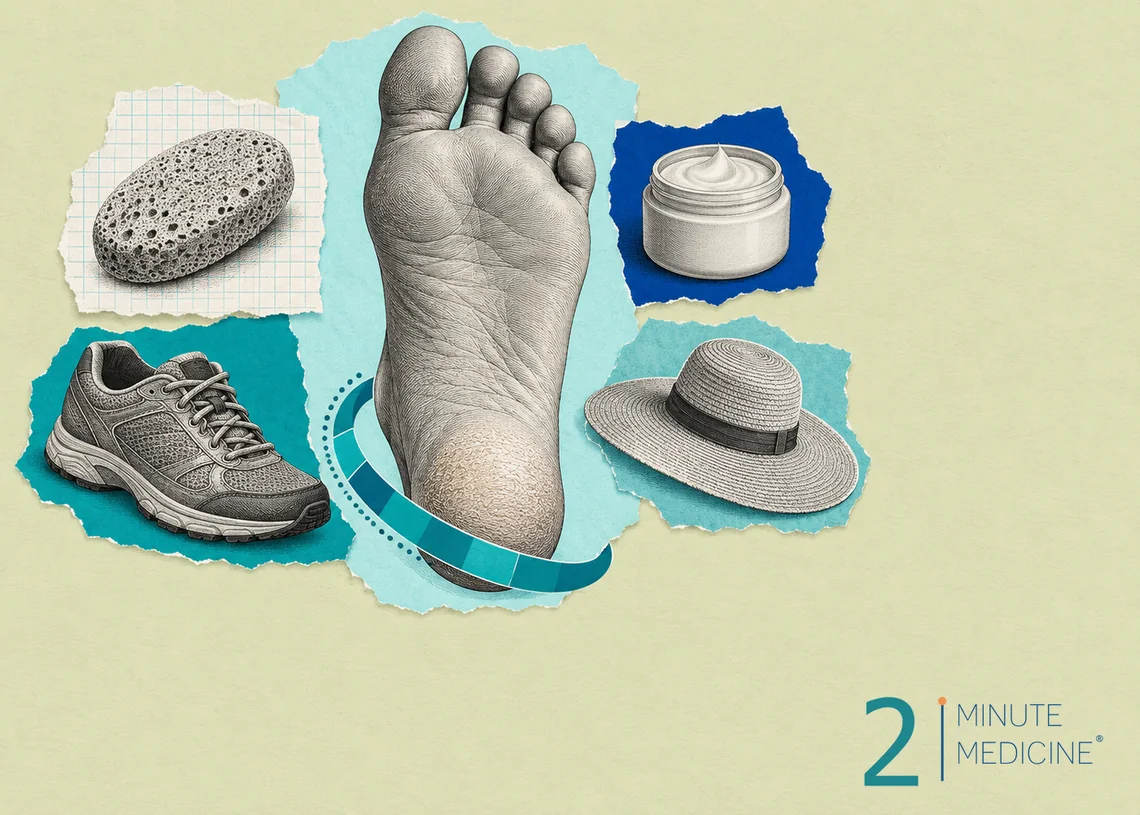
Hyperkeratosis means a thickening of the skin’s tough outer layer. That layer is made mostly of keratin, the same protein found in hair and nails. Hyperkeratosis is a description of what the skin is doing, and many different conditions cause it. Most, like calluses, are harmless, but a rough patch from sun damage can sometimes turn into skin cancer, so new or changing spots deserve a look.
Key points
- Skin thickens to protect itself from pressure, rubbing, sun damage, inflammation or some infections.
- Common examples include calluses, corns, warts, rough sun spots, scaly patches of psoriasis and eczema, and the small bumps of keratosis pilaris.
- Some types are inherited and affect large areas of skin.
- Treatment depends on the cause. Softening creams, removing pressure and treating the underlying skin condition all help.
- See a doctor about any rough spot that bleeds, grows, hurts or doesn’t heal.
What causes hyperkeratosis
New skin cells form deep in the skin and move up to the surface over about a month. As they rise, they fill with keratin, flatten and die, then flake off. In hyperkeratosis, the body makes extra keratin or the dead cells don’t shed normally. The result is a layer that feels hard, dry, rough or scaly. It may be white, yellow, gray or brown. Doctors describe skin like this as hyperkeratotic.
Common types of hyperkeratosis
From pressure and rubbing
- Calluses are broad, flat areas of thick skin, usually on the soles, heels or palms. Shoes, walking barefoot, manual work, gym equipment and musical instruments can all cause them.
- Corns are smaller, deeper and often painful. They form over bony spots, such as the tops of the toes or between them.
- Fingertip calluses are common in guitar and other string players and in people who use hand tools.
From the sun
- Actinic keratoses are rough, scaly spots on skin that has had years of sun, such as the face, ears, scalp, lips, forearms and backs of the hands. They are often easier to feel than to see. A small share can turn into a type of skin cancer called squamous cell carcinoma, so doctors usually treat them.
From skin conditions
- Psoriasis causes thick, raised, scaly patches, often on the elbows, knees and scalp.
- Long-term eczema and repeated scratching can make skin thick and leathery (lichen simplex chronicus).
- Keratosis pilaris causes small, rough bumps around hair follicles, mostly on the upper arms and thighs. It is very common in children and teens and is harmless.
- Seborrheic keratoses are raised, waxy, brown growths that look stuck on. They become common with age and are harmless.
- Warts are caused by a virus. On the soles of the feet (plantar warts), thick skin forms over them and they can look like calluses.
- Nail fungus and nail psoriasis can cause thick, crumbly buildup under the nails (subungual hyperkeratosis), which lifts the nail.
Inherited types
- Ichthyosis is a group of conditions that cause dry, thick, fish-scale-like skin over large areas. The mild form, ichthyosis vulgaris, is fairly common and often runs in families.
- Palmoplantar keratoderma causes thick skin across the palms and soles. It can be inherited or develop later in life.
How it’s diagnosed
A doctor can often tell the cause by looking at the skin and asking about your work, shoes, sun exposure and family history. A handheld magnifying light (dermatoscope) helps. Gently shaving the surface of a thick spot on the foot can show whether it is a callus or a wart. If a growth looks unusual, is changing or might be cancer, a small sample (biopsy) is sent to a lab.
Treatment
Calluses and corns
- Find and remove the source of pressure. Wear shoes with enough room, and use pads, cushions or shoe inserts.
- Soak the skin in warm water, then gently rub it with a pumice stone or foot file.
- Use a cream with urea, lactic acid or salicylic acid to soften the thick layer.
- A podiatrist (foot doctor) can safely trim thick skin and fit inserts.
If you have diabetes, nerve damage in your feet or poor circulation, don’t cut corns yourself or use medicated corn pads. Small wounds on the feet can turn into serious infections. See a doctor or podiatrist instead.
Actinic keratoses
Options include freezing with liquid nitrogen, prescription creams such as fluorouracil or imiquimod, and a light treatment called photodynamic therapy.
Other types
- Keratosis pilaris and ichthyosis improve with daily moisturizers, especially those with urea or lactic acid, and gentle washing. Prescription creams can help more stubborn cases.
- Psoriasis and eczema are treated with steroid creams and other prescription options.
- Seborrheic keratoses need no treatment, but they can be frozen or shaved off if they itch or catch on clothing.
- Warts can be treated with salicylic acid or freezing.
Lowering your risk
- Choose shoes that fit well and wear socks.
- Wear gloves for manual work and gardening.
- Use sunscreen, a wide-brimmed hat and protective clothing.
- Moisturize dry skin daily, especially after bathing.
When to see a doctor
- A rough or scaly spot that bleeds, grows quickly, hurts or doesn’t heal within a few weeks
- A thick spot on your foot if you have diabetes or poor circulation
- Painful corns or calluses that make walking hard
- Thick, scaly skin over large areas, or thick skin on both palms and soles
- Signs of infection, such as redness, warmth, swelling or pus
Common questions about hyperkeratosis
Is a callus the same as hyperkeratosis?
A callus is one kind of hyperkeratosis. Hyperkeratosis is the general medical term for thickened outer skin, whatever the cause. A callus is thickening caused by pressure or rubbing, usually on the hands or feet, and it fades once the pressure stops.
Is hyperkeratosis serious?
Usually not. Mild hyperkeratosis from calluses, dry skin or keratosis pilaris is harmless. Rough, scaly spots on sun-damaged skin are the main exception, because some actinic keratoses turn into skin cancer. A spot that bleeds, grows or won’t heal should be checked.
What causes hyperkeratosis on the hands and feet?
Calluses and corns are the most common cause. Eczema, psoriasis and fungal infections such as athlete’s foot can also thicken the palms, soles and fingertips, and in children eczema is a frequent cause of rough, cracked hands. Thick skin across both palms and soles, especially if it runs in the family, may be an inherited keratoderma.
Can you get hyperkeratosis on your face?
Yes. On adults, rough spots on the face are often actinic keratoses from sun damage or seborrheic keratoses, which are harmless. In children and teens, keratosis pilaris can cause small rough bumps on the cheeks. Psoriasis and eczema can also cause scaly patches on the face.
Questions to ask your doctor
- What is causing my skin to thicken?
- Is this spot harmless, or does it need a biopsy?
- Which creams or products should I use?
- Do I need special shoes or inserts?
- How often should I have my skin checked?
Learn more
- Corns and calluses (MedlinePlus, U.S. National Library of Medicine)
- Keratosis pilaris (DermNet)
This guide is general information and doesn’t replace advice from your own doctor. Last updated October 2026.






 Get the app