

Patient Basics: Maturity Onset Diabetes of the Young (MODY)
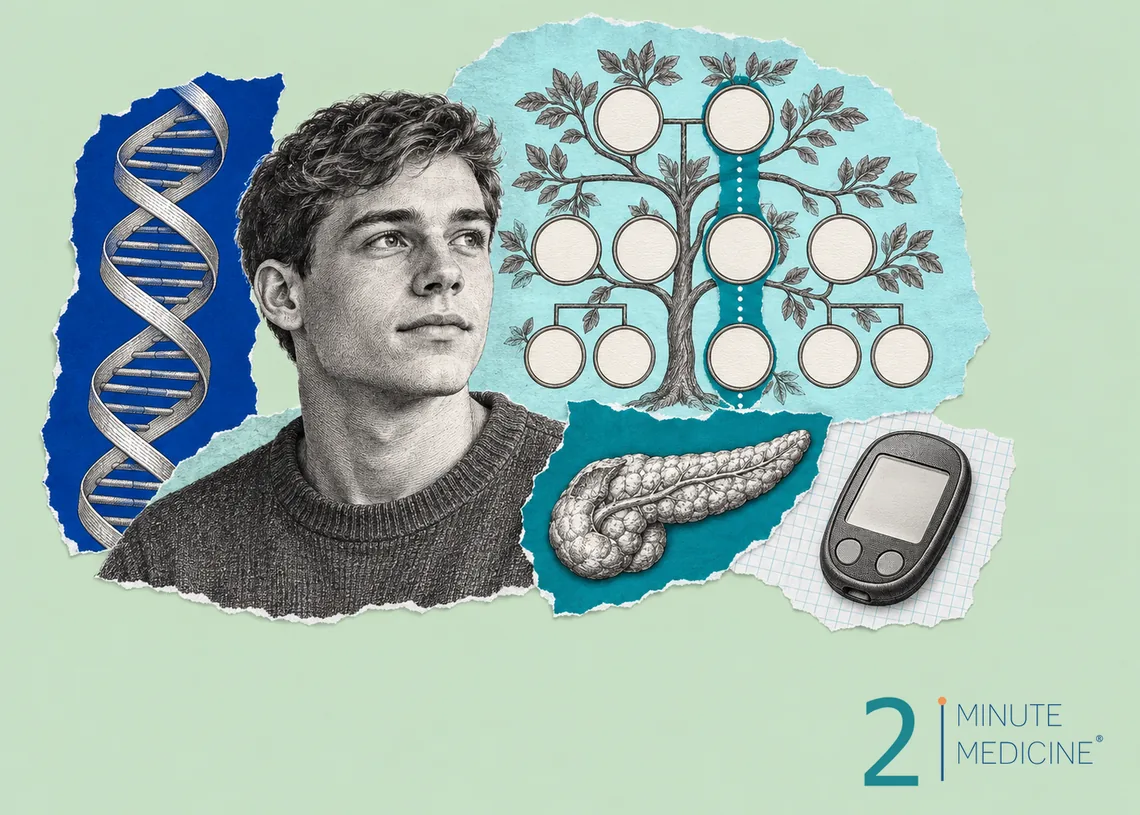
Maturity onset diabetes of the young, or MODY diabetes, is a rare form of diabetes caused by a change in a single gene. It usually starts in the teens or young adulthood and runs strongly in families. Because it is uncommon, it is often mistaken for type 1 or type 2 diabetes. Getting the right diagnosis matters, because some types of MODY need only low-dose pills or no treatment at all.
Key points
- MODY is a form of monogenic diabetes, meaning one altered gene causes it.
- A parent with MODY has a 1 in 2 chance of passing it to each child.
- Clues include diabetes found before about age 35, several generations of family members with diabetes, and blood tests that don’t fit type 1.
- A genetic test from a blood or saliva sample confirms it.
- Treatment depends on the gene. Some people can switch from insulin shots to pills, and one type usually needs no treatment.
What causes it
Insulin is a hormone made by beta cells in the pancreas. It moves sugar from the blood into the body’s cells. In MODY, a change in one gene affects how the beta cells sense sugar or how much insulin they release. Blood sugar rises even though the body is not attacking its own beta cells (as in type 1) and isn’t resistant to insulin (as in type 2).
The gene change is passed down in a pattern called autosomal dominant. Only one copy is needed to cause MODY, and boys and girls are equally likely to inherit it. Sometimes the change is new in a person and not found in either parent.
Main types of MODY
Doctors name each type after the gene involved. More than a dozen genes are known, but a few cause most cases.
- GCK-MODY (MODY 2). The body’s sugar sensor is set a little high, so fasting blood sugar runs slightly above normal from birth. It stays stable for life, rarely causes complications, and usually needs no medicine outside pregnancy.
- HNF1A-MODY (MODY 3). This is one of the most common types. Blood sugar is normal in early childhood and then rises, often in the teens or twenties, and slowly gets worse over time. It responds very well to low doses of pills called sulfonylureas, such as glipizide or glimepiride.
- HNF4A-MODY (MODY 1). It behaves much like HNF1A-MODY and also responds to sulfonylureas. Babies who inherit it may be born large and have low blood sugar in the first days of life.
- HNF1B-MODY (MODY 5). Along with diabetes, it often affects the kidneys, causing cysts or other changes. It can also affect the pancreas, liver and reproductive organs. Insulin is usually needed.
Symptoms and signs of MODY diabetes
MODY doesn’t cause special symptoms. When blood sugar is high, anyone with diabetes may notice thirst, passing a lot of urine, tiredness or blurred vision. Many people with MODY have no symptoms, and it is found on a routine blood test. Your doctor may think of MODY if:
- You were diagnosed before about age 35
- A parent, and often a grandparent, also has diabetes
- Tests for the antibodies seen in type 1 diabetes are negative
- Your body still makes its own insulin years after diagnosis
- You need little or no insulin, and you have never had diabetic ketoacidosis (a dangerous buildup of acids in the blood)
- You don’t have the usual risk factors for type 2 diabetes, such as carrying extra weight
- You have mild high blood sugar that has never changed much
How it’s diagnosed
An endocrinologist (a doctor who treats diabetes and hormone problems) usually leads the testing.
- Antibody tests. Blood tests look for the antibodies that attack beta cells in type 1 diabetes. In MODY they are usually absent.
- C-peptide. This blood or urine test shows how much insulin your body still makes.
- Genetic testing. A lab checks a blood or saliva sample for changes in the known MODY genes. Results can take several weeks. Insurance coverage varies, so ask before testing.
- Genetic counseling. A genetic counselor can explain what the results mean for you and your relatives, and help decide which family members to test.
How MODY diabetes is treated
Treatment is matched to the gene:
- GCK-MODY usually needs no diabetes medicine. Pills and insulin barely change blood sugar in this type, so stopping them is often safe. Check with your doctor first.
- HNF1A- and HNF4A-MODY often respond to a low dose of a sulfonylurea, sometimes better than to insulin. Many people stop insulin shots after the diagnosis. Over the years, some need other diabetes medicines or insulin. Because sulfonylureas can cause low blood sugar, you’ll learn its signs and what to do.
- HNF1B-MODY is usually treated with insulin, along with care for any kidney problems.
Healthy eating, regular activity and not smoking help with all types. People with GCK-MODY don’t need a special diet or exercise plan to control blood sugar, and they can be as active as they like.
Pregnancy
MODY needs a careful plan in pregnancy, so talk to your diabetes team before you try to conceive. In GCK-MODY, whether the mother needs insulin can depend on whether the baby has inherited the gene, which affects the baby’s growth. Women taking sulfonylureas for HNF1A- or HNF4A-MODY are often switched to insulin during pregnancy. Babies at risk of HNF4A-MODY may need their blood sugar checked after birth.
Living with MODY
Except for GCK-MODY, people with MODY can get the same long-term complications as other people with diabetes, affecting the eyes, kidneys, nerves and heart. Regular A1C blood tests, eye exams, kidney tests and foot checks help catch problems early. Keep blood pressure and cholesterol in a healthy range.
If you have MODY, your parents, brothers, sisters and children may want to be tested, even if they feel well.
When to see a doctor
- You have diabetes, were diagnosed young, and several relatives also have it
- A family member has been diagnosed with MODY
- You are planning a pregnancy and have MODY
- You have shakiness, sweating or confusion that could mean low blood sugar
Common questions about MODY diabetes
Is MODY type 1 or type 2 diabetes?
Neither. MODY is its own type, caused by one changed gene. Unlike type 1, the immune system doesn’t attack the pancreas. Unlike type 2, it isn’t driven by insulin resistance or extra weight. Many people are first told they have type 1 or type 2 until a genetic test shows MODY.
Is MODY diabetes dangerous?
GCK-MODY is mild and rarely causes complications, so people with it have a normal life expectancy. Other types can damage the eyes, kidneys, nerves and heart if blood sugar stays high, like any diabetes. Keeping blood sugar, blood pressure and cholesterol in range greatly lowers that risk.
Can MODY diabetes be reversed?
No. The gene change is present for life, so MODY doesn’t go away. But many people need far less treatment once they know their type. Some stop insulin and take a low-dose pill instead, and most people with GCK-MODY need no medicine at all.
Questions to ask your doctor
- Could my diabetes be MODY?
- Should I have genetic testing, and will insurance cover it?
- If I have MODY, can I change my treatment?
- Which family members should be tested?
- What do I need to plan before a pregnancy?
Learn more
- Monogenic diabetes (MODY and neonatal diabetes) (National Institute of Diabetes and Digestive and Kidney Diseases)
- Maturity-onset diabetes of the young (MedlinePlus Genetics)
This guide is general information and doesn’t replace advice from your own doctor. Last updated October 2026.






 Get the app