

• About
  • Masthead
  • License Content
  • Advertise
  • Submit Press Release
  • RSS/Email List
  • 2MM Podcast
  • Write for us
  • Contact Us
2 Minute Medicine
No Result
View All Result

No products in the cart.

SUBSCRIBE
  • Specialties
    • All Specialties, All Recent Reports
    • Cardiology
    • Chronic Disease
    • Dermatology
    • Emergency
    • Endocrinology
    • Gastroenterology
    • Imaging and Intervention
    • Infectious Disease
    • Nephrology
    • Neurology
    • Obstetrics
    • Oncology
    • Ophthalmology
    • Pediatrics
    • Pharma
    • Preclinical
    • Psychiatry
    • Public Health
    • Pulmonology
    • Rheumatology
    • Surgery
  • Tools
    • EvidencePulse™
    • RVU Search
    • NPI Registry Lookup
  • Pharma
  • AI News
  • The Scan+
  • Classics™+
    • 2MM+ Online Access
    • Paperback and Ebook
  • Rewinds
  • Partners
    • License Content
    • Submit Press Release
    • Advertise with Us
  • Account
    • Subscribe
    • Sign-in
    • My account
2 Minute Medicine
  • Specialties
    • All Specialties, All Recent Reports
    • Cardiology
    • Chronic Disease
    • Dermatology
    • Emergency
    • Endocrinology
    • Gastroenterology
    • Imaging and Intervention
    • Infectious Disease
    • Nephrology
    • Neurology
    • Obstetrics
    • Oncology
    • Ophthalmology
    • Pediatrics
    • Pharma
    • Preclinical
    • Psychiatry
    • Public Health
    • Pulmonology
    • Rheumatology
    • Surgery
  • Tools
    • EvidencePulse™
    • RVU Search
    • NPI Registry Lookup
  • Pharma
  • AI News
  • The Scan+
  • Classics™+
    • 2MM+ Online Access
    • Paperback and Ebook
  • Rewinds
  • Partners
    • License Content
    • Submit Press Release
    • Advertise with Us
  • Account
    • Subscribe
    • Sign-in
    • My account
SUBSCRIBE
2 Minute Medicine
Subscribe
Home Health A to Z

Patient Basics: Pityriasis Rosea

byHarvard Health
November 30, 2014
in Health A to Z
Reading Time: 3 mins read
0
Share on FacebookShare on Twitter

Originally published by Harvard Health.

What Is It?

Pityriasis rosea is a harmless skin disease that causes scaly patches that sometimes itch over the torso, neck, arms and legs. Anyone can get it, but it is most common in people ages 10 to 35.

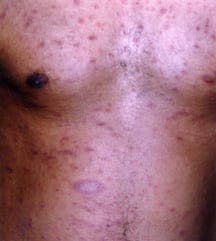
Typically, the disease begins with the appearance of a single large, pink, scaly, oval patch, called the “herald patch.” This patch is approximately 1 inch to 2 inches long. It tends to have a salmon-colored center surrounded by a darker pink ring, which some people mistake as a sign of ringworm.
363

Within about two weeks, many smaller patches appear, sometimes hundreds of them. They appear mainly on the abdomen and back. On the back, the patches tend to line up along the ribs, giving the rash a distinct “Christmas tree” pattern. The rash goes away on its own, usually within two months. Any skin discoloration from the rash will fade after another few months.

No one knows what causes pityriasis rosea. It seems to occur most often in spring and autumn. It is not thought to be contagious, and it does not lead to any other disorder.

RELATED REPORTS

No Content Available

Symptoms

The main symptoms of pityriasis rosea are the appearance of the herald patch followed by a more diffuse rash of smaller patches. The patches tend to be oval, scaly, and dry to the touch. They may be pink, red or brown and generally appear on the abdomen, back, neck, arms and legs. Only rarely do the patches appear on the face.

Sometimes, the rash can be associated with mild itching.

Diagnosis

In most cases, a physician or dermatologist can diagnose pityriasis rosea simply by looking at it. Although there is no specific blood test to diagnose pityriasis, blood testing may be ordered to exclude other diagnoses. If there is any question of a skin fungus, a scraping of the edge of a spot will be placed on a slide and examined under the microscope. Rarely, a skin biopsy is needed to confirm the diagnosis. In a biopsy, a small piece of tissue is removed and sent to a laboratory to be examined.

Expected Duration

After the initial rash, or herald patch, appears, the secondary rash of smaller patches appears within about 2 to 14 days. This more widespread rash generally lasts 3 to 8 weeks but may linger for months.

Prevention

Because no one knows what causes pityriasis rosea, there is no way to prevent it. It does not appear to be contagious.

Treatment

There are no treatments that cure pityriasis rosea; the disease must run its course. However, itching, if present, can be treated in several ways. An over-the-counter a lotion that cools the skin (such as one with camphor or menthol) or corticosteroid cream (such as Cortizone-10 or Cortaid) may be enough to provide relief. For more severe itching, oral antihistamines may be prescribed.

In very severe cases, or if the rash lasts longer than usual or the rash covers a large part of the body, ultraviolet (UV) light therapy may be recommended. Doses of UV-B rays, similar to the sun’s rays, are given by exposing the skin to the light rays for short periods of time over several days. The skin may turn slightly red, similar to a mild sunburn.

The red spots may appear more prominently after a hot shower or bath and after heavy physical activity. The condition doesn’t get worse. The rash simply becomes more noticeable.

When To Call a Professional

See a health care professional if you or your child develops an unexplained rash. Although treatment is not necessary for pityriasis rosea, its symptoms are similar to other skin diseases, such as ringworm, that need to be treated. Your physician can diagnose the problem and recommend appropriate treatment.

Prognosis

The outlook is excellent. Most cases clear up within two months. The rash rarely returns. Although some people, especially those with dark skin, experience some skin discoloration from the rash spots, it usually fades with time. Generally, there are no lasting effects.

Additional Info

American Academy of Dermatology
P.O. Box 4014
Schaumburg, IL 60168-4014
Phone: 847-330-0230
Toll-Free: 1-888-462-3376
Fax: 847-240-1859
http://www.aad.org/

Tags: Pityriasis Rosea
Previous Post

Patient Basics: Rosacea

Next Post

Patient Basics: Pubic Lice Or Crab Lice

RelatedReports

No Content Available
Next Post

Use of infant bedding remains high despite recommendations

Impaired brain growth in preterm infants linked with delayed cognitive development

Weight loss in exclusively breastfed infants differs by delivery type

Buccal administration of dextrose gel effective for neonatal hypoglycemia

Moderate and late preterm birth increases cerebral palsy risk

2 Minute Medicine® is an award winning, physician-run, expert medical media company. Our content is curated, written and edited by practicing health professionals who have clinical and scientific expertise in their field of reporting. Our editorial management team is comprised of highly-trained MD physicians. Join numerous brands, companies, and hospitals who trust our licensed content.

Recent Reports

  • A multidisciplinary home-based intervention may reduce risk of falls after stroke
  • Prednisone may have bone and cardiovascular benefits compared to hydrocortisone therapy in adrenal insufficiency
  • Lilly’s retatrutide achieves significant weight loss and A1C reduction in Phase 3 trial
License Content
Terms of Use | Disclaimer
Cookie Policy
Privacy Statement (EU)
Disclaimer

The Classics in Medicine Paperback Released!

Over the past 30 years, the transition from print to digital media has contributed to an exponential increase in medical literature. In response, 2 Minute Medicine presents 160+ authoritative, physician-written summaries of the most cited landmark trials in medicine.

amazon-logo_blackGet-it-on-iBooks-badge

Click anywhere to close this announcement

  • Specialties
    • All Specialties, All Recent Reports
    • Cardiology
    • Chronic Disease
    • Dermatology
    • Emergency
    • Endocrinology
    • Gastroenterology
    • Imaging and Intervention
    • Infectious Disease
    • Nephrology
    • Neurology
    • Obstetrics
    • Oncology
    • Ophthalmology
    • Pediatrics
    • Pharma
    • Preclinical
    • Psychiatry
    • Public Health
    • Pulmonology
    • Rheumatology
    • Surgery
  • Tools
    • EvidencePulse™
    • RVU Search
    • NPI Registry Lookup
  • Pharma
  • AI News
  • The Scan
  • Classics™
    • 2MM+ Online Access
    • Paperback and Ebook
  • Rewinds
  • Partners
    • License Content
    • Submit Press Release
    • Advertise with Us
  • Account
    • Subscribe
    • Sign-in
    • My account
No Result
View All Result

© 2026 2 Minute Medicine, Inc. - Physician-written medical news.