

Patient Basics: Rosacea
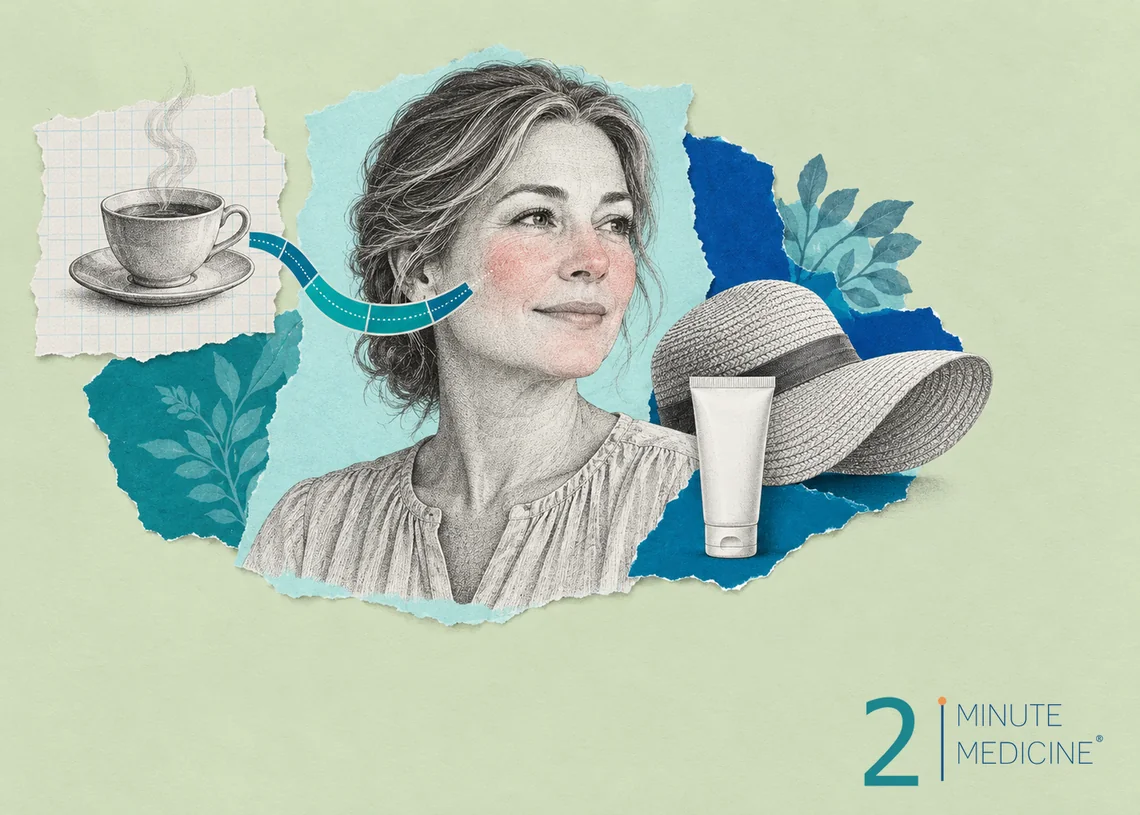
Rosacea is a long-lasting skin condition that causes redness and flushing in the middle of the face, often with small bumps, pimples or visible blood vessels. It usually starts between ages 30 and 50 and tends to come and go in flares. There is no cure, but treatment and avoiding your own triggers can keep it well controlled.
Key points
- Rosacea affects the cheeks, nose, chin and forehead. It can also make the eyes red and gritty.
- It isn’t caused by poor hygiene and it isn’t contagious.
- Common triggers include sun, heat, hot drinks, spicy food, alcohol, stress and cold wind.
- Daily sunscreen and gentle skin care are the base of treatment. Creams, gels, pills and light treatments target the rest.
- Rosacea occurs in all skin tones. In darker skin, the redness can be hard to see, so it is often missed.
What causes rosacea
The exact cause isn’t known. Several things seem to work together:
- Blood vessels in the face that widen too easily and stay open
- An overactive immune response in the skin
- Tiny mites called Demodex that live in hair follicles on everyone’s face, but are found in larger numbers in rosacea
- Genes, since it often runs in families
- Nerves in the skin that react strongly to heat and other triggers
- Hormone changes around perimenopause and menopause, when hot flashes add to flushing
Using strong steroid creams on the face for a long time can bring on a rosacea-like rash.
Rosacea symptoms
Rosacea looks different from person to person. You may have one or more of these:
- Flushing, a wave of redness and heat that lasts minutes to hours
- Lasting redness across the cheeks and nose
- Visible small blood vessels (spider veins)
- Bumps and pimples that look like acne but without blackheads
- Burning, stinging or dry, sensitive skin
- Thickened, bumpy skin, most often on the nose (rhinophyma). This is uncommon and mostly affects men.
- Eye symptoms (ocular rosacea), such as dry, gritty, burning or bloodshot eyes, swollen eyelids and repeated styes
On brown or Black skin, rosacea may show up as warmth, stinging, dryness, darker patches or bumps rather than obvious redness.
How it’s diagnosed
A doctor or dermatologist can usually tell by looking at your skin and asking about your symptoms and triggers. There’s no blood test for rosacea. Sometimes tests are needed to rule out conditions that look similar, such as acne, seborrheic dermatitis, an allergic rash or lupus.
Treatment
Treatment is chosen for the symptoms that bother you most. It often takes 2 to 3 months to see the full effect.
Skin care for everyone
- Use a broad-spectrum sunscreen of SPF 30 or higher every day. Mineral sunscreens with zinc oxide or titanium dioxide tend to sting less.
- Wash with a mild, soap-free cleanser and lukewarm water. Pat dry.
- Use a fragrance-free moisturizer.
- Avoid scrubs, toners with alcohol, and products with menthol, camphor or witch hazel.
- Test new products on a small patch of skin first.
For bumps and pimples
- Creams or gels such as ivermectin, metronidazole, azelaic acid, or minocycline foam
- Low-dose doxycycline pills, which calm inflammation at a dose too low to act as an antibiotic
- Isotretinoin for severe cases that don’t respond. It can cause serious birth defects, so pregnancy must be avoided while taking it.
For redness and blood vessels
- Brimonidine gel or oxymetazoline cream, which narrow blood vessels for several hours. Redness can return, sometimes worse, as they wear off.
- Laser or intense pulsed light (IPL) treatments, which shrink visible vessels and lessen redness. Several sessions are usually needed, and insurance often doesn’t cover them.
For thickened skin
Laser resurfacing or surgery can reshape thickened skin on the nose.
For the eyes
Warm compresses, gentle eyelid cleaning and artificial tears help. A doctor may add doxycycline pills or prescription eye drops.
Living with rosacea
Keep a simple diary for a few weeks. Note flares and what you ate, drank or did beforehand. Not everyone has the same triggers, so you only need to avoid the ones that affect you. Green-tinted primer or makeup can tone down redness. If rosacea affects your confidence or mood, tell your doctor.
When to see a doctor
- Facial redness, flushing or bumps that don’t go away
- Over-the-counter acne products make your skin worse
- Your eyes are red, gritty or burning
See a doctor the same day for eye pain, sensitivity to light or blurred vision. Rosacea can rarely damage the clear front of the eye (cornea).
Common questions about rosacea
Can perimenopause cause a red nose and rosacea?
Yes, it can bring it on or make it worse. Hot flashes during perimenopause and menopause cause repeated flushing, and some women first notice a red nose and cheeks at this age. Treating hot flashes, along with usual rosacea care, often helps the redness.
Does drinking alcohol cause rosacea?
No, people who never drink get rosacea too, including the thick, bumpy nose of rhinophyma that is often wrongly blamed on drinking. Alcohol, especially red wine, is a common trigger for flares, so cutting back can help if you notice a link.
Is rosacea the same as acne?
No, though the bumps can look alike. Rosacea has no blackheads, usually starts after age 30, and comes with flushing and redness. Some acne products, such as benzoyl peroxide washes and scrubs, can irritate rosacea and make it worse.
Questions to ask your doctor
- Which type of rosacea symptoms do I have?
- Which treatment should I start with, and how long before it works?
- Which skin care products and sunscreens are best for me?
- Would laser or light treatment help my redness?
- Should I see an eye doctor?
Learn more
This guide is general information and doesn’t replace advice from your own doctor. Last updated October 2026.






 Get the app