

Patient Basics: Ringworm (Tinea)
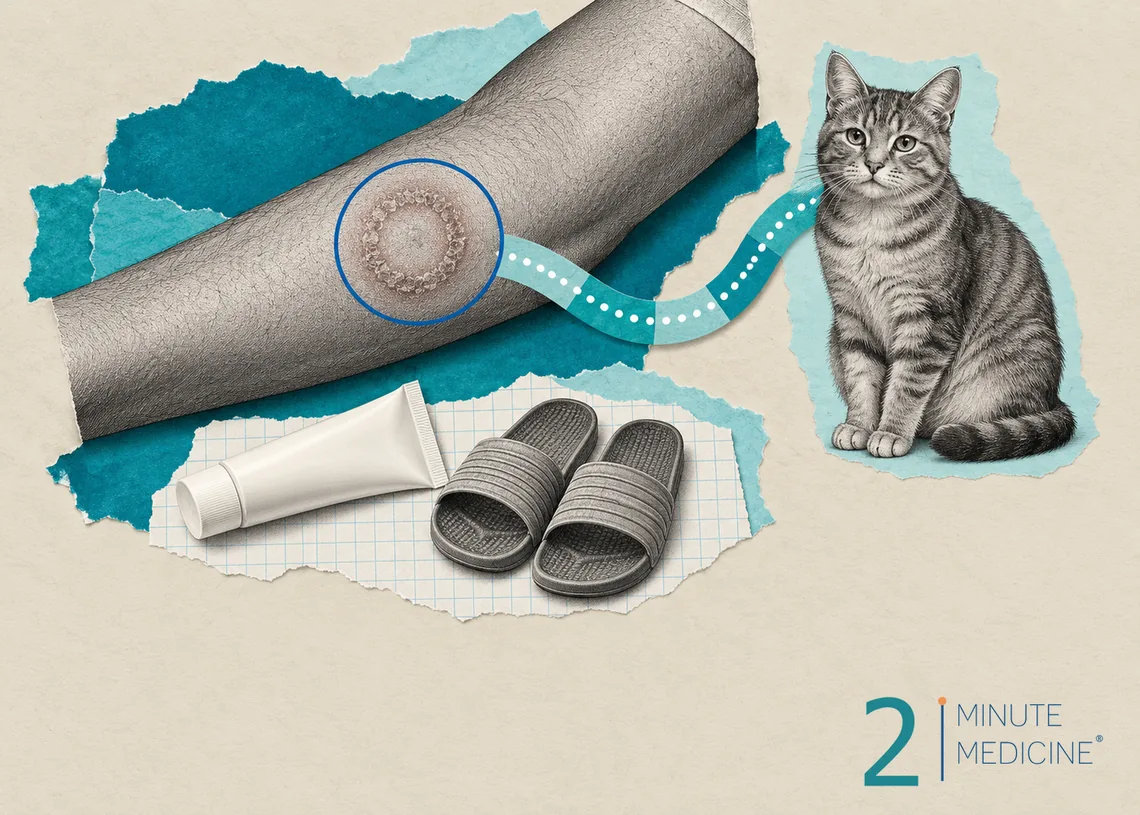
Ringworm is a common skin infection caused by a fungus, not a worm. On the body it often makes an itchy, red, ring-shaped patch with a scaly edge. Doctors call these infections tinea, and the same fungi cause athlete’s foot and jock itch. Most cases on the skin clear up with an antifungal cream from the drugstore, but infections of the scalp or nails need pills.
Key points
- Ringworm spreads by touching infected people, pets or objects, such as towels, combs and locker room floors.
- Warm, damp skin lets the fungus grow, so sweating and tight clothing raise the risk.
- Keep using the cream for 1 to 2 weeks after the rash seems gone, or it may come back.
- Steroid creams such as hydrocortisone can make ringworm spread. Don’t use them on a rash unless a doctor has said it’s not fungal.
- See a doctor for ringworm on the scalp, a rash that keeps spreading, or a rash that hasn’t cleared after 2 weeks of treatment.
Types of ringworm
The name changes with the part of the body that’s infected:
- Body (tinea corporis): round, scaly patches on the arms, legs, trunk or face
- Feet (tinea pedis, athlete’s foot): peeling, cracked or itchy skin between the toes or on the soles
- Groin (tinea cruris, jock itch): a red, itchy rash on the inner thighs and folds of the groin, which sometimes spreads to the penis
- Scalp (tinea capitis): scaly patches with broken hairs and bald spots, most often in children
- Nails (tinea unguium): thick, crumbly, yellowed nails, usually toenails
- Beard (tinea barbae): red, swollen bumps in the beard area
How ringworm spreads
The fungi live on skin, hair and nails, and some live in soil. You can pick them up from:
- Close skin contact, as in wrestling and other contact sports, and sex
- Pets and farm animals. Kittens, puppies and cattle are common sources.
- Shared towels, hairbrushes, hats, clothing and bedding
- Damp floors in showers, pools and locker rooms
- Your own body. Athlete’s foot can spread to the groin or hands, for example by drying with the same towel.
People with diabetes or a weak immune system, and people who sweat a lot, are more likely to get it and to have it spread.
Symptoms
- An itchy patch that’s red, pink, brown or gray, depending on your skin tone
- A raised, scaly border that slowly grows outward, while the middle looks clearer
- Several patches that may join together
- On the scalp: flaky patches, broken hairs that look like black dots, and sometimes swollen glands in the neck
Sometimes a scalp infection turns into a tender, swollen, pus-filled lump called a kerion. It needs prompt treatment to lower the chance of permanent hair loss.
How it’s diagnosed
A doctor can often tell by looking at the rash. Several other conditions look similar, including eczema, psoriasis and a ring-shaped rash called granuloma annulare. To be sure, the doctor may gently scrape a few skin flakes onto a slide and look for fungus under a microscope. For the scalp or nails, they may send a sample to a lab to grow the fungus, which can take a few weeks.
Treatment
Creams for skin
Antifungal creams such as terbinafine, clotrimazole, miconazole and butenafine work for most ringworm of the body, feet and groin.
- Wash and dry the skin first.
- Spread the cream over the rash and about an inch of normal skin around it.
- Use it as often as the label says, usually once or twice a day.
- Keep going for 1 to 2 weeks after the rash has cleared. Treatment often takes 2 to 4 weeks in all.
Avoid creams that mix an antifungal with a steroid unless your doctor prescribes one. The steroid can let the fungus grow deeper.
Pills
Creams can’t reach deep enough into hair roots or nails. Scalp ringworm is treated with antifungal pills such as terbinafine or griseofulvin for several weeks, along with a medicated shampoo to lower the spread to others. Nail infections usually need terbinafine pills for about 3 months, and the nail takes much longer to look normal. Pills may also be used for rashes that are widespread or don’t respond to creams. Your doctor may check your blood before or during treatment.
A newer type of ringworm that resists the usual medicines has been found in the United States. It tends to cause large, very itchy patches that keep spreading. If a rash doesn’t improve with treatment, go back to your doctor rather than trying more creams.
Lowering your risk
- Dry your skin well after bathing, especially between the toes and in skin folds.
- Change socks and underwear every day, and more often if they get sweaty.
- Wear flip-flops or shower shoes in locker rooms and public showers.
- Don’t share towels, combs, hats or sports gear.
- Shower right after contact sports, and check your skin.
- Take pets with patches of hair loss to a vet. Wash your hands after handling animals.
- Treat athlete’s foot early so it doesn’t spread to other areas.
Children being treated for ringworm can usually go to school or daycare. Cover skin patches when possible, and avoid sharing hats and hair items.
When to see a doctor
- A rash on the scalp or in the beard
- A rash that hasn’t improved after 2 weeks of an over-the-counter cream
- Patches that are spreading or covering a large area
- Thick, discolored nails
- A painful, swollen or oozing area, or a fever
- Ringworm if you have diabetes or a weak immune system
Common questions about ringworm
Can you get ringworm on your penis?
Yes, though it’s less common than jock itch on the thighs and groin. The fungus can spread there from your feet or groin on your hands or a towel, and some types pass during sex. It shows up as itchy, red or darker, scaly patches on the shaft, the head or the skin above it.
How do you treat ringworm on the penis?
An antifungal cream from the drugstore, such as clotrimazole or terbinafine, usually works if you keep using it for 1 to 2 weeks after the rash clears. See a doctor first, because yeast, psoriasis, eczema and some sexually transmitted infections can look similar. Skip steroid creams unless a doctor prescribes them.
How long does ringworm last?
With treatment, ringworm on the skin usually clears in 2 to 4 weeks. Without treatment it can linger for months and spread to other areas or people. Scalp infections need several weeks of pills, and an infected nail can take a year or more to grow out.
Questions to ask your doctor
- Are you sure this rash is ringworm?
- Which cream should I use, and for how long?
- Do I need pills, and are there side effects I should watch for?
- Should my family members or pets be checked?
- How can I stop it from coming back?
Learn more
- Ringworm basics (Centers for Disease Control and Prevention)
- Tinea infections (MedlinePlus, U.S. National Library of Medicine)
This guide is general information and doesn’t replace advice from your own doctor. Last updated October 2026.






 Get the app