• About
  • Masthead
  • License Content
  • Advertise
  • Press Releases
  • Newsroom
  • RSS/Email List
  • 2MM Podcast
  • Write for us
  • Contact Us
2 Minute Medicine
No Result
View All Result

No products in the cart.

Sign in
SUBSCRIBE
  • About
  • Specialties
    • All Specialties, All Recent Reports
    • Cardiology
    • Chronic Disease
    • Dermatology
    • Emergency
    • Endocrinology
    • Gastroenterology
    • Imaging and Intervention
    • Infectious Disease
    • Nephrology
    • Neurology
    • Obstetrics
    • Oncology
    • Ophthalmology
    • Pediatrics
    • Pharma
    • Preclinical
    • Psychiatry
    • Public Health
    • Pulmonology
    • Rheumatology
    • Surgery
    • Rewinds
    • The Scan
  • EvidencePulse™
  • HypeCheck™
  • AI News
  • Classics™
    • 2MM+ Online Access
    • Paperback and Ebook
  • Tools
    • NPI Registry Lookup
    • RVU Search
    • Physician Pay by Specialty
    • ICD-10 Code Lookup
    • FDA Drug Approvals
    • Drug Safety for Breastfeeding/Pregnancy
    • Clinical Guidelines
    • Medical Calculators
    • ECG Reference
      • QTc Calculator
      • Sgarbossa Criteria
      • ECG Axis Calculator
      • AV Block Helper
  • Rankings
    • Medical School Rankings
    • Residency Rankings
  • Partners
    • License Content
    • Advertise with Us
2 Minute Medicine
  • About
  • Specialties
    • All Specialties, All Recent Reports
    • Cardiology
    • Chronic Disease
    • Dermatology
    • Emergency
    • Endocrinology
    • Gastroenterology
    • Imaging and Intervention
    • Infectious Disease
    • Nephrology
    • Neurology
    • Obstetrics
    • Oncology
    • Ophthalmology
    • Pediatrics
    • Pharma
    • Preclinical
    • Psychiatry
    • Public Health
    • Pulmonology
    • Rheumatology
    • Surgery
    • Rewinds
    • The Scan
  • EvidencePulse™
  • HypeCheck™
  • AI News
  • Classics™
    • 2MM+ Online Access
    • Paperback and Ebook
  • Tools
    • NPI Registry Lookup
    • RVU Search
    • Physician Pay by Specialty
    • ICD-10 Code Lookup
    • FDA Drug Approvals
    • Drug Safety for Breastfeeding/Pregnancy
    • Clinical Guidelines
    • Medical Calculators
    • ECG Reference
      • QTc Calculator
      • Sgarbossa Criteria
      • ECG Axis Calculator
      • AV Block Helper
  • Rankings
    • Medical School Rankings
    • Residency Rankings
  • Partners
    • License Content
    • Advertise with Us
Sign in
SUBSCRIBE
2 Minute Medicine
Sign in
Subscribe
2 Minute MedicineFree on Google PlayGet
✦EvidencePulse™by 2 Minute Medicine3 reportsYou askedtop stroke trials 2026Synthesizing medical evidence...Top 2026 stroke trial results:OCEANIC — ischemic stroke: 6.2% vs 8.4%OPTION* — mRS 0–1: 43.6% vs 34.2%ORIENTAL* — mRS 0–2: 58.6% vs 46.6%*Higher sICH in intervention armsParticipants randomizedNOCEANIC12,327OPTION570ORIENTAL564Ask about guidelines or landmark trials...↑Try EvidencePulse™Ask the evidence. Get the signal.Try it now →
Home Health A to Z

Patient Basics: Rheumatoid Arthritis
by2 Minute Medicine
October 30, 2026
in Health A to Z
Reading Time: 6 mins read
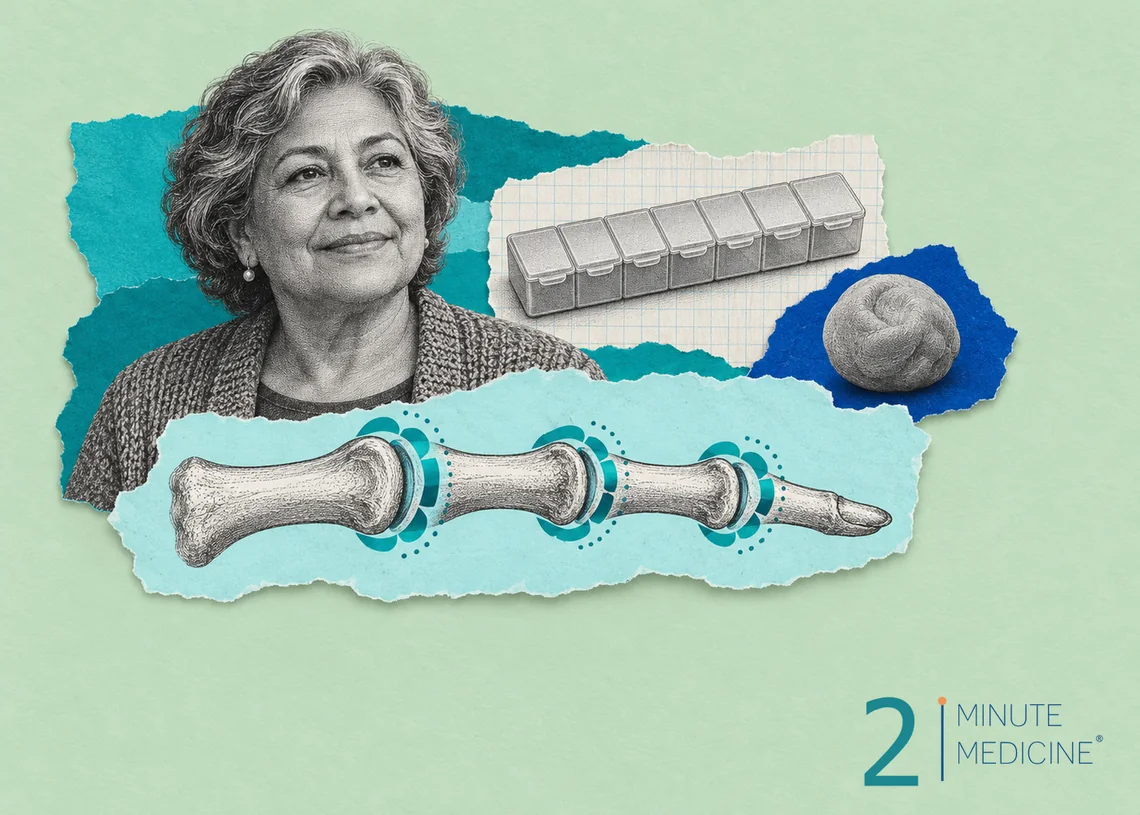
Rheumatoid arthritis collage: a calm woman, finger bones with the knuckles ringed in teal, a pill organizer and putty
Share on FacebookShare on TwitterShare on LinkedIn

Rheumatoid arthritis (RA) is a long-term disease in which the immune system attacks the lining of the joints, causing pain, swelling and stiffness. It usually starts in the small joints of the hands and feet, on both sides of the body. Without treatment it can damage joints for good. Starting the right medicine early can stop that damage, and many people reach remission.

Key points

  • RA often causes morning stiffness that lasts more than an hour, plus tiredness.
  • Blood tests for rheumatoid factor and anti-CCP antibodies help with diagnosis, but some people with RA test negative.
  • Methotrexate is usually the first medicine. Biologic drugs and JAK inhibitors are added if needed.
  • Treatment works best when it starts within the first few months of symptoms.
  • RA raises the risk of heart disease, so blood pressure, cholesterol and not smoking matter even more.

What causes rheumatoid arthritis

Each joint is lined with a thin layer of tissue called the synovium, which makes fluid to keep the joint moving smoothly. In RA, immune cells invade this lining. It swells and thickens, and over time it can wear away cartilage and bone and loosen the ligaments that hold the joint together.

The exact trigger isn’t known. A mix of genes and outside factors seems to set it off. Things that raise the risk include:

  • Being female. Women get RA two to three times more often than men.
  • Age. It most often starts between 30 and 60, but it can begin at any age.
  • Family history of RA or other autoimmune diseases
  • Smoking, the strongest risk you can change. It also makes RA more severe.
  • Obesity
  • Gum disease and breathing in silica dust may also play a part.

RA is not caused by wear and tear, an injury or anything you ate.

Symptoms of rheumatoid arthritis

  • Painful, swollen, warm joints, often the knuckles, finger joints, wrists and the balls of the feet
  • The same joints affected on both sides of the body
  • Stiffness in the morning or after rest that lasts more than an hour
  • Tiredness, low fever, poor appetite or weight loss
  • Trouble making a fist, opening jars or walking first thing in the morning
  • Firm lumps under the skin near joints, such as the elbows (rheumatoid nodules)

RA often comes and goes in flares. Over time it can affect larger joints such as the knees, shoulders and hips, and the neck.

Effects beyond the joints

RA is a whole-body disease. It can cause dry eyes and mouth, inflammation of the eyes, scarring in the lungs, anemia and thinning bones. People with RA also have a higher risk of heart attack and stroke.

RELATED REPORTS

Zemprocitinib sustained clinical responses through Week 76 in rheumatoid arthritis after inadequate response to biologic therapy

Utility of long-term routine laboratory toxicity monitoring of immunomodulatory drugs in rheumatoid arthritis

How rheumatoid arthritis is diagnosed

No single test proves RA. A doctor, often a rheumatologist (arthritis specialist), puts together your symptoms, an exam of your joints and test results.

  • Rheumatoid factor (RF). This antibody is found in most people with RA. It can also show up in healthy older adults and with other illnesses, so a positive result alone doesn’t mean you have RA.
  • Anti-CCP antibodies. This test is more specific. A positive result makes RA much more likely and points to a higher chance of joint damage.
  • ESR and CRP. These measure inflammation in the body. They help show how active the disease is.
  • Blood count, liver and kidney tests, which also give a starting point before medicines begin
  • X-rays, ultrasound or MRI of the hands and feet to look for swelling and early damage to bone

About 1 in 4 people with RA have negative RF and anti-CCP tests. This is called seronegative RA, and it is treated the same way.

Treatment

The goal is remission, or at least very low disease activity. Your doctor will check your joints and blood tests every few months and adjust medicines until you get there.

Medicines that slow the disease

  • Conventional DMARDs (disease-modifying antirheumatic drugs). Methotrexate is the usual first choice, taken once a week with folic acid. Others are hydroxychloroquine, sulfasalazine and leflunomide. They take 6 to 12 weeks to work.
  • Biologic drugs, given as shots or through a vein, block specific parts of the immune system. They include TNF blockers such as adalimumab and etanercept, as well as abatacept, rituximab and tocilizumab. Lower-cost copies called biosimilars are available for several.
  • JAK inhibitors, such as tofacitinib, baricitinib and upadacitinib, are pills. They carry warnings about blood clots, heart problems and some cancers, so they are usually used after other options.

Medicines for symptoms

A short course of a steroid such as prednisone can calm a flare while slower medicines start working. Anti-inflammatory pain relievers such as ibuprofen or naproxen ease pain and stiffness but don’t prevent joint damage.

Staying safe on treatment

  • Expect regular blood tests to check your liver and blood counts.
  • You’ll be tested for tuberculosis and hepatitis B before biologic drugs or JAK inhibitors.
  • Ask about flu, pneumonia, COVID-19 and shingles vaccines, ideally before you start.
  • Limit alcohol on methotrexate, and tell your doctor about fever or infections.
  • If you might become pregnant, plan ahead. Methotrexate and leflunomide must be stopped well before trying to conceive.

Surgery

When a joint is badly damaged, surgery can replace it, fuse it or repair tendons. Hip, knee and shoulder replacements give good pain relief for many people with RA.

Living with rheumatoid arthritis

  • Keep moving. Walking, swimming, cycling and gentle strength training protect joints and ease tiredness. Rest during flares, but don’t stop moving altogether.
  • Work with therapists. Physical and occupational therapists can teach exercises, splints and easier ways to do daily tasks.
  • Use heat and cold. Warm showers loosen stiff joints. Cold packs calm hot, swollen ones.
  • Quit smoking, which helps medicines work better.
  • Protect your heart by keeping a healthy weight and managing blood pressure and cholesterol.
  • Look after your mood. Long-term pain and fatigue can lead to depression, which is treatable.

When to see a doctor

  • Joint pain and swelling that lasts more than a few weeks
  • Morning stiffness lasting longer than an hour
  • Swelling in the same joints on both hands or feet
  • Fever, cough or other signs of infection while on RA medicines
  • New shortness of breath or a dry cough that won’t go away

Get emergency care for chest pain, signs of a stroke, or a single joint that is suddenly very hot and swollen with a fever, which can mean infection.

Common questions about rheumatoid arthritis

What do my rheumatoid arthritis blood test results mean?

A positive anti-CCP test strongly suggests RA, especially with swollen joints. A positive rheumatoid factor alone is less certain, since healthy people can have it too. High ESR or CRP means inflammation but doesn’t show its cause. Negative tests don’t rule out RA, so your doctor reads them alongside your joint exam.

What is the difference between rheumatoid arthritis and osteoarthritis?

Osteoarthritis comes from cartilage breaking down with age and use. It often affects knees, hips and the ends of the fingers, and stiffness eases within 30 minutes. RA is an immune disease. It causes warm, swollen joints on both sides, long morning stiffness and tiredness, and it needs immune-calming medicine.

Can rheumatoid arthritis go into remission?

Yes. With early, steady treatment, many people reach remission, meaning little or no joint swelling or pain. Some can later lower their medicine dose with their doctor’s help. Stopping treatment entirely often leads to a flare, so make any changes slowly and only with your rheumatologist.

Does diet help rheumatoid arthritis?

No diet cures RA, but healthy eating helps. A Mediterranean-style diet with fish, vegetables, fruit, olive oil and whole grains may ease inflammation a little and protects the heart. Keeping a healthy weight takes strain off joints and may help medicines work. Be wary of supplements that promise to replace treatment.

Questions to ask your doctor

  • How active is my RA right now?
  • Which medicine do you suggest first, and when will we know if it works?
  • What side effects should I watch for?
  • Which vaccines should I get before starting treatment?
  • What exercises are safe for my joints?

Learn more

  • Rheumatoid arthritis (National Institute of Arthritis and Musculoskeletal and Skin Diseases)
  • Rheumatoid arthritis (MedlinePlus, U.S. National Library of Medicine)

This guide is general information and doesn’t replace advice from your own doctor. Last updated October 2026.

Tags: rheumatoid arthritis
Previous Post

Patient Basics: Seborrheic Keratoses

Next Post

Patient Basics: Ringworm (Tinea)

RelatedReports

The image shows an illustration of a knee joint, accompanied by a representation of an antibody, suggesting a focus on rheumatoid arthritis or psoriatic arthritis and its treatment.
2MM Trial Briefs

Zemprocitinib sustained clinical responses through Week 76 in rheumatoid arthritis after inadequate response to biologic therapy

October 30, 2026
Blood tests collage: a tray of capped sample tubes lying flat, an open benchtop centrifuge and a pipette
Rheumatology

Utility of long-term routine laboratory toxicity monitoring of immunomodulatory drugs in rheumatoid arthritis

August 28, 2025
#VisualAbstract: Brain Activation Measured on Functional MRI Predicts Response to Certolizumab, a TNF Inhibitor, in Rheumatoid Arthritis
StudyGraphics

#VisualAbstract: Brain Activation Measured on Functional MRI Predicts Response to Certolizumab, a TNF Inhibitor, in Rheumatoid Arthritis

July 14, 2025
#VisualAbstract Use of Certain Biologics or Disease Modifying Antirheumatic Drugs May Be Associated With Cancer Risk
StudyGraphics

#VisualAbstract Use of Certain Biologics or Disease Modifying Antirheumatic Drugs May Be Associated With Cancer Risk

December 5, 2024
Next Post
Pityriasis rosea collage: a skin swatch with one big oval patch, small patches in a fir-tree pattern and a fir sprig

Patient Basics: Pityriasis Rosea

Collage of pubic lice: an engraved crab louse under a magnifying glass, a fine-toothed lice comb and folded bed sheets

Patient Basics: Pubic Lice (Crab Lice)

Collage for CRPS: a feather on a fingertip, a teal nerve path, a small mirror and a bowl of dried beans

Patient Basics: Complex Regional Pain Syndrome (CRPS)

✦ EvidencePulse™ by 2 Minute Medicine 3 reports You asked top stroke trials 2026 Synthesizing medical evidence... Top 2026 stroke trial results: OCEANIC — ischemic stroke: 6.2% vs 8.4% OPTION* — mRS 0–1: 43.6% vs 34.2% ORIENTAL* — mRS 0–2: 58.6% vs 46.6% *Higher sICH in intervention arms Participants randomizedN OCEANIC 12,327 OPTION 570 ORIENTAL 564 Ask about guidelines or landmark trials... Try EvidencePulse™ Get the signal. Try it now → Physician-trained medical AI by 2 Minute Medicine

2MM+ All Access

Full details →
$4.99 /month

3-day free trial · cancel anytime

  • ✓100+ physician-written reports
  • ✓EvidencePulse™ + HypeCheck™
  • ✓Ad-free reading + newsletters
Start 3-day free trial

Then $4.99/month. Manage renewal in your account.

2 Minute Medicine® is an award winning, physician-run, expert medical media company. Our content is curated, written and edited by practicing health professionals who have clinical and scientific expertise in their field of reporting. Our editorial management team is comprised of highly-trained MD physicians. Join numerous brands, companies, and hospitals who trust our licensed content.

Recent Reports

  • Pelacarsen lowers lipoprotein(a) but does not reduce major cardiovascular events in patients with established cardiovascular disease
  • Durvalumab plus enfortumab vedotin was approved for perioperative treatment of muscle-invasive bladder cancer
  • CDC reports 5,412 confirmed measles cases in the United States in 2026
License Content
Terms of Use | Disclaimer
Cookie Policy

Get the app

Read 2 Minute Medicine on iPhone, iPad and Android.

Download on the App StoreGet it on Google Play
QR code for www.2minutemedicine.com/app
On a computer? Scan this with your phone’s camera.
2MM+ All Access Full details →

The medical literature, distilled daily.

Monthly plan selected: $4.99 /month.

$4.99/month

3-day free trial · cancel anytime

Start 3-day free trial

Then $4.99/month. Manage renewal in your account.

Yearly plan selected: $49.90 /year.

$49.90/year

2 months free

Start 3-day free trial

Then $49.90/year.

Membership benefits

  • ✓100+ new physician-written study summaries monthly, 12,000+ searchable
  • ✓AI EvidencePulse™ + HypeCheck™
  • ✓Ad-free reading + newsletters
  • ✓FDA drug approvals + clinical calculators

Already a member? Sign in

  • Get the app
  • About
  • Specialties
    • All Specialties, All Recent Reports
    • Cardiology
    • Chronic Disease
    • Dermatology
    • Emergency
    • Endocrinology
    • Gastroenterology
    • Imaging and Intervention
    • Infectious Disease
    • Nephrology
    • Neurology
    • Obstetrics
    • Oncology
    • Ophthalmology
    • Pediatrics
    • Pharma
    • Preclinical
    • Psychiatry
    • Public Health
    • Pulmonology
    • Rheumatology
    • Surgery
    • Rewinds
    • The Scan
  • EvidencePulse™
  • HypeCheck™
  • AI News
  • Classics™
    • 2MM+ Online Access
    • Paperback and Ebook
  • Tools
    • NPI Registry Lookup
    • RVU Search
    • Physician Pay by Specialty
    • ICD-10 Code Lookup
    • FDA Drug Approvals
    • Drug Safety for Breastfeeding/Pregnancy
    • Clinical Guidelines
    • Medical Calculators
    • ECG Reference
      • QTc Calculator
      • Sgarbossa Criteria
      • ECG Axis Calculator
      • AV Block Helper
  • Rankings
    • Medical School Rankings
    • Residency Rankings
  • Partners
    • License Content
    • Advertise with Us
No Result
View All Result

© 2026 2 Minute Medicine, Inc. - Physician-written medical news.