• About
  • Masthead
  • License Content
  • Advertise
  • Press Releases
  • Newsroom
  • RSS/Email List
  • 2MM Podcast
  • Write for us
  • Contact Us
2 Minute Medicine
No Result
View All Result

No products in the cart.

Sign in
SUBSCRIBE
  • About
  • Specialties
    • All Specialties, All Recent Reports
    • Cardiology
    • Chronic Disease
    • Dermatology
    • Emergency
    • Endocrinology
    • Gastroenterology
    • Imaging and Intervention
    • Infectious Disease
    • Nephrology
    • Neurology
    • Obstetrics
    • Oncology
    • Ophthalmology
    • Pediatrics
    • Pharma
    • Preclinical
    • Psychiatry
    • Public Health
    • Pulmonology
    • Rheumatology
    • Surgery
    • Rewinds
    • The Scan
  • EvidencePulse™
  • HypeCheck™
  • AI News
  • Classics™
    • 2MM+ Online Access
    • Paperback and Ebook
  • Tools
    • NPI Registry Lookup
    • RVU Search
    • Physician Pay by Specialty
    • ICD-10 Code Lookup
    • FDA Drug Approvals
    • Drug Safety for Breastfeeding/Pregnancy
    • Clinical Guidelines
    • Medical Calculators
    • ECG Reference
      • QTc Calculator
      • Sgarbossa Criteria
      • ECG Axis Calculator
      • AV Block Helper
  • Rankings
    • Medical School Rankings
    • Residency Rankings
  • Partners
    • License Content
    • Advertise with Us
2 Minute Medicine
  • About
  • Specialties
    • All Specialties, All Recent Reports
    • Cardiology
    • Chronic Disease
    • Dermatology
    • Emergency
    • Endocrinology
    • Gastroenterology
    • Imaging and Intervention
    • Infectious Disease
    • Nephrology
    • Neurology
    • Obstetrics
    • Oncology
    • Ophthalmology
    • Pediatrics
    • Pharma
    • Preclinical
    • Psychiatry
    • Public Health
    • Pulmonology
    • Rheumatology
    • Surgery
    • Rewinds
    • The Scan
  • EvidencePulse™
  • HypeCheck™
  • AI News
  • Classics™
    • 2MM+ Online Access
    • Paperback and Ebook
  • Tools
    • NPI Registry Lookup
    • RVU Search
    • Physician Pay by Specialty
    • ICD-10 Code Lookup
    • FDA Drug Approvals
    • Drug Safety for Breastfeeding/Pregnancy
    • Clinical Guidelines
    • Medical Calculators
    • ECG Reference
      • QTc Calculator
      • Sgarbossa Criteria
      • ECG Axis Calculator
      • AV Block Helper
  • Rankings
    • Medical School Rankings
    • Residency Rankings
  • Partners
    • License Content
    • Advertise with Us
Sign in
SUBSCRIBE
2 Minute Medicine
Sign in
Subscribe
2 Minute MedicineFree on Google PlayGet
✦EvidencePulse™by 2 Minute Medicine3 reportsYou askedtop stroke trials 2026Synthesizing medical evidence...Top 2026 stroke trial results:OCEANIC — ischemic stroke: 6.2% vs 8.4%OPTION* — mRS 0–1: 43.6% vs 34.2%ORIENTAL* — mRS 0–2: 58.6% vs 46.6%*Higher sICH in intervention armsParticipants randomizedNOCEANIC12,327OPTION570ORIENTAL564Ask about guidelines or landmark trials...↑Try EvidencePulse™Ask the evidence. Get the signal.Try it now →
Home Health A to Z

Patient Basics: Premenstrual Syndrome (PMS)
by2 Minute Medicine
October 30, 2026
in Health A to Z
Reading Time: 5 mins read
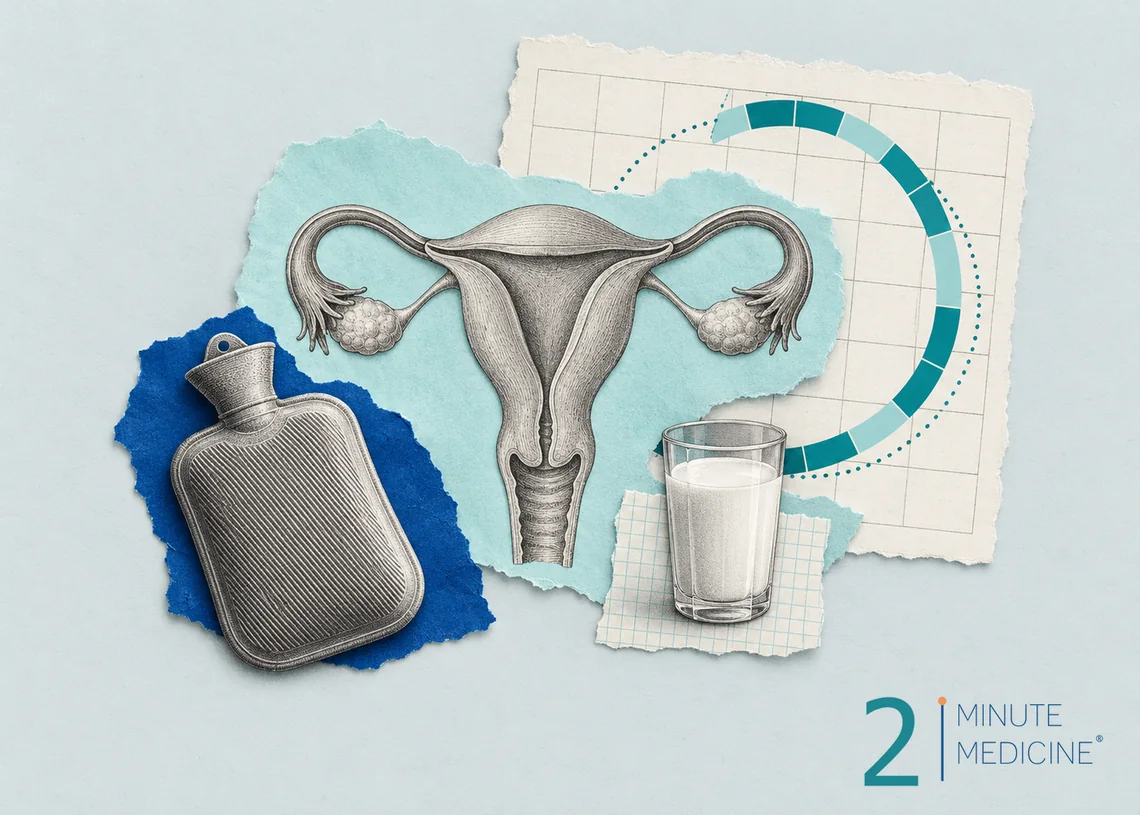
PMS collage: an anatomical uterus with ovaries, a blank calendar page looped by a teal ribbon, a hot water bottle and milk
Share on FacebookShare on TwitterShare on LinkedIn

PMS (premenstrual syndrome) is a set of physical and emotional changes that start in the week or two before a period and fade within a few days after bleeding begins. Bloating, sore breasts, irritability and mood swings are among the most common. Most people who menstruate have some of these changes. When symptoms get in the way of work, school or relationships, there are treatments that help.

Key points

  • As many as 3 in 4 people who have periods notice some premenstrual symptoms. A smaller group has symptoms strong enough to disrupt daily life.
  • The cause is a sensitivity in the brain to the normal rise and fall of hormones after ovulation, not abnormal hormone levels.
  • A daily symptom diary kept for two or three cycles is the best way to confirm PMS.
  • Exercise, sleep and less caffeine, alcohol and salt help many people. Pain relievers, certain antidepressants and birth control pills can help more.
  • Severe mood symptoms before periods may be premenstrual dysphoric disorder (PMDD), which needs a doctor’s care.

What causes PMS

After you ovulate, around the middle of your cycle, estrogen and progesterone rise and then drop sharply if you don’t get pregnant. People with PMS have normal hormone levels. Their brain chemistry, especially the mood chemical serotonin, reacts more strongly to these swings. That’s why symptoms follow a monthly pattern and stop during pregnancy and after menopause.

You may be more likely to have PMS if close relatives have it, if you’ve had depression or anxiety, or if you’re under a lot of stress. PMS can start any time after periods begin, and many people notice it more in their late 20s to 40s.

PMS symptoms

Symptoms differ from person to person, but they tend to repeat each month in the same person.

Mood and behavior

  • Irritability, anger or a short temper
  • Mood swings, sadness or crying spells
  • Anxiety or feeling tense or on edge
  • Trouble concentrating
  • Food cravings or eating more
  • Tiredness, or sleeping more or less than usual
  • Less interest in usual activities

Body

  • Bloating and a few pounds of water weight
  • Sore, swollen breasts
  • Headaches
  • Acne breakouts
  • Muscle or joint aches and low back pain
  • Constipation or diarrhea

Period cramps usually start with bleeding. They are common, but they are a separate problem from PMS.

PMDD: when PMS is severe

Premenstrual dysphoric disorder (PMDD) is a severe form of PMS that affects about 1 in 20 people who menstruate. Mood symptoms take over: deep sadness or hopelessness, intense anger, anxiety or panic, and feeling out of control. Some people have thoughts of suicide. The symptoms lift within a few days after the period starts. PMDD is a real medical condition, and treatment works for most people.

RELATED REPORTS

Severe premenstrual disorder may increase risk of early onset perimenopausal symptoms

The Scan by 2 Minute Medicine®: FIFA Women’s World Cup, National Immunization Awareness Month, Back-to-School, Overdose Awareness, Maintenance of Certification Frustrations, and Wegovy for Weight Loss and the Heart

If you have thoughts of harming yourself, call or text 988, the Suicide & Crisis Lifeline, any time.

How PMS is diagnosed

No blood test or scan shows PMS. Your doctor makes the diagnosis from the timing of your symptoms. You’ll be asked to rate your symptoms every day for at least two cycles, on paper or in a period-tracking app. PMS shows a clear pattern: symptoms in the days before your period, relief within a few days after it starts, and a week or more of feeling well.

If your symptoms don’t follow that pattern, your doctor will look for other causes, such as depression, an anxiety disorder, a thyroid problem or the hormone shifts of perimenopause. Some conditions, such as depression and migraine, can flare before periods too.

PMS treatment and relief

Things you can try at home

  • Move more. Regular aerobic exercise, such as brisk walking, cycling or swimming, eases mood and physical symptoms for many people.
  • Sleep. Aim for steady sleep and wake times through the whole month.
  • Eat steadily. Smaller meals spaced through the day, with whole grains, fruit and vegetables, can steady cravings and moods.
  • Cut back on caffeine, alcohol and salty foods in the second half of your cycle, which may ease breast soreness, irritability and bloating.
  • Calcium. Getting enough calcium from food or supplements has some evidence for easing PMS.
  • Manage stress. Yoga, meditation, breathing exercises or counseling can help. Cognitive behavioral therapy (CBT) has good evidence for PMS.

Some people try vitamin B6, magnesium or chasteberry. The evidence is mixed, and supplement quality varies. Too much vitamin B6 can damage nerves, so check with your doctor first.

Medicines

  • Pain relievers. Ibuprofen or naproxen (NSAIDs) ease cramps, headaches, breast pain and aches. Starting a day or two before symptoms usually begin can help.
  • SSRI antidepressants. Fluoxetine, sertraline, paroxetine and escitalopram are the main treatment for severe PMS and PMDD. For premenstrual symptoms they work within days, so some people take them only in the two weeks before their period.
  • Birth control pills. Pills that stop ovulation can smooth out hormone swings. A pill containing drospirenone is approved for PMDD. Taking active pills without a break, to skip periods, helps some people more.
  • Spironolactone, a water pill, may help bloating and breast tenderness.
  • Stronger hormone treatment. For severe PMDD that hasn’t responded to other treatment, a specialist may use shots that pause the menstrual cycle for a while.

When to see a doctor

  • Symptoms make it hard to work, study or get along with people
  • Home steps haven’t helped after two or three cycles
  • You feel depressed or anxious on most days of the month
  • Your periods are very heavy, painful or irregular
  • You’re over 40 and your symptoms have changed

Common questions about PMS

How can I tell PMS from early pregnancy?

Both can cause sore breasts, tiredness, bloating and mood changes, so symptoms alone can’t tell them apart. PMS fades once your period starts. If your period is late, a home pregnancy test is the quickest way to know, and it’s most accurate from the first day of the missed period.

How long does PMS last?

PMS symptoms usually start 5 to 14 days before a period and ease within 2 to 4 days after bleeding starts. If you feel unwell for most of the month, or symptoms carry on well after your period, something other than PMS may be involved, and it’s worth seeing a doctor.

Does PMS get worse with age?

It can. Many people notice stronger symptoms in their 30s and 40s, and the uneven hormone swings of perimenopause can make them less predictable. PMS ends after menopause, when periods and ovulation stop. Hormone changes in perimenopause can also cause hot flashes and sleep problems that feel similar.

Questions to ask your doctor

  • Do my symptoms fit PMS or PMDD, or could something else be going on?
  • What should I track in my symptom diary?
  • Which treatment should I try first?
  • Could birth control pills help me, and are they a good fit for my health?
  • If I take an antidepressant, can I take it only before my period?

Learn more

  • Premenstrual syndrome (MedlinePlus, U.S. National Library of Medicine)
  • PMS (premenstrual syndrome) (NHS)

This guide is general information and doesn’t replace advice from your own doctor. Last updated October 2026.

Tags: Premenstrual Syndrome (PMS)
Previous Post

Patient Basics: Post-Traumatic Stress Disorder (PTSD)

Next Post

Patient Basics: Priapism

RelatedReports

Chronic Disease

Severe premenstrual disorder may increase risk of early onset perimenopausal symptoms

September 28, 2023
The Scan by 2 Minute Medicine®:  Ultra-Trail du Mont-Blanc, Taylor Swift, NBA rookie Chet Holmgren and Magic Mushrooms!
The Scan by 2 Minute Medicine®

The Scan by 2 Minute Medicine®: FIFA Women’s World Cup, National Immunization Awareness Month, Back-to-School, Overdose Awareness, Maintenance of Certification Frustrations, and Wegovy for Weight Loss and the Heart

August 22, 2023
Next Post
Postpartum depression collage: a thoughtful young woman by a window, knitted baby booties and a mug of tea

Patient Basics: Postpartum Depression

Post-polio syndrome collage of an older woman with a calm gaze, a spinal cord drawing, a walking cane and an hourglass

Patient Basics: Post-Polio Syndrome

Polyarteritis nodosa collage: a calm middle-aged man beside a branching artery drawing, a kidney and a reflex hammer

Patient Basics: Polyarteritis Nodosa

✦ EvidencePulse™ by 2 Minute Medicine 3 reports You asked top stroke trials 2026 Synthesizing medical evidence... Top 2026 stroke trial results: OCEANIC — ischemic stroke: 6.2% vs 8.4% OPTION* — mRS 0–1: 43.6% vs 34.2% ORIENTAL* — mRS 0–2: 58.6% vs 46.6% *Higher sICH in intervention arms Participants randomizedN OCEANIC 12,327 OPTION 570 ORIENTAL 564 Ask about guidelines or landmark trials... Try EvidencePulse™ Get the signal. Try it now → Physician-trained medical AI by 2 Minute Medicine

2MM+ All Access

Full details →
$4.99 /month

3-day free trial · cancel anytime

  • ✓100+ physician-written reports
  • ✓EvidencePulse™ + HypeCheck™
  • ✓Ad-free reading + newsletters
Start 3-day free trial

Then $4.99/month. Manage renewal in your account.

2 Minute Medicine® is an award winning, physician-run, expert medical media company. Our content is curated, written and edited by practicing health professionals who have clinical and scientific expertise in their field of reporting. Our editorial management team is comprised of highly-trained MD physicians. Join numerous brands, companies, and hospitals who trust our licensed content.

Recent Reports

  • Pelacarsen lowers lipoprotein(a) but does not reduce major cardiovascular events in patients with established cardiovascular disease
  • Durvalumab plus enfortumab vedotin was approved for perioperative treatment of muscle-invasive bladder cancer
  • CDC reports 5,412 confirmed measles cases in the United States in 2026
License Content
Terms of Use | Disclaimer
Cookie Policy

Get the app

Read 2 Minute Medicine on iPhone, iPad and Android.

Download on the App StoreGet it on Google Play
QR code for www.2minutemedicine.com/app
On a computer? Scan this with your phone’s camera.
2MM+ All Access Full details →

The medical literature, distilled daily.

Monthly plan selected: $4.99 /month.

$4.99/month

3-day free trial · cancel anytime

Start 3-day free trial

Then $4.99/month. Manage renewal in your account.

Yearly plan selected: $49.90 /year.

$49.90/year

2 months free

Start 3-day free trial

Then $49.90/year.

Membership benefits

  • ✓100+ new physician-written study summaries monthly, 12,000+ searchable
  • ✓AI EvidencePulse™ + HypeCheck™
  • ✓Ad-free reading + newsletters
  • ✓FDA drug approvals + clinical calculators

Already a member? Sign in

  • Get the app
  • About
  • Specialties
    • All Specialties, All Recent Reports
    • Cardiology
    • Chronic Disease
    • Dermatology
    • Emergency
    • Endocrinology
    • Gastroenterology
    • Imaging and Intervention
    • Infectious Disease
    • Nephrology
    • Neurology
    • Obstetrics
    • Oncology
    • Ophthalmology
    • Pediatrics
    • Pharma
    • Preclinical
    • Psychiatry
    • Public Health
    • Pulmonology
    • Rheumatology
    • Surgery
    • Rewinds
    • The Scan
  • EvidencePulse™
  • HypeCheck™
  • AI News
  • Classics™
    • 2MM+ Online Access
    • Paperback and Ebook
  • Tools
    • NPI Registry Lookup
    • RVU Search
    • Physician Pay by Specialty
    • ICD-10 Code Lookup
    • FDA Drug Approvals
    • Drug Safety for Breastfeeding/Pregnancy
    • Clinical Guidelines
    • Medical Calculators
    • ECG Reference
      • QTc Calculator
      • Sgarbossa Criteria
      • ECG Axis Calculator
      • AV Block Helper
  • Rankings
    • Medical School Rankings
    • Residency Rankings
  • Partners
    • License Content
    • Advertise with Us
No Result
View All Result

© 2026 2 Minute Medicine, Inc. - Physician-written medical news.