• About
  • Masthead
  • License Content
  • Advertise
  • Press Releases
  • Newsroom
  • RSS/Email List
  • 2MM Podcast
  • Write for us
  • Contact Us
2 Minute Medicine
No Result
View All Result

No products in the cart.

Sign in
SUBSCRIBE
  • About
  • Specialties
    • All Specialties, All Recent Reports
    • Cardiology
    • Chronic Disease
    • Dermatology
    • Emergency
    • Endocrinology
    • Gastroenterology
    • Imaging and Intervention
    • Infectious Disease
    • Nephrology
    • Neurology
    • Obstetrics
    • Oncology
    • Ophthalmology
    • Pediatrics
    • Pharma
    • Preclinical
    • Psychiatry
    • Public Health
    • Pulmonology
    • Rheumatology
    • Surgery
    • Rewinds
    • The Scan
  • EvidencePulse™
  • HypeCheck™
  • AI News
  • Classics™
    • 2MM+ Online Access
    • Paperback and Ebook
  • Tools
    • NPI Registry Lookup
    • RVU Search
    • Physician Pay by Specialty
    • ICD-10 Code Lookup
    • FDA Drug Approvals
    • Drug Safety for Breastfeeding/Pregnancy
    • Clinical Guidelines
    • Medical Calculators
    • ECG Reference
      • QTc Calculator
      • Sgarbossa Criteria
      • ECG Axis Calculator
      • AV Block Helper
  • Rankings
    • Medical School Rankings
    • Residency Rankings
  • Partners
    • License Content
    • Advertise with Us
2 Minute Medicine
  • About
  • Specialties
    • All Specialties, All Recent Reports
    • Cardiology
    • Chronic Disease
    • Dermatology
    • Emergency
    • Endocrinology
    • Gastroenterology
    • Imaging and Intervention
    • Infectious Disease
    • Nephrology
    • Neurology
    • Obstetrics
    • Oncology
    • Ophthalmology
    • Pediatrics
    • Pharma
    • Preclinical
    • Psychiatry
    • Public Health
    • Pulmonology
    • Rheumatology
    • Surgery
    • Rewinds
    • The Scan
  • EvidencePulse™
  • HypeCheck™
  • AI News
  • Classics™
    • 2MM+ Online Access
    • Paperback and Ebook
  • Tools
    • NPI Registry Lookup
    • RVU Search
    • Physician Pay by Specialty
    • ICD-10 Code Lookup
    • FDA Drug Approvals
    • Drug Safety for Breastfeeding/Pregnancy
    • Clinical Guidelines
    • Medical Calculators
    • ECG Reference
      • QTc Calculator
      • Sgarbossa Criteria
      • ECG Axis Calculator
      • AV Block Helper
  • Rankings
    • Medical School Rankings
    • Residency Rankings
  • Partners
    • License Content
    • Advertise with Us
Sign in
SUBSCRIBE
2 Minute Medicine
Sign in
Subscribe
2 Minute MedicineFree on Google PlayGet
✦EvidencePulse™by 2 Minute Medicine3 reportsYou askedtop stroke trials 2026Synthesizing medical evidence...Top 2026 stroke trial results:OCEANIC — ischemic stroke: 6.2% vs 8.4%OPTION* — mRS 0–1: 43.6% vs 34.2%ORIENTAL* — mRS 0–2: 58.6% vs 46.6%*Higher sICH in intervention armsParticipants randomizedNOCEANIC12,327OPTION570ORIENTAL564Ask about guidelines or landmark trials...↑Try EvidencePulse™Ask the evidence. Get the signal.Try it now →
Home Health A to Z

Patient Basics: Radiation Therapy
by2 Minute Medicine
October 30, 2026
in Health A to Z
Reading Time: 6 mins read
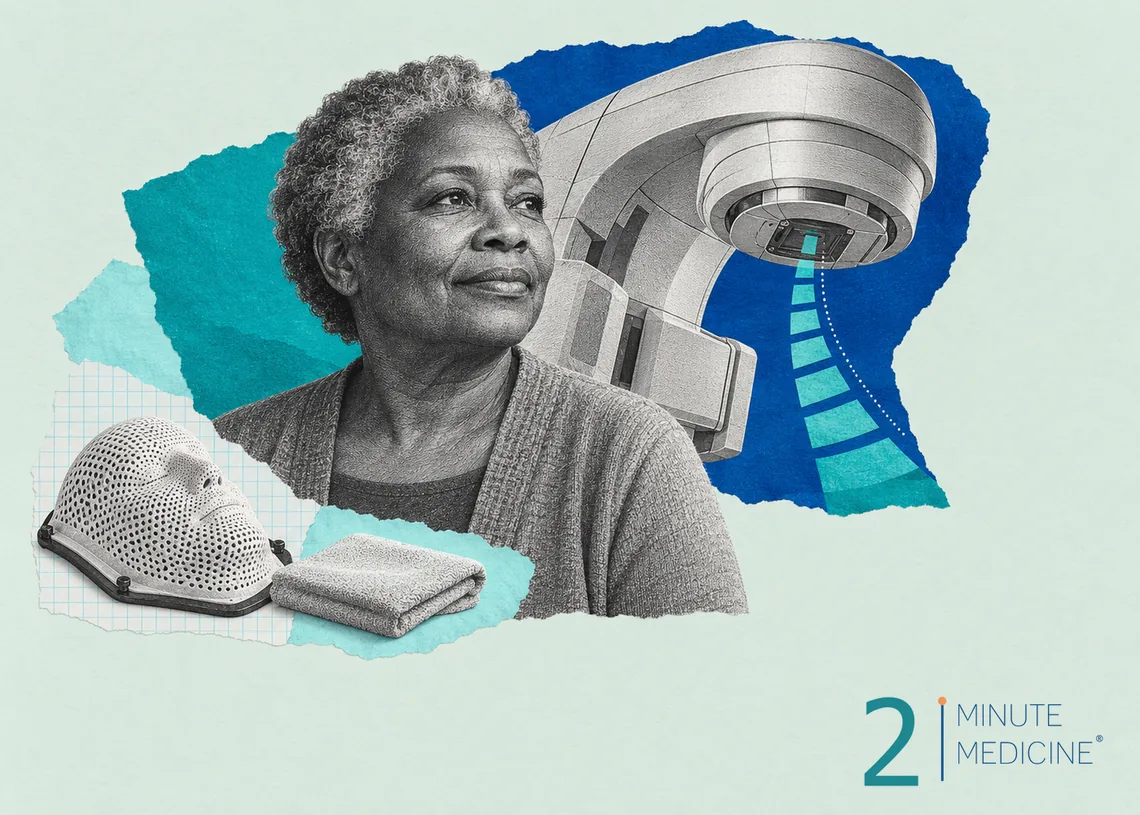
Radiation therapy collage: an older woman in a calm portrait beside the curved arm of a treatment machine and a mesh mask
Share on FacebookShare on TwitterShare on LinkedIn

Radiation therapy (radiotherapy) uses high-energy beams or radioactive material to kill cancer cells or stop them from growing. About half of all people with cancer have it at some point, alone or along with surgery, chemotherapy or other drugs. It is aimed carefully, so side effects mostly happen in the part of the body being treated.

Key points

  • Radiation damages the DNA inside cells. Cancer cells are less able to repair that damage than normal cells.
  • Most people get it from a machine outside the body, in short daily visits over days to weeks.
  • The treatment itself doesn’t hurt, and outside-beam radiation doesn’t make you radioactive.
  • Tiredness and skin changes are common. Other side effects depend on the area treated.
  • Most side effects fade within weeks after treatment ends. A few can show up months or years later.

Why radiation therapy is used

  • To cure cancer, either on its own or combined with chemotherapy. Many cancers of the head and neck, cervix, prostate, skin and lung can be treated this way.
  • Before surgery, to shrink a tumor so it is easier to remove.
  • After surgery, to kill cancer cells that may be left behind. This is common after breast-conserving surgery (lumpectomy).
  • To ease symptoms such as bone pain, bleeding or pressure on the spinal cord when a cancer can’t be cured. This is called palliative radiation.
  • Before a bone marrow transplant, to clear the marrow.

Doctors also use radiation for a few conditions that aren’t cancer, such as some noncancerous tumors near the brain and thick scars (keloids).

Types of radiation therapy

External beam radiation

A large machine called a linear accelerator sends beams into the body from different angles. Newer methods shape the beam to fit the tumor and spare nearby organs. Common types include:

  • IMRT (intensity-modulated radiation therapy), which changes the strength of the beam across the target
  • Stereotactic radiation (SBRT or radiosurgery), which gives a few very precise, high doses. Gamma Knife is one type used for the brain.
  • Proton therapy, which uses a different kind of particle that stops at a set depth. It can help for some childhood cancers and tumors near the brain or spine. It is offered at fewer centers.

Internal radiation (brachytherapy)

A radioactive source is placed inside the body, in or next to the tumor. It may stay a few minutes and then be removed, or tiny seeds may be left in place for good, as in some prostate cancers. It is also used for cancers of the cervix, uterus and breast.

Radiation medicines

Some treatments are given as a drink, pill or IV drip. The medicine travels to the cancer cells. Examples are radioactive iodine for thyroid cancer and lutetium-based drugs for some prostate cancers and neuroendocrine tumors.

Getting ready: planning your treatment

Your care team is led by a radiation oncologist (a doctor who treats cancer with radiation). Before treatment starts, you’ll have a planning visit, sometimes called a simulation.

RELATED REPORTS

Radiotherapy with cetuximab or durvalumab for advanced HNSCC

Machine learning algorithm shows limited capacity for reducing health spending for radiation therapy outpatients

  • You lie on a table in the position you’ll be treated in, and you have a CT scan of the area.
  • The team may make a mold or a mesh mask to help you stay still. Masks are common for head and neck cancers.
  • Small ink marks or tiny dot tattoos on your skin help line up the beam each day.
  • A team of doctors, physicists and dosimetrists (planners) then designs the beams on a computer. This can take a week or two.

What a radiation therapy session is like

External treatments are often given once a day, Monday to Friday, for anywhere from 1 day to about 8 weeks. Each visit takes 15 to 30 minutes, but the beam is on for only a few minutes. A radiation therapist positions you, then leaves the room and watches you on a camera. You can talk to them through an intercom. The machine moves around you and may buzz or click. You won’t feel, see or smell the radiation.

You’ll see your radiation doctor about once a week to check on side effects. Tell them about any new problems.

Side effects

Side effects build up over the course of treatment and usually peak near the end or just after. Two are common with almost any area:

  • Tiredness, which can last a few weeks or months after treatment ends
  • Skin changes in the treated area, such as redness, dryness, itching, darkening or peeling, like a sunburn

Others depend on the area treated:

  • Head and neck: mouth sores, dry mouth, changes in taste, trouble swallowing
  • Chest: sore throat or heartburn, cough, shortness of breath
  • Belly and pelvis: nausea, diarrhea, needing to pass urine often, bladder irritation
  • Brain: hair loss in the treated area, headache, tiredness

Hair loss happens only where the beam passes. Radiation to the pelvis can affect fertility and sexual function, so ask about options before you start if this matters to you.

Late effects can appear months or years later. They include scar tissue, a dry mouth that doesn’t fully recover, bowel or bladder changes, and, rarely, a new cancer caused by the radiation. Modern planning keeps these risks low.

Taking care of yourself during radiation therapy

  • Wash the treated skin gently with lukewarm water and mild soap. Pat it dry.
  • Use only the creams your team approves, and don’t put heat packs, ice or adhesive tape on the area.
  • Wear loose, soft clothing and keep the area out of the sun.
  • Eat enough protein and calories, and drink plenty of fluids. A dietitian can help if eating is hard.
  • Rest when you need to, but light activity such as walking can ease tiredness.
  • Ask before taking supplements or antioxidant vitamins.

When to call your care team

  • Fever or chills
  • Skin that breaks open, blisters or oozes
  • Diarrhea, vomiting or mouth sores that stop you eating or drinking
  • Trouble breathing or a new cough
  • New pain, weakness or numbness

Common questions about radiation therapy

Will I be radioactive after radiation treatment?

No, not after external beam radiation. The beam passes through you and leaves nothing behind, so you can hug family and be around children. With some seed implants or radiation medicines, you may need to limit close contact for a short time. Your team will give you clear rules.

Does radiation therapy hurt?

The treatment itself is painless, like having an X-ray. Lying still in one position can be uncomfortable, especially with a mask, and the team can help with padding or medicine for anxiety. Side effects such as sore skin or a sore throat can hurt and can be treated.

How long do radiation side effects last?

Most short-term side effects, such as sore skin and tiredness, ease within a few weeks to a few months after the last session. Some late effects, such as dry mouth or bowel changes, can last longer or start later. Tell your team about symptoms that linger, since many can be treated.

Is radiation therapy worse than chemotherapy?

They work differently, so the side effects differ. Radiation acts mainly on one part of the body, while chemotherapy travels through the whole body and causes effects such as hair loss everywhere and a higher infection risk. Many people get both. Your doctor will choose based on your cancer type and stage.

Questions to ask your doctor

  • What is the goal of my radiation therapy?
  • What type of radiation will I have, and how many sessions?
  • Which side effects should I expect, and how can I prevent them?
  • Can I keep working and exercising during treatment?
  • Will radiation affect my fertility or my sex life?

Learn more

  • Radiation therapy for cancer (National Cancer Institute)
  • Radiation therapy (MedlinePlus, U.S. National Library of Medicine)

This guide is general information and doesn’t replace advice from your own doctor. Last updated October 2026.

Tags: Radiation Therapy
Previous Post

Patient Basics: Sigmoidoscopy

Next Post

Patient Basics: Pneumonectomy

RelatedReports

Parathyroid cancer collage: the back of a thyroid with four small parathyroid glands, a blood tube, a bone and a woman
Chronic Disease

Radiotherapy with cetuximab or durvalumab for advanced HNSCC

November 18, 2024
2 Minute Medicine

Machine learning algorithm shows limited capacity for reducing health spending for radiation therapy outpatients

November 25, 2024
Radiation therapy collage: an older woman in a calm portrait beside the curved arm of a treatment machine and a mesh mask
Oncology

Systemic Therapy and Stereotactic Body Radiotherapy in Oligoprogressive Breast Cancer or Lung Cancer

January 8, 2024
Oncology

Younger adults with extremity soft-tissue sarcoma may be more likely to receive chemotherapy and less likely to receive radiation therapy compared to older adults

August 23, 2021
Next Post
Pneumonectomy collage: one engraved lung beside the dotted outline of the removed lung, a breathing trainer and a pillow

Patient Basics: Pneumonectomy

Collage on the PSA blood test: an engraved bladder and prostate, a capped blood tube, a balance scale and a blank calendar

Patient Basics: Prostate-Specific Antigen Blood Test (PSA Test)

Collage for a Papanicolaou test: an engraved uterus and cervix, a clinic gown on a hook, a soft brush and a glass slide

Patient Basics: Pap Test (Papanicolaou Smear)

✦ EvidencePulse™ by 2 Minute Medicine 3 reports You asked top stroke trials 2026 Synthesizing medical evidence... Top 2026 stroke trial results: OCEANIC — ischemic stroke: 6.2% vs 8.4% OPTION* — mRS 0–1: 43.6% vs 34.2% ORIENTAL* — mRS 0–2: 58.6% vs 46.6% *Higher sICH in intervention arms Participants randomizedN OCEANIC 12,327 OPTION 570 ORIENTAL 564 Ask about guidelines or landmark trials... Try EvidencePulse™ Get the signal. Try it now → Physician-trained medical AI by 2 Minute Medicine

2MM+ All Access

Full details →
$4.99 /month

3-day free trial · cancel anytime

  • ✓100+ physician-written reports
  • ✓EvidencePulse™ + HypeCheck™
  • ✓Ad-free reading + newsletters
Start 3-day free trial

Then $4.99/month. Manage renewal in your account.

2 Minute Medicine® is an award winning, physician-run, expert medical media company. Our content is curated, written and edited by practicing health professionals who have clinical and scientific expertise in their field of reporting. Our editorial management team is comprised of highly-trained MD physicians. Join numerous brands, companies, and hospitals who trust our licensed content.

Recent Reports

  • Pelacarsen lowers lipoprotein(a) but does not reduce major cardiovascular events in patients with established cardiovascular disease
  • Durvalumab plus enfortumab vedotin was approved for perioperative treatment of muscle-invasive bladder cancer
  • CDC reports 5,412 confirmed measles cases in the United States in 2026
License Content
Terms of Use | Disclaimer
Cookie Policy

Get the app

Read 2 Minute Medicine on iPhone, iPad and Android.

Download on the App StoreGet it on Google Play
QR code for www.2minutemedicine.com/app
On a computer? Scan this with your phone’s camera.
2MM+ All Access Full details →

The medical literature, distilled daily.

Monthly plan selected: $4.99 /month.

$4.99/month

3-day free trial · cancel anytime

Start 3-day free trial

Then $4.99/month. Manage renewal in your account.

Yearly plan selected: $49.90 /year.

$49.90/year

2 months free

Start 3-day free trial

Then $49.90/year.

Membership benefits

  • ✓100+ new physician-written study summaries monthly, 12,000+ searchable
  • ✓AI EvidencePulse™ + HypeCheck™
  • ✓Ad-free reading + newsletters
  • ✓FDA drug approvals + clinical calculators

Already a member? Sign in

  • Get the app
  • About
  • Specialties
    • All Specialties, All Recent Reports
    • Cardiology
    • Chronic Disease
    • Dermatology
    • Emergency
    • Endocrinology
    • Gastroenterology
    • Imaging and Intervention
    • Infectious Disease
    • Nephrology
    • Neurology
    • Obstetrics
    • Oncology
    • Ophthalmology
    • Pediatrics
    • Pharma
    • Preclinical
    • Psychiatry
    • Public Health
    • Pulmonology
    • Rheumatology
    • Surgery
    • Rewinds
    • The Scan
  • EvidencePulse™
  • HypeCheck™
  • AI News
  • Classics™
    • 2MM+ Online Access
    • Paperback and Ebook
  • Tools
    • NPI Registry Lookup
    • RVU Search
    • Physician Pay by Specialty
    • ICD-10 Code Lookup
    • FDA Drug Approvals
    • Drug Safety for Breastfeeding/Pregnancy
    • Clinical Guidelines
    • Medical Calculators
    • ECG Reference
      • QTc Calculator
      • Sgarbossa Criteria
      • ECG Axis Calculator
      • AV Block Helper
  • Rankings
    • Medical School Rankings
    • Residency Rankings
  • Partners
    • License Content
    • Advertise with Us
No Result
View All Result

© 2026 2 Minute Medicine, Inc. - Physician-written medical news.