

Patient Basics: Tension Headache
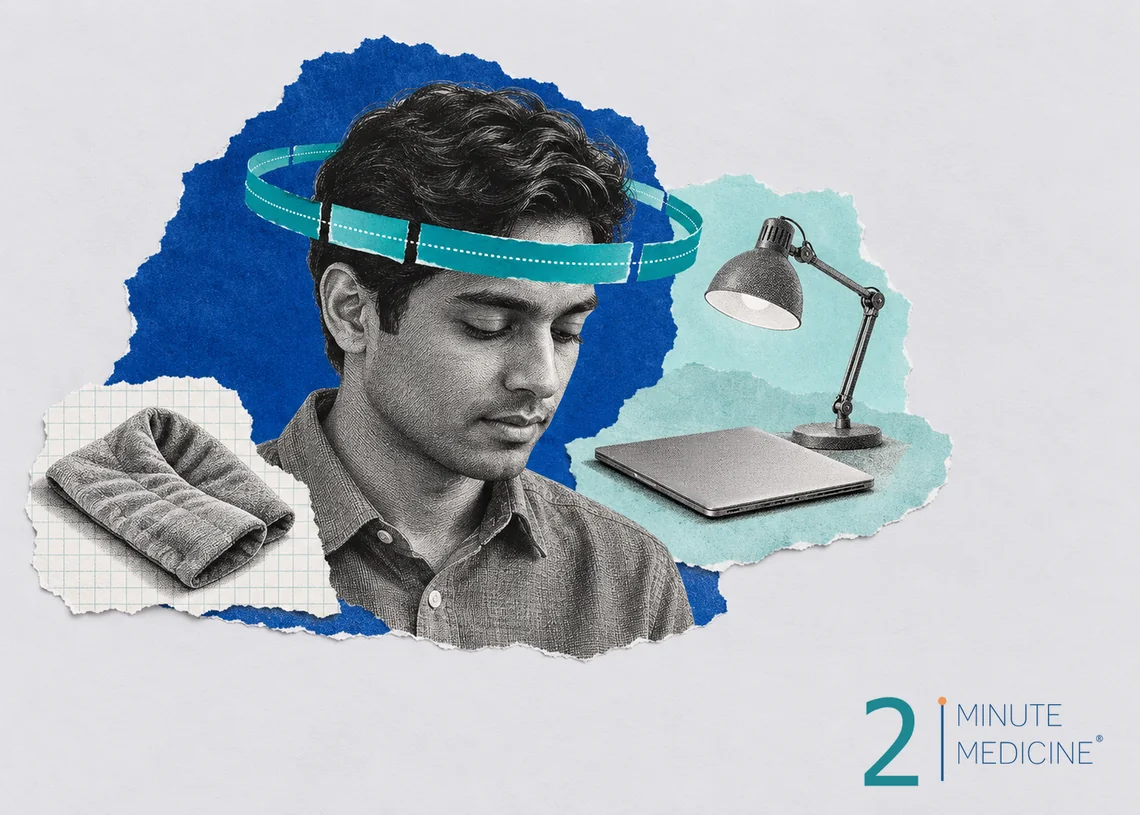
A tension headache is the most common kind of headache. It causes a dull, pressing pain around the forehead, temples or back of the head, often described as a tight band. The pain is usually mild to moderate and doesn’t stop you from going about your day. Most tension headaches respond to simple pain relievers and self-care, but using pain pills too often can make headaches more frequent.
Key points
- Common triggers are stress, poor sleep, long hours at a screen, and tight muscles across the neck and shoulders.
- Unlike migraine, tension headaches usually don’t cause nausea or throbbing, and moving around doesn’t make them worse.
- Ibuprofen, naproxen, aspirin or acetaminophen usually help.
- Use pain relievers on no more than 2 or 3 days a week to avoid rebound headaches.
- Regular exercise, good sleep and relaxation training can prevent many headaches.
What a tension headache feels like
- Steady pressure or tightness, not pounding
- Pain on the left and right together, or across the forehead or the back of the head
- Sore, tender muscles in the scalp, neck or shoulders
- Sometimes mild sensitivity to light or to noise
A single headache can last from half an hour to several days. Doctors call it episodic when it happens on fewer than 15 days a month, and chronic when it happens on 15 or more days a month for more than three months.
What causes tension headaches
Experts don’t fully understand the cause. Tight, tender muscles of the scalp and neck play a part. In people with frequent headaches, the nerves that carry pain signals also seem to become more sensitive over time. Common triggers include:
- Stress at work or home
- Too little sleep or an irregular sleep schedule
- Hunching over a desk, phone or steering wheel for long periods
- Eye strain from screens or uncorrected vision
- Clenching your jaw or grinding your teeth
- Skipping meals or not drinking enough water
- Missing your usual caffeine
- Anxiety and depression
How it’s diagnosed
Your doctor can usually tell from your description and a normal exam. They’ll ask how often headaches happen, how long they last, what they feel like, and what medicines you take for them. Keeping a headache diary for a few weeks before the visit helps. Most people don’t need blood tests or a brain scan. Your doctor may order one if the headaches have changed, are getting steadily worse, or come with other warning signs.
How tension headaches are treated
When a headache starts
- Pain relievers you can buy, such as ibuprofen, naproxen, aspirin or acetaminophen. Products that add caffeine can work a little better for some people.
- Heat or cold. A warm pack or warm shower on the neck and shoulders, or a cold pack on the forehead.
- Gentle stretching and massage of the neck, shoulders and scalp.
- A short break from the screen, some fresh air, food and water.
If these don’t help, your doctor may prescribe a stronger anti-inflammatory medicine. Doctors advise against opioids and pills containing butalbital for headaches. They can cause dependence and make headaches worse over time.
Avoiding rebound headaches
Taking pain relievers on half or more of the days in a month can lead to medication overuse headache. The headaches become more frequent, and each dose helps less. If this happens, your doctor can help you cut back, and headaches usually improve within a few weeks after you stop overusing the medicine.
Preventing frequent headaches
If headaches happen often, preventive treatment can cut down how many you get.
- Amitriptyline, an older antidepressant taken at a low dose each night, has the most evidence. Other options include mirtazapine and venlafaxine. They are used for pain prevention, not because you are depressed.
- Physical therapy for posture and neck muscles.
- Relaxation training, biofeedback and cognitive behavioral therapy (CBT), which teach you to notice and release tension and to handle stress.
- Acupuncture helps some people.
Lowering your risk
- Get regular aerobic exercise, such as brisk walking or cycling, most days.
- Keep a steady sleep schedule.
- Set up your desk so the screen is at eye level, and take short breaks to stretch every hour.
- Eat regular meals and drink water through the day.
- Keep caffeine moderate and steady.
- Have your eyes checked if you squint or strain to see.
- Ask a dentist about a night guard if you grind your teeth.
Common questions about tension headaches
How long does a tension headache last?
A tension headache may ease in half an hour or hang on for several days, though most fade within a few hours, often sooner with a pain reliever, rest or a warm shower. If you have headaches on 15 or more days a month for three months, it’s called chronic tension-type headache, and preventive treatment can help.
Can stress cause tension headaches?
Yes. Stress is the most common trigger. When you feel tense, you tend to tighten the muscles of your jaw, neck and shoulders, and stress also makes the brain more sensitive to pain. Regular exercise, enough sleep and relaxation methods such as slow breathing can make headaches less frequent.
Can a tension headache be serious?
Tension headaches themselves aren’t dangerous and don’t harm the brain. See a doctor quickly, though, if a headache is sudden and severe, comes with fever, a stiff neck, confusion, weakness or vision loss, follows a head injury, or is a new kind of headache after age 50.
When to see a doctor
- Headaches on more than a few days a month, or that disrupt work or sleep
- Needing pain relievers on more than 2 or 3 days most weeks
- Headaches that are changing or getting steadily worse
- Headaches that wake you from sleep or are worse when you cough, strain or lie down
- A new kind of headache after age 50, or during pregnancy
Call 911 for a sudden, severe headache that peaks within a minute, or a headache with weakness, numbness, confusion, trouble speaking, vision loss, a seizure or fainting. Get emergency care for a headache with fever and a stiff neck, or after a head injury.
Questions to ask your doctor
- Are these tension headaches, or could they be migraine or something else?
- Which pain reliever is best for me, and how often can I take it?
- Could I have medication overuse headache?
- Would a preventive medicine or physical therapy help?
- Could my sleep, jaw or eyesight be playing a part?
Learn more
- Tension headache (MedlinePlus, U.S. National Library of Medicine)
- Tension headaches (NHS)
This guide is general information and doesn’t replace advice from your own doctor. Last updated October 2026.






 Get the app