

Patient Basics: Urinalysis
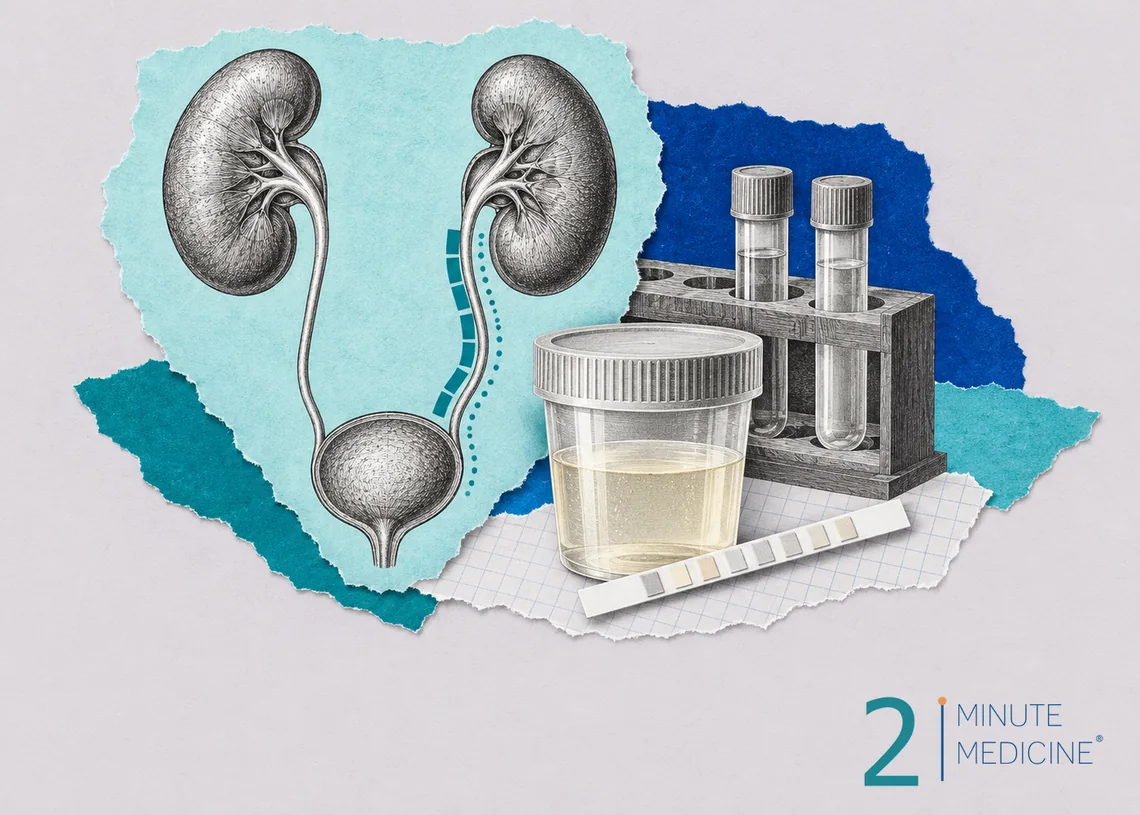
A urinalysis is a test of a small sample of your urine. It checks the urine’s color, clarity and chemistry, and looks at it under a microscope. It can give early clues to a urinary tract infection, kidney disease, diabetes and other conditions. All you need to do is pee into a cup, and results often come back the same day.
Key points
- A urinalysis has three parts: a look at the urine, a dipstick test strip, and a microscope exam.
- It is part of many checkups, pregnancy visits and hospital stays, and it helps diagnose bladder and kidney problems.
- A clean-catch, midstream sample gives the most accurate result.
- A dipstick reading takes minutes. A full lab urinalysis usually takes a few hours to a day.
- An abnormal result often needs a repeat test or a follow-up test, such as a urine culture.
Why a urinalysis is done
- Symptoms such as burning when you pee, needing to go often, belly or side pain, or blood in the urine
- A routine checkup, or before surgery
- Prenatal visits, to look for protein, sugar or infection
- Checking on diabetes, kidney disease or high blood pressure
- Looking for signs of kidney stones or liver problems
Getting ready for a urinalysis
- Eat and drink as usual unless told otherwise. Drinking huge amounts of water can dilute the sample.
- Your doctor may ask for a first-morning sample, which is more concentrated.
- Tell your doctor about your medicines and supplements. Vitamin C, B vitamins, some antibiotics and the bladder pain pill phenazopyridine can change the color or test results.
- Beets, blackberries and rhubarb can turn urine red or pink.
- Hard exercise in the day before can cause protein or blood to show up briefly.
- If you have your period, tell the staff. Blood can get into the sample, and the test may be repeated later.
How to collect a clean-catch sample
This method keeps germs from the skin out of the sample.
- Wash your hands.
- Clean around the urethra with the wipe you’re given. Women should spread the labia and wipe front to back. Men should wipe the tip of the penis, pulling back the foreskin if needed.
- Start peeing into the toilet.
- After a second or two, move the cup into the stream and collect about an ounce or two, or up to the line on the cup.
- Finish peeing into the toilet.
- Put the lid on without touching the inside of the cup or lid, and hand it in.
For babies and young children, a sterile bag is taped over the genitals, or a thin tube (catheter) is used to get a clean sample. In the hospital, a sample can also be taken from a catheter already in place.
What the lab checks
Appearance
Normal urine is pale yellow to amber and clear. Dark urine can mean you need more fluids. Cloudy urine can come from infection, crystals or mucus. Red or brown urine can come from blood, certain foods or medicines.
Dipstick test
A plastic strip with small chemical pads is dipped in the urine. The pads change color to show:
- Specific gravity: how concentrated the urine is
- pH: how acidic it is
- Protein, which can point to kidney damage
- Glucose (sugar) and ketones, which can point to diabetes
- Blood
- Leukocyte esterase and nitrite, signs of white blood cells and bacteria from an infection
- Bilirubin and urobilinogen, which relate to the liver
Microscope exam
A lab worker or machine looks at the urine for red and white blood cells, bacteria, yeast, crystals, and casts. Casts are tiny tube-shaped clumps formed in the kidneys. Many skin cells (epithelial cells) mean the sample probably picked up germs from the skin, and you may need to repeat it.
Understanding your urinalysis results
Normal ranges differ a little between labs. A single abnormal result doesn’t always mean something is wrong. Your doctor will look at it alongside your symptoms and other tests.
- Signs of infection. White blood cells, nitrite and bacteria suggest a urinary tract infection. A urine culture can confirm it and show which antibiotic will work.
- Protein. Small amounts can follow fever, exercise or dehydration. Protein that stays can be an early sign of kidney damage from diabetes or high blood pressure. A urine albumin test measures it more exactly.
- Glucose. Sugar in the urine usually means blood sugar is high. People who take SGLT2 diabetes medicines, such as empagliflozin, have sugar in their urine as expected.
- Ketones can appear with fasting, vomiting or low-carb diets. With high blood sugar, they can signal a dangerous complication of diabetes.
- Blood. Red blood cells can come from infection, kidney stones, hard exercise, a period or kidney disease. Blood seen only under a microscope that stays on repeat tests needs more checks, especially in adults over 35 or people who smoke, because rarely it is a sign of bladder or kidney cancer.
- Casts can point to kidney inflammation or damage.
- Crystals are often harmless but can relate to kidney stones.
- Bilirubin in the urine can mean a liver or bile duct problem.
Possible risks
A urinalysis has no risks when you give a sample yourself. If a catheter is used, there is a small chance of discomfort or infection.
When to call your doctor
- You haven’t heard about your results when expected
- Burning, frequent peeing or cloudy urine gets worse while you wait
- You see blood in your urine
Get care the same day for fever, chills, or pain in your side or back with urinary symptoms. These can mean a kidney infection.
Common questions about urinalysis
How long does it take to get urinalysis results?
A dipstick test in the office gives results in a few minutes. A full lab urinalysis is usually ready within a few hours to a day. If your doctor also orders a urine culture to grow bacteria, those results take 1 to 3 days.
Can I collect a urine sample at home?
Yes, if your clinic gives you a sterile cup and instructions. Collect it the clean-catch way, close the lid tightly and label it. Keep it in the refrigerator and bring it in within the time the lab gives you, often a few hours, because bacteria multiply and change results.
Is a urinalysis the same as a drug test?
No. A standard urinalysis doesn’t look for drugs. A drug screen is a separate urine test that your doctor or employer must order. Pregnancy tests and urine tests for chlamydia and gonorrhea are also separate tests, though they can use the same sample.
Questions to ask your doctor
- Why are you ordering this test?
- Do I need a first-morning sample?
- Should I stop any vitamins or medicines before the test?
- What do my results mean?
- Do I need a repeat test or a urine culture?
Learn more
- Urinalysis (MedlinePlus, U.S. National Library of Medicine)
This guide is general information and doesn’t replace advice from your own doctor. Last updated October 2026.






 Get the app