

Patient Basics: Vitamin B12 Deficiency
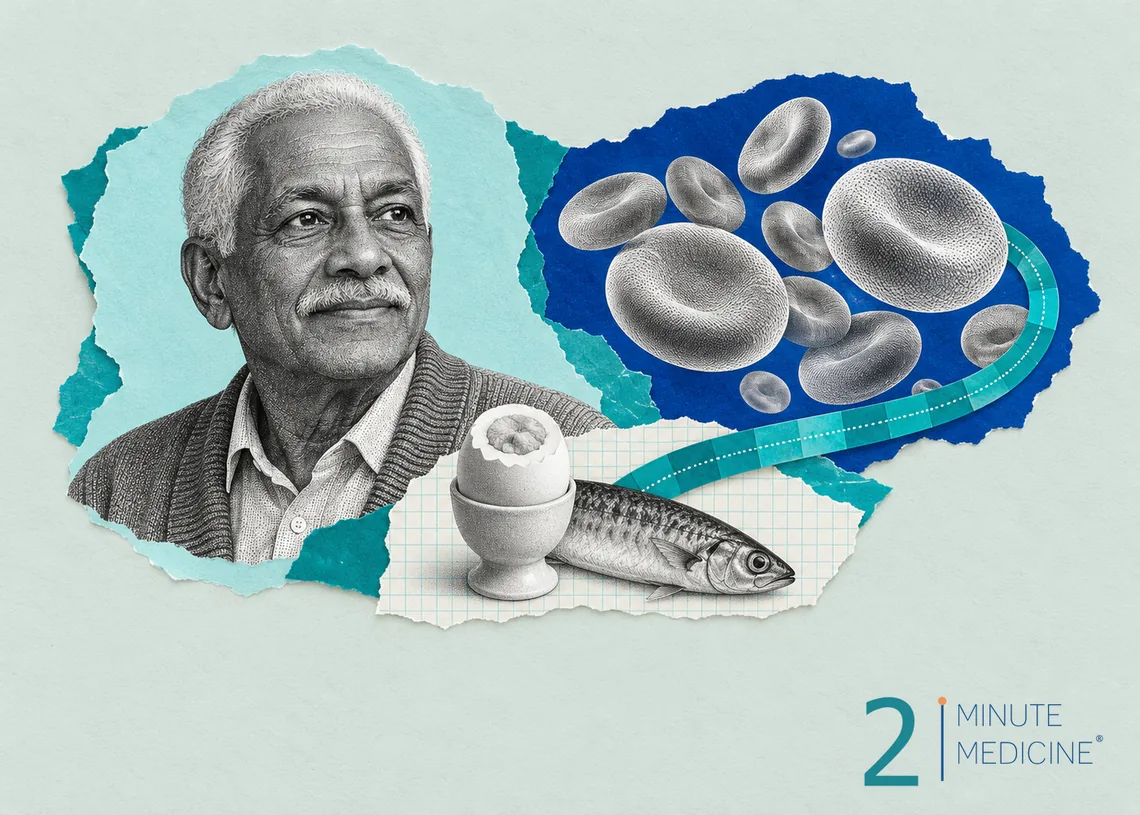
Vitamin B12 deficiency means your body doesn’t have enough vitamin B12, which you need to make healthy red blood cells and keep your nerves working. It can cause tiredness, anemia (low red blood cells), numbness and tingling, and memory or mood changes. It usually develops slowly, over years. It’s easy to treat, but nerve damage can become permanent if it goes on too long, so early testing helps.
Key points
- Common causes are pernicious anemia, older age, long-term use of metformin or acid-reducing medicines, weight-loss surgery and a vegan diet without supplements.
- Symptoms include tiredness, pale skin, a sore tongue, tingling in the hands and feet, balance problems and memory trouble.
- Blood tests confirm it. Some people need extra tests to find the cause.
- Treatment is B12 shots or high-dose B12 pills, sometimes for life.
- People over 50, vegans and people who take metformin should ask about getting enough B12.
What causes vitamin B12 deficiency
B12 is found naturally in animal foods. To absorb it, stomach acid first frees B12 from food. Then it joins a protein made in the stomach called intrinsic factor, and the pair is absorbed at the end of the small intestine. The liver stores several years’ worth, so a shortfall takes a long time to show. A problem at any step can lead to deficiency:
- Pernicious anemia (explained below)
- Thinning of the stomach lining with age, which lowers stomach acid. This is common after age 50.
- Medicines, especially metformin for diabetes and long-term acid reducers such as omeprazole or famotidine
- Stomach or bowel surgery, including gastric bypass and removal of the end of the small intestine
- Bowel conditions such as Crohn’s disease and celiac disease
- A vegan or mostly plant-based diet without fortified foods or supplements. Breastfed babies of mothers with low B12 can also become deficient.
- Heavy alcohol use
- Recreational nitrous oxide (“laughing gas” or “whippets”), which blocks B12 and can quickly cause serious nerve damage
Pernicious anemia
Pernicious anemia is an autoimmune disease. The immune system attacks the stomach cells that make intrinsic factor, so B12 can’t be absorbed from food no matter how much you eat. It’s more common in older adults, in people with a family history of it, and in people with other autoimmune conditions such as thyroid disease, type 1 diabetes or vitiligo. It slightly raises the risk of stomach cancer, so some people are offered an endoscopy.
Symptoms of vitamin B12 deficiency
- Tiredness, weakness and shortness of breath
- Pale or slightly yellow skin
- A fast heartbeat
- A sore, red, smooth tongue or mouth sores
- Numbness, tingling or a pins-and-needles feeling in the hands and feet
- Unsteady walking or poor balance, especially in the dark
- Memory problems, confusion, depression or irritability
- Vision changes, in rare cases
Nerve symptoms can show up even when blood counts are normal. Babies with low B12 may grow slowly, feed poorly, seem floppy or fall behind in development.
How it’s diagnosed
- Complete blood count. Low B12 often causes anemia with red blood cells that are larger than normal.
- Vitamin B12 level.
- Methylmalonic acid and homocysteine. These levels rise when B12 is low. They help when the B12 level is borderline.
- Folate level. Low folate causes a similar anemia. Taking folic acid alone can fix the anemia but let B12 nerve damage keep getting worse, so both are checked.
- Antibody tests for intrinsic factor and stomach cells, to look for pernicious anemia
Treatment
- B12 shots. Injections into a muscle (hydroxocobalamin or cyanocobalamin) work even when the gut can’t absorb B12. Shots are given often at first, then about once a month or every few months.
- High-dose B12 pills. Taken daily, they work for many people, even those with pernicious anemia, because a small amount gets absorbed without intrinsic factor.
- B12 nasal spray is another option for ongoing treatment.
- Treating the cause. This might mean changing your diet, reviewing your medicines or treating a bowel condition.
People with pernicious anemia, weight-loss surgery or bowel removal usually need B12 for life. Don’t stop treatment when you feel better.
Recovery
Many people feel more energy within days to a couple of weeks of starting treatment. Blood counts usually return to normal within about two months. Nerve symptoms improve more slowly, over months, and may not go away completely if the deficiency lasted a long time.
Lowering your risk
- Eat foods with B12, such as fish, shellfish, meat, eggs, milk, yogurt and cheese.
- If you eat little or no animal food, use B12-fortified foods (some cereals, plant milks and nutritional yeast) or take a supplement.
- After age 50, get some B12 from fortified foods or a supplement, since the body absorbs B12 from food less well with age.
- If you take metformin or acid reducers long term, or have had weight-loss surgery, ask your doctor about regular B12 checks.
- If you are pregnant or breastfeeding and vegan, take a B12 supplement.
When to see a doctor
- Ongoing tiredness, weakness or shortness of breath
- Numbness, tingling or balance problems
- Memory loss, confusion or mood changes
- A sore, smooth tongue
- A baby who isn’t growing or developing as expected
Get emergency care for chest pain, fainting, severe shortness of breath, or sudden trouble walking or confusion.
Common questions about vitamin B12 deficiency
Can low B12 cause anxiety or depression?
Yes, it can affect mood. Low B12 can cause depression, irritability, anxiety and, when severe, confusion or memory loss, because the brain and nerves need it to work. These symptoms often get better with treatment. They have many other possible causes too, so a doctor should look at the whole picture.
Is pernicious anemia genetic?
It tends to run in families but isn’t passed down in a simple, predictable way. Having a parent or sibling with pernicious anemia, or with another autoimmune disease such as thyroid disease or type 1 diabetes, raises your chance. Most relatives never get it, so testing is usually done only if symptoms appear.
Can you take too much vitamin B12?
B12 is very safe. The body passes extra in the urine, and no upper limit has been set. Very high blood levels in someone who isn’t taking supplements can be a sign of another health problem and are worth asking about. Shots rarely cause an allergic reaction or acne-like spots.
Questions to ask your doctor
- What is causing my low B12?
- Do I have pernicious anemia?
- Should I have shots, or can I take pills?
- How long will I need treatment, and how often should my levels be checked?
- Will my numbness or memory problems get better?
Learn more
- Vitamin B12 deficiency anemia (MedlinePlus, U.S. National Library of Medicine)
- Pernicious anemia (MedlinePlus, U.S. National Library of Medicine)
This guide is general information and doesn’t replace advice from your own doctor. Last updated October 2026.






 Get the app