

• About
  • Masthead
  • License Content
  • Advertise
  • Submit Press Release
  • RSS/Email List
  • 2MM Podcast
  • Write for us
  • Contact Us
2 Minute Medicine
No Result
View All Result

No products in the cart.

SUBSCRIBE
  • Specialties
    • All Specialties, All Recent Reports
    • Cardiology
    • Chronic Disease
    • Dermatology
    • Emergency
    • Endocrinology
    • Gastroenterology
    • Imaging and Intervention
    • Infectious Disease
    • Nephrology
    • Neurology
    • Obstetrics
    • Oncology
    • Ophthalmology
    • Pediatrics
    • Pharma
    • Preclinical
    • Psychiatry
    • Public Health
    • Pulmonology
    • Rheumatology
    • Surgery
  • Tools
    • EvidencePulse™
    • RVU Search
    • NPI Registry Lookup
  • Pharma
  • AI News
  • The Scan+
  • Classics™+
    • 2MM+ Online Access
    • Paperback and Ebook
  • Rewinds
  • Partners
    • License Content
    • Submit Press Release
    • Advertise with Us
  • Account
    • Subscribe
    • Sign-in
    • My account
2 Minute Medicine
  • Specialties
    • All Specialties, All Recent Reports
    • Cardiology
    • Chronic Disease
    • Dermatology
    • Emergency
    • Endocrinology
    • Gastroenterology
    • Imaging and Intervention
    • Infectious Disease
    • Nephrology
    • Neurology
    • Obstetrics
    • Oncology
    • Ophthalmology
    • Pediatrics
    • Pharma
    • Preclinical
    • Psychiatry
    • Public Health
    • Pulmonology
    • Rheumatology
    • Surgery
  • Tools
    • EvidencePulse™
    • RVU Search
    • NPI Registry Lookup
  • Pharma
  • AI News
  • The Scan+
  • Classics™+
    • 2MM+ Online Access
    • Paperback and Ebook
  • Rewinds
  • Partners
    • License Content
    • Submit Press Release
    • Advertise with Us
  • Account
    • Subscribe
    • Sign-in
    • My account
SUBSCRIBE
2 Minute Medicine
Subscribe
Home All Specialties Cardiology

The presence of a fractional flow reserve-negative high-risk nonculprit plaque associated with worse clinical outcomes among patients with myocardial infarction
byYasin AvciandYuchen Dai
October 12, 2023
in Cardiology, Imaging and Intervention
Reading Time: 3 mins read
0
Share on FacebookShare on Twitter

1. Major adverse cardiovascular events (MACE) were more likely to occur in patients with myocardial infarction (MI) with an optical coherence tomography–identified high-risk fractional flow reserve–negative nonculprit plaque than without after two years.

2. The existence of a high-risk plaque was linked to a twofold rise in the risk of MACE, primarily due to higher revascularization rates.

Evidence Rating Level: 1 (Excellent)

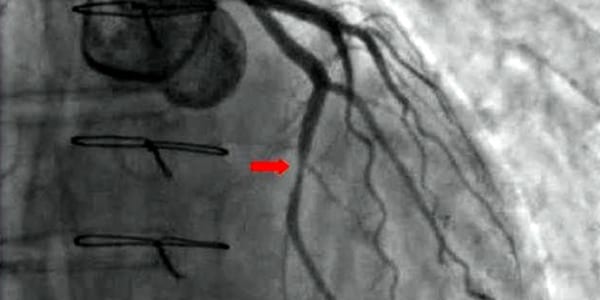
Study Rundown: After an MI, recurrent coronary events often occur due to atherosclerotic lesions in coronary locations unrelated to the initial MI, which are termed nonculprit lesions. Additional percutaneous coronary intervention (PCI) in MI patients is guided by angiography or fractional flow reserve (FFR). Still, FFR’s limited assessment and potential false negatives necessitate new diagnostic tools for high-risk nonculprit lesions. Pathological studies have pinpointed critical characteristics of high-risk lesions prone to plaque rupture and myocardial infarction, which can be identified in vivo using intravascular optical coherence tomography (OCT), a high-resolution invasive imaging technique. This observational, prospective cohort study is the first to assess the association between OCT-detected high-risk plaques in FFR-negative nonculprit lesions and MACE among patients with MI. This study found that within the MI patient population, the existence of a high-risk nonculprit plaque with a negative fractional flow reserve is linked to poorer clinical outcomes. A limitation of this study is the limited representation of women in the current cohort, which matters because it may hinder the generalizability of the study’s findings to the female population, potentially overlooking important gender-specific factors that could impact patient outcomes. In conclusion, within a population experiencing a significant recurrence of events despite comprehensive revascularization guided by physiology, these findings underscore the need for further investigation into the potential advantages of additional pharmacological or targeted treatment approaches in patients with high-risk plaques.

Click to read the study in JAMA Cardiology

Relevant Reading: Optical coherence tomography detection of vulnerable plaques at high risk of developing acute coronary syndrome

RELATED REPORTS

The preoperative combination of evolocumab and rosuvastatin may not reduce major adverse cardiovascular events

Late ventricular fibrillation following myocardial infarction is associated with increased risk of 1-year mortality

2 Minute Medicine Rewind January 5, 2026

In-Depth [prospective cohort]: This study was a multicenter, international, prospective, observational cohort study called PECTUS-obs (Identification of Risk Factors for Acute Coronary Events by OCT After STEMI [ST-segment elevation MI] and NSTEMI [non-STEMI]). 438 patients were enrolled from 14 hospitals in 4 countries between December 2018 and September 2020. Patients who had MI and underwent coronary angiography were eligible for inclusion if they had at least one nonculprit lesion with intermediate stenosis (30%-90%), which was not considered hemodynamically significant (determined by FFR measurement with FFR >0.80). Exclusion criteria comprised individuals under 18 years of age, pregnant patients, those with hemodynamic instability, a history of or a need for coronary artery bypass grafting, and individuals with a life expectancy of less than 3 years. The primary outcome measured in this study was the incidence of MACE (a combination of all-cause mortality, nonfatal MI, or unplanned revascularization) within the 2-year (±30 days) follow-up period. Secondary outcomes included the specific components of the primary outcome, such as cardiac mortality, target vessel failure and revascularization, and target lesion failure and revascularization. Among the study population, 45 patients (10.7%) experienced MACE within the 2-year period following their MI. Notably, the primary outcome occurred in 22 patients within the high-risk group (15.4%) and 23 patients within the non-high-risk group (8.3%), with a hazard ratio (HR) of 1.93 (95% confidence interval (CI), 1.08-3.47), demonstrating statistical significance (P = 0.02). The presence of a high-risk plaque was also independently associated with 2-year MACE in the study’s multivariate Cox proportional hazards regression models. The main factor contributing to the primary outcome was a higher incidence of unplanned revascularization in the high-risk plaque group, with 14 cases (9.8%) compared to 12 cases (4.3%) in the non-high-risk plaque group (P = 0.02).

Image: PD

©2023 2 Minute Medicine, Inc. All rights reserved. No works may be reproduced without expressed written consent from 2 Minute Medicine, Inc. Inquire about licensing here. No article should be construed as medical advice and is not intended as such by the authors or by 2 Minute Medicine, Inc.

Tags: fractional flow reserve (FFRmajor adverse cardiovascular events (MACE)nstemioptical coherence tomographyPECTUSpercutaneous coronary intervention (PCI)STEMI
Previous Post

#VisualAbstract:Complete revascularization reduces mortality in older adults with myocardial infarction

Next Post

Physical and psychological recovery after vaginal childbirth with and without epidural analgesia

RelatedReports

Using HEART score to risk stratify patients with chest pain is safe but underutilized in the ED
Cardiology

The preoperative combination of evolocumab and rosuvastatin may not reduce major adverse cardiovascular events

January 12, 2026
Using HEART score to risk stratify patients with chest pain is safe but underutilized in the ED
Cardiology

Late ventricular fibrillation following myocardial infarction is associated with increased risk of 1-year mortality

January 12, 2026
Using HEART score to risk stratify patients with chest pain is safe but underutilized in the ED
Weekly Rewinds

2 Minute Medicine Rewind January 5, 2026

January 13, 2026
Elective colectomy associated with improved survival in ulcerative colitis
Weekly Rewinds

2 Minute Medicine Rewind November 24, 2025

November 24, 2025
Next Post
Increased risk of stillbirth recurrence after a previous stillbirth

Physical and psychological recovery after vaginal childbirth with and without epidural analgesia

#VisualAbstract: Automated Insulin Delivery in Women with Pregnancy Complicated by Type 1 Diabetes

#VisualAbstract: Automated Insulin Delivery in Women with Pregnancy Complicated by Type 1 Diabetes

Early palliative care may improve survival in advanced cancer

Spiritual care is associated with improved quality of life in patients who underwent intracranial hemorrhage surgery

2 Minute Medicine® is an award winning, physician-run, expert medical media company. Our content is curated, written and edited by practicing health professionals who have clinical and scientific expertise in their field of reporting. Our editorial management team is comprised of highly-trained MD physicians. Join numerous brands, companies, and hospitals who trust our licensed content.

Recent Reports

  • Zorevunersen appears safe and may alleviate symptoms in children with Dravet syndrome
  • Apixaban outperforms rivaroxaban in venous thromboembolism bleeding risk
  • Placental abruption during pregnancy is not associated with increased risk of cardiovascular mortality in children
License Content
Terms of Use | Disclaimer
Cookie Policy
Privacy Statement (EU)
Disclaimer

The Classics in Medicine Paperback Released!

Over the past 30 years, the transition from print to digital media has contributed to an exponential increase in medical literature. In response, 2 Minute Medicine presents 160+ authoritative, physician-written summaries of the most cited landmark trials in medicine.

amazon-logo_blackGet-it-on-iBooks-badge

Click anywhere to close this announcement

  • Specialties
    • All Specialties, All Recent Reports
    • Cardiology
    • Chronic Disease
    • Dermatology
    • Emergency
    • Endocrinology
    • Gastroenterology
    • Imaging and Intervention
    • Infectious Disease
    • Nephrology
    • Neurology
    • Obstetrics
    • Oncology
    • Ophthalmology
    • Pediatrics
    • Pharma
    • Preclinical
    • Psychiatry
    • Public Health
    • Pulmonology
    • Rheumatology
    • Surgery
  • Tools
    • EvidencePulse™
    • RVU Search
    • NPI Registry Lookup
  • Pharma
  • AI News
  • The Scan
  • Classics™
    • 2MM+ Online Access
    • Paperback and Ebook
  • Rewinds
  • Partners
    • License Content
    • Submit Press Release
    • Advertise with Us
  • Account
    • Subscribe
    • Sign-in
    • My account
No Result
View All Result

© 2026 2 Minute Medicine, Inc. - Physician-written medical news.