• About
  • Masthead
  • License Content
  • Advertise
  • Press Releases
  • Newsroom
  • RSS/Email List
  • 2MM Podcast
  • Write for us
  • Contact Us
2 Minute Medicine
No Result
View All Result

No products in the cart.

Sign in
SUBSCRIBE
  • About
  • Specialties
    • All Specialties, All Recent Reports
    • Cardiology
    • Chronic Disease
    • Dermatology
    • Emergency
    • Endocrinology
    • Gastroenterology
    • Imaging and Intervention
    • Infectious Disease
    • Nephrology
    • Neurology
    • Obstetrics
    • Oncology
    • Ophthalmology
    • Pediatrics
    • Pharma
    • Preclinical
    • Psychiatry
    • Public Health
    • Pulmonology
    • Rheumatology
    • Surgery
    • Rewinds
    • The Scan
  • EvidencePulse™
  • HypeCheck™
  • AI News
  • Classics™
    • 2MM+ Online Access
    • Paperback and Ebook
  • Tools
    • NPI Registry Lookup
    • RVU Search
  • Partners
    • License Content
    • Advertise with Us
2 Minute Medicine
  • About
  • Specialties
    • All Specialties, All Recent Reports
    • Cardiology
    • Chronic Disease
    • Dermatology
    • Emergency
    • Endocrinology
    • Gastroenterology
    • Imaging and Intervention
    • Infectious Disease
    • Nephrology
    • Neurology
    • Obstetrics
    • Oncology
    • Ophthalmology
    • Pediatrics
    • Pharma
    • Preclinical
    • Psychiatry
    • Public Health
    • Pulmonology
    • Rheumatology
    • Surgery
    • Rewinds
    • The Scan
  • EvidencePulse™
  • HypeCheck™
  • AI News
  • Classics™
    • 2MM+ Online Access
    • Paperback and Ebook
  • Tools
    • NPI Registry Lookup
    • RVU Search
  • Partners
    • License Content
    • Advertise with Us
Sign in
SUBSCRIBE
2 Minute Medicine
Sign in
Subscribe
2 Minute MedicineFree on Google PlayGet
✦ EvidencePulse™ by 2 Minute Medicine 2026 evidence scan 3 reports You asked top stroke trials 2026 Synthesizing medical evidence... Top 2026 stroke trial results: OCEANIC — ischemic stroke: 6.2% vs 8.4% OPTION* — mRS 0–1: 43.6% vs 34.2% ORIENTAL* — mRS 0–2: 58.6% vs 46.6% *Higher sICH in intervention arms Participants randomizedN OCEANIC 12,327 OPTION 570 ORIENTAL 564 Ask about guidelines or landmark trials... ↑ Try EvidencePulse™ Ask the evidence.
Get the signal.
Try it now → Physician-trained medical AI by 2 Minute Medicine
Home All Specialties Cardiology

NT-proBNP associated with risk for incident heart failure and all-cause mortality

byZoya GomesandYuchen Dai
February 19, 2023
in Cardiology, Chronic Disease
Reading Time: 3 mins read
Quick Take: Association of African Ancestry with Electrocardiographic Voltage and Concentric Left Ventricular Hypertrophy: The Dallas Heart Study
Share on FacebookShare on TwitterShare on LinkedIn

1. In this prospective cohort study, among 9776 individuals, an NT-proBNP level of 125pg/mL or higher was associated with risk for incident heart failure and mortality.

2. Changes in systolic blood pressure, low-density lipoprotein cholesterol, triglyceride levels, body mass index, and estimated glomerular filtration rate were found to be significantly associated with changes in NT-proBNP.

Evidence Rating Level: 2 (Good)

Study Rundown: N-terminal pro-B-type natriuretic peptide (NT-proBNP) is a biomarker used in the diagnosis and prognosis of patients with heart failure (HF). Elevated NT-proBNP levels in patients with established cardiovascular disease have been consistently associated with incident clinical HF events, coronary heart disease, stroke and all-cause mortality, among other outcomes. The objective of this study was to assess the association between change in NT-proBNP and risk for incident HF and death. The primary exposure variable was NT-proBNP change between visits 2 and 4, which were approximately 6 years apart. The primary outcomes were incident HF hospitalization and all-cause mortality. A total of 9776 individuals were included in this study. Participants with NT-proBNP levels of 125 pg/mL or higher at both visits were found to have an increase in incident HF and mortality risk, compared to those with NT-proBNP levels less than 125 pg/mL. The percent change in NT-proBNP was positively associated with HF and death. Factors significantly associated with a change in NT-proBNP included changes in systolic blood pressure, low-density lipoprotein cholesterol, triglyceride levels, body mass index, and estimated glomerular filtration rate. This study demonstrated that persistently elevated levels of NT-proBNP were associated with the highest risk of incident HF and all-cause mortality. A major strength of this study was its large sample size. A limitation was that due to the large gap of 6 years between visits, the study could not account for potential fluctuations in biomarkers between visits 2 and 4, and how such variations could affect cardiovascular risk.

Click to read the study in JAMA Cardiology

Relevant Reading: Risk factors for pre-heart failure or symptomatic heart failure based on NT-proBNP

RELATED REPORTS

Prognostic associations of anthropometric indices vary by clinical outcomes

Increased rapid eye movement (REM) sleep is associated with lower risks of several chronic diseases

In-Depth [prospective cohort]: This study assessed the association between change in NT-proBNP and risk for incident HF and death. A total of 9776 individuals were recruited from 4 US communities enrolled in the Atherosclerosis Risk in Community (ARIC) study (mean [SD] age, 57.1 [5.7] years at visit 2; 5523 [56.5%] women). The primary exposure variable was NT-proBNP change between visits 2 and 4, modelled as change categories (<135pg/mL or ≥ 125 pg/mL) and as percent change. The primary outcomes were incident HF hospitalization and all-cause mortality. Participants with NT-proBNP levels of 125 pg/mL or higher at both visits were found to have an increase in incident HF (adjusted hazard ratio [HR], 2.40 [95% CI, 2.00 – 2.88]) and mortality risk (HR, 1.68 [95% CI, 1.47 – 1.91), compared to those with NT-proBNP levels less than 125 pg/mL. Compared with the group with NT-proBNP levels of less than 125 pg/mL at both visits, participants with an NT-proBNP of 125 pg/mL or higher at visit 2 and less than 125 pg/mL at visit 4 had a similar risk for HF and death (HR, 1.01 [95% CI, 0.71 – 1.43]; HR, 0.79 [95% CI, 0.61 – 1.01]). The median (IQR) change in NT-proBNP over the approximately 6 years between visits was 21.8 (0.5 – 59.3) pg/mL. The percent change in NT-proBNP was positively associated with HF and death (HR, 1.06 [95% CI, 1.02 – 1.10]; HR, 1.05 [95% CI, 1.03 – 1.08]).

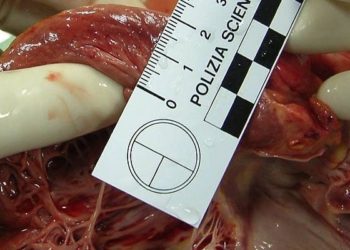
Image: PD

©2023 2 Minute Medicine, Inc. All rights reserved. No works may be reproduced without expressed written consent from 2 Minute Medicine, Inc. Inquire about licensing here. No article should be construed as medical advice and is not intended as such by the authors or by 2 Minute Medicine, Inc.

Tags: all-cause mortalityheart failureHF hospitalizationNT-proBNP
Previous Post

Early restrictive fluid management does not reduce mortality in sepsis-induced hypotension

Next Post

2 Minute Medicine Rewind February 20, 2023

RelatedReports

An illustration featuring a heart within a house, with a stethoscope, a scale, and medication, symbolizing heart failure home hospital care.
Cardiology

Prognostic associations of anthropometric indices vary by clinical outcomes

September 28, 2026
A man is sleeping on his side with a caution symbol and tape beside him, while lung images are in the background, suggesting a focus on sleep and respiratory health.
Cardiology

Increased rapid eye movement (REM) sleep is associated with lower risks of several chronic diseases

September 23, 2026
Few older adolescents meet recommended levels of physical activity
Chronic Disease

Higher physical fitness is associated with lower all-cause mortality

August 27, 2026
Remote patient monitoring did not reduce heart failure readmissions: The BEAT-HF trial
Weekly Rewinds

2 Minute Medicine Rewind July 20, 2026

July 20, 2026
Next Post
Implementation of pneumococcal vaccine programs linked to decreased antibiotic prescription

2 Minute Medicine Rewind February 20, 2023

Preterm birth associated with lower high school academic performance

One third of university students access mental health services

Patient Basics: Macular Degeneration

Novel anti-VEGF agent provides additional benefit when combined with ranibizumab for neovascular age-related macular degeneration

✦ EvidencePulse™ by 2 Minute Medicine 2026 evidence scan 3 reports You asked top stroke trials 2026 Synthesizing medical evidence... Top 2026 stroke trial results: OCEANIC — ischemic stroke: 6.2% vs 8.4% OPTION* — mRS 0–1: 43.6% vs 34.2% ORIENTAL* — mRS 0–2: 58.6% vs 46.6% *Higher sICH in intervention arms Participants randomizedN OCEANIC 12,327 OPTION 570 ORIENTAL 564 Ask about guidelines or landmark trials... Try EvidencePulse™ Get the signal. Try it now → Physician-trained medical AI by 2 Minute Medicine

2MM+ All Access

Full details →
$4.99 /month

3-day free trial · cancel anytime

  • ✓100+ physician-written reports
  • ✓EvidencePulse™ + HypeCheck™
  • ✓Ad-free reading + newsletters
Start 3-day free trial

Then $4.99/month. Manage renewal in your account.

NPI Lookup · Free

Look up any US clinician

Search by name or NPI number, live from the CMS NPI Registry.

  • OIG exclusion check
  • Licenses and specialties
  • No account needed
Open NPI Lookup →

2 Minute Medicine® is an award winning, physician-run, expert medical media company. Our content is curated, written and edited by practicing health professionals who have clinical and scientific expertise in their field of reporting. Our editorial management team is comprised of highly-trained MD physicians. Join numerous brands, companies, and hospitals who trust our licensed content.

Recent Reports

  • Optogenetic therapy may partially restore vision in retinitis pigmentosa
  • An artificial intelligence system for human papillomavirus-positive dual stain cervical cancer screening reads p16-Ki67 slides
  • Elevated low-density lipoprotein cholesterol is a risk factor for atherosclerotic disease irrespective of familial hypercholesterolemia status
License Content
Terms of Use | Disclaimer
Cookie Policy

Get the app

Read 2 Minute Medicine on iPhone, iPad and Android.

Download on the App StoreGet it on Google Play
QR code for www.2minutemedicine.com/app
On a computer? Scan this with your phone’s camera.
2MM+ All Access Full details →

The medical literature, distilled daily.

Monthly plan selected: $4.99 /month.

$4.99/month

3-day free trial · cancel anytime

Start 3-day free trial

Then $4.99/month. Manage renewal in your account.

Yearly plan selected: $49.90 /year.

$49.90/year

2 months free

Start 3-day free trial

Then $49.90/year.

Membership benefits

  • ✓100+ physician-written reports
  • ✓AI EvidencePulse™ + HypeCheck™
  • ✓Ad-free reading + newsletters
  • ✓NPI watchlist + bulk NPI verification

Already a member? Sign in

  • Get the app
  • About
  • Specialties
    • All Specialties, All Recent Reports
    • Cardiology
    • Chronic Disease
    • Dermatology
    • Emergency
    • Endocrinology
    • Gastroenterology
    • Imaging and Intervention
    • Infectious Disease
    • Nephrology
    • Neurology
    • Obstetrics
    • Oncology
    • Ophthalmology
    • Pediatrics
    • Pharma
    • Preclinical
    • Psychiatry
    • Public Health
    • Pulmonology
    • Rheumatology
    • Surgery
    • Rewinds
    • The Scan
  • EvidencePulse™
  • HypeCheck™
  • AI News
  • Classics™
    • 2MM+ Online Access
    • Paperback and Ebook
  • Tools
    • NPI Registry Lookup
    • RVU Search
  • Partners
    • License Content
    • Advertise with Us
No Result
View All Result

© 2026 2 Minute Medicine, Inc. - Physician-written medical news.