• About
  • Masthead
  • License Content
  • Advertise
  • Submit Press Release
  • RSS/Email List
  • 2MM Podcast
  • Write for us
  • Contact Us
2 Minute Medicine
No Result
View All Result

No products in the cart.

SUBSCRIBE
  • About
  • Specialties
    • All Specialties, All Recent Reports
    • Cardiology
    • Chronic Disease
    • Dermatology
    • Emergency
    • Endocrinology
    • Gastroenterology
    • Imaging and Intervention
    • Infectious Disease
    • Nephrology
    • Neurology
    • Obstetrics
    • Oncology
    • Ophthalmology
    • Pediatrics
    • Pharma
    • Preclinical
    • Psychiatry
    • Public Health
    • Pulmonology
    • Rheumatology
    • Surgery
  • Tools+
    • EvidencePulse™
    • HypeCheck™
    • NPI Registry Lookup
    • RVU Search
  • Pharma
  • AI Roundup
  • The Scan+
  • Classics™+
    • 2MM+ Online Access
    • Paperback and Ebook
  • Rewinds
  • Partners
    • License Content
    • Submit Press Release
    • Advertise with Us
  • Account
    • Subscribe
    • My account
    • Cart
    • Sign-in
2 Minute Medicine
  • About
  • Specialties
    • All Specialties, All Recent Reports
    • Cardiology
    • Chronic Disease
    • Dermatology
    • Emergency
    • Endocrinology
    • Gastroenterology
    • Imaging and Intervention
    • Infectious Disease
    • Nephrology
    • Neurology
    • Obstetrics
    • Oncology
    • Ophthalmology
    • Pediatrics
    • Pharma
    • Preclinical
    • Psychiatry
    • Public Health
    • Pulmonology
    • Rheumatology
    • Surgery
  • Tools+
    • EvidencePulse™
    • HypeCheck™
    • NPI Registry Lookup
    • RVU Search
  • Pharma
  • AI Roundup
  • The Scan+
  • Classics™+
    • 2MM+ Online Access
    • Paperback and Ebook
  • Rewinds
  • Partners
    • License Content
    • Submit Press Release
    • Advertise with Us
  • Account
    • Subscribe
    • My account
    • Cart
    • Sign-in
SUBSCRIBE
2 Minute Medicine
Subscribe
EvidencePulse™ by 2 Minute Medicine 2026 evidence scan 3 reports You asked top stroke trials 2026 Synthesizing medical evidence... Top 2026 stroke trial results: OCEANIC — ischemic stroke: 6.2% vs 8.4% OPTION* — mRS 0–1: 43.6% vs 34.2% ORIENTAL* — mRS 0–2: 58.6% vs 46.6% *Higher sICH in intervention arms Participants randomizedN OCEANIC 12,327 OPTION 570 ORIENTAL 564 Ask about guidelines or landmark trials... ↑ Try EvidencePulse™ Ask the evidence.
Get the signal.
Try it now → Physician-trained medical AI by 2 Minute Medicine
Home All Specialties Cardiology

Pulmonary artery catheter use increased in heart failure despite recommendations
byShayna BejaimalandJames Jiang
December 2, 2015
in Cardiology, Public Health
Reading Time: 2 mins read
Image-guided percutaneous drainage of pericardial effusions is safe and effective
Share on FacebookShare on Twitter

1. There was an increase in pulmonary artery catheterization in heart failure patients despite the ESCAPE trial’s recommendations against its use.

2. The largest increase was found in patients without a definite indication.

Evidence Rating Level: 2 (Good)

Study Rundown: Pulmonary artery (PA) catheters are used for continuous cardiac output monitoring and was thought to be helpful in patients with heart failure (HF). However, after the ESCAPE trial in 2005, it was shown that PA catheters in HF management did not improve outcomes and in fact was associated with an increase in adverse events. Thereafter, guidelines recommended against the use of PA catheterization in HF patients. It is unclear, however, how well these recommendations have been implemented. This study examined the contemporary trends of PA catheter use in hospitalized HF patients.

Initially, there was a decrease in PA catheter use from 2001 to 2007. However, in contrast to the ESCAPE trial results, there was an increase in PA catheter use in hospitalized HF patients thereafter to 2012. Interestingly, the largest increase was found in patients without a definite indication. Strengths of this study include using validated diagnostic and procedural coding to capture a large study population, and it also highlights the known issue of efficient guideline implementation into practice. However, this study did not address the concern of whether the increase of PA catheterization was attributed to inappropriate use, and thus further study may be warranted.

Click to read the study, published today in JAMA Internal Medicine

RELATED REPORTS

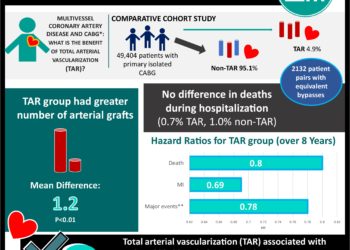
#VisualAbstract: Long-term Outcomes Associated With Total Arterial Revascularization vs Non–Total Arterial Revascularization

Quick Take: Identification of patients and plaques vulnerable to future coronary events with near-infrared spectroscopy intravascular ultrasound imaging

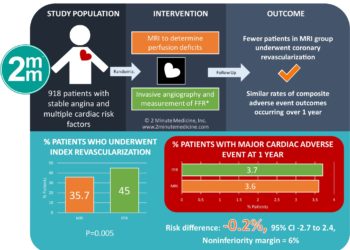
#VisualAbstract: Magnetic Resonance Perfusion or Fractional Flow Reserve in Coronary Disease

Relevant Reading: Evaluation study of congestive heart failure and pulmonary artery catheterization effectiveness (ESCAPE Trial)

In-Depth [survey analysis]: This study completed a survey analysis from the National Inpatient Sample identifying adult patients from January 2001 to December 2012. The population of study was patients with a diagnosis of HF using the validated International Classification of Disease 9th Revision (ICD-9-CM) codes. Using validated procedural codes, the study authors identified hospitalized HF patients where PA catheters were used. The authors then examined changes in the use of PA catheters among HF patients before (2001 to 2006) and after (2006 to 2012) the ESCAPE Trial. Subgroup analyses included investigation of patient cohorts with cardiogenic shock, mechanical ventilation with no cardiogenic shock, and HF without respiratory or cardiogenic failure.

Over the whole study period, 75,000 hospitalizations for heart failure were associated with PA catheter use. This represented 0.6% of all HF hospitalizations. There was an initial overall decrease in PA catheterization from 2001 to 2007, from 7.9 to 4.9 per 1000 HF hospitalizations. However, from 2007 to 2012, there was an increase back to 7.9 per 1000 HF hospitalizations. In subgroup analysis, both patient groups with cardiogenic shock only, and those without cardiogenic shock or respiratory failure, had significant initial decreases from 2001 to 2007. However, thereafter, both groups had significant increases to 2012. In contrast, patients with respiratory failure only had a significant decrease in PA catheter use from 2001 to 2012.

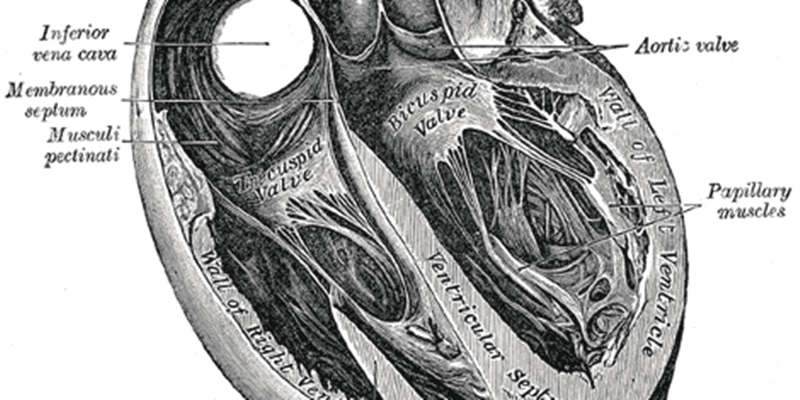
Image: PD

©2015 2 Minute Medicine, Inc. All rights reserved. No works may be reproduced without expressed written consent from 2 Minute Medicine, Inc. Inquire about licensing here. No article should be construed as medical advice and is not intended as such by the authors or by 2 Minute Medicine, Inc.
Tags: Cardiac Catheterization
Previous Post

Spleen elastography may be effective in the diagnosis of portal hypertension

Next Post

Lixisenatide ineffective in reducing cardiovascular events in diabetics: The ELIXA study

RelatedReports

#VisualAbstract: Long-term Outcomes Associated With Total Arterial Revascularization vs Non–Total Arterial Revascularization
StudyGraphics

#VisualAbstract: Long-term Outcomes Associated With Total Arterial Revascularization vs Non–Total Arterial Revascularization

April 10, 2020
Cardiology

Quick Take: Identification of patients and plaques vulnerable to future coronary events with near-infrared spectroscopy intravascular ultrasound imaging

October 11, 2019
#VisualAbstract: Magnetic Resonance Perfusion or Fractional Flow Reserve in Coronary Disease
StudyGraphics

#VisualAbstract: Magnetic Resonance Perfusion or Fractional Flow Reserve in Coronary Disease

August 10, 2019
The MR-INFORM trial: fewer patients undergo revascularization when coronary perfusion is assessed with MRI compared to invasive angiography
Chronic Disease

The MR-INFORM trial: fewer patients undergo revascularization when coronary perfusion is assessed with MRI compared to invasive angiography

June 28, 2019
Next Post
Atrial fibrillation-specific management increases days alive and out of hospital

Lixisenatide ineffective in reducing cardiovascular events in diabetics: The ELIXA study

Government-funded initiatives provide important supports to low-income HIV patients

On-demand preexposure prophylaxis decreases HIV infection in high-risk men

Cardiovascular risk factors related to brain volume and associated dementia

Prevalence of neural tube defects unchanged over 20 years in Europe

EvidencePulse™ by 2 Minute Medicine 2026 evidence scan 3 reports You asked top stroke trials 2026 Synthesizing medical evidence... Top 2026 stroke trial results: OCEANIC — ischemic stroke: 6.2% vs 8.4% OPTION* — mRS 0–1: 43.6% vs 34.2% ORIENTAL* — mRS 0–2: 58.6% vs 46.6% *Higher sICH in intervention arms Participants randomizedN OCEANIC 12,327 OPTION 570 ORIENTAL 564 Ask about guidelines or landmark trials... ↑ Try EvidencePulse™ Ask the evidence.
Get the signal.
Try it now → Physician-trained medical AI by 2 Minute Medicine

2MM+ All Access

Full details →
$4.99 /month

5-day free trial · cancel anytime

  • ✓100+ physician-written reports
  • ✓EvidencePulse™ + HypeCheck™
  • ✓Ad-free reading + newsletters
Start 5-day free trial

Then $4.99/month. Manage renewal in your account.

2 Minute Medicine® is an award winning, physician-run, expert medical media company. Our content is curated, written and edited by practicing health professionals who have clinical and scientific expertise in their field of reporting. Our editorial management team is comprised of highly-trained MD physicians. Join numerous brands, companies, and hospitals who trust our licensed content.

Recent Reports

  • Brepocitinib becomes first oral therapy approved for adult dermatomyositis
  • An ultrasound-guided percutaneous method of vagal nerve stimulation may be effective for refractory chronic pain
  • Daraxonrasib extends survival in metastatic pancreatic cancer
License Content
Terms of Use | Disclaimer
Cookie Policy
Cleantalk Pixel
2MM+ All Access Full details →

The medical literature, distilled daily.

Monthly plan selected: $4.99 /month.

$4.99/month

5-day free trial · cancel anytime

Start 5-day free trial

Then $4.99/month. Manage renewal in your account.

Yearly plan selected: $49.90 /year.

$49.90/year

2 months free · only $4.16/month

Start 5-day free trial

Then $49.90/year. Manage renewal in your account.

Membership benefits

  • ✓100+ physician-written reports
  • ✓AI EvidencePulse™ + HypeCheck™
  • ✓Ad-free reading + newsletters

Already a member? Sign in

  • About
  • Specialties
    • All Specialties, All Recent Reports
    • Cardiology
    • Chronic Disease
    • Dermatology
    • Emergency
    • Endocrinology
    • Gastroenterology
    • Imaging and Intervention
    • Infectious Disease
    • Nephrology
    • Neurology
    • Obstetrics
    • Oncology
    • Ophthalmology
    • Pediatrics
    • Pharma
    • Preclinical
    • Psychiatry
    • Public Health
    • Pulmonology
    • Rheumatology
    • Surgery
  • Tools
    • EvidencePulse™
    • HypeCheck™
    • NPI Registry Lookup
    • RVU Search
  • Pharma
  • AI Roundup
  • The Scan
  • Classics™
    • 2MM+ Online Access
    • Paperback and Ebook
  • Rewinds
  • Partners
    • License Content
    • Submit Press Release
    • Advertise with Us
  • Account
    • Subscribe
    • My account
    • Cart
    • Sign-in
No Result
View All Result

© 2026 2 Minute Medicine, Inc. - Physician-written medical news.