
• About
  • Masthead
  • License Content
  • Advertise
  • RSS/Email List
  • 2MM Podcast
  • Write for us
  • Contact Us
2 Minute Medicine
No Result
View All Result

No products in the cart.

Sign in
SUBSCRIBE
  • About
  • Specialties
    • All Specialties, All Recent Reports
    • Cardiology
    • Chronic Disease
    • Dermatology
    • Emergency
    • Endocrinology
    • Gastroenterology
    • Imaging and Intervention
    • Infectious Disease
    • Nephrology
    • Neurology
    • Obstetrics
    • Oncology
    • Ophthalmology
    • Pediatrics
    • Pharma
    • Preclinical
    • Psychiatry
    • Public Health
    • Pulmonology
    • Rheumatology
    • Surgery
  • Tools+
    • EvidencePulse™
    • HypeCheck™
    • NPI Registry Lookup
    • RVU Search
  • Pharma
  • AI Roundup
  • The Scan+
  • Classics™+
    • 2MM+ Online Access
    • Paperback and Ebook
  • Rewinds
  • Partners
    • License Content
    • Advertise with Us
2 Minute Medicine
  • About
  • Specialties
    • All Specialties, All Recent Reports
    • Cardiology
    • Chronic Disease
    • Dermatology
    • Emergency
    • Endocrinology
    • Gastroenterology
    • Imaging and Intervention
    • Infectious Disease
    • Nephrology
    • Neurology
    • Obstetrics
    • Oncology
    • Ophthalmology
    • Pediatrics
    • Pharma
    • Preclinical
    • Psychiatry
    • Public Health
    • Pulmonology
    • Rheumatology
    • Surgery
  • Tools+
    • EvidencePulse™
    • HypeCheck™
    • NPI Registry Lookup
    • RVU Search
  • Pharma
  • AI Roundup
  • The Scan+
  • Classics™+
    • 2MM+ Online Access
    • Paperback and Ebook
  • Rewinds
  • Partners
    • License Content
    • Advertise with Us
Sign in
SUBSCRIBE
2 Minute Medicine
Sign in
Subscribe
✦ EvidencePulse™ by 2 Minute Medicine 2026 evidence scan 3 reports You asked top stroke trials 2026 Synthesizing medical evidence... Top 2026 stroke trial results: OCEANIC — ischemic stroke: 6.2% vs 8.4% OPTION* — mRS 0–1: 43.6% vs 34.2% ORIENTAL* — mRS 0–2: 58.6% vs 46.6% *Higher sICH in intervention arms Participants randomizedN OCEANIC 12,327 OPTION 570 ORIENTAL 564 Ask about guidelines or landmark trials... ↑ Try EvidencePulse™ Ask the evidence.
Get the signal.
Try it now → Physician-trained medical AI by 2 Minute Medicine
Home All Specialties Chronic Disease

Multicomponent intervention linked to improved guideline adherence in long-term opioid therapy

byJames EnglandandAnees Daud
July 19, 2017
in Chronic Disease, Emergency, Oncology, Psychiatry, Public Health, Surgery
Reading Time: 3 mins read
American Academy of Pediatrics recommends standards for adverse event disclosures
Share on FacebookShare on TwitterShare on LinkedIn

1. In this cluster-randomized trial targeting primary care clinicians (PCC) treating patients with long-term opioid therapy in safety-net practices, a multicomponent intervention increased guideline concordant care and lead to opioid dose reduction or discontinuation compared to the control.

2. Frequency of early opioid prescription refills were not significantly different between the intervention and control groups.

Evidence Rating Level: 2 (Good)       

Study Rundown: Long-term opioid use has been linked to increased morbidity and mortality, and has led to increased availability for non-medical purposes. The Center for Disease Control and Prevention has published guidelines in order to minimize unsafe prescribing practices. The guidelines include: patient-clinician agreements, urine drug testing (UDT), prescription drug monitoring programs, and recommendations against use of more than 100 mg morphine equivalent daily dose (MEDD). The current study evaluated a multicomponent intervention (TOPCARE) aimed at improving guideline adherence for PCCs treating patients on long-term opioids in a safety-net setting. The study found that compared to the control, the intervention group were more likely to have guideline-concordant care, to have documented clinician-patient agreement, undergo at least one UDT, discontinue opioid therapy, or have a 10% reduction in opioid dose. There was no observed difference in the odds of early refill of opioid prescription.

The main strength of the study was the randomized controlled design allowing for more meaningful conclusions than previous observational studies. The limitations of this study included use of electronic medical records as the source of data, which were lacking information on patient outcomes such as pain control, overdose rates, and opioid misuse.

Click to read the study, published in JAMA Internal Medicine

RELATED REPORTS

The 5x-multiplier algorithm reduces opioids prescribed at discharge

A neurostimulation intervention may improve pain in patients with chronic low back pain

Relevant Reading: CDC Guideline for Prescribing Opioids for Chronic Pain—United States, 2016

In-Depth [randomized controlled trial]: This study was a cluster randomized trial assigning PCCs from 4 safety net primary care practices to either TOPCARE multicomponent intervention, or a control arm receiving only electronic decision tools for long-term opioid prescribing over a 1 year period. The intervention components included: 1) nurse care manager to aid in pain assessments, UDT testing, and prescription preparation, 2) electronic registry to consolidate electronic health record data into summary reports of action items, 3) 1-on-1 session between PCCs and an opioid prescribing expert, and 4) online evidence based decision tools to aid in opioid prescribing decisions. The primary outcomes were adherence to guideline-derived monitoring strategies, and early opioid refills. Secondary outcomes included proportion of patients discontinuing opioids, or having a 10% reduction in dose.

A total of 58 PCCs were included in the study, and 25 were assigned to the intervention group. In total, there were 985 patients on long-term opioids – 586 in the intervention group and 399 in the control. The patients assigned to TOPCARE PCCs were more likely to have guideline-concordant care (65.9% vs. 37.8%, p < 0.001), to have a clinician-patient agreement documented (53.8% vs. 6.0%, p < 0.001), undergo at least one UDT (74.6% vs. 57.9%, p < 0.001), discontinue opioid therapy (21.3% vs. 16.8%, p = 0.04), or have at least a 10% reduction in MEDD (32.8% vs. 22.9%, p = 0.01). There were no differences observed in early prescription refills (20.7% vs. 20.1%, AOR, 1.1; 95%CI, 0.7-1.8).

Image: PD

©2017 2 Minute Medicine, Inc. All rights reserved. No works may be reproduced without expressed written consent from 2 Minute Medicine, Inc. Inquire about licensing here. No article should be construed as medical advice and is not intended as such by the authors or by 2 Minute Medicine, Inc.
Tags: addictionchronic painopioids
Previous Post

2 Minute Medicine Rewind July 17, 2017

Next Post

The TNT trial: Intensive statin therapy in coronary heart disease [Classics Series]

RelatedReports

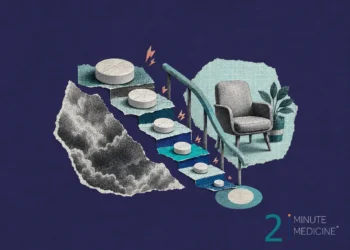
An illustration representing the process of opioid tapering, with pills arranged on a staircase leading to a seated area, symbolizing behavioral support during withdrawal.
Chronic Disease

The 5x-multiplier algorithm reduces opioids prescribed at discharge

September 13, 2026
Epidural corticosteroid injections provide only short-term radiculopathy pain relief
Chronic Disease

A neurostimulation intervention may improve pain in patients with chronic low back pain

August 17, 2026
Rectal indomethacin dose escalation for prevention of pancreatitis after endoscopic retrograde cholangiopancreatography in high-risk patients
Chronic Disease

Chemotherapy exposure is independently associated with reduced pain severity in advanced pancreatic cancer

July 15, 2026
Strict tobacco licensing laws linked to reduced adolescent smoking initiation
Pharma

Glucagon-like peptide-1 receptor agonists show potential in reducing substance use disorders

May 7, 2026
Next Post
Adverse pregnancy outcomes associated with thrombophilias [Classics Series]

The TNT trial: Intensive statin therapy in coronary heart disease [Classics Series]

Long-term outcomes for off-pump and on-pump CABG are similar

Healthy Heart Score performed moderately well in assessing cardiovascular disease risk in young adults

AAP recommends disaster preparedness measures for children

AAP issues guidelines for ideal pediatric care teams

✦ EvidencePulse™ by 2 Minute Medicine 2026 evidence scan 3 reports You asked top stroke trials 2026 Synthesizing medical evidence... Top 2026 stroke trial results: OCEANIC — ischemic stroke: 6.2% vs 8.4% OPTION* — mRS 0–1: 43.6% vs 34.2% ORIENTAL* — mRS 0–2: 58.6% vs 46.6% *Higher sICH in intervention arms Participants randomizedN OCEANIC 12,327 OPTION 570 ORIENTAL 564 Ask about guidelines or landmark trials... Try EvidencePulse™ Get the signal. Try it now → Physician-trained medical AI by 2 Minute Medicine

2MM+ All Access

Full details →
$4.99 /month

3-day free trial · cancel anytime

  • ✓100+ physician-written reports
  • ✓EvidencePulse™ + HypeCheck™
  • ✓Ad-free reading + newsletters
Start 3-day free trial

Then $4.99/month. Manage renewal in your account.

NPI Lookup · Free

Look up any US clinician

Search by name or NPI number, live from the CMS NPI Registry.

  • OIG exclusion check
  • Licenses and specialties
  • No account needed
Open NPI Lookup →

2 Minute Medicine® is an award winning, physician-run, expert medical media company. Our content is curated, written and edited by practicing health professionals who have clinical and scientific expertise in their field of reporting. Our editorial management team is comprised of highly-trained MD physicians. Join numerous brands, companies, and hospitals who trust our licensed content.

Recent Reports

  • 2 Minute Medicine Rewind October 19, 2026
  • Deep learning model demonstrates potential to generate an interpretable brain health biomarker from sleep electroencephalography
  • Low-pressure pneumoperitoneum does not reduce pain after laporoscopic cholecystectomy
License Content
Terms of Use | Disclaimer
Cookie Policy
2MM+ All Access Full details →

The medical literature, distilled daily.

Monthly plan selected: $4.99 /month.

$4.99/month

3-day free trial · cancel anytime

Start 3-day free trial

Then $4.99/month. Manage renewal in your account.

Yearly plan selected: $49.90 /year.

$49.90/year

2 months free

Start 3-day free trial

Then $49.90/year.

Membership benefits

  • ✓100+ physician-written reports
  • ✓AI EvidencePulse™ + HypeCheck™
  • ✓Ad-free reading + newsletters
  • ✓NPI watchlist + bulk NPI verification

Already a member? Sign in

  • About
  • Specialties
    • All Specialties, All Recent Reports
    • Cardiology
    • Chronic Disease
    • Dermatology
    • Emergency
    • Endocrinology
    • Gastroenterology
    • Imaging and Intervention
    • Infectious Disease
    • Nephrology
    • Neurology
    • Obstetrics
    • Oncology
    • Ophthalmology
    • Pediatrics
    • Pharma
    • Preclinical
    • Psychiatry
    • Public Health
    • Pulmonology
    • Rheumatology
    • Surgery
  • Tools
    • EvidencePulse™
    • HypeCheck™
    • NPI Registry Lookup
    • RVU Search
  • Pharma
  • AI Roundup
  • The Scan
  • Classics™
    • 2MM+ Online Access
    • Paperback and Ebook
  • Rewinds
  • Partners
    • License Content
    • Advertise with Us
No Result
View All Result

© 2026 2 Minute Medicine, Inc. - Physician-written medical news.