

• About
  • Masthead
  • License Content
  • Advertise
  • Submit Press Release
  • RSS/Email List
  • 2MM Podcast
  • Write for us
  • Contact Us
2 Minute Medicine
No Result
View All Result

No products in the cart.

SUBSCRIBE
  • Specialties
    • All Specialties, All Recent Reports
    • Cardiology
    • Chronic Disease
    • Dermatology
    • Emergency
    • Endocrinology
    • Gastroenterology
    • Imaging and Intervention
    • Infectious Disease
    • Nephrology
    • Neurology
    • Obstetrics
    • Oncology
    • Ophthalmology
    • Pediatrics
    • Pharma
    • Preclinical
    • Psychiatry
    • Public Health
    • Pulmonology
    • Rheumatology
    • Surgery
  • Tools
    • EvidencePulse™
    • RVU Search
    • NPI Registry Lookup
  • Pharma
  • AI News
  • The Scan+
  • Classics™+
    • 2MM+ Online Access
    • Paperback and Ebook
  • Rewinds
  • Partners
    • License Content
    • Submit Press Release
    • Advertise with Us
  • Account
    • Subscribe
    • Sign-in
    • My account
2 Minute Medicine
  • Specialties
    • All Specialties, All Recent Reports
    • Cardiology
    • Chronic Disease
    • Dermatology
    • Emergency
    • Endocrinology
    • Gastroenterology
    • Imaging and Intervention
    • Infectious Disease
    • Nephrology
    • Neurology
    • Obstetrics
    • Oncology
    • Ophthalmology
    • Pediatrics
    • Pharma
    • Preclinical
    • Psychiatry
    • Public Health
    • Pulmonology
    • Rheumatology
    • Surgery
  • Tools
    • EvidencePulse™
    • RVU Search
    • NPI Registry Lookup
  • Pharma
  • AI News
  • The Scan+
  • Classics™+
    • 2MM+ Online Access
    • Paperback and Ebook
  • Rewinds
  • Partners
    • License Content
    • Submit Press Release
    • Advertise with Us
  • Account
    • Subscribe
    • Sign-in
    • My account
SUBSCRIBE
2 Minute Medicine
Subscribe
Home 2 Minute Medicine

Artificial intelligence-assisted electrocardiogram interpretation improves door-to-balloon time in patients with suspected acute coronary syndromes
byCheng En XiandDeepti Shroff
August 9, 2024
in 2 Minute Medicine, Cardiology, Emergency
Reading Time: 2 mins read
0
Share on FacebookShare on Twitter

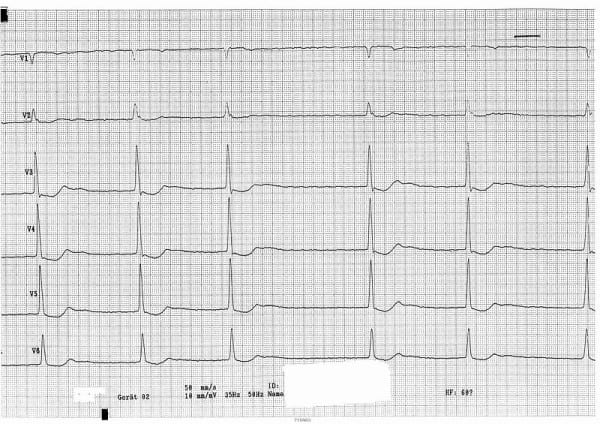
1. A randomized controlled trial by Lin and colleagues compared artificial intelligence (AI) to standard care in triaging suspected cases of myocardial infarction.

2. AI-assisted triaging of patients based on ECG interpretations significantly decreased the door-to-balloon and ECG-to-balloon times for patients.

Evidence Rating Level: 1 (Excellent)

Study Rundown: Timely intervention via primary percutaneous coronary intervention (PPCI) for ST-segment elevation myocardial infarction (STEMI) is crucial for patient prognosis. However, it is challenging to distinguish between STEMI patients and those with undifferentiated chest pain in acute clinical settings. Lin and colleagues conducted a randomized controlled trial to compare the triage performance of artificial intelligence (AI)-assisted electrocardiogram (ECG) analysis against the standard care protocol. 43,234 patients were assigned randomly to an intervention group and a control group. The intervention group used an AI algorithm to analyze 12-lead ECG waveform data in real time, which alerted cardiologists of suspected STEMI cases. The control group utilized patient assessment by frontline physicians, who can then refer patients to cardiology. The primary endpoints were the door-to-balloon time and ECG-to-balloon time in STEMI patients. The study found that both primary endpoints were significantly shorter for the intervention group compared to the control group. However, there were no significant differences between their prognostic indicators (ejection fraction, highest level of high-sensitivity cardiac troponin I and creatinine kinase, length of hospitalization). Overall, this study demonstrated AI’s ability to improve the timeliness of care delivery for STEMI patients.

Click here to read the study in NEJM AI

Relevant Reading: Current and Future Use of Artificial Intelligence in Electrocardiography

RELATED REPORTS

The preoperative combination of evolocumab and rosuvastatin may not reduce major adverse cardiovascular events

Late ventricular fibrillation following myocardial infarction is associated with increased risk of 1-year mortality

2 Minute Medicine Rewind January 5, 2026

In-Depth [randomized controlled trial]: 43,234 adult patients without prior coronary angiography who received an ECG in the emergency or inpatient department were randomized to the intervention or control group in a 1:1 ratio. The AI algorithm used in this trial reported a positive predictive value of 93.2% in a preliminary study. The cardiologists were not blinded to their group assignment. Instead of AI, frontline physicians in the control group had a Philips automatic ECG analysis system to assist with interpretation. The primary endpoints were the door-to-balloon time and ECG-to-balloon time in STEMI patients. The former was a known prognostic indicator, and the latter was more relevant for evaluating inpatient cases. In the emergency department, the median door-to-balloon time was 82.0 minutes in the intervention group, compared to 96.0 minutes in the control group (p = 0.002). For both emergency and inpatient cases, the median ECG-to-ballon time was 78.0 minutes (intervention) versus 83.6 minutes (control) (p = 0.011). Furthermore, post hoc analysis was conducted for hospitalization prognostic indicators for STEMI: ejection fraction, the highest level of high-sensitivity cardiac troponin I and creatinine kinase, and length of hospitalization. There were no significant differences in these measures between the two groups. The authors concluded that AI-ECG analysis demonstrated its potential to enhance the timeliness of STEMI treatments, and further research with longer follow-up periods is required to clarify the intervention’s clinical benefits.

Image: PD

©2024 2 Minute Medicine, Inc. All rights reserved. No works may be reproduced without expressed written consent from 2 Minute Medicine, Inc. Inquire about licensing here. No article should be construed as medical advice and is not intended as such by the authors or by 2 Minute Medicine, Inc.
Tags: #cardiology#ECGartifical intelligenceelectrocardiogramElectrocardiogram (EKG)Heart Attack (Myocardial Infarction)STEMI
Previous Post

Stereotactic radiotherapy reduces anti-VEGF injection requirements in neovascular age-related macular degeneration

Next Post

Phase I trial of novel CAR-T cell therapy for pediatric midline gliomas

RelatedReports

Using HEART score to risk stratify patients with chest pain is safe but underutilized in the ED
Cardiology

The preoperative combination of evolocumab and rosuvastatin may not reduce major adverse cardiovascular events

January 12, 2026
Using HEART score to risk stratify patients with chest pain is safe but underutilized in the ED
Cardiology

Late ventricular fibrillation following myocardial infarction is associated with increased risk of 1-year mortality

January 12, 2026
Using HEART score to risk stratify patients with chest pain is safe but underutilized in the ED
Weekly Rewinds

2 Minute Medicine Rewind January 5, 2026

January 13, 2026
Using HEART score to risk stratify patients with chest pain is safe but underutilized in the ED
Cardiology

Use of ticagrelor may provide improved myocardial protection compared to clopidogrel in pharmaco-invasive ST-segment elevation myocardial infarction

January 13, 2026
Next Post
Brain lesions on MRI linked with subsequent increased stroke risk

Phase I trial of novel CAR-T cell therapy for pediatric midline gliomas

Variability in interpretation of breast biopsy slides associated with low verification of atypia and ductal carcinoma in situ

Dose-dense adjuvant therapy with epirubicin and cyclophosphamide effective for breast cancer

2 Minute Medicine Rewind August 12, 2024

2 Minute Medicine® is an award winning, physician-run, expert medical media company. Our content is curated, written and edited by practicing health professionals who have clinical and scientific expertise in their field of reporting. Our editorial management team is comprised of highly-trained MD physicians. Join numerous brands, companies, and hospitals who trust our licensed content.

Recent Reports

  • Propofol is associated with lower mortality in sepsis-associated encephalopathy
  • The Scan by 2 Minute Medicine®: Daily caffeine intake linked to lower dementia risk, AAP sues over federal vaccine schedule overhaul, Catherine O’Hara passes away after short illness, and GLP-1 receptor agonists reduce endometrial cancer risk
  • Polypharmacy is associated with higher risk of mortality and hospitalizations among older adults
License Content
Terms of Use | Disclaimer
Cookie Policy
Privacy Statement (EU)
Disclaimer

© 2025 2 Minute Medicine, Inc. - Physician-written medical news.

  • Specialties
    • All Specialties, All Recent Reports
    • Cardiology
    • Chronic Disease
    • Dermatology
    • Emergency
    • Endocrinology
    • Gastroenterology
    • Imaging and Intervention
    • Infectious Disease
    • Nephrology
    • Neurology
    • Obstetrics
    • Oncology
    • Ophthalmology
    • Pediatrics
    • Pharma
    • Preclinical
    • Psychiatry
    • Public Health
    • Pulmonology
    • Rheumatology
    • Surgery
  • Tools
    • EvidencePulse™
    • RVU Search
    • NPI Registry Lookup
  • Pharma
  • AI News
  • The Scan
  • Classics™
    • 2MM+ Online Access
    • Paperback and Ebook
  • Rewinds
  • Partners
    • License Content
    • Submit Press Release
    • Advertise with Us
  • Account
    • Subscribe
    • Sign-in
    • My account
No Result
View All Result

© 2025 2 Minute Medicine, Inc. - Physician-written medical news.