Mesenteric approach reduces tumor cell spillage without improving survival in pancreatoduodenectomy
1. The mesenteric approach to pancreatoduodenectomy did not improve overall survival compared to the conventional Kocher-first approach in patients with resectable or borderline resectable pancreatic ductal adenocarcinoma.
2. Despite showing no survival benefit, the mesenteric approach significantly reduced circulating tumor cell DNA in portal venous blood.
Evidence Rating Level: 1 (Excellent)
Study Rundown: The conventional approach to pancreatoduodenectomy begins with extensive Kocher mobilization to free the pancreatic head from the retroperitoneum. The infracolic superior mesenteric artery (SMA)-first “mesenteric” approach to pancreatoduodenectomy accesses the SMA early through the infracolic compartment and was developed to optimize curative resection rates, reduce intraoperative blood loss, and minimize intraoperative tumor dissemination. Prior evidence supporting the use of the mesenteric approach was largely limited to retrospective, single-center data. The MAPLE-PD trial addressed this gap with a randomized design across multiple high-volume Japanese centers, enrolling patients with both resectable and borderline resectable pancreatic ductal adenocarcinoma (PDAC) scheduled to undergo elective pancreatoduodenectomy. With a median follow-up of nearly 40 months, neither overall survival nor recurrence-free survival differed between groups based on intention-to-treat analysis, regardless of resectability status, neoadjuvant therapy use, or per-protocol subgroup analyses. R0 resection rates and postoperative complications were also comparable between treatment arms. However, intraoperative blood loss was higher in the mesenteric group than in the conventional group. There was notable divergence in intraoperative circulating tumor cell (CTC) DNA between groups. While portal venous CTC levels from laparotomy to just before specimen removal rose in the conventional approach, they decreased in the mesenteric approach. However, this significant scientific change did not translate into measurable clinical benefit. Strengths of this study included its multicenter, randomized design and broad inclusion of both resectable and borderline resectable cases. Limitations included a restriction to Japanese high-volume centers, potentially limiting generalizability to lower-volume or internationally diverse settings; additionally, there was a lack of standardization of neoadjuvant and adjuvant chemotherapy regimens.
Click to read the study in Annals of Surgery
Relevant Reading: Reduced Dissemination of Circulating Tumor Cells With No-Touch Isolation Surgical Technique in Patients With Pancreatic Cancer
In-Depth [randomized controlled trial]: This study enrolled patients scheduled to undergo elective pancreatoduodenectomy for resectable or borderline resectable PDAC with portal vein invasion across 24 high-volume Japanese centers between 2018 and 2021. Patients were blinded and randomized 1:1 to either the Kocher-first conventional approach or the mesenteric approach to pancreatoduodenectomy. The primary endpoint was overall survival (OS) by intention-to-treat analysis. Secondary endpoints included recurrence-free survival (RFS) and R0 resection rate. Portal venous blood was sampled at laparotomy and again just prior to specimen removal to quantify CTC DNA copy numbers. A total of 360 patients were randomized, 181 to the conventional group and 179 to the mesenteric group. During a median follow-up time of 39.3 months, OS was comparable between the conventional and mesenteric study arms (41.7 vs. 39.3 months; HR 1.02, 95% CI 0.76-1.37; P = .897). RFS was also similar between groups (HR 1.08, 95% CI 0.84-1.39; P = .566). Subgroup analyses by resectability category and neoadjuvant therapy status showed no differential benefit in OS or RFS between the treatment arms. Despite the theoretical advantage of a mesenteric approach in achieving more complete tissue clearance surrounding the SMA, R0 resection rates were comparable between groups in this study. A significant difference was reported between groups regarding intraoperative change in CTC DNA from laparotomy to pre-specimen removal: in the conventional group, the mean change in portal venous CTC DNA copy numbers increased by a value of 10.1 ± 2.6, whereas CTC levels in the mesenteric group decreased over the same interval by an average of −7.3 ± 2.6 copies (P < .0001). This between-group difference in CTC burden suggests that the intraoperative vascular spread of cancer cells is mitigated by the nontouch isolation procedure afforded by the mesenteric approach. However, there was no difference between groups in rates of postoperative disease recurrence both locally (22% conventional vs. 21% mesenteric; P = .841) and distantly to sites including the liver (21% vs. 17%; P = .305) and lung (11% vs. 10%; P = .759). This suggests that in PDAC, a disease with considerably poor prognosis, limiting tumor cell spread during pancreatoduodenectomy alone is insufficient to improve survival or reduce recurrence, underscoring the importance of multimodal treatment including adjuvant chemotherapy.
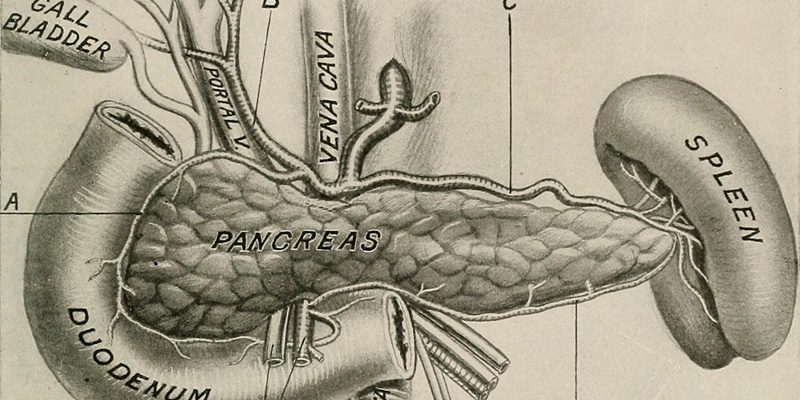
Image: PD
©2026 2 Minute Medicine, Inc. All rights reserved. No works may be reproduced without expressed written consent from 2 Minute Medicine, Inc. Inquire about licensing here. No article should be construed as medical advice and is not intended as such by the authors or by 2 Minute Medicine, Inc.