

• About
  • Masthead
  • License Content
  • Advertise
  • Submit Press Release
  • RSS/Email List
  • 2MM Podcast
  • Write for us
  • Contact Us
2 Minute Medicine
No Result
View All Result

No products in the cart.

SUBSCRIBE
  • Specialties
    • All Specialties, All Recent Reports
    • Cardiology
    • Chronic Disease
    • Dermatology
    • Emergency
    • Endocrinology
    • Gastroenterology
    • Imaging and Intervention
    • Infectious Disease
    • Nephrology
    • Neurology
    • Obstetrics
    • Oncology
    • Ophthalmology
    • Pediatrics
    • Pharma
    • Preclinical
    • Psychiatry
    • Public Health
    • Pulmonology
    • Rheumatology
    • Surgery
  • Tools
    • EvidencePulse™
    • RVU Search
    • NPI Registry Lookup
  • Pharma
  • AI News
  • The Scan+
  • Classics™+
    • 2MM+ Online Access
    • Paperback and Ebook
  • Rewinds
  • Partners
    • License Content
    • Submit Press Release
    • Advertise with Us
  • Account
    • Subscribe
    • Sign-in
    • My account
2 Minute Medicine
  • Specialties
    • All Specialties, All Recent Reports
    • Cardiology
    • Chronic Disease
    • Dermatology
    • Emergency
    • Endocrinology
    • Gastroenterology
    • Imaging and Intervention
    • Infectious Disease
    • Nephrology
    • Neurology
    • Obstetrics
    • Oncology
    • Ophthalmology
    • Pediatrics
    • Pharma
    • Preclinical
    • Psychiatry
    • Public Health
    • Pulmonology
    • Rheumatology
    • Surgery
  • Tools
    • EvidencePulse™
    • RVU Search
    • NPI Registry Lookup
  • Pharma
  • AI News
  • The Scan+
  • Classics™+
    • 2MM+ Online Access
    • Paperback and Ebook
  • Rewinds
  • Partners
    • License Content
    • Submit Press Release
    • Advertise with Us
  • Account
    • Subscribe
    • Sign-in
    • My account
SUBSCRIBE
2 Minute Medicine
Subscribe
Home 2 Minute Medicine

A new machine-learning model achieved higher diagnostic accuracy on Mendelian disorders than existing bioinformatic tools
byCheng En XiandDeepti Shroff
June 3, 2024
in 2 Minute Medicine, Genetics
Reading Time: 3 mins read
0
Share on FacebookShare on Twitter

1. AI-MARRVEL (AIM), a new artificial intelligence (AI) system, was trained using samples diagnosed by experts from the American Board of Medical Genetics and Genomics. The system was subsequently tested on three patient data sets.

2. Compared with four existing top-performing algorithms, AIM doubled the number of solved cases. AIM achieved a precision rate of 98% and identified 57% of diagnosable cases.

Evidence Rating Level: 2 (Good)

Study Rundown: Mendelian diseases are caused by one or a few variants in a single gene, but identifying these variants is time-consuming and requires a broad knowledge base. A cost-effective solution is bioinformatics gene analysis, but existing tools have limited accuracy and were developed using simulated data. Mao and colleagues developed a new AI system – AIM, using 3.5 million variant data points. It was engineered using genetic principles and the clinical expertise of experts. Then, AIM’s accuracy against four existing, top-performing bioinformatic tools was tested using data from three distinct patient groups. The study found that AIM outperformed all four comparators across all three datasets. As the volume of training samples increased, AIM’s accuracy increased from 54% to 66% after incorporating additional engineering features. However, like other tools, AIM performed worse for cases with a recessive inheritance pattern compared to those with a dominant pattern. AIM was then further modified to produce a model dedicated to diagnosing recessive cases, achieving an accuracy of 63.4%. Similarly, additional training and filters enhanced its performance in diagnosing heterozygous variants. Overall, this study demonstrated the potential of AIM in identifying genetic variants for diagnosing Mendelian disorders and its superiority over existing algorithms.

Click here to read the study in NEJM AI

Click to read an accompanying editorial in NEJM AI

RELATED REPORTS

Ambient artificial intelligence effectively reduced work exhaustion among healthcare providers

Anthropic positions Claude as workflow software for regulated healthcare, not a chatbot

AstraZeneca moves to own multimodal oncology AI with Modella

Relevant Reading: Open-Source Artificial Intelligence System Supports Diagnosis of Mendelian Diseases in Acutely Ill Infants

In-Depth [cross-sectional study]: Mao and colleagues developed AIM using 3.5 million variant data points from samples diagnosed and selected by experts certified by the American Board of Medical Genetics and Genomics. AIM was engineered with relevant knowledge such as minor allele frequency, variant impact, inheritance pattern, phenotype matching, gene constraint, etc., as well as different aspects of genetic diagnosis techniques. The authors compared AIM’s performance to four top-performing benchmarking algorithms: Exomiser, LIRICAL, PhenIX, and Xrare across three independent data sets (1377 total patients). Throughout the study, AIM was modified to create additional models to assess changes in its performance in specific diagnostic contexts (e.g., diagnosing recessive disorders).

AIM achieved higher accuracy rates than all four comparators across all three data sets, having diagnosed 57% of diagnosable cases out of 871 cases. For context, the current diagnostic rate for such disorders is 30-40%. With additional engineering features, AIM improved its accuracy from 54% to 66%, indicating AIM’s ability to capture underlying patterns within the additional training data. Like other algorithms, AIM performed worse for recessive cases, leading to the development of AIM-Recessive, achieving a 63.4% accuracy rate. Finally, a new AIM model without connections to established disease databases could potentially identify new disease genes and variants with limited patient data. Despite these successes, AIM was mainly trained on cases involving coding variants, with its ability to analyze non-coding variants being unclear.

In conclusion, the authors assessed AIM’s ability to diagnose Mendelian disorders by analyzing gene variants. Its superiority over existing algorithms demonstrated its potential to become a more cost-effective method of interpreting genetic variations and improving patient outcomes.

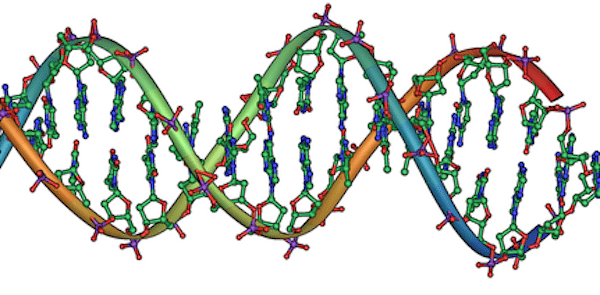
Image: PD

©2024 2 Minute Medicine, Inc. All rights reserved. No works may be reproduced without expressed written consent from 2 Minute Medicine, Inc. Inquire about licensing here. No article should be construed as medical advice and is not intended as such by the authors or by 2 Minute Medicine, Inc.

Tags: artificial intelligencegenetic disordersgenetic screeningMendelian disorders
Previous Post

#VisualAbstract: Nirmatrelvir does not decrease symptom duration of COVID-19

Next Post

#VisualAbstract: Ticagrelor monotherapy reduces bleeding risk following percutaneous coronary intervention

RelatedReports

Natural language processing may automate data extraction from radiologic reports
Artificial Intelligence

Ambient artificial intelligence effectively reduced work exhaustion among healthcare providers

February 2, 2026
Natural language processing may automate data extraction from radiologic reports
AI Roundup

Anthropic positions Claude as workflow software for regulated healthcare, not a chatbot

January 22, 2026
Patients with advanced adenomas are at increased risk of developing colorectal cancer
AI Roundup

AstraZeneca moves to own multimodal oncology AI with Modella

January 21, 2026
Tramadol use linked with increased risk of hypoglycemia hospitalizations
AI Roundup

NVIDIA and Lilly put $1B behind AI as core drug infrastructure

January 20, 2026
Next Post
#VisualAbstract: Ticagrelor monotherapy reduces bleeding risk following percutaneous coronary intervention

#VisualAbstract: Ticagrelor monotherapy reduces bleeding risk following percutaneous coronary intervention

Thrombophilia-associated stillbirth risk appears limited to factor V Leiden

2 Minute Medicine Rewind June 3rd, 2024

High schoolers use e-cigarettes to vaporize cannabis

Vaping associated with increased incidence of respiratory symptoms amongst youth

2 Minute Medicine® is an award winning, physician-run, expert medical media company. Our content is curated, written and edited by practicing health professionals who have clinical and scientific expertise in their field of reporting. Our editorial management team is comprised of highly-trained MD physicians. Join numerous brands, companies, and hospitals who trust our licensed content.

Recent Reports

  • An ultrasound test may more reliably detect ovarian cancer in premenopausal women than the Risk of Malignancy Index
  • Chimeric antigen receptor T-cell therapy may induce sustained remission in multirefractory autoimmune hemolytic anemia
  • Neonatal Hyperbilirubinemia and navigating the 2022 AAP guideline updates
License Content
Terms of Use | Disclaimer
Cookie Policy
Privacy Statement (EU)
Disclaimer

© 2025 2 Minute Medicine, Inc. - Physician-written medical news.

  • Specialties
    • All Specialties, All Recent Reports
    • Cardiology
    • Chronic Disease
    • Dermatology
    • Emergency
    • Endocrinology
    • Gastroenterology
    • Imaging and Intervention
    • Infectious Disease
    • Nephrology
    • Neurology
    • Obstetrics
    • Oncology
    • Ophthalmology
    • Pediatrics
    • Pharma
    • Preclinical
    • Psychiatry
    • Public Health
    • Pulmonology
    • Rheumatology
    • Surgery
  • Tools
    • EvidencePulse™
    • RVU Search
    • NPI Registry Lookup
  • Pharma
  • AI News
  • The Scan
  • Classics™
    • 2MM+ Online Access
    • Paperback and Ebook
  • Rewinds
  • Partners
    • License Content
    • Submit Press Release
    • Advertise with Us
  • Account
    • Subscribe
    • Sign-in
    • My account
No Result
View All Result

© 2025 2 Minute Medicine, Inc. - Physician-written medical news.