

• About
  • Masthead
  • License Content
  • Advertise
  • Submit Press Release
  • RSS/Email List
  • 2MM Podcast
  • Write for us
  • Contact Us
2 Minute Medicine
No Result
View All Result

No products in the cart.

SUBSCRIBE
  • Specialties
    • All Specialties, All Recent Reports
    • Cardiology
    • Chronic Disease
    • Dermatology
    • Emergency
    • Endocrinology
    • Gastroenterology
    • Imaging and Intervention
    • Infectious Disease
    • Nephrology
    • Neurology
    • Obstetrics
    • Oncology
    • Ophthalmology
    • Pediatrics
    • Pharma
    • Preclinical
    • Psychiatry
    • Public Health
    • Pulmonology
    • Rheumatology
    • Surgery
  • Tools
    • EvidencePulse™
    • RVU Search
    • NPI Registry Lookup
  • Pharma
  • AI News
  • The Scan+
  • Classics™+
    • 2MM+ Online Access
    • Paperback and Ebook
  • Rewinds
  • Partners
    • License Content
    • Submit Press Release
    • Advertise with Us
  • Account
    • Subscribe
    • Sign-in
    • My account
2 Minute Medicine
  • Specialties
    • All Specialties, All Recent Reports
    • Cardiology
    • Chronic Disease
    • Dermatology
    • Emergency
    • Endocrinology
    • Gastroenterology
    • Imaging and Intervention
    • Infectious Disease
    • Nephrology
    • Neurology
    • Obstetrics
    • Oncology
    • Ophthalmology
    • Pediatrics
    • Pharma
    • Preclinical
    • Psychiatry
    • Public Health
    • Pulmonology
    • Rheumatology
    • Surgery
  • Tools
    • EvidencePulse™
    • RVU Search
    • NPI Registry Lookup
  • Pharma
  • AI News
  • The Scan+
  • Classics™+
    • 2MM+ Online Access
    • Paperback and Ebook
  • Rewinds
  • Partners
    • License Content
    • Submit Press Release
    • Advertise with Us
  • Account
    • Subscribe
    • Sign-in
    • My account
SUBSCRIBE
2 Minute Medicine
Subscribe
Home All Specialties Hematology

Chimeric antigen receptor T-cell therapy may induce sustained remission in multirefractory autoimmune hemolytic anemia
byRomila SantraandThomas Su
February 6, 2026
in Hematology
Reading Time: 3 mins read
0
Share on FacebookShare on Twitter

1. In this prospective cohort study, CD19-directed chimeric antigen receptor (CAR) T-cell therapy was found to elicit a complete response in eleven patients with autoimmune hemolytic anemia who had previously failed at least three lines of therapy.

2. Treatment was associated with an acceptable safety profile, with adverse events including mild cytokine-release syndrome and mild to moderate infections. 

Evidence Rating Level: 2 (Good)

Study Rundown: Patients with autoimmune hemolytic anemia (AIHA) face a high risk of relapse, with those unresponsive to three or more therapies classified as having multirefractory disease. CD19-directed chimeric antigen receptor (CAR) T-cell therapy depletes B cells and thus may reduce autoreactive B-cell activity in AIHA. This prospective clinical trial examined the safety and efficacy of a single infusion of CD19 CAR T-cell therapy in treating adults with multirefractory AIHA. All eleven patients enrolled achieved a complete response to the treatment, defined as symptom resolution, improved anemia, and normalization of hemolysis markers, in a median time of under two months. Relapse occurred in two of the eleven patients over a median follow-up of over twelve months. The most commonly reported adverse events were mild to moderate infections, but others included mild cytokine release syndrome, one instance of immune effector cell-associated neurotoxicity syndrome, and one instance of immune effector cell-associated hematotoxicity. Strengths of the study were inclusion of patients with different subtypes of AIHA as well as the analysis of the cellular mechanisms of relapse that were observed. Some limitations were a small sample size and a relatively short follow-up duration. Overall, this study suggests that CD19 CAR T-cell therapy may be a relatively safe treatment to achieve rapid, prolonged remission in patients with multirefractory AIHA. 

Click to read the study in NEJM

Relevant Reading: BCMA-Targeted T-Cell Engager for Autoimmune Hemolytic Anemia after CD19 CAR T-Cell Therapy

RELATED REPORTS

Afamitresgene autoleucel as an effective T-cell therapy for synovial sarcoma and liposarcoma

Axicabtagene ciloleucel improves event-free survival in relapsed or refractory large B-cell lymphoma

#VisualAbstract Lenalidomide in combination with R-CHOP is effective in new, untreated diffuse large B-cell lymphoma transformed from follicular lymphoma

In-Depth [prospective cohort]: This prospective cohort study aimed to study the safety and efficacy of CD19 CAR T-cell therapy in treatment of multirefractory AIHA. Patients with primary AIHA who were previously unresponsive to three or more previous therapies were enrolled from a compassionate-use program (n=5) and from a phase 1 study (n=6). Patients with lymphoproliferative disorders, secondary AIHA, or previous organ or stem-cell transplantation were excluded. Participants underwent monthly testing of flow cytometry, cell counts, and hemolysis markers for six months. Complete response was defined as a resolution of symptoms, hemoglobin level of 11 in women and 12 in men and normalization of hemolysis markers including lactate dehydrogenase and unconjugated bilirubin. Among this cohort, CAR T cells persisted for a median of 68 days (interquartile range [IQR], 39.5 to 128.8 days), and B cell aplasia persisted for 69 days (IQR, 51 to 90 days). All patients had complete response to the drug by a median of 45 days (range, 21 to 153 days). The median duration of drug-free remission was 11.5 months. There were a total of 67 adverse events among the 11 participants, including grade 3 infections, immune effector cell-associated hematotoxicity (ICAH), mild cytokine release syndrome, and grade 1 immune effector cell-associated neurotoxicity syndrome (ICANS). There were no severe cases of neutropenia or leukopenia, nor any increase in mutation burden in marrow T cells. Two patients did relapse 7 to 8 months after the infusion, but further targeted therapy then induced a complete response in both patients. Altogether, these results suggest that CD19 CAR T-cell therapy may be an effective therapy for patients with multirefractory AIHA. 

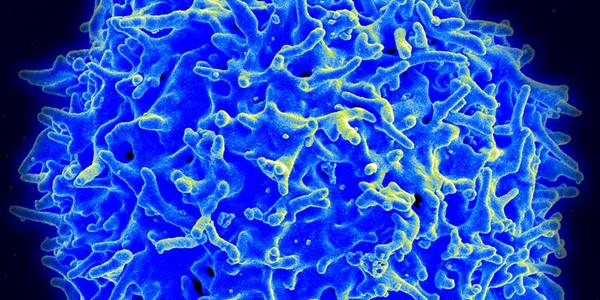
Image: PD

©2026 2 Minute Medicine, Inc. All rights reserved. No works may be reproduced without expressed written consent from 2 Minute Medicine, Inc. Inquire about licensing here. No article should be construed as medical advice and is not intended as such by the authors or by 2 Minute Medicine, Inc.

Tags: autoimmune hemolytic anemia (AIHA)b-cellCD19chimeric antigen receptor (CAR) T-cell therapy
Previous Post

Neonatal Hyperbilirubinemia and navigating the 2022 AAP guideline updates

Next Post

An ultrasound test may more reliably detect ovarian cancer in premenopausal women than the Risk of Malignancy Index

RelatedReports

Survivors of adult-onset cancers associated with increased incidence of cardiovascular disease
Chronic Disease

Afamitresgene autoleucel as an effective T-cell therapy for synovial sarcoma and liposarcoma

May 1, 2024
Mutation linked with decrease in cutaneous diffuse large B-cell lymphoma
Hematology

Axicabtagene ciloleucel improves event-free survival in relapsed or refractory large B-cell lymphoma

February 28, 2022
#VisualAbstract Lenalidomide in combination with R-CHOP is effective in new, untreated diffuse large B-cell lymphoma transformed from follicular lymphoma
StudyGraphics

#VisualAbstract Lenalidomide in combination with R-CHOP is effective in new, untreated diffuse large B-cell lymphoma transformed from follicular lymphoma

November 12, 2021
#VisualAbstract Venetoclax with dose-adjusted EPOCH-R may be a promising combination therapy for aggressive B-cell lymphoma
StudyGraphics

#VisualAbstract Venetoclax with dose-adjusted EPOCH-R may be a promising combination therapy for aggressive B-cell lymphoma

October 21, 2021
Next Post
Assessment of Combined Nivolumab and Bevacizumab in Relapsed Ovarian Cancer: A Phase 2 Clinical Trial

An ultrasound test may more reliably detect ovarian cancer in premenopausal women than the Risk of Malignancy Index

Assessment of Combined Nivolumab and Bevacizumab in Relapsed Ovarian Cancer: A Phase 2 Clinical Trial

2 Minute Medicine Rewind February 9, 2026

Amniotic fluid lactate associated with labor disorders

The incidence of psychotic disorders has increased in more recent birth cohorts

2 Minute Medicine® is an award winning, physician-run, expert medical media company. Our content is curated, written and edited by practicing health professionals who have clinical and scientific expertise in their field of reporting. Our editorial management team is comprised of highly-trained MD physicians. Join numerous brands, companies, and hospitals who trust our licensed content.

Recent Reports

  • Artificial intelligence predicts colorectal cancer in ulcerative colitis with 99% accuracy
  • Penpulimab and lenalidomide in combination with standard of care chemoimmunotherapy demonstrates promising safety and efficacy in diffuse large B-cell lymphoma
  • Artificial intelligence designed drugs Hit 90% Phase I success rate in trials
License Content
Terms of Use | Disclaimer
Cookie Policy
Privacy Statement (EU)
Disclaimer

© 2025 2 Minute Medicine, Inc. - Physician-written medical news.

  • Specialties
    • All Specialties, All Recent Reports
    • Cardiology
    • Chronic Disease
    • Dermatology
    • Emergency
    • Endocrinology
    • Gastroenterology
    • Imaging and Intervention
    • Infectious Disease
    • Nephrology
    • Neurology
    • Obstetrics
    • Oncology
    • Ophthalmology
    • Pediatrics
    • Pharma
    • Preclinical
    • Psychiatry
    • Public Health
    • Pulmonology
    • Rheumatology
    • Surgery
  • Tools
    • EvidencePulse™
    • RVU Search
    • NPI Registry Lookup
  • Pharma
  • AI News
  • The Scan
  • Classics™
    • 2MM+ Online Access
    • Paperback and Ebook
  • Rewinds
  • Partners
    • License Content
    • Submit Press Release
    • Advertise with Us
  • Account
    • Subscribe
    • Sign-in
    • My account
No Result
View All Result

© 2025 2 Minute Medicine, Inc. - Physician-written medical news.