A telemedicine intervention may be non-inferior to standard care for rotator cuff syndrome
1. Telemedicine was non-inferior to conventional care in reducing pain and improving function for patients with RCS.
Evidence Rating Level: 1 (Excellent)
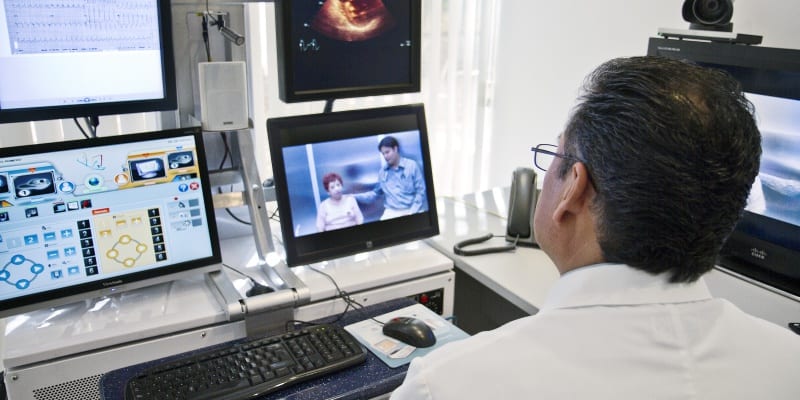
Exercise programs can effectively reduce pain and improve shoulder function in Rotator Cuff Syndrome (RCS). Telemedicine involving asynchronous exercise video and remote physician follow-up can provide advantages in accessibility and cost-effectiveness and has emerged as a promising alternative to traditional in-person rehabilitation. This study thus evaluated the effectiveness of telemedicine compared to conventional methods in the rehabilitation of RCS. This randomized controlled trial was conducted at a public hospital physiatry clinic between November 2023 and June 2024 and included adults aged 30-64 with magnetic resonance imaging (MRI)-confirmed unilateral rotator cuff tendinopathy (tendinitis/ tendinosis), impingement, or partial rupture. Participants were randomized 1:1 to the telemedicine group or the control group. The telemedicine group received asynchronous exercise videos and remote video-call follow-ups, while the control group received illustrated exercise brochures and in-person follow-ups. Outcomes were assessed at baseline, 15th day, and 6th month. The primary outcomes were pain measured using the Visual Analog Scale (VAS) (0 = no pain, 10 = worst pain) and functional recovery assessed using the Quick Disabilities of Arm, Shoulder, and Hand (QuickDASH) (0 = no disability, 100 = most severe disability). Out of the 90 patients randomized (mean age, 51.19 ± 7.07 years; 54 females [60%]), 81 patients completed the study, with 43 in the telemedicine group and 38 in the control group. Both the telemedicine and control group showed within-group improvements in VAS (mean change −1.88 [95% CI −2.56 to −1.20]) and QuickDASH (−15.6 [95% CI −21.0 to −10.2]) scores from baseline to 15th day and in VAS from baseline to 6th month (−4.82 [95% CI −5.50 to −4.13]). Between the two groups, there were no differences found in pain reduction at 15th day (estimate = −0.27, 95% CI −1.44 to 0.89) or at 6th month (estimate = −0.40, 95% CI −1.57 to 0.77), nor in functional improvement at 15th day (estimate = −2.68, 95% CI −12.90 to 7.57). No clinically meaningful difference in pain or functional outcomes was found between the groups at either follow-up point. Overall, this study found that telemedicine was non-inferior to conventional in-person care in reducing pain and improving function for patients with RCS, highlighting its potential as an alternative for traditional rehabilitation for this population.
Click here to read this study in PLOS One
Image: PD
©2026 2 Minute Medicine, Inc. All rights reserved. No works may be reproduced without expressed written consent from 2 Minute Medicine, Inc. Inquire about licensing here. No article should be construed as medical advice and is not intended as such by the authors or by 2 Minute Medicine, Inc.