• About
  • Masthead
  • License Content
  • Advertise
  • Submit Press Release
  • RSS/Email List
  • 2MM Podcast
  • Write for us
  • Contact Us
2 Minute Medicine
No Result
View All Result

No products in the cart.

SUBSCRIBE
  • Specialties
    • All Specialties, All Recent Reports
    • Cardiology
    • Chronic Disease
    • Dermatology
    • Emergency
    • Endocrinology
    • Gastroenterology
    • Imaging and Intervention
    • Infectious Disease
    • Nephrology
    • Neurology
    • Obstetrics
    • Oncology
    • Ophthalmology
    • Pediatrics
    • Pharma
    • Preclinical
    • Psychiatry
    • Public Health
    • Pulmonology
    • Rheumatology
    • Surgery
  • Tools
    • EvidencePulse™
    • RVU Search
    • NPI Registry Lookup
  • Pharma
  • AI News
  • The Scan+
  • Classics™+
    • 2MM+ Online Access
    • Paperback and Ebook
  • Rewinds
  • Partners
    • License Content
    • Submit Press Release
    • Advertise with Us
  • Account
    • Subscribe
    • Sign-in
    • My account
2 Minute Medicine
  • Specialties
    • All Specialties, All Recent Reports
    • Cardiology
    • Chronic Disease
    • Dermatology
    • Emergency
    • Endocrinology
    • Gastroenterology
    • Imaging and Intervention
    • Infectious Disease
    • Nephrology
    • Neurology
    • Obstetrics
    • Oncology
    • Ophthalmology
    • Pediatrics
    • Pharma
    • Preclinical
    • Psychiatry
    • Public Health
    • Pulmonology
    • Rheumatology
    • Surgery
  • Tools
    • EvidencePulse™
    • RVU Search
    • NPI Registry Lookup
  • Pharma
  • AI News
  • The Scan+
  • Classics™+
    • 2MM+ Online Access
    • Paperback and Ebook
  • Rewinds
  • Partners
    • License Content
    • Submit Press Release
    • Advertise with Us
  • Account
    • Subscribe
    • Sign-in
    • My account
SUBSCRIBE
2 Minute Medicine
Subscribe
Home All Specialties Pharma

Approved label populations may be broader than trial populations for new drugs

byJunghoon KoandThomas Su
July 7, 2025
in Pharma, Public Health
Reading Time: 3 mins read
0
Share on FacebookShare on Twitter

1. In this cross-sectional study, approved label populations were broader overall compared to trial populations for new drugs in the United States and Europe.

2. The category of patient fitness most often exhibited broader label populations than trial populations, followed by disease severity.

Evidence Rating Level: 3 (Average)

Study Rundown: The United States (US) Food and Drug Administration (FDA), the European Medicines Agency (EMA), and Switzerland’s Swissmedic are three major drug regulatory agencies which appraise and approve new drugs based on clinical trial data regarding their quality, safety, and efficacy. When approving a new medication, a broader indication, or the “label indication,” may be extrapolated and approved from the narrower trial population with respect to various criteria including disease subtype and severity. Extrapolation can be justified in circumstances where the clinical evidence suggests that trial findings can be applied to populations excluded from the study or in cases where it is difficult to include all patient subpopulations due to the rarity of the disease. However, populations excluded from the study may not experience the expected benefits or be subject to increased risk of adverse events compared to the trial populations. Prior studies investigating the prevalence of label indications have been limited to drugs approved by the FDA for a short time period or specific drug classes, and the role of extrapolation in drug approval at the EMA or Swissmedic remains unclear. Hence, this cross-sectional study aimed to analyze the differences in the characteristics of enrolled patients including age, disease subtype, disease severity, prior therapy and patient fitness between trial populations and approved label populations in the US, European Union (EU), and Switzerland for new drugs. Overall, it demonstrated that approved label populations were broader compared to trial populations for new drugs, especially in the US compared to the EU and Switzerland. The category of patient fitness most often had greater variance than trial populations, followed by disease severity. The study was limited by a lack of uniformity in the reporting of trial eligibility criteria. Overall, these results highlighted the need for continued post-approval surveillance of medications to ensure safety and effectiveness.

Click to read the study in AIM

Relevant Reading: Use of extrapolation in new drug approvals by the US Food and Drug Administration

RELATED REPORTS

#VisualAbstract: Vepdegestrant Increased Progres-sion-Free Survival in Advaced Breast 2m TM Cancer with ESR1 Mutations

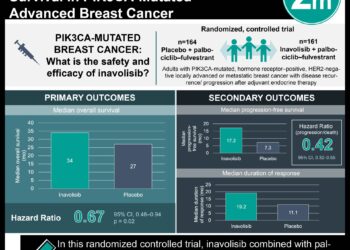
#VisualAbstract: Inavolisib Increased Overall Survival in PIK3CA-Mutated Advanced Breast Cancer

#VisualAbstract: Perioperative Durvalumab increased Survival in Gastric and Gastroesopha-geal Junction Cancer

In-Depth [cross-sectional study]: This cross-sectional study analyzed differences in enrolled patient characteristics between trial and approved label populations in the US, EU, and Switzerland for new drugs. Among all new drugs with novel active ingredients approved by the FDA between January 1, 2012 and December 31, 2023, those which were also approved by the EMA and Swissmedic during the same period were included. The eligibility criteria from the efficacy trials were classified into five categories including age, disease subtype, disease severity, prior therapy, and patient fitness. An indication was appraised as “broader” if the label population was more extensive in at least one category compared to the eligibility criteria for the trial population, “more restrictive” if the label population was more restrictive in at least one category compared the eligibility criteria for the trial population, and “congruent” if the label and trial populations matched. A score of +1 was assigned for broader, -1 for more restrictive, and 0 for congruent for each category and a cumulative score for the five categories was obtained. Of 520 drugs approved by the FDA during the inclusion period, 263 were also approved by the EMA and Swissmedic for 278 indications. All three agencies had a cumulative score greater than 0, including a composite of 1.83 for the FDA (95% confidence interval [CI], 1.68 to 1.98), 1.39 for the EMA (95% CI, 1.23 to 1.55), and 1.31 for Swissmedic (95% CI, 1.14 to 1.47). Patient fitness most often had broader label populations with 276 approved indications in the US (99.3% [CI, 99.2% to 99.4%]), 276 in the EU (99.3% [CI, 99.2% to 99.4%]), and 275 in Switzerland (98.9% [CI, 98.8% to 99%]), followed by disease severity with 143 approved indications (51% [CI, 49% to 54%]), 119 approved indications (43%, [CI, 40% to 46%]), and 111 approved indications (40% [CI, 37% to 43%]), respectively. In summary, this trial demonstrates that label populations were broader than trial populations for new drugs approved in the US and Europe.

Image: PD

©2025 2 Minute Medicine, Inc. All rights reserved. No works may be reproduced without expressed written consent from 2 Minute Medicine, Inc. Inquire about licensing here. No article should be construed as medical advice and is not intended as such by the authors or by 2 Minute Medicine, Inc.

Tags: Drug approvalefficacyFDA approvalFood and Drug Administration (FDA)indicationsmedication side effectssafety
Previous Post

Abridge drafts pediatric notes so physicians stay with the kids, not the keyboard

Next Post

Body mass index-specific waist circumference thresholds may improve mortality risk stratification in women

RelatedReports

#VisualAbstract: Vepdegestrant Increased Progres-sion-Free Survival in Advaced Breast 2m TM Cancer with ESR1 Mutations
StudyGraphics

#VisualAbstract: Vepdegestrant Increased Progres-sion-Free Survival in Advaced Breast 2m TM Cancer with ESR1 Mutations

August 22, 2025
#VisualAbstract: Inavolisib Increased Overall Survival in PIK3CA-Mutated Advanced Breast Cancer
StudyGraphics

#VisualAbstract: Inavolisib Increased Overall Survival in PIK3CA-Mutated Advanced Breast Cancer

August 8, 2025
#VisualAbstract: Perioperative Durvalumab increased Survival in Gastric and Gastroesopha-geal Junction Cancer
StudyGraphics

#VisualAbstract: Perioperative Durvalumab increased Survival in Gastric and Gastroesopha-geal Junction Cancer

August 7, 2025
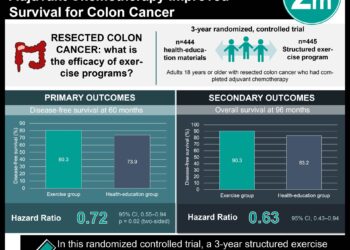
#VisualAbstract: 3-Year Structured Exercise after Adjuvant Chemotherapy Improved Survival for Colon Cancer
StudyGraphics

#VisualAbstract: 3-Year Structured Exercise after Adjuvant Chemotherapy Improved Survival for Colon Cancer

August 7, 2025
Next Post
Majority of obese tenth-graders already obese by fifth grade

Body mass index-specific waist circumference thresholds may improve mortality risk stratification in women

Biosimilar to infliximab shows equivalent safety and efficacy for treating Crohn’s disease

Fecal calprotectin is a useful marker for defining small bowel endoscopic remission in Crohn's disease

2 Minute Medicine: Pharma Roundup: Price Hikes, Breakthrough Approvals, Legal Showdowns, Biotech Expansion, and Europe’s Pricing Debate [May 12nd, 2025]

2 Minute Medicine: Pharma Roundup – Gastric Immunotherapy Gains, Prostate Pill Expansion, Five-Minute Myeloma Dosing, and Streamlined CAR-T Access [July 8th 2025]

2 Minute Medicine® is an award winning, physician-run, expert medical media company. Our content is curated, written and edited by practicing health professionals who have clinical and scientific expertise in their field of reporting. Our editorial management team is comprised of highly-trained MD physicians. Join numerous brands, companies, and hospitals who trust our licensed content.

Recent Reports

  • Glucagon-like peptide-1 receptor agonists are associated with reduced risk of developing substance use disorders
  • Oral infigratinib boosts growth velocity in achondroplasia study
  • Computed tomography angiography of the head and neck may inform emergency management in patients with suspected stroke
License Content
Terms of Use | Disclaimer
Cookie Policy
Privacy Statement (EU)
Disclaimer

© 2025 2 Minute Medicine, Inc. - Physician-written medical news.

  • Specialties
    • All Specialties, All Recent Reports
    • Cardiology
    • Chronic Disease
    • Dermatology
    • Emergency
    • Endocrinology
    • Gastroenterology
    • Imaging and Intervention
    • Infectious Disease
    • Nephrology
    • Neurology
    • Obstetrics
    • Oncology
    • Ophthalmology
    • Pediatrics
    • Pharma
    • Preclinical
    • Psychiatry
    • Public Health
    • Pulmonology
    • Rheumatology
    • Surgery
  • Tools
    • EvidencePulse™
    • RVU Search
    • NPI Registry Lookup
  • Pharma
  • AI News
  • The Scan
  • Classics™
    • 2MM+ Online Access
    • Paperback and Ebook
  • Rewinds
  • Partners
    • License Content
    • Submit Press Release
    • Advertise with Us
  • Account
    • Subscribe
    • Sign-in
    • My account
No Result
View All Result

© 2025 2 Minute Medicine, Inc. - Physician-written medical news.