• About
  • Masthead
  • License Content
  • Advertise
  • RSS/Email List
  • 2MM Podcast
  • Write for us
  • Contact Us
2 Minute Medicine
No Result
View All Result

No products in the cart.

Sign in
SUBSCRIBE
  • About
  • Specialties
    • All Specialties, All Recent Reports
    • Cardiology
    • Chronic Disease
    • Dermatology
    • Emergency
    • Endocrinology
    • Gastroenterology
    • Imaging and Intervention
    • Infectious Disease
    • Nephrology
    • Neurology
    • Obstetrics
    • Oncology
    • Ophthalmology
    • Pediatrics
    • Pharma
    • Preclinical
    • Psychiatry
    • Public Health
    • Pulmonology
    • Rheumatology
    • Surgery
  • Tools+
    • EvidencePulse™
    • HypeCheck™
    • NPI Registry Lookup
    • RVU Search
  • Pharma
  • AI Roundup
  • The Scan+
  • Classics™+
    • 2MM+ Online Access
    • Paperback and Ebook
  • Rewinds
  • Partners
    • License Content
    • Advertise with Us
2 Minute Medicine
  • About
  • Specialties
    • All Specialties, All Recent Reports
    • Cardiology
    • Chronic Disease
    • Dermatology
    • Emergency
    • Endocrinology
    • Gastroenterology
    • Imaging and Intervention
    • Infectious Disease
    • Nephrology
    • Neurology
    • Obstetrics
    • Oncology
    • Ophthalmology
    • Pediatrics
    • Pharma
    • Preclinical
    • Psychiatry
    • Public Health
    • Pulmonology
    • Rheumatology
    • Surgery
  • Tools+
    • EvidencePulse™
    • HypeCheck™
    • NPI Registry Lookup
    • RVU Search
  • Pharma
  • AI Roundup
  • The Scan+
  • Classics™+
    • 2MM+ Online Access
    • Paperback and Ebook
  • Rewinds
  • Partners
    • License Content
    • Advertise with Us
Sign in
SUBSCRIBE
2 Minute Medicine
Sign in
Subscribe
EvidencePulse™ by 2 Minute Medicine 2026 evidence scan 3 reports You asked top stroke trials 2026 Synthesizing medical evidence... Top 2026 stroke trial results: OCEANIC — ischemic stroke: 6.2% vs 8.4% OPTION* — mRS 0–1: 43.6% vs 34.2% ORIENTAL* — mRS 0–2: 58.6% vs 46.6% *Higher sICH in intervention arms Participants randomizedN OCEANIC 12,327 OPTION 570 ORIENTAL 564 Ask about guidelines or landmark trials... ↑ Try EvidencePulse™ Ask the evidence.
Get the signal.
Try it now → Physician-trained medical AI by 2 Minute Medicine
Home All Specialties Oncology

Cemiplimab for Kidney Transplant Recipients With Cutaneous Squamous Cell Carcinoma
byDaniel GoldshteinandSze Wah Samuel Chan
January 29, 2024
in Chronic Disease, Nephrology, Oncology
Reading Time: 3 mins read
Patient Basics: Kidney Transplant
Share on FacebookShare on TwitterShare on LinkedIn

1. There was no kidney rejection noted in the cemiplimab for kidney transplant recipients.

2. Cemiplimab was found to have a median progression-free survival and overall survival of 22.5 months.

Evidence Rating Level: 2 (Good)

Study Rundown: Solid organ transplant recipients receiving chronic immunosuppression have an increased risk of cutaneous squamous cell carcinoma (CSCC). Cemiplimab, a PD-1 inhibitor, has shown promising results in treating advanced CSCC but hasn’t been studied in transplant recipients due to concerns about organ rejection. This study investigated cemiplimab in kidney transplant recipients with advanced CSCC. The primary endpoint was safety and rate of kidney allograft rejection and secondary endpoints included objective response rate (ORR), duration of response (DoR), progression-free survival (PFS) and overall survival (OS). An exploratory analysis was also done for PD-L1 expression and tumor mutation burden (TMB). Most common adverse events include skin disorders (83%) and fatigue (65%). Grade 3, 4, and 5 adverse events were observed in 83%, 0%, and 25% respectively. 5 deaths occurred, two from disease progression, two from unrelated medical conditions, and one from interaction between mTOR inhabitation and an ACEi. There were no kidney allograft rejection events. ORR was seen in 46% with three patients having a complete response and two having a partial response. Median DoR was 11.4 months. Median PFS was 22.5 months, median OS was 22.5 months, and the 3-month OS estimate was 72%. The median PD-L1 tumor proportion score was 1. TMB values ranged from 10 to 97, with a median of 40, and it was found that median TMB values were higher among responders (p=.05). The strengths of this study included its exploratory analysis and the limitations include the small sample size. Overall it was found that in patients with CSCC who had previous kidney transplants, cemiplimab had some response with no kidney rejection observed.

Click to read the study in JCO

Relevant Reading: mTOR signaling pathway and mTOR inhibitors in cancer: progress and challenges

RELATED REPORTS

Recognition of kidney allograft microvascular inflammation refines risk stratification for allograft outcomes

High incidence of post-transplant lymphoproliferative disorder in Epstein-Barr virus-seronegative kidney recipients

In-Depth [prospective cohort]: This phase I, single-arm, nonrandomized trial enrolled 12 adults with advanced CSCC who had a history of kidney transplant and switched their existing immunosuppressive regimen to an mTOR inhibitor and started them on cemiplimab for up to 35 doses (2 years) along with pulse steroids with each cycle. Initially, there was another arm of this study which included allogenic stem-cell transplant patients, but that arm was closed due to slow accrual. Median follow-up was 6.8 months. Most common adverse events include skin disorders (83%) and fatigue (65%). Grade 3, 4, and 5 adverse events were observed in 83%, 0%, and 25% respectively. 5 deaths occurred, two from disease progression, two from unrelated medical conditions, and one from interaction between mTOR inhabitation and an ACEi. There were no kidney allograft rejection events. ORR was seen in 46% (90%CI, 20-73) with three patients having a complete response and two having a partial response. Median DoR was 11.4 months (range, 4.9-29.7). Median PFS was 22.5 months (90%CI, 1.2-29.8), median OS was 22.5 months (90%CI, 2.9-29.8), and 3-month OS estimate was 72% (90%CI, 43-88). The median PD-L1 tumor proportion score was 1. TMB values ranged from 10 to 97, with a median of 40, and it was found that median TMB values were higher among responders (80 vs 37,  p=.05). Overall it was found that in patients with CSCC who had previous kidney transplants, Cemiplimab had some response with no kidney rejection observed.

Image: PD

©2024 2 Minute Medicine, Inc. All rights reserved. No works may be reproduced without expressed written consent from 2 Minute Medicine, Inc. Inquire about licensing here. No article should be construed as medical advice and is not intended as such by the authors or by 2 Minute Medicine, Inc.
Tags: cemiplimabcutaneous squamous cell carcinomakidney transplant
Previous Post

Low dose olanzapine in non-inferior to standard dose in terms of anti-emetic effect in patients receiving emetogenic chemotherapy

Next Post

Smartphone Mental Health Apps Can Help Reduce Symptoms Of Anxiety And Depression

RelatedReports

Tenofovir disoprovil fumarate HIV prophylaxis linked with minimal kidney impact
Chronic Disease

Recognition of kidney allograft microvascular inflammation refines risk stratification for allograft outcomes

March 12, 2025
Adaptive interim PET-CT guides treatment for advanced Hodgkin’s lymphoma
Oncology

High incidence of post-transplant lymphoproliferative disorder in Epstein-Barr virus-seronegative kidney recipients

January 27, 2025
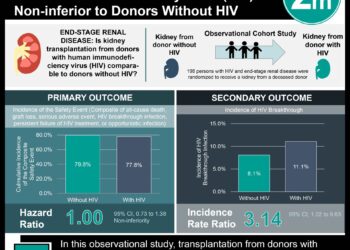
Kidney Transplantation from Donors with Human Immunodeficiency Virus (HIV) is  Non-inferior to Donors Without HIV
StudyGraphics

Kidney Transplantation from Donors with Human Immunodeficiency Virus (HIV) is Non-inferior to Donors Without HIV

October 24, 2024
Adding sargramostim to ipilimumab may improve survival in advanced melanoma
Pharma

BioNTech’s mRNA Cancer Candidate Packs A Punch With Regeneron’s Cemiplimab In Phase 2 Melanoma Trial

September 3, 2024
Next Post
2 Minute Medicine Rewind October 21, 2019

Smartphone Mental Health Apps Can Help Reduce Symptoms Of Anxiety And Depression

#VisualAbstract: Ubrogepant is safe and effective for acute treatment of migraine prodrome

#VisualAbstract: Ubrogepant is safe and effective for acute treatment of migraine prodrome

Rivaroxaban after TAVR linked with increased risk of adverse events compared to antiplatelet therapy

Non-invasive ultrasound therapy safely improves aortic valve function in high-risk patients with calcified aortic stenosis

EvidencePulse™ by 2 Minute Medicine 2026 evidence scan 3 reports You asked top stroke trials 2026 Synthesizing medical evidence... Top 2026 stroke trial results: OCEANIC — ischemic stroke: 6.2% vs 8.4% OPTION* — mRS 0–1: 43.6% vs 34.2% ORIENTAL* — mRS 0–2: 58.6% vs 46.6% *Higher sICH in intervention arms Participants randomizedN OCEANIC 12,327 OPTION 570 ORIENTAL 564 Ask about guidelines or landmark trials... ↑ Try EvidencePulse™ Get the signal. Try it now → Physician-trained medical AI by 2 Minute Medicine

2MM+ All Access

Full details →
$4.99 /month

3-day free trial · cancel anytime

  • ✓100+ physician-written reports
  • ✓EvidencePulse™ + HypeCheck™
  • ✓Ad-free reading + newsletters
Start 3-day free trial

Then $4.99/month. Manage renewal in your account.

NPI Lookup · Free

Look up any US clinician

Search by name or NPI number, live from the CMS NPI Registry.

  • OIG exclusion check
  • Licenses and specialties
  • No account needed
Open NPI Lookup →

2 Minute Medicine® is an award winning, physician-run, expert medical media company. Our content is curated, written and edited by practicing health professionals who have clinical and scientific expertise in their field of reporting. Our editorial management team is comprised of highly-trained MD physicians. Join numerous brands, companies, and hospitals who trust our licensed content.

Recent Reports

  • A reduced length protocol for peripheral magnetic stimulation may be as effective compared to standard length protocol for upper trapezius myofascial pain syndrome
  • Preoperative self-preparation for total knee arthroplasty is multifactorial and can be optimized by targeting external support and internal motivation
  • Artificial intelligence (AI)-powered mental health app demonstrated improved social well-being among users
License Content
Terms of Use | Disclaimer
Cookie Policy
2MM+ All Access Full details →

The medical literature, distilled daily.

Monthly plan selected: $4.99 /month.

$4.99/month

3-day free trial · cancel anytime

Start 3-day free trial

Then $4.99/month. Manage renewal in your account.

Yearly plan selected: $49.90 /year.

$49.90/year

2 months free

Start 3-day free trial

Then $49.90/year.

Membership benefits

  • ✓100+ physician-written reports
  • ✓AI EvidencePulse™ + HypeCheck™
  • ✓Limited-time Deep research trial
  • ✓Ad-free reading + newsletters
  • ✓NPI watchlist + bulk NPI verification

Already a member? Sign in

  • About
  • Specialties
    • All Specialties, All Recent Reports
    • Cardiology
    • Chronic Disease
    • Dermatology
    • Emergency
    • Endocrinology
    • Gastroenterology
    • Imaging and Intervention
    • Infectious Disease
    • Nephrology
    • Neurology
    • Obstetrics
    • Oncology
    • Ophthalmology
    • Pediatrics
    • Pharma
    • Preclinical
    • Psychiatry
    • Public Health
    • Pulmonology
    • Rheumatology
    • Surgery
  • Tools
    • EvidencePulse™
    • HypeCheck™
    • NPI Registry Lookup
    • RVU Search
  • Pharma
  • AI Roundup
  • The Scan
  • Classics™
    • 2MM+ Online Access
    • Paperback and Ebook
  • Rewinds
  • Partners
    • License Content
    • Advertise with Us
No Result
View All Result

© 2026 2 Minute Medicine, Inc. - Physician-written medical news.