• About
  • Masthead
  • License Content
  • Advertise
  • Press Releases
  • Newsroom
  • RSS/Email List
  • 2MM Podcast
  • Write for us
  • Contact Us
2 Minute Medicine
No Result
View All Result

No products in the cart.

Sign in
SUBSCRIBE
  • About
  • Specialties
    • All Specialties, All Recent Reports
    • Cardiology
    • Chronic Disease
    • Dermatology
    • Emergency
    • Endocrinology
    • Gastroenterology
    • Imaging and Intervention
    • Infectious Disease
    • Nephrology
    • Neurology
    • Obstetrics
    • Oncology
    • Ophthalmology
    • Pediatrics
    • Pharma
    • Preclinical
    • Psychiatry
    • Public Health
    • Pulmonology
    • Rheumatology
    • Surgery
    • Rewinds
    • The Scan
  • EvidencePulse™
  • HypeCheck™
  • AI News
  • Classics™
    • 2MM+ Online Access
    • Paperback and Ebook
  • Tools
    • NPI Registry Lookup
    • RVU Search
    • Physician Pay by Specialty
    • ICD-10 Code Lookup
    • FDA Drug Approvals
    • Drug Safety for Breastfeeding/Pregnancy
    • Clinical Guidelines
    • Medical Calculators
    • ECG Reference
      • QTc Calculator
      • Sgarbossa Criteria
      • ECG Axis Calculator
      • AV Block Helper
  • Rankings
    • Medical School Rankings
    • Residency Rankings
  • Partners
    • License Content
    • Advertise with Us
2 Minute Medicine
  • About
  • Specialties
    • All Specialties, All Recent Reports
    • Cardiology
    • Chronic Disease
    • Dermatology
    • Emergency
    • Endocrinology
    • Gastroenterology
    • Imaging and Intervention
    • Infectious Disease
    • Nephrology
    • Neurology
    • Obstetrics
    • Oncology
    • Ophthalmology
    • Pediatrics
    • Pharma
    • Preclinical
    • Psychiatry
    • Public Health
    • Pulmonology
    • Rheumatology
    • Surgery
    • Rewinds
    • The Scan
  • EvidencePulse™
  • HypeCheck™
  • AI News
  • Classics™
    • 2MM+ Online Access
    • Paperback and Ebook
  • Tools
    • NPI Registry Lookup
    • RVU Search
    • Physician Pay by Specialty
    • ICD-10 Code Lookup
    • FDA Drug Approvals
    • Drug Safety for Breastfeeding/Pregnancy
    • Clinical Guidelines
    • Medical Calculators
    • ECG Reference
      • QTc Calculator
      • Sgarbossa Criteria
      • ECG Axis Calculator
      • AV Block Helper
  • Rankings
    • Medical School Rankings
    • Residency Rankings
  • Partners
    • License Content
    • Advertise with Us
Sign in
SUBSCRIBE
2 Minute Medicine
Sign in
Subscribe
2 Minute MedicineFree on Google PlayGet
✦EvidencePulse™by 2 Minute Medicine3 reportsYou askedtop stroke trials 2026Synthesizing medical evidence...Top 2026 stroke trial results:OCEANIC — ischemic stroke: 6.2% vs 8.4%OPTION* — mRS 0–1: 43.6% vs 34.2%ORIENTAL* — mRS 0–2: 58.6% vs 46.6%*Higher sICH in intervention armsParticipants randomizedNOCEANIC12,327OPTION570ORIENTAL564Ask about guidelines or landmark trials...↑Try EvidencePulse™Ask the evidence. Get the signal.Try it now →
Home All Specialties Chronic Disease

Children with autism spectrum disorder may have reduced fecal microbial diversity
byLori LaiandSimon Pan
October 21, 2026
in Chronic Disease, Gastroenterology, Pediatrics
Reading Time: 2 mins read
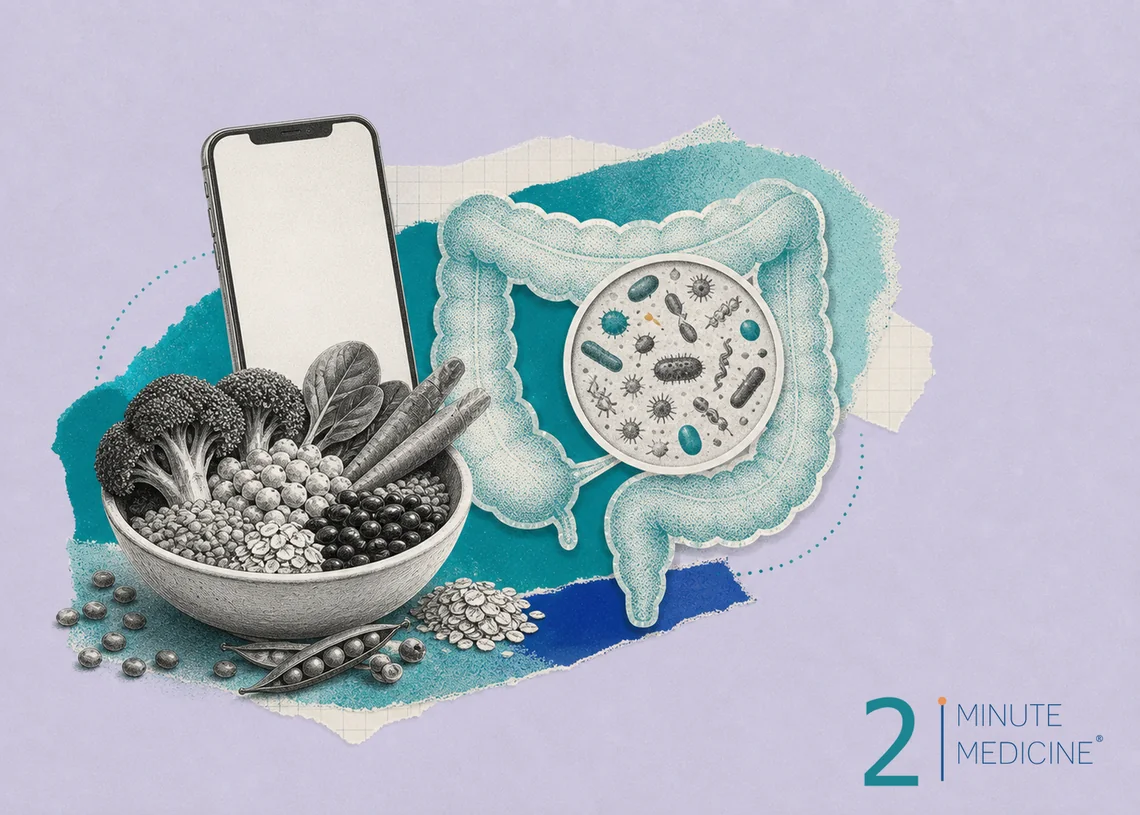
An illustration depicting a bowl of vegetables, a smartphone, and a representation of the gut microbiome inside the human intestinal tract.
Share on FacebookShare on TwitterShare on LinkedIn

1. In this cross-sectional study, stool samples from children with Autism Spectrum Disorder (ASD) and increased GI symptoms yielded reduced microbiome diversity compared to stool samples from typically developing children.

Evidence Rating Level: 2 (Good)

Many children with Autism Spectrum Disorder (ASD) suffer from increased gastrointestinal (GI) symptoms, with 31-84% of those with ASD suffering from severe symptoms including increased abdominal pain, food selectivity, constipation, diarrhea, stool incontinence, and vomiting. One possible mechanism to explain increased GI symptoms in patients with ASD is gut dysbiosis and subsequent overgrowth of core flora, including Bacteroides and Ruminococci. This cross-sectional study compared stool samples from children aged 4-16 with ASD to neurotypical children or siblings. It was found that children with ASD, both with or without GI symptoms, had a statistically significantly lower level of polymicrobial diversity compared to siblings (p=0.01) or neurotypical children (p=0.06). Children with ASD and GI symptoms had a higher abundance of Bacteroides and Ruminococcus flora, which was positively correlated with higher rates of flatulence, nighttime awakening, abdominal pain, and foul-smelling stool. Overall, this study demonstrates that children with ASD have less fecal microbial diversity compared to siblings and neurotypical children, correlating with a higher severity of GI symptoms. Knowing that children with ASD may struggle with food selectivity, medication adherence, and nutrition, further research is necessary to maximize positive outcomes.

Click here to read this study in Pediatric Research

Citation: Harne V, Fatheree NY, Serrano AV, Okeugo B, Fadhel Alvarez A, Hessabi M, et al. Gut microbiota are linked to gastrointestinal symptoms and behavioral changes but not inflammation in autism spectrum disorder: a cross-sectional analysis. Pediatr Res. 2026 Oct 14. doi: 10.1038/s41390-026-05548-6. Epub ahead of print. PMID: 42875511.

© 2026 2 Minute Medicine, Inc. All rights reserved. No part of this article may be reproduced, distributed or transmitted in any form or by any means without the prior written permission of 2 Minute Medicine, Inc. To license this content, contact 2 Minute Medicine, Inc. This article is for informational and educational purposes only; it is not medical advice and does not replace the judgment of a qualified healthcare professional.
Image: © 2 Minute Medicine

RELATED REPORTS

Zavegepant (Zavzpret) may be effective for the management of migraine symptoms in Asian adults

Routine postdilation improves transcatheter heart valve geometry in patients with severe aortic stenosis

Tags: ASDchildrensiblingsstudysymptoms
Previous Post

Variable homicide mortality rates among women aged 15-44 years depending on state abortion policy

Next Post

Elevated low-density lipoprotein cholesterol is a risk factor for atherosclerotic disease irrespective of familial hypercholesterolemia status

RelatedReports

Migraine collage: a woman resting with eyes closed and a finger at her temple, a zigzag aura, window blinds and sunglasses
Chronic Disease

Zavegepant (Zavzpret) may be effective for the management of migraine symptoms in Asian adults

November 6, 2026
Heart valve problems collage: older man in profile, an engraved three-leaflet valve and a replacement valve on a mesh frame
Cardiology

Routine postdilation improves transcatheter heart valve geometry in patients with severe aortic stenosis

November 6, 2026
Kidney stones collage: a kidney and ureter, small crystal stones, a glass of water with lemon slices and a mesh strainer
Emergency

Percutaneous nephrolithotomy and flexible ureteroscopy may have similar outcomes in pediatric nephrolithiasis

November 6, 2026
AI in health care collage: a smiling older man in a collared shirt beside a tablet with a blank screen and a dot network
Artificial Intelligence

Artificial intelligence-generated pre-visit summaries improved communication outcomes in neurosurgical consultations

November 5, 2026
Next Post
A man walking along a path surrounded by healthy food options, sporting shoes, a heart illustration, and urban scenery, indicating lifestyle changes for cardiovascular health.

Elevated low-density lipoprotein cholesterol is a risk factor for atherosclerotic disease irrespective of familial hypercholesterolemia status

A calendar, a specimen jar, and a brush are depicted alongside a microscopic view of cervical cells, indicating cervical cancer screening.

An artificial intelligence system for human papillomavirus-positive dual stain cervical cancer screening reads p16-Ki67 slides

A woman using a red light therapy device while seated, surrounded by workout equipment and papers, suggesting engagement in wellness practices.

Optogenetic therapy may partially restore vision in retinitis pigmentosa

✦ EvidencePulse™ by 2 Minute Medicine 3 reports You asked top stroke trials 2026 Synthesizing medical evidence... Top 2026 stroke trial results: OCEANIC — ischemic stroke: 6.2% vs 8.4% OPTION* — mRS 0–1: 43.6% vs 34.2% ORIENTAL* — mRS 0–2: 58.6% vs 46.6% *Higher sICH in intervention arms Participants randomizedN OCEANIC 12,327 OPTION 570 ORIENTAL 564 Ask about guidelines or landmark trials... Try EvidencePulse™ Get the signal. Try it now → Physician-trained medical AI by 2 Minute Medicine

2MM+ All Access

Full details →
$4.99 /month

3-day free trial · cancel anytime

  • ✓100+ physician-written reports
  • ✓EvidencePulse™ + HypeCheck™
  • ✓Ad-free reading + newsletters
Start 3-day free trial

Then $4.99/month. Manage renewal in your account.

2 Minute Medicine® is an award winning, physician-run, expert medical media company. Our content is curated, written and edited by practicing health professionals who have clinical and scientific expertise in their field of reporting. Our editorial management team is comprised of highly-trained MD physicians. Join numerous brands, companies, and hospitals who trust our licensed content.

Recent Reports

  • CDC reports 5,182 confirmed measles cases in the United States in 2026
  • In selected patients with anterior-circulation large-vessel stroke 24-72 hours after onset, thrombectomy improved 90-day function but increased hemorrhage and death
  • Mavacamten reduced left ventricular outflow tract obstruction more than placebo in adolescents with symptomatic obstructive hypertrophic cardiomyopathy
License Content
Terms of Use | Disclaimer
Cookie Policy

Get the app

Read 2 Minute Medicine on iPhone, iPad and Android.

Download on the App StoreGet it on Google Play
QR code for www.2minutemedicine.com/app
On a computer? Scan this with your phone’s camera.
2MM+ All Access Full details →

The medical literature, distilled daily.

Monthly plan selected: $4.99 /month.

$4.99/month

3-day free trial · cancel anytime

Start 3-day free trial

Then $4.99/month. Manage renewal in your account.

Yearly plan selected: $49.90 /year.

$49.90/year

2 months free

Start 3-day free trial

Then $49.90/year.

Membership benefits

  • ✓100+ physician-written reports
  • ✓AI EvidencePulse™ + HypeCheck™
  • ✓Ad-free reading + newsletters
  • ✓FDA drug approvals + clinical calculators

Already a member? Sign in

  • Get the app
  • About
  • Specialties
    • All Specialties, All Recent Reports
    • Cardiology
    • Chronic Disease
    • Dermatology
    • Emergency
    • Endocrinology
    • Gastroenterology
    • Imaging and Intervention
    • Infectious Disease
    • Nephrology
    • Neurology
    • Obstetrics
    • Oncology
    • Ophthalmology
    • Pediatrics
    • Pharma
    • Preclinical
    • Psychiatry
    • Public Health
    • Pulmonology
    • Rheumatology
    • Surgery
    • Rewinds
    • The Scan
  • EvidencePulse™
  • HypeCheck™
  • AI News
  • Classics™
    • 2MM+ Online Access
    • Paperback and Ebook
  • Tools
    • NPI Registry Lookup
    • RVU Search
    • Physician Pay by Specialty
    • ICD-10 Code Lookup
    • FDA Drug Approvals
    • Drug Safety for Breastfeeding/Pregnancy
    • Clinical Guidelines
    • Medical Calculators
    • ECG Reference
      • QTc Calculator
      • Sgarbossa Criteria
      • ECG Axis Calculator
      • AV Block Helper
  • Rankings
    • Medical School Rankings
    • Residency Rankings
  • Partners
    • License Content
    • Advertise with Us
No Result
View All Result

© 2026 2 Minute Medicine, Inc. - Physician-written medical news.