• About
  • Masthead
  • License Content
  • Advertise
  • Submit Press Release
  • RSS/Email List
  • 2MM Podcast
  • Write for us
  • Contact Us
2 Minute Medicine
No Result
View All Result

No products in the cart.

Sign in
SUBSCRIBE
  • About
  • Specialties
    • All Specialties, All Recent Reports
    • Cardiology
    • Chronic Disease
    • Dermatology
    • Emergency
    • Endocrinology
    • Gastroenterology
    • Imaging and Intervention
    • Infectious Disease
    • Nephrology
    • Neurology
    • Obstetrics
    • Oncology
    • Ophthalmology
    • Pediatrics
    • Pharma
    • Preclinical
    • Psychiatry
    • Public Health
    • Pulmonology
    • Rheumatology
    • Surgery
  • Tools+
    • EvidencePulse™
    • HypeCheck™
    • NPI Registry Lookup
    • RVU Search
  • Pharma
  • AI Roundup
  • The Scan+
  • Classics™+
    • 2MM+ Online Access
    • Paperback and Ebook
  • Rewinds
  • Partners
    • License Content
    • Advertise with Us
2 Minute Medicine
  • About
  • Specialties
    • All Specialties, All Recent Reports
    • Cardiology
    • Chronic Disease
    • Dermatology
    • Emergency
    • Endocrinology
    • Gastroenterology
    • Imaging and Intervention
    • Infectious Disease
    • Nephrology
    • Neurology
    • Obstetrics
    • Oncology
    • Ophthalmology
    • Pediatrics
    • Pharma
    • Preclinical
    • Psychiatry
    • Public Health
    • Pulmonology
    • Rheumatology
    • Surgery
  • Tools+
    • EvidencePulse™
    • HypeCheck™
    • NPI Registry Lookup
    • RVU Search
  • Pharma
  • AI Roundup
  • The Scan+
  • Classics™+
    • 2MM+ Online Access
    • Paperback and Ebook
  • Rewinds
  • Partners
    • License Content
    • Advertise with Us
Sign in
SUBSCRIBE
2 Minute Medicine
Sign in
Subscribe
EvidencePulse™ by 2 Minute Medicine 2026 evidence scan 3 reports You asked top stroke trials 2026 Synthesizing medical evidence... Top 2026 stroke trial results: OCEANIC — ischemic stroke: 6.2% vs 8.4% OPTION* — mRS 0–1: 43.6% vs 34.2% ORIENTAL* — mRS 0–2: 58.6% vs 46.6% *Higher sICH in intervention arms Participants randomizedN OCEANIC 12,327 OPTION 570 ORIENTAL 564 Ask about guidelines or landmark trials... ↑ Try EvidencePulse™ Ask the evidence.
Get the signal.
Try it now → Physician-trained medical AI by 2 Minute Medicine
Home All Specialties Cardiology

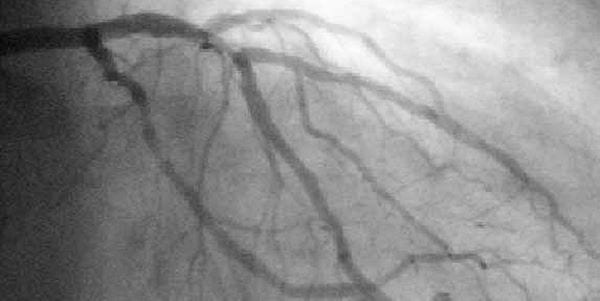
Coronary angiography in asymptomatic patients may lead to inappropriate percutaneous interventions
byAnees DaudandJames Jiang
August 26, 2014
in Cardiology, Emergency
Reading Time: 3 mins read
Ultrasound, flow reserve guided coronary interventions provide minimal benefit
Share on FacebookShare on TwitterShare on LinkedIn

1. Roughly one quarter of patients who received elective coronary angiography were asymptomatic. 

2. Hospitals with higher rates of elective angiography in asymptomatic patients also had higher rates of inappropriate intervention (such as stent deployment), which suggesting that coronary angiography selection was associated with the appropriateness of coronary intervention. 

Evidence Rating Level: 2 (Good)            

Study Rundown: Percutaneous coronary intervention (PCI) is a cardiac procedure that can improve the quality of life and mortality in the appropriate patient population. However, there is significant variability amongst hospitals in the selection criteria, which can lead to unnecessary PCI. This can potentially be very dangerous. The purpose of this study was to determine whether the selection of patients for coronary angiography affects if patients inappropriately receive PCI. Patient data was obtained from the CathPCI Registry, the largest registry of diagnostic cardiac catheterizations and PCI in the US. The results of this study suggest that about a quarter of patients who receive coronary angiography are asymptomatic, and there is marked variability in this number across hospitals (1-73%). In addition, hospitals with higher rates of elective angiography in asymptomatic patients also had higher rates of inappropriate PCI, which suggests that coronary angiography selection is associated with the appropriateness of coronary intervention.

A major strength of the study was that the data was obtained from a very large registry of patient information, which makes the results generalizable. However, a large proportion of the data was excluded based on missing pre-catheterization cardiac testing data, which can bias the results, since those patients may in fact have been appropriately chosen for cardiac catheterization. The investigators did attempt to account for this by assigning those patients with theoretic pre-catheterization results, so that they could be in the “appropriate” and “inappropriate” group and then analyze with those simulations.

Click to read the study, published today in JAMA Internal Medicine

RELATED REPORTS

The preoperative combination of evolocumab and rosuvastatin may not reduce major adverse cardiovascular events

The efficacy 3 months of dual antiplatelet therapy is similar to 12 months in patients with acute coronary syndrome

2 Minute Medicine Rewind December 29th, 2025

Relevant Reading: Appropriateness of Diagnostic Catheterization for Suspected Coronary Artery Disease in New York State

In-Depth [retrospective cohort]: The study consisted of patients that belonged to the CathPCI registry. Patients included in the study were those undergoing elective coronary angiography and PCI from July 1, 2009 and September 30, 2013 in the US. The final cohort that was analyzed consisted of 544 hospitals that included 1,225,562 elective coronary angiograms and 203,158 elective PCIs. Evidence based algorithms were used to determine the appropriateness of the coronary procedures, where PCI was considered inappropriate when the procedure was unlikely to improve the patient’s health status, including symptoms, function, quality of life, or survival.

Of all patients included in the study who underwent elective diagnostic coronary angiography, 25.1% were asymptomatic at the time of the procedure. The median hospital proportion of asymptomatic patients who underwent coronary angiography was 24.7% (range, 1.0 – 73.6%). The hospital proportion of asymptomatic patients undergoing angiography was positively correlated with rates of inappropriate PCI (Spearman ρ = 0.51, P<0.001).

More from this author: Blood clot prophylaxis medicine inpatient may be unnecessary, Chest pain may be better than EKG, echo for predicting coronary artery disease prognosis, Strict blood pressure control in kidney disease linked to worse outcomes, Catheter thrombolysis + anticoagulation may be inferior to anticoagulation alone in DVT, Pediatric brain injury unlikely with isolated loss of consciousness, Ultrasound, flow reserve guided coronary interventions provide minimal benefit

Image: PD 

©2012-2014 2minutemedicine.com. All rights reserved. No works may be reproduced without expressed written consent from 2minutemedicine.com. Disclaimer: We present factual information directly from peer reviewed medical journals. No post should be construed as medical advice and is not intended as such by the authors, editors, staff or by 2minutemedicine.com. PLEASE SEE A HEALTHCARE PROVIDER IN YOUR AREA IF YOU SEEK MEDICAL ADVICE OF ANY SORT.
Tags: angiographyPCI
Previous Post

Dermatological consultation in outpatients improves diagnosis of cellulitis

Next Post

Deep brain stimulation may be safe for older Parkinson patients

RelatedReports

Using HEART score to risk stratify patients with chest pain is safe but underutilized in the ED
Cardiology

The preoperative combination of evolocumab and rosuvastatin may not reduce major adverse cardiovascular events

January 12, 2026
Using HEART score to risk stratify patients with chest pain is safe but underutilized in the ED
Cardiology

The efficacy 3 months of dual antiplatelet therapy is similar to 12 months in patients with acute coronary syndrome

January 12, 2026
Admission may not be needed following sleep apnea surgery
Weekly Rewinds

2 Minute Medicine Rewind December 29th, 2025

January 12, 2026
Lariat device for left atrial appendage exclusion associated with adverse events
Cardiology

Atrial fibrillation risk is high following coronary artery bypass grafting and is low but gradually accumulates following percutaneous coronary intervention

January 13, 2026
Next Post
Deep brain stimulation may be safe for older Parkinson patients

Deep brain stimulation may be safe for older Parkinson patients

Social integration may reduce suicide risk in male health professionals

Collaborative model effective in treating teen depression

Comorbidities of head and neck cancer may drive malnutrition

Comorbidities of head and neck cancer may drive malnutrition

EvidencePulse™ by 2 Minute Medicine 2026 evidence scan 3 reports You asked top stroke trials 2026 Synthesizing medical evidence... Top 2026 stroke trial results: OCEANIC — ischemic stroke: 6.2% vs 8.4% OPTION* — mRS 0–1: 43.6% vs 34.2% ORIENTAL* — mRS 0–2: 58.6% vs 46.6% *Higher sICH in intervention arms Participants randomizedN OCEANIC 12,327 OPTION 570 ORIENTAL 564 Ask about guidelines or landmark trials... ↑ Try EvidencePulse™ Get the signal. Try it now → Physician-trained medical AI by 2 Minute Medicine

2MM+ All Access

Full details →
$4.99 /month

3-day free trial · cancel anytime

  • ✓100+ physician-written reports
  • ✓EvidencePulse™ + HypeCheck™
  • ✓Ad-free reading + newsletters
Start 3-day free trial

Then $4.99/month. Manage renewal in your account.

NPI Lookup · Free

Look up any US clinician

Search by name or NPI number, live from the CMS NPI Registry.

  • OIG exclusion check
  • Licenses and specialties
  • No account needed
Open NPI Lookup →

2 Minute Medicine® is an award winning, physician-run, expert medical media company. Our content is curated, written and edited by practicing health professionals who have clinical and scientific expertise in their field of reporting. Our editorial management team is comprised of highly-trained MD physicians. Join numerous brands, companies, and hospitals who trust our licensed content.

Recent Reports

  • Children with intellectual and developmental disabilities have increased risks of depression and anxiety
  • Gabapentin (Neurontin) prescription for chronic low back pain in adults is associated with a higher risk of dementia
  • The rate of urethrocutaneous fistula formation may be similar between caudal and penile blocks
License Content
Terms of Use | Disclaimer
Cookie Policy
Cleantalk Pixel
2MM+ All Access Full details →

The medical literature, distilled daily.

Monthly plan selected: $4.99 /month.

$4.99/month

3-day free trial · cancel anytime

Start 3-day free trial

Then $4.99/month. Manage renewal in your account.

Yearly plan selected: $49.90 /year.

$49.90/year

2 months free

Start 3-day free trial

Then $49.90/year.

Membership benefits

  • ✓100+ physician-written reports
  • ✓AI EvidencePulse™ + HypeCheck™
  • ✓Ad-free reading + newsletters
  • ✓NPI watchlist + bulk NPI verification

Already a member? Sign in

  • About
  • Specialties
    • All Specialties, All Recent Reports
    • Cardiology
    • Chronic Disease
    • Dermatology
    • Emergency
    • Endocrinology
    • Gastroenterology
    • Imaging and Intervention
    • Infectious Disease
    • Nephrology
    • Neurology
    • Obstetrics
    • Oncology
    • Ophthalmology
    • Pediatrics
    • Pharma
    • Preclinical
    • Psychiatry
    • Public Health
    • Pulmonology
    • Rheumatology
    • Surgery
  • Tools
    • EvidencePulse™
    • HypeCheck™
    • NPI Registry Lookup
    • RVU Search
  • Pharma
  • AI Roundup
  • The Scan
  • Classics™
    • 2MM+ Online Access
    • Paperback and Ebook
  • Rewinds
  • Partners
    • License Content
    • Advertise with Us
No Result
View All Result

© 2026 2 Minute Medicine, Inc. - Physician-written medical news.