
• About
  • Masthead
  • License Content
  • Advertise
  • Submit Press Release
  • RSS/Email List
  • 2MM Podcast
  • Write for us
  • Contact Us
2 Minute Medicine
No Result
View All Result

No products in the cart.

Sign in
SUBSCRIBE
  • About
  • Specialties
    • All Specialties, All Recent Reports
    • Cardiology
    • Chronic Disease
    • Dermatology
    • Emergency
    • Endocrinology
    • Gastroenterology
    • Imaging and Intervention
    • Infectious Disease
    • Nephrology
    • Neurology
    • Obstetrics
    • Oncology
    • Ophthalmology
    • Pediatrics
    • Pharma
    • Preclinical
    • Psychiatry
    • Public Health
    • Pulmonology
    • Rheumatology
    • Surgery
  • Tools+
    • EvidencePulse™
    • HypeCheck™
    • NPI Registry Lookup
    • RVU Search
  • Pharma
  • AI Roundup
  • The Scan+
  • Classics™+
    • 2MM+ Online Access
    • Paperback and Ebook
  • Rewinds
  • Partners
    • License Content
    • Advertise with Us
2 Minute Medicine
  • About
  • Specialties
    • All Specialties, All Recent Reports
    • Cardiology
    • Chronic Disease
    • Dermatology
    • Emergency
    • Endocrinology
    • Gastroenterology
    • Imaging and Intervention
    • Infectious Disease
    • Nephrology
    • Neurology
    • Obstetrics
    • Oncology
    • Ophthalmology
    • Pediatrics
    • Pharma
    • Preclinical
    • Psychiatry
    • Public Health
    • Pulmonology
    • Rheumatology
    • Surgery
  • Tools+
    • EvidencePulse™
    • HypeCheck™
    • NPI Registry Lookup
    • RVU Search
  • Pharma
  • AI Roundup
  • The Scan+
  • Classics™+
    • 2MM+ Online Access
    • Paperback and Ebook
  • Rewinds
  • Partners
    • License Content
    • Advertise with Us
Sign in
SUBSCRIBE
2 Minute Medicine
Sign in
Subscribe
EvidencePulse™ by 2 Minute Medicine 2026 evidence scan 3 reports You asked top stroke trials 2026 Synthesizing medical evidence... Top 2026 stroke trial results: OCEANIC — ischemic stroke: 6.2% vs 8.4% OPTION* — mRS 0–1: 43.6% vs 34.2% ORIENTAL* — mRS 0–2: 58.6% vs 46.6% *Higher sICH in intervention arms Participants randomizedN OCEANIC 12,327 OPTION 570 ORIENTAL 564 Ask about guidelines or landmark trials... ↑ Try EvidencePulse™ Ask the evidence.
Get the signal.
Try it now → Physician-trained medical AI by 2 Minute Medicine
Home All Specialties Artificial Intelligence

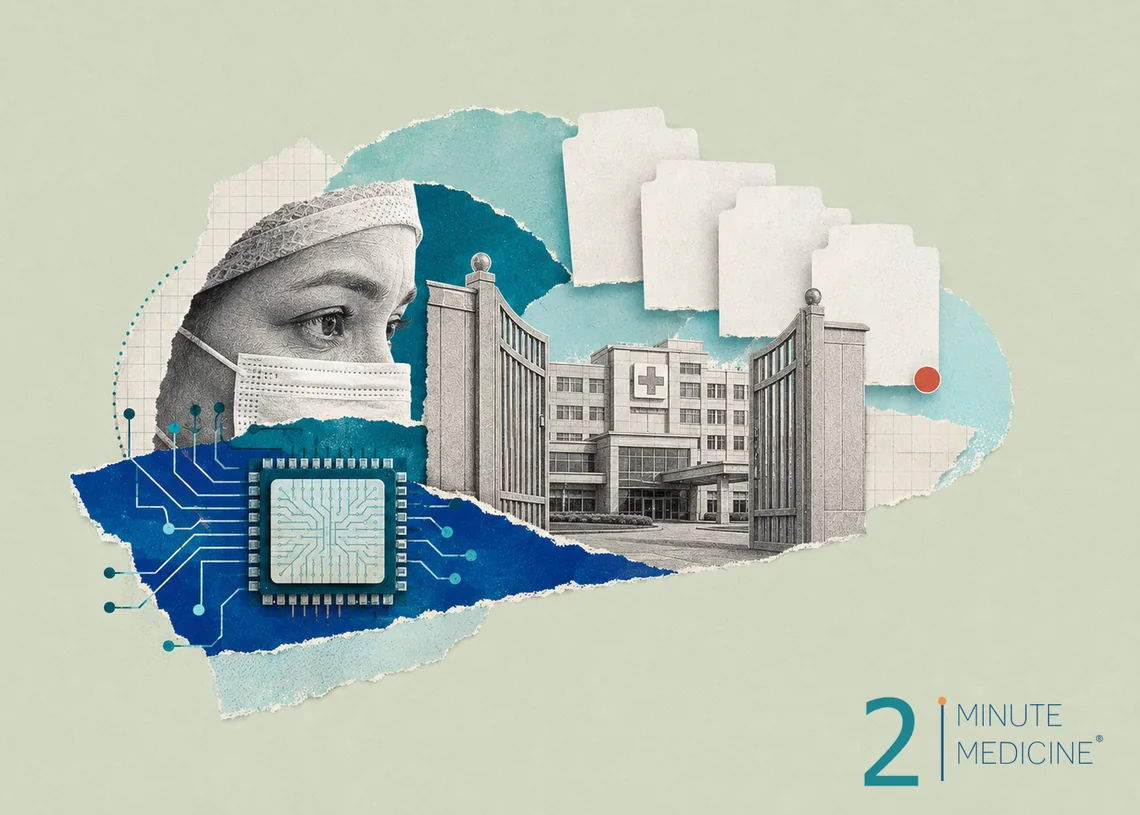
Emergency department triaging decisions supported by artificial intelligence (AI) led to improved triaging accuracy and patient flow
byCheng En Xi
September 21, 2026
in Artificial Intelligence, Emergency
Reading Time: 2 mins read
Emergency department triaging decisions supported by artificial intelligence (AI) led to improved triaging accuracy and patient flow
Share on FacebookShare on TwitterShare on LinkedIn

1. Taylor and colleagues evaluated the implementation of an AI-informed triage decision-support tool.

2. With the AI tool, nurses more accurately identified patients requiring critical care, and the department experienced decreased flow times.

Evidence Rating Level: 2 (Good)

Study Rundown: Emergency department (ED) triage often utilizes subjective criteria, causing bias. AI-based triage tools embedded in electronic health records (EHRs) have the potential to improve triage performance and patient flow. Taylor and colleagues assessed an AI-informed clinical decision support tool’s ability to assist ED nurses with triage. The tool was implemented across three EDs, and outcomes from 180-day periods before and after implementation were compared. The primary outcomes included triage acuity distribution, identification of critical care and emergency surgery, hospitalization among low-acuity patients, and time to treatment and departure. The tool was required to provide an individualized rationale for its decisions, and nurses retained final decision-making authority. The study found that sensitivity in identifying critical care as high-acuity improved from 78.8% to 83.1% following AI-tool implementation. Additionally, after AI intervention, there was a median decrease of 4 minutes from patient arrival to moving to the initial care area. Overall, AI-supported triage was associated with improved critical-care identification and patient flow.

Click here to read the study in NEJM AI

Relevant Reading: Clinical Impact of Artificial Intelligence-Based Triage Systems in Emergency Departments: A Systematic Review

RELATED REPORTS

Pairing cardiac magnetic resonance with electrocardiograms (ECGs) improved artificial intelligence (AI) assessments of cardiovascular diseases

Physician edits to artificial intelligence (AI)-generated messages to patients were associated with different response time burdens

Artificial intelligence (AI)-supported symptom self-assessment led to more appropriate patient care-seeking decisions

In-Depth [cross-sectional study]: This quality improvement study included 174,648 visits across three EDs in Connecticut. There were 83,404 visits during the 180-day pre-implementation period and 91,244 during the 180-day post-implementation period. The AI triage tool collected data, such as demographics, arrival mode, vital signs, chief complaint, and active issues, to predict outcomes, such as need for critical care or emergency surgery. Then, an Emergency Severity Index recommendation with an individualized explanation was generated, but triage nurses could accept or override it. Study outcomes included sensitivity and specificity for classifying patients requiring critical care or emergency surgery as high acuity; hospitalization among low-acuity patients; and time from arrival to initial care area, disposition, and departure. The study found that following implementation, low-acuity assignments increased from 23.9% to 35.4%, while mid-acuity and high-acuity assignments decreased. Sensitivity for identifying critical-care patients as high acuity increased from 78.8% (95% confidence interval [CI], 76.4%-80.8%) to 83.1% (95% confidence interval [CI], 80.9%-85.0%; p<0.001). Emergency surgery triage sensitivity did not significantly change. Median time to initial care decreased from 12 to 8 minutes, disposition from 190 to 182 minutes, and departure from 311 to 292 minutes. However, this study was limited by temporal confounding from the observational design, possible cross-site contamination, and the absence of long-term patient outcomes. Nonetheless, this study provided evidence that AI has the potential to improve ED triage accuracy and patient flow.

Image: PD

©2026 2 Minute Medicine, Inc. All rights reserved. No works may be reproduced without expressed written consent from 2 Minute Medicine, Inc. Inquire about licensing here. No article should be construed as medical advice and is not intended as such by the authors or by 2 Minute Medicine, Inc.
Tags: artificial intelligenceemergencyemergency departmentemergency medicinetriage
Previous Post

2MM: Longevity Roundup – Sleep patterns track with biological aging, earlier menopause signals cognitive decline, diet predicts aging-related mortality, and lifestyle intervention preserves mobility in frailty

Next Post

The rotavirus vaccine (ROTASIIL) may reduce the incidence of hospitalization for rotavirus gastroenteritis in children

RelatedReports

Artificial Intelligence

Pairing cardiac magnetic resonance with electrocardiograms (ECGs) improved artificial intelligence (AI) assessments of cardiovascular diseases

October 9, 2026
Artificial Intelligence

Physician edits to artificial intelligence (AI)-generated messages to patients were associated with different response time burdens

October 8, 2026
Artificial Intelligence

Artificial intelligence (AI)-supported symptom self-assessment led to more appropriate patient care-seeking decisions

October 7, 2026
Artificial Intelligence

Artificial intelligence (AI)-triggered rapid response notifications were associated with lower mortality among inpatients

October 2, 2026
Next Post

The rotavirus vaccine (ROTASIIL) may reduce the incidence of hospitalization for rotavirus gastroenteritis in children

High maternal egg-peanut intake not associated with reduced infant allergy

Alcohol use declines but remains above pre-pandemic levels

EvidencePulse™ by 2 Minute Medicine 2026 evidence scan 3 reports You asked top stroke trials 2026 Synthesizing medical evidence... Top 2026 stroke trial results: OCEANIC — ischemic stroke: 6.2% vs 8.4% OPTION* — mRS 0–1: 43.6% vs 34.2% ORIENTAL* — mRS 0–2: 58.6% vs 46.6% *Higher sICH in intervention arms Participants randomizedN OCEANIC 12,327 OPTION 570 ORIENTAL 564 Ask about guidelines or landmark trials... ↑ Try EvidencePulse™ Get the signal. Try it now → Physician-trained medical AI by 2 Minute Medicine

2MM+ All Access

Full details →
$4.99 /month

3-day free trial · cancel anytime

  • ✓100+ physician-written reports
  • ✓EvidencePulse™ + HypeCheck™
  • ✓Ad-free reading + newsletters
Start 3-day free trial

Then $4.99/month. Manage renewal in your account.

NPI Lookup · Free

Look up any US clinician

Search by name or NPI number, live from the CMS NPI Registry.

  • OIG exclusion check
  • Licenses and specialties
  • No account needed
Open NPI Lookup →

2 Minute Medicine® is an award winning, physician-run, expert medical media company. Our content is curated, written and edited by practicing health professionals who have clinical and scientific expertise in their field of reporting. Our editorial management team is comprised of highly-trained MD physicians. Join numerous brands, companies, and hospitals who trust our licensed content.

Recent Reports

  • Children with intellectual and developmental disabilities have increased risks of depression and anxiety
  • Gabapentin (Neurontin) prescription for chronic low back pain in adults is associated with a higher risk of dementia
  • The rate of urethrocutaneous fistula formation may be similar between caudal and penile blocks
License Content
Terms of Use | Disclaimer
Cookie Policy
Cleantalk Pixel
2MM+ All Access Full details →

The medical literature, distilled daily.

Monthly plan selected: $4.99 /month.

$4.99/month

3-day free trial · cancel anytime

Start 3-day free trial

Then $4.99/month. Manage renewal in your account.

Yearly plan selected: $49.90 /year.

$49.90/year

2 months free

Start 3-day free trial

Then $49.90/year.

Membership benefits

  • ✓100+ physician-written reports
  • ✓AI EvidencePulse™ + HypeCheck™
  • ✓Ad-free reading + newsletters
  • ✓NPI watchlist + bulk NPI verification

Already a member? Sign in

  • About
  • Specialties
    • All Specialties, All Recent Reports
    • Cardiology
    • Chronic Disease
    • Dermatology
    • Emergency
    • Endocrinology
    • Gastroenterology
    • Imaging and Intervention
    • Infectious Disease
    • Nephrology
    • Neurology
    • Obstetrics
    • Oncology
    • Ophthalmology
    • Pediatrics
    • Pharma
    • Preclinical
    • Psychiatry
    • Public Health
    • Pulmonology
    • Rheumatology
    • Surgery
  • Tools
    • EvidencePulse™
    • HypeCheck™
    • NPI Registry Lookup
    • RVU Search
  • Pharma
  • AI Roundup
  • The Scan
  • Classics™
    • 2MM+ Online Access
    • Paperback and Ebook
  • Rewinds
  • Partners
    • License Content
    • Advertise with Us
No Result
View All Result

© 2026 2 Minute Medicine, Inc. - Physician-written medical news.