• About
  • Masthead
  • License Content
  • Advertise
  • Submit Press Release
  • RSS/Email List
  • 2MM Podcast
  • Write for us
  • Contact Us
2 Minute Medicine
No Result
View All Result

No products in the cart.

SUBSCRIBE
  • Specialties
    • All Specialties, All Recent Reports
    • Cardiology
    • Chronic Disease
    • Dermatology
    • Emergency
    • Endocrinology
    • Gastroenterology
    • Imaging and Intervention
    • Infectious Disease
    • Nephrology
    • Neurology
    • Obstetrics
    • Oncology
    • Ophthalmology
    • Pediatrics
    • Pharma
    • Preclinical
    • Psychiatry
    • Public Health
    • Pulmonology
    • Rheumatology
    • Surgery
  • Tools
    • EvidencePulse™
    • RVU Search
    • NPI Registry Lookup
  • Pharma
  • AI News
  • The Scan+
  • Classics™+
    • 2MM+ Online Access
    • Paperback and Ebook
  • Rewinds
  • Partners
    • License Content
    • Submit Press Release
    • Advertise with Us
  • Account
    • Subscribe
    • Sign-in
    • My account
2 Minute Medicine
  • Specialties
    • All Specialties, All Recent Reports
    • Cardiology
    • Chronic Disease
    • Dermatology
    • Emergency
    • Endocrinology
    • Gastroenterology
    • Imaging and Intervention
    • Infectious Disease
    • Nephrology
    • Neurology
    • Obstetrics
    • Oncology
    • Ophthalmology
    • Pediatrics
    • Pharma
    • Preclinical
    • Psychiatry
    • Public Health
    • Pulmonology
    • Rheumatology
    • Surgery
  • Tools
    • EvidencePulse™
    • RVU Search
    • NPI Registry Lookup
  • Pharma
  • AI News
  • The Scan+
  • Classics™+
    • 2MM+ Online Access
    • Paperback and Ebook
  • Rewinds
  • Partners
    • License Content
    • Submit Press Release
    • Advertise with Us
  • Account
    • Subscribe
    • Sign-in
    • My account
SUBSCRIBE
2 Minute Medicine
Subscribe
Home All Specialties Imaging and Intervention

Glioblastoma phenotypes identified on MRI predict molecular behavior
byDavid WangandDylan Wolman
September 8, 2015
in Imaging and Intervention, Oncology
Reading Time: 3 mins read
0
Share on FacebookShare on Twitter

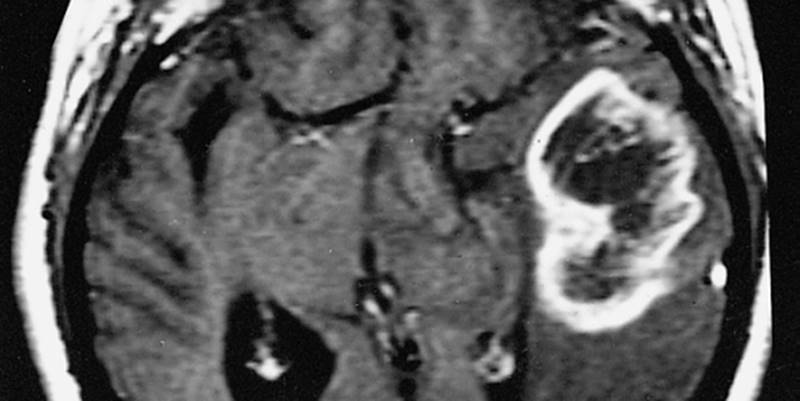
1. In a retrospective review of brain MRIs of two large cohorts of patients with glioblastoma multiforme (GBM), imaged tumors made up three distinct phenotypic clusters: pre-multifocal, spherical, and rim enhancing, each of which reflect distinct molecular characteristics which corresponded to differential survival and response to therapy.

2. Pre-multifocal GBM was associated with the poorest survival and displayed increased c-Kit expression. Spherical GBM was associated with intermediate survival and displayed decreased c-Kit expression and IL-6 and Ang/Tie2 signaling. Rim-enhancing GBM had the most favorable survival and displayed increased FOXA, PDGFR and VEGFR expression.

Evidence Rating Level: 2 (Good)

Study Rundown: GBM is the most common primary brain malignancy in adults associated with significant mortality and poor response to therapy. Currently, diagnosis and individual prognostication relies on tissue-based molecular biomarkers, which necessitates an invasive brain biopsy. To date, there has been a limited research on the use of non-invasive imaging features as surrogates for molecular biomarkers in characterization of GBM  to predict both outcomes and response to therapy. The current study sought to determine and validate the magnetic resonance imaging (MRI) based GBM phenotypes which represent different molecular backgrounds and their behaviors. The authors performed quantitative imaging analysis of brain MRIs of a large cohort of GBM patients to segment tumor features which were subsequently clustered into three common phenotypic groups by a consensus clustering method. These imaging phenotypes were subsequently validated on a second large GBM cohort from The Cancer Genome Atlas (TCGA). At the conclusion of the study, three distinct imaging phenotypes were determined and validated: pre-multifocal, spherical, and rim enhancing based on quantitative MRI-derived features. Interestingly, each imaging phenotype mapped to unique molecular signaling pathways known in the pathogenesis of GBM based on cross-correlation to gene expression data from TCGA. Furthermore, there was a significant difference in the overall survival of patients between the three imaging phenotype groups, and their response to standard therapeutic regimens. The results of this study support the use of these imaging phenotypes as a potential non-invasive, image-based biomarker for prognostication as well as additional avenues for targeted molecular therapies for GBM. The study is limited by its retrospective and the use of a strict inclusion criterion of unifocal, unilateral tumors, which may reduce the external generalizability of these results. Additional prospective, randomized controlled trials with targeted interventions are needed to confirm these associations.

Click to read the study in Science Translational Medicine

Relevant Reading: Non–Small Cell Lung Cancer: Identifying Prognostic Imaging Biomarkers by Leveraging Public Gene Expression Microarray Data—Methods and Preliminary Results

RELATED REPORTS

Body composition measures from magnetic resonance imaging scans may be associated with adverse health outcomes

Molecular imaging non-inferior to adrenal vein sampling in detecting aldosterone-producing adrenal adenomas

The Scan by 2 Minute Medicine®: Kate Middleton’s Hair: Chemo Mysteries, MRI Screening: Is It Useful?, Biden’s COVID Amid Variant Surge, Avoiding Microplastics

In-Depth [retrospective study]: This study was a retrospective review of two large GBM patient cohorts in the United States, one recruited from patients with GBM from Stanford University Hospital (n = 121), and another from The Cancer Genome Atlas (TCGA; n = 144), including only patients with de novo GBM, age > 18 years, availability of preoperative MRI data, and presence of solitary, unilateral tumors only. Quantitative imaging analysis was performed on the Stanford cohort (used as the development cohort) for subtype identification via k-means consensus clustering. Identified subgroups were validated with the second patient cohort using in-group proportion (IGP) statistics. Each subgroup was subsequently mapped to known molecular signaling pathways from the Cancer Genome Atlas cohort as well as overall survival and response to standard Stupp protocol therapy. At the conclusion of the study, 3 imaging phenotypes were isolated: 1) pre-multifocal, 2) spherical, and 3) rim-enhancing. There was a significant difference in survival between the three subtypes (p = 0.004) with pre-multifocal group having the lowest survival rate and rim-enhancing group having the highest survival rate. Overall, pre-multifocal GBM was associated with the poorest survival and displayed increased c-Kit stem cell factor receptor pathway expression. Spherical GBM was associated with intermediate survival and displayed decreased c-Kit expression and IL-6 and Ang/Tie2 signaling, among 21 total molecular expression differences. Rim-enhancing GBM had the most favorable survival and displayed increased FOXA, PDGFR and VEGFR expression, among 31 different molecular expression differences.

Image: PD

©2015 2 Minute Medicine, Inc. All rights reserved. No works may be reproduced without expressed written consent from 2 Minute Medicine, Inc. Inquire about licensing here. No article should be construed as medical advice and is not intended as such by the authors or by 2 Minute Medicine, Inc.
Tags: glioblastoma multiformeMagnetic Resonance Imaging (MRI)
Previous Post

2 Minute Medicine Rewind August 30 – September 6, 2015

Next Post

USPSTF finds insufficient evidence for screening for iron deficiency anemia during pregnancy

RelatedReports

Time from symptom onset may not predict infarct volume in stroke
Cardiology

Body composition measures from magnetic resonance imaging scans may be associated with adverse health outcomes

September 29, 2025
PET/MRI is viable for tracking small lung nodules in cancer patients
Endocrinology

Molecular imaging non-inferior to adrenal vein sampling in detecting aldosterone-producing adrenal adenomas

March 3, 2025
The Scan by 2 Minute Medicine®:  Ultra-Trail du Mont-Blanc, Taylor Swift, NBA rookie Chet Holmgren and Magic Mushrooms!
The Scan by 2 Minute Medicine®

The Scan by 2 Minute Medicine®: Kate Middleton’s Hair: Chemo Mysteries, MRI Screening: Is It Useful?, Biden’s COVID Amid Variant Surge, Avoiding Microplastics

July 23, 2024
The Scan by 2 Minute Medicine®:  Ultra-Trail du Mont-Blanc, Taylor Swift, NBA rookie Chet Holmgren and Magic Mushrooms!
The Scan by 2 Minute Medicine®

The Scan by 2 Minute Medicine®: Patient Zero: Immunotherapy for Brain Tumors?, Over-the-Counter Birth Control, Florida Supreme Court Deals a Devastating Blow to Abortion Access, Schwarzenegger’s Post-Pacemaker Update on Instagram

April 16, 2024
Next Post
USPSTF finds insufficient evidence for screening for iron deficiency anemia during pregnancy

USPSTF finds insufficient evidence for screening for iron deficiency anemia during pregnancy

Development of a risk index for colorectal cancer screening

Reference payments for colonoscopy may reduce cost without complication increase

Molecular testing for Clostridium difficile may not predict disease activity

Molecular testing for Clostridium difficile may not predict disease activity

2 Minute Medicine® is an award winning, physician-run, expert medical media company. Our content is curated, written and edited by practicing health professionals who have clinical and scientific expertise in their field of reporting. Our editorial management team is comprised of highly-trained MD physicians. Join numerous brands, companies, and hospitals who trust our licensed content.

Recent Reports

  • Orforglipron (Foundayo) expands oral treatment options for weight management
  • Housing insecurity is associated with increased risk of geriatric conditions and mortality
  • Polyethylene glycol-mediated nerve repair may accelerate early recovery in patients with distal forearm nerve injuries
License Content
Terms of Use | Disclaimer
Cookie Policy
Privacy Statement (EU)
Disclaimer

The Classics in Medicine Paperback Released!

Over the past 30 years, the transition from print to digital media has contributed to an exponential increase in medical literature. In response, 2 Minute Medicine presents 160+ authoritative, physician-written summaries of the most cited landmark trials in medicine.

amazon-logo_blackGet-it-on-iBooks-badge

Click anywhere to close this announcement

  • Specialties
    • All Specialties, All Recent Reports
    • Cardiology
    • Chronic Disease
    • Dermatology
    • Emergency
    • Endocrinology
    • Gastroenterology
    • Imaging and Intervention
    • Infectious Disease
    • Nephrology
    • Neurology
    • Obstetrics
    • Oncology
    • Ophthalmology
    • Pediatrics
    • Pharma
    • Preclinical
    • Psychiatry
    • Public Health
    • Pulmonology
    • Rheumatology
    • Surgery
  • Tools
    • EvidencePulse™
    • RVU Search
    • NPI Registry Lookup
  • Pharma
  • AI News
  • The Scan
  • Classics™
    • 2MM+ Online Access
    • Paperback and Ebook
  • Rewinds
  • Partners
    • License Content
    • Submit Press Release
    • Advertise with Us
  • Account
    • Subscribe
    • Sign-in
    • My account
No Result
View All Result

© 2026 2 Minute Medicine, Inc. - Physician-written medical news.