• About
  • Masthead
  • License Content
  • Advertise
  • Submit Press Release
  • RSS/Email List
  • 2MM Podcast
  • Write for us
  • Contact Us
2 Minute Medicine
No Result
View All Result

No products in the cart.

Sign in
SUBSCRIBE
  • About
  • Specialties
    • All Specialties, All Recent Reports
    • Cardiology
    • Chronic Disease
    • Dermatology
    • Emergency
    • Endocrinology
    • Gastroenterology
    • Imaging and Intervention
    • Infectious Disease
    • Nephrology
    • Neurology
    • Obstetrics
    • Oncology
    • Ophthalmology
    • Pediatrics
    • Pharma
    • Preclinical
    • Psychiatry
    • Public Health
    • Pulmonology
    • Rheumatology
    • Surgery
  • Tools+
    • EvidencePulse™
    • HypeCheck™
    • NPI Registry Lookup
    • RVU Search
  • Pharma
  • AI Roundup
  • The Scan+
  • Classics™+
    • 2MM+ Online Access
    • Paperback and Ebook
  • Rewinds
  • Partners
    • License Content
    • Advertise with Us
2 Minute Medicine
  • About
  • Specialties
    • All Specialties, All Recent Reports
    • Cardiology
    • Chronic Disease
    • Dermatology
    • Emergency
    • Endocrinology
    • Gastroenterology
    • Imaging and Intervention
    • Infectious Disease
    • Nephrology
    • Neurology
    • Obstetrics
    • Oncology
    • Ophthalmology
    • Pediatrics
    • Pharma
    • Preclinical
    • Psychiatry
    • Public Health
    • Pulmonology
    • Rheumatology
    • Surgery
  • Tools+
    • EvidencePulse™
    • HypeCheck™
    • NPI Registry Lookup
    • RVU Search
  • Pharma
  • AI Roundup
  • The Scan+
  • Classics™+
    • 2MM+ Online Access
    • Paperback and Ebook
  • Rewinds
  • Partners
    • License Content
    • Advertise with Us
Sign in
SUBSCRIBE
2 Minute Medicine
Sign in
Subscribe
EvidencePulse™ by 2 Minute Medicine 2026 evidence scan 3 reports You asked top stroke trials 2026 Synthesizing medical evidence... Top 2026 stroke trial results: OCEANIC — ischemic stroke: 6.2% vs 8.4% OPTION* — mRS 0–1: 43.6% vs 34.2% ORIENTAL* — mRS 0–2: 58.6% vs 46.6% *Higher sICH in intervention arms Participants randomizedN OCEANIC 12,327 OPTION 570 ORIENTAL 564 Ask about guidelines or landmark trials... ↑ Try EvidencePulse™ Ask the evidence.
Get the signal.
Try it now → Physician-trained medical AI by 2 Minute Medicine
Home All Specialties Chronic Disease

High BMI linked to reduced risk of endometriosis
bys25qthea
May 18, 2013
in Chronic Disease, Obstetrics
Reading Time: 3 mins read
High BMI linked to reduced risk of endometriosis
Share on FacebookShare on TwitterShare on LinkedIn

Image: PD

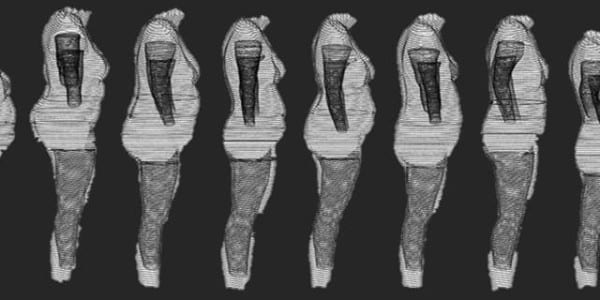
1. Body mass index (BMI) at age 18 and current BMI were inversely related with endometriosis. 

2. Among infertile women, magnitude of weight change since early adulthood and rate of endometriosis were inversely related. 

Evidence Rating Level: 2 (Excellent) 

Study Rundown: This study found that BMI at age 18 and current BMI were inversely related with risk of endometriosis. Women who were overweight or obese and infertile women who had experienced increases in BMI since age 18 were less likely to be diagnosed with endometriosis. While prior studies have shown an inverse relationship between weight and risk of endometriosis, this study is the first to assess BMI in early adulthood and suggests that BMI at age 18 precedes the diagnosis of endometriosis and may play a role in its development. 

Strengths of this study include a prospective design, large sample size and extensive follow-up period. Limitations include the use of self-reported height and weight data and limiting measured outcomes to the diagnosis of endometriosis. Future studies might assess the relationship of BMI and weight to stages of endometriosis and more long-term sequelae related to the condition.

RELATED REPORTS

A long-term gonadotropin-releasing hormone agonist protocol may be associated with increased positive pregnancy outcomes in women with endometriosis undergoing frozen embryo transfer

Prognostic associations of anthropometric indices vary by clinical outcomes

Click to read the study in Human Reproduction

Relevant Reading: Epidemiology of endometriosis – an assessment of risk factors

Study Author, Dr. Divya Shah, M.D., talks to 2 Minute Medicine: University of Iowa, Clinical Assistant Professor, Department of Obstetrics & Gynecology 

“A key finding of this study is that high body mass index (BMI), both currently and at age 18, is associated with a significantly lower risk of developing endometriosis.  The association was strongest in the subgroup of infertile women.  This information may be useful for clinicians to integrate into their diagnostic workup for endometriosis.  Despite the strength of evidence underlying this association, however, it is important to note that inferences regarding causation cannot be made based on this data.  Moreover, the study does not suggest that obese women are, in some way, healthier than lean women and that is the reason for their lower risk of endometriosis.  It is more likely that the prevalence of conditions like polycystic ovary syndrome in obese infertile women may contribute to the reduced risk of endometriosis in this population.  Future work will need to focus on elucidating the underlying biologic mechanisms that contribute to this disease process.”

In-Depth [prospective cohort study]: This study evaluated the relationship between BMI, body size and endometriosis. Data was drawn from 116,430 female nurses from September 1989 to June 2011 as part of the Nurses’ Health Study II. BMI was calculated using self-reported height and weight, and participants were categorized as lower (18.5-22.4 kg/m2) or upper (22.5-24.9 kg/m2); the low-normal group was used as the referent group in analysis. Endometriosis was self-reported and confirmed with operative reports. Data on demographics, substance use, infertility, oral contraception use and menstrual history were also collected.

Current BMI demonstrated an inverse linear relationship (p<0.0001) for infertile women, and BMI at age 18 showed a similar trend for all women (p<0.0001). Women who were morbidly obese (BMI > 40 kg/m2) were less likely to develop endometriosis (RR 0.61, CI 0.50-0.75). Women who had BMIs of 25-29.9 and 30-34.9 kg/m2 at age 18 were also less likely to be diagnosed with endometriosis. Among women with infertility, there was an inverse linear relationship between change in BMI and endometriosis (RR 0.66, CI 0.53-0.82).

By Denise Pong and Leah Hawkins

More from this author: Obtaining consent for c-section during labor may be suboptimal, Gestational weight loss may improve outcomes for obese women, Chromosomal analysis not cost effective in evaluation of recurrent miscarriage

© 2013 2minutemedicine.com. All rights reserved. No works may be reproduced without written consent from 2minutemedicine.com. Disclaimer: We present factual information directly from peer reviewed medical journals. No post should be construed as medical advice and is not intended as such by the authors or by 2minutemedicine.com. PLEASE SEE A HEALTHCARE PROVIDER IN YOUR AREA IF YOU SEEK MEDICAL ADVICE OF ANY SORT. Content is produced in accordance with fair use copyrights solely and strictly for the purpose of teaching, news and criticism. No benefit, monetary or otherwise, is realized by any participants or the owner of this domain. 

Tags: BMIendometriosis
Previous Post

Key pathogens burden diarrhea in the developing world

Next Post

Brain injuries linked with increased military suicide risk

RelatedReports

Two children standing on a colorful abstract background, symbolizing growth and development, possibly related to fertility or reproductive health.
Endocrinology

A long-term gonadotropin-releasing hormone agonist protocol may be associated with increased positive pregnancy outcomes in women with endometriosis undergoing frozen embryo transfer

October 1, 2026
An illustration featuring a heart within a house, with a stethoscope, a scale, and medication, symbolizing heart failure home hospital care.
Cardiology

Prognostic associations of anthropometric indices vary by clinical outcomes

September 28, 2026
Increasing maternal BMI linked to higher risk of cerebral palsy
Endocrinology

Newer GLP-1 agents yield substantial weight loss in nondiabetic adults

August 31, 2026
Survival greater in cervical cancer patients undergoing abdominal hysterectomy compared to minimally invasive techniques: the LACC trial
Chronic Disease

Surgery is associated with an increased quality of life in women with endometriosis

August 11, 2026
Next Post
Brain injuries linked with increased military suicide risk

Brain injuries linked with increased military suicide risk

Novel combination therapy improves bone mineral density in postmenopausal osteoporosis

Novel combination therapy improves bone mineral density in postmenopausal osteoporosis

Point-of-care ultrasound effectively identifies pediatric skull fractures

Point-of-care ultrasound effectively identifies pediatric skull fractures

EvidencePulse™ by 2 Minute Medicine 2026 evidence scan 3 reports You asked top stroke trials 2026 Synthesizing medical evidence... Top 2026 stroke trial results: OCEANIC — ischemic stroke: 6.2% vs 8.4% OPTION* — mRS 0–1: 43.6% vs 34.2% ORIENTAL* — mRS 0–2: 58.6% vs 46.6% *Higher sICH in intervention arms Participants randomizedN OCEANIC 12,327 OPTION 570 ORIENTAL 564 Ask about guidelines or landmark trials... ↑ Try EvidencePulse™ Get the signal. Try it now → Physician-trained medical AI by 2 Minute Medicine

2MM+ All Access

Full details →
$4.99 /month

3-day free trial · cancel anytime

  • ✓100+ physician-written reports
  • ✓EvidencePulse™ + HypeCheck™
  • ✓Ad-free reading + newsletters
Start 3-day free trial

Then $4.99/month. Manage renewal in your account.

NPI Lookup · Free

Look up any US clinician

Search by name or NPI number, live from the CMS NPI Registry.

  • OIG exclusion check
  • Licenses and specialties
  • No account needed
Open NPI Lookup →

2 Minute Medicine® is an award winning, physician-run, expert medical media company. Our content is curated, written and edited by practicing health professionals who have clinical and scientific expertise in their field of reporting. Our editorial management team is comprised of highly-trained MD physicians. Join numerous brands, companies, and hospitals who trust our licensed content.

Recent Reports

  • Preoperative self-preparation for total knee arthroplasty is multifactorial and can be optimized by targeting external support and internal motivation
  • Artificial intelligence (AI)-powered mental health app demonstrated improved social well-being among users
  • Children with intellectual and developmental disabilities have increased risks of depression and anxiety
License Content
Terms of Use | Disclaimer
Cookie Policy
2MM+ All Access Full details →

The medical literature, distilled daily.

Monthly plan selected: $4.99 /month.

$4.99/month

3-day free trial · cancel anytime

Start 3-day free trial

Then $4.99/month. Manage renewal in your account.

Yearly plan selected: $49.90 /year.

$49.90/year

2 months free

Start 3-day free trial

Then $49.90/year.

Membership benefits

  • ✓100+ physician-written reports
  • ✓AI EvidencePulse™ + HypeCheck™
  • ✓Limited-time Deep research trial
  • ✓Ad-free reading + newsletters
  • ✓NPI watchlist + bulk NPI verification

Already a member? Sign in

  • About
  • Specialties
    • All Specialties, All Recent Reports
    • Cardiology
    • Chronic Disease
    • Dermatology
    • Emergency
    • Endocrinology
    • Gastroenterology
    • Imaging and Intervention
    • Infectious Disease
    • Nephrology
    • Neurology
    • Obstetrics
    • Oncology
    • Ophthalmology
    • Pediatrics
    • Pharma
    • Preclinical
    • Psychiatry
    • Public Health
    • Pulmonology
    • Rheumatology
    • Surgery
  • Tools
    • EvidencePulse™
    • HypeCheck™
    • NPI Registry Lookup
    • RVU Search
  • Pharma
  • AI Roundup
  • The Scan
  • Classics™
    • 2MM+ Online Access
    • Paperback and Ebook
  • Rewinds
  • Partners
    • License Content
    • Advertise with Us
No Result
View All Result

© 2026 2 Minute Medicine, Inc. - Physician-written medical news.