• About
  • Masthead
  • License Content
  • Advertise
  • Submit Press Release
  • RSS/Email List
  • 2MM Podcast
  • Write for us
  • Contact Us
2 Minute Medicine
No Result
View All Result

No products in the cart.

SUBSCRIBE
  • Specialties
    • All Specialties, All Recent Reports
    • Cardiology
    • Chronic Disease
    • Dermatology
    • Emergency
    • Endocrinology
    • Gastroenterology
    • Imaging and Intervention
    • Infectious Disease
    • Nephrology
    • Neurology
    • Obstetrics
    • Oncology
    • Ophthalmology
    • Pediatrics
    • Pharma
    • Preclinical
    • Psychiatry
    • Public Health
    • Pulmonology
    • Rheumatology
    • Surgery
  • Tools
    • EvidencePulse™
    • RVU Search
    • NPI Registry Lookup
  • Pharma
  • AI News
  • The Scan+
  • Classics™+
    • 2MM+ Online Access
    • Paperback and Ebook
  • Rewinds
  • Partners
    • License Content
    • Submit Press Release
    • Advertise with Us
  • Account
    • Subscribe
    • Sign-in
    • My account
2 Minute Medicine
  • Specialties
    • All Specialties, All Recent Reports
    • Cardiology
    • Chronic Disease
    • Dermatology
    • Emergency
    • Endocrinology
    • Gastroenterology
    • Imaging and Intervention
    • Infectious Disease
    • Nephrology
    • Neurology
    • Obstetrics
    • Oncology
    • Ophthalmology
    • Pediatrics
    • Pharma
    • Preclinical
    • Psychiatry
    • Public Health
    • Pulmonology
    • Rheumatology
    • Surgery
  • Tools
    • EvidencePulse™
    • RVU Search
    • NPI Registry Lookup
  • Pharma
  • AI News
  • The Scan+
  • Classics™+
    • 2MM+ Online Access
    • Paperback and Ebook
  • Rewinds
  • Partners
    • License Content
    • Submit Press Release
    • Advertise with Us
  • Account
    • Subscribe
    • Sign-in
    • My account
SUBSCRIBE
2 Minute Medicine
Subscribe
Home 2 Minute Medicine

Machine learning models diagnose celiac disease at similar performance levels to pathologists
byCheng En Xi
August 29, 2025
in 2 Minute Medicine, Gastroenterology
Reading Time: 2 mins read
0
Share on FacebookShare on Twitter

1. Jaeckle and colleagues assessed the performance of machine learning models to diagnose celiac disease based on duodenal biopsies.

2. The machine learning models achieved accuracy above 90% and similar inter-rater reliability as independent pathologists.

Evidence Rating Level: 2 (Good)

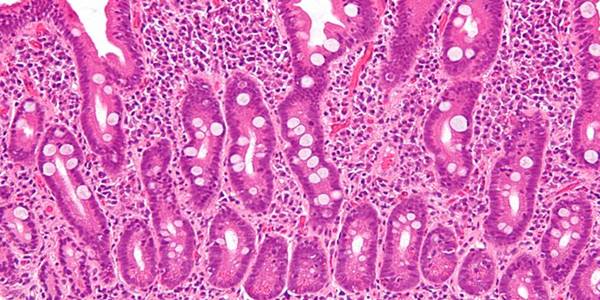
Study Rundown: The gold standard for celiac disease (CD) diagnosis remains a duodenal biopsy and pathologist interpretation. However, there is a severe pathologist shortage, and concordance among pathologists for CD diagnosis can be as low as 70%. Jaeckle and colleagues trained five machine learning (ML) models to diagnose CD using duodenal biopsies. The models were trained on a dataset of 3383 whole-slide images (WSIs), and their performance was evaluated by assessing accuracy, sensitivity, specificity, positive predictive value (PPV), and negative predictive value (NPV). The models’ performance was also compared to that of four independent pathologists by examining the diagnostic concordance between the ML model and pathologists. The study found that, for a test dataset from a previously unseen source, the ML models achieved a mean accuracy of 97.5%, a sensitivity of 95.5%, and a specificity of 97.8%. During cross-validation, the PPV was 91.4% and the NPV was 98.5%. The concordance between the model and pathologists was also nearly identical to the inter-rater agreement between pathologists. This study demonstrated the potential for ML models to achieve human-level accuracy for CD biopsy diagnosis.

Click here to read the study in NEJM AI

Relevant Reading: Artificial intelligence in digital pathology: a systematic review and meta-analysis of diagnostic test accuracy

RELATED REPORTS

NVIDIA GTC 2026 unveils Isaac GR00T foundation model for surgical robotics

Roche and NVIDIA deploy the pharmaceutical industry’s largest artificial intelligence factory

2MM: AI Roundup – Roche and NVIDIA’s AI drug discovery factory and surgical robotics foundation model, Amazon’s nationwide health AI expansion, and Brown’s AI therapy ethics warning [March 2026]

In-Depth [retrospective cohort]: Jaeckle and colleagues trained five ML models with 3383 WSIs of hematoxylin- and eosin-stained duodenal biopsies and their corresponding diagnoses from four hospitals. The WSIs were pre-processed, and Macenko’s method for stain normalization was used to improve generalization performance. All five models were run independently, and their outputs were averaged. A celiac-positive diagnosis was made if the mean output exceeded a specified diagnostic threshold. The following performance metrics were evaluated: accuracy, sensitivity, specificity, PPV, and NPV. Model performance was also compared to four independent pathologists by calculating the mean average agreement and Cohen’s kappa coefficient. When the models were evaluated during cross-validation, the mean accuracy was 96.8%, the sensitivity was 95.4%, the specificity was 97.2%, the PPV was 91.4%, and the NPV was 98.5%. Additionally, the models were assessed using a new dataset from a new hospital, for which they achieved an accuracy of 97.5%, a sensitivity of 95.5%, and a specificity of 97.8%. Finally, the inter-rater agreement between the ML models and independent pathologists was 0.905±0.050, with a corresponding kappa coefficient of 0.813±0.095. These values were nearly identical to the concordance between the four pathologists: 0.903±0.066, with a kappa coefficient of 0.810±0.127. The main limitation of the study was the subjective nature of CD diagnosis, which affects the accuracy of the ground truth used to train the models. Overall, the authors concluded that the ML model achieved pathologist-level performance in diagnosing CD.

Image: PD

©2025 2 Minute Medicine, Inc. All rights reserved. No works may be reproduced without expressed written consent from 2 Minute Medicine, Inc. Inquire about licensing here. No article should be construed as medical advice and is not intended as such by the authors or by 2 Minute Medicine, Inc.

Tags: #histopathologyartifical intelligenceceliacceliac diseasemachine learningpathology
Previous Post

Presymptomatic treatment of spinal muscular atrophy with risdiplam leads to improved functional outcomes

Next Post

Significant body weight reduction with cagrilintide-semaglutide therapy

RelatedReports

Single-site robotic cholecystectomy is safe, but technically challenging
AI Roundup

NVIDIA GTC 2026 unveils Isaac GR00T foundation model for surgical robotics

April 9, 2026
Natural language processing may automate data extraction from radiologic reports
AI Roundup

Roche and NVIDIA deploy the pharmaceutical industry’s largest artificial intelligence factory

April 7, 2026
2MM: AI Roundup- AI Cancer Test, Smarter Hospitals, Faster Drug Discovery, and Mental Health Tech [May 2nd, 2025]
AI Roundup

2MM: AI Roundup – Roche and NVIDIA’s AI drug discovery factory and surgical robotics foundation model, Amazon’s nationwide health AI expansion, and Brown’s AI therapy ethics warning [March 2026]

April 6, 2026
Patient Basics: Crossed Eyes (Strabismus)
Artificial Intelligence

Smartphone-based digital ruler achieved high diagnostic performance for strabismus screening

March 3, 2026
Next Post

Significant body weight reduction with cagrilintide-semaglutide therapy

Imatinib safe and effective as long-term treatment for chronic myeloid leukemia: The IRIS trial

2 Minute Medicine Rewind September 1, 2025

Brain lesions on MRI linked with subsequent increased stroke risk

Moderate to severe TBI is associated with elevated malignant brain tumor risk

2 Minute Medicine® is an award winning, physician-run, expert medical media company. Our content is curated, written and edited by practicing health professionals who have clinical and scientific expertise in their field of reporting. Our editorial management team is comprised of highly-trained MD physicians. Join numerous brands, companies, and hospitals who trust our licensed content.

Recent Reports

  • Transcranial magnetic stimulation may reduce combat-related post-traumatic stress disorder symptoms
  • High-flow nasal oxygen therapy may not be superior to standard oxygen therapy after cardiac surgery
  • Segment 4b/5 resection offers no survival advantage over wedge resection in gallbladder cancer
License Content
Terms of Use | Disclaimer
Cookie Policy
Privacy Statement (EU)
Disclaimer

The Classics in Medicine Paperback Released!

Over the past 30 years, the transition from print to digital media has contributed to an exponential increase in medical literature. In response, 2 Minute Medicine presents 160+ authoritative, physician-written summaries of the most cited landmark trials in medicine.

amazon-logo_blackGet-it-on-iBooks-badge

Click anywhere to close this announcement

  • Specialties
    • All Specialties, All Recent Reports
    • Cardiology
    • Chronic Disease
    • Dermatology
    • Emergency
    • Endocrinology
    • Gastroenterology
    • Imaging and Intervention
    • Infectious Disease
    • Nephrology
    • Neurology
    • Obstetrics
    • Oncology
    • Ophthalmology
    • Pediatrics
    • Pharma
    • Preclinical
    • Psychiatry
    • Public Health
    • Pulmonology
    • Rheumatology
    • Surgery
  • Tools
    • EvidencePulse™
    • RVU Search
    • NPI Registry Lookup
  • Pharma
  • AI News
  • The Scan
  • Classics™
    • 2MM+ Online Access
    • Paperback and Ebook
  • Rewinds
  • Partners
    • License Content
    • Submit Press Release
    • Advertise with Us
  • Account
    • Subscribe
    • Sign-in
    • My account
No Result
View All Result

© 2026 2 Minute Medicine, Inc. - Physician-written medical news.