

Patient Basics: Bursitis
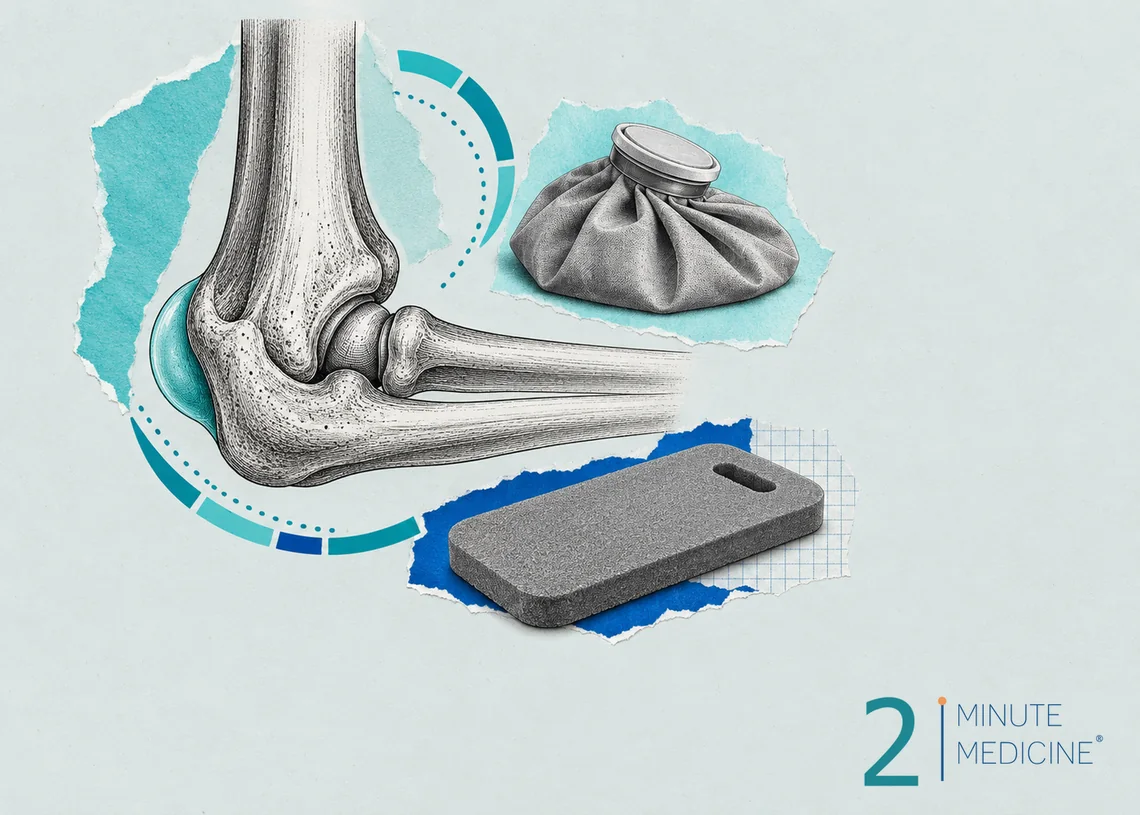
Bursitis is swelling and irritation of a bursa, a small, slippery sac of fluid that cushions the spots where bones, tendons and skin rub against each other. It causes pain and tenderness near a joint, most often the shoulder, elbow, hip or knee. Most bursitis comes from repeated pressure or overuse and gets better in a few weeks with rest, ice and pain relievers. A bursa that turns red and hot may be infected and needs a doctor quickly.
Key points
- You have about 150 bursae in your body. They let tissues glide smoothly over bone.
- Kneeling, leaning on your elbows, and repeated motions in work or sports are common causes.
- Elbow (olecranon) bursitis often looks like a soft, golf-ball-sized lump at the tip of the elbow.
- Rest, padding, ice and an anti-inflammatory pain reliever help most cases.
- Fever, spreading redness or heat over the joint can mean infection.
What is a bursa?
A bursa is a thin, flat sac lined with cells that make a small amount of slippery fluid. It works like a tiny water cushion. Bursae sit under the skin at bony points such as the elbow and kneecap, and between tendons and bone at the shoulder and hip. When a bursa is irritated, it makes extra fluid and swells, and its lining becomes inflamed and sore.
What causes bursitis
- Repeated pressure. Kneeling on hard floors, leaning on your elbows at a desk, or sitting for long periods on a hard seat.
- Overuse. Motions done over and over, such as throwing, lifting overhead, painting, gardening, cycling, tennis or long-distance running. These activities share the same repeated movement at one joint, many times, often without enough rest between sessions.
- A direct blow, such as a fall onto the knee or elbow.
- Infection (septic bursitis). Germs from the skin, often staph, get in through a scrape or cut. This is most common at the elbow and knee, where the bursa sits just under the skin.
- Other conditions. Gout, rheumatoid arthritis, diabetes and thyroid disease make bursitis more likely.
It’s more common in middle-aged and older adults, and in jobs and hobbies with a lot of kneeling or repeated motion.
Bursitis symptoms by location
Bursitis usually causes a dull ache or stiffness that hurts more when you move or press on the area. The skin over it may look swollen or puffy.
Elbow (olecranon bursitis)
A soft, squishy swelling at the point of the elbow, sometimes as big as a golf ball. It may barely hurt unless you lean on it. It’s common in people who rest their elbows on desks or work under cars and houses.
Shoulder
Pain on the outside of the shoulder when you raise your arm, reach overhead or lie on that side. It often goes along with irritated rotator cuff tendons.
Hip
Pain on the outer side of the hip that may spread down the thigh, worse when you lie on that side, climb stairs or get up from a chair. Doctors often call this greater trochanteric pain syndrome, because tendons are usually involved too.
Knee
Swelling over the kneecap from frequent kneeling (prepatellar bursitis, once called housemaid’s knee), or pain on the inner side of the knee just below the joint (pes anserine bursitis), common in runners and people with knee arthritis.
Heel and buttock
Pain at the back of the heel, where the Achilles tendon attaches, or deep in the buttock when sitting.
How bursitis is diagnosed
A doctor can usually tell from your symptoms and an exam. They may order an X-ray to look at the bone, or an ultrasound or MRI to see the swollen bursa and nearby tendons. If infection or gout is possible, they may draw fluid out of the bursa with a needle and send it to the lab. Clear fluid points to simple irritation. Cloudy fluid may mean infection or crystals.
How bursitis is treated
Home care
- Rest the area and avoid the motion or pressure that caused the problem. Keep moving the joint gently so it doesn’t get stiff.
- Pad it. Use elbow pads, knee pads or a cushion.
- Ice it for 15 to 20 minutes a few times a day for the first few days, with a cloth between the ice and your skin.
- Wrap it. A light elastic sleeve can ease swelling at the elbow or knee.
- Pain relievers. Ibuprofen or naproxen (NSAIDs) ease pain and swelling. Anti-inflammatory gels such as diclofenac work well for spots near the skin. Check with your doctor first if you have kidney disease, stomach ulcers or heart disease, or take a blood thinner.
Medical treatment
- Physical therapy to stretch and strengthen nearby muscles, especially for the shoulder and hip
- A steroid shot into or near the bursa, which can ease pain for weeks to months. Doctors often avoid it at the elbow because it can lead to infection and skin problems.
- Draining fluid with a needle for a large, tight swelling
- Antibiotics for infection, by mouth or through a vein, sometimes with drainage
- Surgery to remove the bursa, rarely, if it keeps coming back or won’t heal
Preventing bursitis
- Use knee pads when kneeling, and don’t lean on your elbows for long stretches.
- Take breaks from repeated tasks and change positions often.
- Warm up before exercise, and increase training slowly.
- Strengthen the muscles around your hips and shoulders.
- Keep a healthy weight to ease stress on your hips and knees.
When to see a doctor
- The area is red, hot or very tender, or there’s a cut over it
- You have a fever or chills
- Swelling comes on fast or is large
- You can’t move the joint, or the pain is severe
- Pain hasn’t improved after 1 to 2 weeks of home care
Common questions about bursitis
Does Tylenol help bursitis?
Tylenol (acetaminophen) can ease the pain, but it doesn’t reduce swelling. Ibuprofen or naproxen treat both, so they’re often the first choice if they’re right for you. Acetaminophen is a good option if you can’t take NSAIDs. Follow the label and don’t take more than the daily limit.
Can bursitis last for months?
Yes. Most cases settle within a few weeks. It can drag on for months, or keep coming back, if the pressure or overuse continues. Hip and shoulder bursitis are often slow to settle. If it’s not getting better, ask about physical therapy or a steroid shot.
Can bursitis cause swollen lymph nodes?
Simple bursitis doesn’t. Swollen, tender lymph nodes near the joint, such as in the armpit with elbow bursitis or the groin with knee bursitis, suggest an infection. Look for redness, heat and fever too, and see a doctor the same day.
What’s the difference between bursitis and arthritis?
Arthritis affects the joint itself, the cartilage and lining inside it, and usually causes stiffness and pain deep in the joint. Bursitis affects a cushion next to the joint, so the soreness sits over a specific spot and is tender to press. The two can happen together, especially at the knee.
Questions to ask your doctor
- Which bursa is inflamed, and what likely caused it?
- Could it be infected?
- Which pain reliever is best for me?
- Do I need physical therapy or a shot?
- How can I keep it from coming back?
Learn more
- Bursitis (MedlinePlus, U.S. National Library of Medicine)
This guide is general information and doesn’t replace advice from your own doctor. Last updated October 2026.






 Get the app