

Patient Basics: Fecal Incontinence
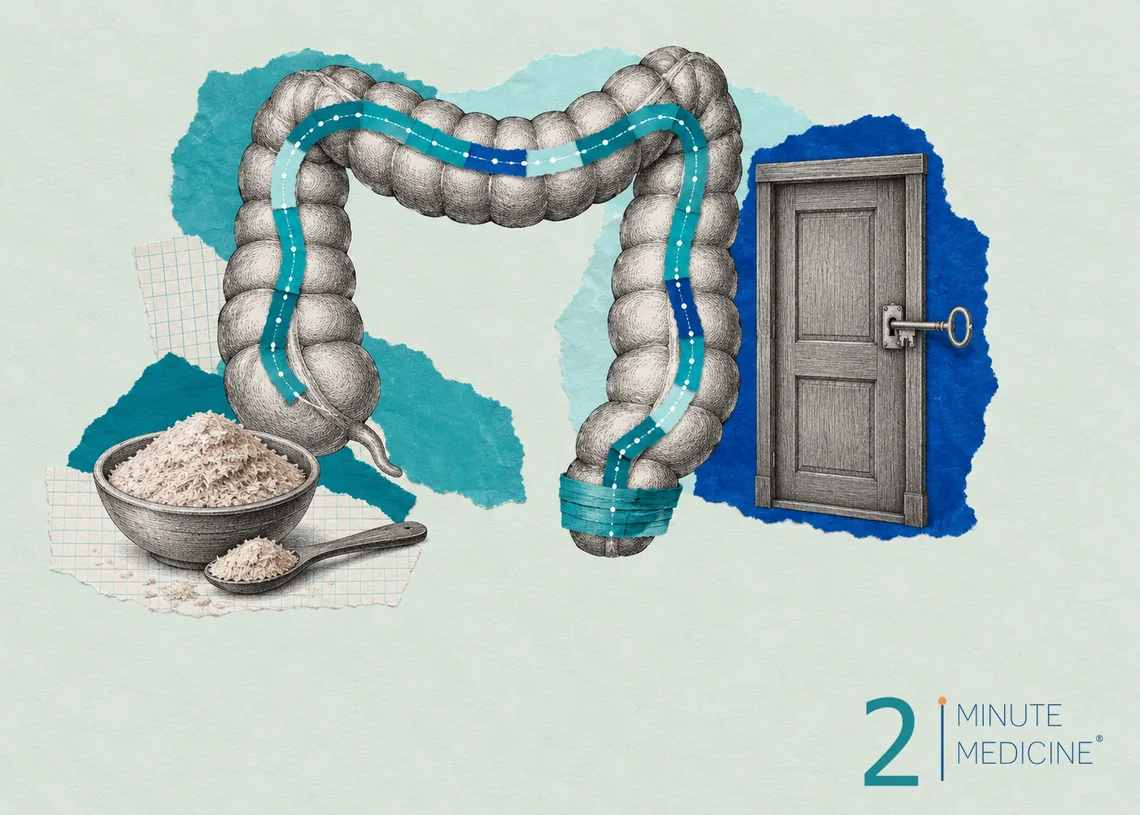
Fecal incontinence (bowel leakage, or anal incontinence) means stool or gas leaks out before you can reach a toilet. It ranges from a small smear on underwear to losing a whole bowel movement. It is common, especially in older adults, and most people improve with simple changes and treatment, so tell your doctor even if it feels embarrassing.
Key points
- Loose stools (diarrhea) are one of the most common triggers. Firming up the stool often helps a lot.
- A weak or torn anal sphincter, often from childbirth, and nerve damage from diabetes or a stroke are other common causes.
- Hard, packed stool can cause leakage too, as watery stool seeps around it.
- Fiber, toilet routines, pelvic floor training and medicines help most people. Surgery is for the few who need more.
- Sudden leakage with back pain, leg weakness or numbness between the legs needs emergency care.
How bowel control works
Stool collects in the rectum, the last part of the large intestine. When the rectum stretches, nerves tell you that you need to go. Two rings of muscle around the anus, called the anal sphincter, stay closed until you choose to let go. The inner ring works on its own, and you squeeze the outer ring on purpose. The pelvic floor, a sling of muscle across the bottom of the pelvis, also helps hold stool in. Control depends on all of these parts, plus stool that is not too loose.
What causes fecal incontinence
- Diarrhea. Loose stool is much harder to hold. Infections, irritable bowel syndrome (IBS), Crohn’s disease, ulcerative colitis, some medicines and too many laxatives can all cause it.
- Constipation with overflow. A large mass of hard stool stretches the rectum and weakens the muscles. Liquid stool from higher up then leaks around it. Doctors call this overflow diarrhea. It explains why some people have constipation followed by sudden, explosive loose stools. It is common in older adults and people who don’t move much.
- Sphincter damage. A tear during vaginal delivery, especially a forceps birth, can harm the anal sphincter. Surgery for hemorrhoids or a fistula (an abnormal tunnel near the anus) can also do it. The effects sometimes show up years later.
- Nerve damage. Diabetes, multiple sclerosis, a stroke, spinal cord injury and years of straining can weaken the signals between the rectum and the brain.
- A stiff rectum. Radiation for cancer in the pelvis, or long-term inflammation, can scar the rectum so it holds less.
- Prolapse. Part of the rectum can slip out through the anus (rectal prolapse), or bulge into the vagina (a rectocele).
- Trouble getting to the toilet. Dementia, arthritis or other problems with moving around can turn urgency into accidents.
Symptoms
Some people feel a strong, sudden urge to poop and can’t hold it long enough (urge incontinence). Others leak without noticing (passive leakage), often small amounts after a bowel movement. Signs that the anal sphincter may be weak include:
- Leaking stool or gas when you cough, lift or walk
- Trouble controlling gas
- Soiled underwear even after careful wiping
- Itching or soreness around the anus
How it’s diagnosed
Your doctor will ask how often leaks happen, what your stool is like, what you eat and drink, which medicines you take, and about childbirth and past surgery. A bowel diary kept for a week or two helps. The exam usually includes a gentle check of the anus and rectum with a gloved finger to test muscle strength and feel for hard stool. Other tests may include:
- Stool tests for infection or inflammation
- Colonoscopy or sigmoidoscopy, a camera on a flexible tube that looks inside the bowel
- Anorectal manometry, a thin tube with pressure sensors that measures how well the muscles squeeze
- Endoanal ultrasound, which shows tears in the sphincter
- Defecography, an MRI or X-ray taken while you empty your bowel, to look for prolapse
How fecal incontinence is treated
Diet and medicines
- Take a fiber supplement such as psyllium. It soaks up water and makes loose stool firmer.
- Cut back on foods and drinks that loosen your stool. Common ones are coffee, alcohol, greasy foods, dairy, and sugar-free products made with sorbitol.
- Loperamide (Imodium) slows the bowel and firms stool. It can be taken before going out, or on a regular plan your doctor sets.
- For constipation with overflow, your doctor may suggest a laxative, suppositories or enemas to clear the rectum. Use enemas only as your doctor advises.
Muscle training
Pelvic floor exercises strengthen the anal sphincter and the muscles around it. Biofeedback, taught by a specially trained nurse or physical therapist, uses sensors to show how well you are squeezing and trains you to notice when the rectum is filling. Many people improve within a few months of practice.
Devices and procedures
- Anal inserts are soft plugs that block leakage for a few hours.
- Bulking injections add a gel to the wall of the anal canal to help it close.
- Sacral nerve stimulation uses a small implanted device, like a pacemaker, to send mild pulses to the nerves that control the bowel.
- Sphincter repair sews torn muscle back together.
- A colostomy brings the end of the colon out through the belly wall into a bag. It is a last option, and some people find it easier to live with than constant leaks.
Healthy toilet habits
- Go when you feel the urge, and try sitting on the toilet after meals, when the bowel is most active.
- Rest your feet on a small stool so your knees are higher than your hips, and lean forward with your elbows on your knees.
- Relax and breathe out gently instead of holding your breath and straining hard.
- Don’t sit for more than a few minutes. If nothing happens, try again later.
- Clean gently with water or unscented wipes, pat dry, and use a barrier cream with zinc oxide to protect the skin.
Common questions about fecal incontinence
How can I hold in diarrhea until I reach a toilet?
Stop moving, squeeze your pelvic floor muscles as if holding in gas, and breathe slowly until the urge passes, then walk calmly to the toilet. Pelvic floor training makes this easier over time. Taking loperamide before an outing, and knowing where toilets are, can help if loose stools are a problem.
Why does it still feel like I need to poop after I go?
This feeling of not emptying fully can come from hard stool, irritable bowel syndrome, hemorrhoids, a rectocele or muscles that tighten instead of relaxing during a bowel movement. Leftover stool can then leak later. A doctor or pelvic floor therapist can find the cause and teach you better ways to empty.
Is fecal incontinence a sign of cancer?
Usually not. Most leakage comes from loose stools, constipation, or muscle or nerve damage. Colon or rectal cancer can change bowel habits, though, so see a doctor soon if leakage comes with blood in the stool, narrow stools that last for weeks, or weight loss you can’t explain.
When to see a doctor
- Any leakage that keeps happening or stops you going out
- Blood in your stool, black stool, or weight loss you can’t explain
- Stools that become narrow or pencil-thin and stay that way, or any change in bowel habits lasting more than a few weeks
- Tissue that bulges out of the anus
Get emergency care if bowel leakage starts suddenly along with back pain, weakness in the legs, numbness between the legs, or trouble passing urine. These can be signs of pressure on the nerves at the base of the spine.
Questions to ask your doctor
- What is causing my leakage?
- Could any of my medicines be making it worse?
- Would a fiber supplement or loperamide help me?
- Can you refer me for pelvic floor training or biofeedback?
- What are my options if these treatments don’t work?
Learn more
- Bowel control problems (fecal incontinence) (National Institute of Diabetes and Digestive and Kidney Diseases)
- Bowel incontinence (MedlinePlus, U.S. National Library of Medicine)
This guide is general information and doesn’t replace advice from your own doctor. Last updated October 2026.






 Get the app