

Patient Basics: Gastrointestinal Amebiasis
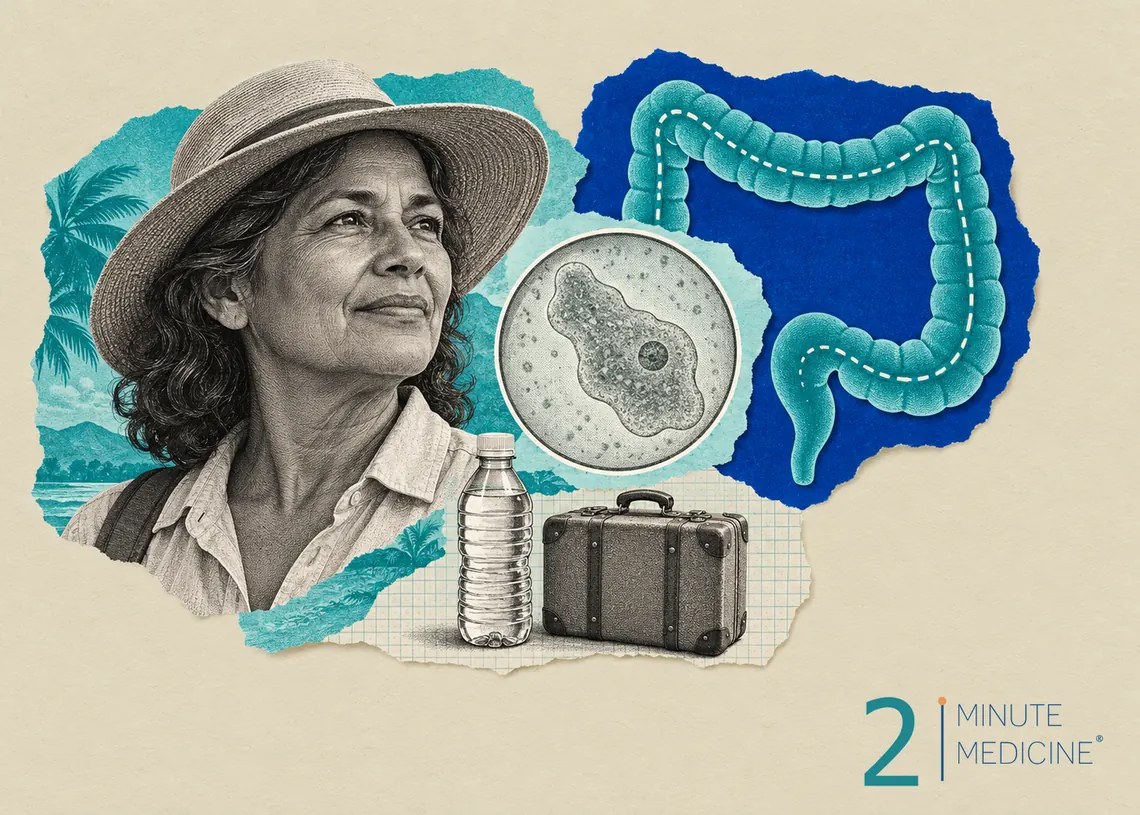
Amebiasis (also spelled amoebiasis) is a gut infection with a single-celled parasite called Entamoeba histolytica, which mainly attacks the colon (large intestine). People catch it by swallowing tiny cysts of the parasite in food or water contaminated with stool. Most infected people have no symptoms, but some get diarrhea that can be bloody. Prescription medicines cure it, and treatment usually takes two steps.
Key points
- The parasite thrives where sanitation is poor. In the US, most cases are in people who have traveled or lived in such places.
- Symptoms range from mild loose stools to bloody diarrhea with belly cramps.
- Stool tests confirm the infection. A blood test helps if the liver is involved.
- Treatment uses one medicine to kill the parasite in the bowel wall and a second to clear any that remain inside the intestine.
- Safe water, careful food choices and handwashing are the best protection.
What causes amebiasis
The parasite has two forms. Hardy cysts pass out in the stool of an infected person and can survive for weeks in water or soil. When someone swallows a cyst, it opens in the intestine and releases active amoebas that can invade the lining of the colon.
You can get infected by:
- Drinking water, or ice made from water, that has stool in it
- Eating raw fruits or vegetables washed in unsafe water, or food handled by someone who didn’t wash their hands
- Sexual contact that involves the mouth and anus
It is common in parts of Mexico, Central and South America, Africa and Asia. In the US, people at higher risk include travelers, recent immigrants, people living in group homes with poor hygiene, and men who have sex with men.
A similar-looking amoeba called Entamoeba dispar lives in the gut without causing disease, and several other amoebas found in the human intestine are harmless too. Modern tests can tell them apart.
Amebiasis symptoms
About 9 in 10 infected people never feel sick, but they can still pass cysts and spread the infection. When symptoms appear, they usually start 1 to 4 weeks after exposure, though they can begin much later. The first signs are often loose stools, gas and mild cramps.
- Loose or watery stools
- Belly cramps or pain
- Bloating and gas
- Stools with blood or mucus (amebic or amoebic dysentery)
- Tiredness and weight loss
- Fever, in some people
Symptoms often build up slowly over days or weeks, which sets amebiasis apart from many other causes of traveler’s diarrhea.
Complications
- Liver abscess. Amoebas can travel through the blood to the liver and form a pocket of pus. Signs include fever and pain under the right ribs, sometimes months after travel and often without diarrhea.
- Severe colitis. Rarely, the colon becomes badly inflamed, swells or tears. This is more likely in pregnant women, people taking steroid medicines and people with weak immune systems.
- Very rarely, the infection spreads to the lungs, brain or skin.
How it’s diagnosed
- Stool tests. A lab checks stool samples for the parasite’s genetic material or proteins. These tests can tell the harmful type from the harmless one. You may be asked for more than one sample.
- Blood tests. An antibody test is very useful when a liver abscess is suspected. It can stay positive for years after an old infection.
- Imaging. An ultrasound or CT scan can show a liver abscess.
- Colonoscopy. Sometimes a doctor looks inside the colon with a camera and takes small samples.
Amebic colitis can look like inflammatory bowel disease. Tell your doctor about any travel, even years ago, because steroid medicines used for bowel inflammation can make amebiasis much worse.
Treatment
If you have symptoms
- First, metronidazole or tinidazole kills the amoebas that have invaded the bowel wall or liver.
- Then, a second medicine, such as paromomycin, clears cysts still living inside the intestine. Skipping this step lets the infection come back or spread to others.
Avoid alcohol while taking metronidazole or tinidazole and for a few days after, as it can cause nausea, vomiting and flushing. These drugs may also leave a metallic taste.
Drink plenty of fluids to replace what diarrhea takes out. Don’t take anti-diarrhea medicines such as loperamide unless your doctor says it’s OK.
If you have no symptoms
People found to carry E. histolytica without symptoms are usually treated with the second medicine alone. This protects them and the people around them.
Liver abscess
Most liver abscesses heal with medicine alone. A large abscess, or one that doesn’t improve, may be drained with a needle guided by ultrasound.
A follow-up stool test after treatment may be done to make sure the infection is gone. Household members may need testing too.
Lowering your risk
There is no vaccine. On trips to places with poor sanitation:
- Drink sealed bottled water or boiled water.
- Skip ice unless it was made with safe water.
- Eat food that is cooked and served hot. Peel fruit yourself.
- Avoid raw salads and food from street stalls.
- Wash your hands with soap and water after using the toilet and before eating or preparing food.
Everyday chlorine levels in water don’t reliably kill the cysts. Boiling does.
If you have amebiasis, wash your hands carefully, don’t prepare food for others, and avoid sexual contact until your doctor says the infection is cleared.
When to see a doctor
- Diarrhea that lasts more than a few days, especially after travel
- Blood or mucus in your stool
- Fever and pain under the right ribs, even months after a trip
- Weight loss you can’t explain
Get emergency care for severe belly pain, a swollen belly, high fever, signs of dehydration such as very little urine or dizziness when standing, or heavy bleeding.
Common questions about amebiasis
Is an amoeba infection in the stomach?
Not really. The parasite passes through the stomach but lives in the large intestine (colon), where it does its damage. People often call it a stomach amoeba because the cramps, bloating and diarrhea are felt in the belly. Pain under the right ribs suggests the liver is involved.
What does stool look like with amebiasis?
Stools are often loose and frequent, sometimes with mucus. In amebic dysentery they can be streaked with blood. You can’t see the amoebas with the naked eye, and many infected people have normal stools, so a lab test is the only way to know.
Can amebiasis go away on its own?
Sometimes the gut clears the parasite without treatment, but you can’t count on it. Untreated infection can come back, spread to others or reach the liver months later. Home remedies don’t kill the parasite, so anyone with E. histolytica should take prescription medicine.
Is amebiasis contagious?
Yes. Cysts in the stool can spread to others through unwashed hands, food, water or sexual contact. People with no symptoms can pass it on too. Good handwashing, not cooking for others, and finishing both steps of treatment protect your household.
Questions to ask your doctor
- Is it the harmful type of amoeba?
- Which medicines will I take, and in what order?
- Do my family or partner need testing?
- When can I go back to work, especially if I handle food?
- Do I need a follow-up test?
Learn more
- About amebiasis (Centers for Disease Control and Prevention)
- Amebiasis (MedlinePlus, U.S. National Library of Medicine)
This guide is general information and doesn’t replace advice from your own doctor. Last updated October 2026.






 Get the app