• About
  • Masthead
  • License Content
  • Advertise
  • Submit Press Release
  • RSS/Email List
  • 2MM Podcast
  • Write for us
  • Contact Us
2 Minute Medicine
No Result
View All Result

No products in the cart.

SUBSCRIBE
  • About
  • Specialties
    • All Specialties, All Recent Reports
    • Cardiology
    • Chronic Disease
    • Dermatology
    • Emergency
    • Endocrinology
    • Gastroenterology
    • Imaging and Intervention
    • Infectious Disease
    • Nephrology
    • Neurology
    • Obstetrics
    • Oncology
    • Ophthalmology
    • Pediatrics
    • Pharma
    • Preclinical
    • Psychiatry
    • Public Health
    • Pulmonology
    • Rheumatology
    • Surgery
  • Tools+
    • EvidencePulse™
    • HypeCheck™
    • NPI Registry Lookup
    • RVU Search
  • Pharma
  • AI Roundup
  • The Scan+
  • Classics™+
    • 2MM+ Online Access
    • Paperback and Ebook
  • Rewinds
  • Partners
    • License Content
    • Submit Press Release
    • Advertise with Us
  • Account
    • Subscribe
    • My account
    • Cart
    • Sign-in
2 Minute Medicine
  • About
  • Specialties
    • All Specialties, All Recent Reports
    • Cardiology
    • Chronic Disease
    • Dermatology
    • Emergency
    • Endocrinology
    • Gastroenterology
    • Imaging and Intervention
    • Infectious Disease
    • Nephrology
    • Neurology
    • Obstetrics
    • Oncology
    • Ophthalmology
    • Pediatrics
    • Pharma
    • Preclinical
    • Psychiatry
    • Public Health
    • Pulmonology
    • Rheumatology
    • Surgery
  • Tools+
    • EvidencePulse™
    • HypeCheck™
    • NPI Registry Lookup
    • RVU Search
  • Pharma
  • AI Roundup
  • The Scan+
  • Classics™+
    • 2MM+ Online Access
    • Paperback and Ebook
  • Rewinds
  • Partners
    • License Content
    • Submit Press Release
    • Advertise with Us
  • Account
    • Subscribe
    • My account
    • Cart
    • Sign-in
SUBSCRIBE
2 Minute Medicine
Subscribe
EvidencePulse™ by 2 Minute Medicine 2026 evidence scan 3 reports You asked top stroke trials 2026 Synthesizing medical evidence... Top 2026 stroke trial results: OCEANIC — ischemic stroke: 6.2% vs 8.4% OPTION* — mRS 0–1: 43.6% vs 34.2% ORIENTAL* — mRS 0–2: 58.6% vs 46.6% *Higher sICH in intervention arms Participants randomizedN OCEANIC 12,327 OPTION 570 ORIENTAL 564 Ask about guidelines or landmark trials... ↑ Try EvidencePulse™ Ask the evidence.
Get the signal.
Try it now → Physician-trained medical AI by 2 Minute Medicine
Home Health A to Z

Patient Basics: Gonorrhea

byHarvard Health
November 30, 2014
in Health A to Z
Reading Time: 4 mins read
Share on FacebookShare on Twitter

Originally published by Harvard Health.

What Is It?

Gonorrhea is a sexually transmitted disease (STD) that is caused by bacteria called Neisseria gonorrhoeae. These bacteria can be passed from person to person during sexual activity (vaginal, oral and anal intercourse) leading to infections of the urethra (urine tube), cervix, vagina and anus. If untreated, these gonorrhea infections can spread to higher portions of the reproductive tract, causing prostatitis (prostate inflammation) and epididymitis (inflammation of the epididymis) in men, and pelvic inflammatory disease (PID) in women.

Gonorrhea also can cause gonococcal proctitis (inflammation of the anus and rectum). In people who practice oral sex, it may infect the throat, causing gonococcal pharyngitis.

Less commonly, gonorrhea can spread to other parts of the body through the bloodstream, causing fever, a characteristic rash and arthritis. In pregnant women with untreated gonorrhea, bacteria may spread to the eyes of their babies during childbirth, causing gonococcal ophthalmia, a severe eye infection in newborns.

Symptoms

Many people who are infected with gonorrhea will not have any symptoms. Women are more likely not to have symptoms than men. When the disease causes symptoms, they usually develop within 10 days after sexual intercourse with an infected person. Men may develop a discharge from the urethra (the opening at the end of the penis where urine comes out), redness around the urethra, frequent urination and pain or a burning discomfort during urination.

Women may develop pain or discomfort on urination, frequent urination, a vaginal discharge and discomfort in the anal or rectal area. In some women, the bacteria will spread to the uterus and fallopian tubes, causing pain during intercourse, abdominal pain, abnormal menstrual bleeding and fever. In cases of gonococcal pharyngitis, there may not be any symptoms or the person may have a sore throat.

RELATED REPORTS

Nuzolvence (Zoliflodacin) first oral Gonorrhea treatment shows non-inferior cure rates

2 Minute Medicine: Pharma Roundup – New oral gonorrhea antibiotic Nuzolvence (zoliflodacin), late‑December cardiovascular and oncology drug approvals, first targeted complement inhibitor therapy for HSCT‑TMA (Yartemlea), and antibody‑drug conjugate (ADC) safety concerns with ifinatamab deruxtecan (I‑DXd) [January 2026]

Oral gepotidacin is non-inferior to standard therapy for uncomplicated urogenital gonorrhea

Many people with gonococcal proctitis don’t have any symptoms. When symptoms occur, they commonly include rectal pain or itching, a rectal discharge that contains blood, mucus, pus or a persistent urge to move the bowels.

If gonorrhea spreads through the bloodstream, it may cause fever, pain and swelling in several joints, and a characteristic rash.

In newborns infected with gonococcal ophthalmia, symptoms appear one to four days after birth and can affect one or both eyes. Symptoms include redness of the eyes, swelling of the eyelids, and an eye discharge that is thick and contains pus. If untreated, gonococcal ophthalmia can cause blindness.

Diagnosis

Your doctor may suspect gonorrhea based on your symptoms, sexual history and the results of physical and gynecological examinations. Your doctor can confirm the diagnosis of gonococcal infection by swabbing the affected area (urethra, cervix, rectum, throat) and sending the sample to a laboratory for culture (a test to see if bacteria grow). The sample also can be tested to detect genetic material in the gonorrhea bacteria.

In people suspected of having infection that has spread beyond the genital tract, other fluids, such as blood or joint fluid, can be sampled for culture.

Expected Duration

Gonorrhea infections rapidly improve with antibiotic therapy. If an infected woman is untreated, gonorrhea can spread to the fallopian tubes, where it can cause scarring and infertility.

Prevention

Since gonorrhea is an STD that can be transmitted during sexual activity, you can prevent infection by:

  • Avoiding sexual activity
  • Having sex only with one uninfected person
  • Consistently using male latex condoms during sexual activity

To prevent gonococcal ophthalmia in newborns, all pregnant women at risk for gonorrhea should be tested during the first prenatal visit and, if necessary, be treated for gonorrhea. Women at risk for infection during pregnancy should have the test repeated during the third trimester.

As another preventive measure, newborns can be routinely treated at birth with anti-infective eye drops or eye ointment.

Treatment

The bacteria that cause gonorrhea have become resistant to many of the antibiotics that were very effective in the past. Currently, the optimal treatment of an uncomplicated infection requires two antibiotics — an intramuscular injection of ceftriaxone (Rocephin) and an oral dose of azithromycin.

All sex partners of an infected person must be treated as well.

When To Call A Professional

Call your doctor if you have any of the symptoms of gonorrhea infections. Also call your doctor if you have participated in sexual activity with someone who has a gonorrhea infection, especially if you are pregnant.

All sexually active women should schedule a routine physical examination, including a pelvic examination every year, even if they have no symptoms of a sexually transmitted infection.

Prognosis

If gonorrhea infections are diagnosed and treated quickly and correctly, recovery usually is complete unless pelvic inflammatory disease (PID) develops. PID is more likely to develop if treatment is delayed. It can cause infertility, scarred fallopian tubes (a risk of tubal pregnancy in women) and chronic (long-lasting) abdominal pain.

Health experts recommend that all patients treated for gonorrhea should be treated for chlamydia as well because 15% to 25% of males and 35% to 50% of females with gonorrhea have chlamydia infections.

Additional Info

CDC National Prevention Information Network (NPIN)
National Center for HIV, STD and TB Prevention
P.O. Box 6003
Rockville, MD 20849-6003
Toll-Free: (800) 458-5231
Fax: (888) 282-7681
TTY: (800) 243-7012
http://www.cdcnpin.org/

American Social Health Association
P.O. Box 13827
Research Triangle Park, NC 27709
Phone: (919) 361-8400
Fax: (919) 361-8425
http://www.ashastd.org/

Tags: gonorrhea
Previous Post

Patient Basics: Glomerulonephritis

Next Post

Patient Basics: Guillain-Barre Syndrome

RelatedReports

USPSTF recommends routinely screening asymptomatic women for chlamydia and gonorrhea
Infectious Disease

Nuzolvence (Zoliflodacin) first oral Gonorrhea treatment shows non-inferior cure rates

January 14, 2026
2 Minute Medicine: Pharma Roundup: Price Hikes, Breakthrough Approvals, Legal Showdowns, Biotech Expansion, and Europe’s Pricing Debate [May 12nd, 2025]
Cardiology

2 Minute Medicine: Pharma Roundup – New oral gonorrhea antibiotic Nuzolvence (zoliflodacin), late‑December cardiovascular and oncology drug approvals, first targeted complement inhibitor therapy for HSCT‑TMA (Yartemlea), and antibody‑drug conjugate (ADC) safety concerns with ifinatamab deruxtecan (I‑DXd) [January 2026]

January 26, 2026
Nearly Half of All Pediatric Buprenorphine Exposures Result in Hospitalization
Infectious Disease

Oral gepotidacin is non-inferior to standard therapy for uncomplicated urogenital gonorrhea

May 28, 2025
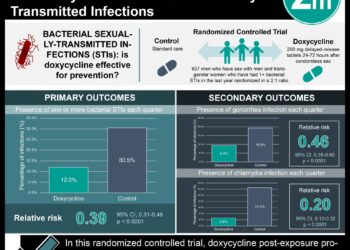
#VisualAbstract: Doxycycline Post-Exposure Prophylaxis Effectively Prevents Bacterial Sexually Transmitted Infections
StudyGraphics

#VisualAbstract: Doxycycline Post-Exposure Prophylaxis Effectively Prevents Bacterial Sexually Transmitted Infections

April 9, 2025
Next Post

Patient Basics: Gestational Diabetes

Patient Basics: Giardiasis

Patient Basics: Gastroenteritis In Adults

EvidencePulse™ by 2 Minute Medicine 2026 evidence scan 3 reports You asked top stroke trials 2026 Synthesizing medical evidence... Top 2026 stroke trial results: OCEANIC — ischemic stroke: 6.2% vs 8.4% OPTION* — mRS 0–1: 43.6% vs 34.2% ORIENTAL* — mRS 0–2: 58.6% vs 46.6% *Higher sICH in intervention arms Participants randomizedN OCEANIC 12,327 OPTION 570 ORIENTAL 564 Ask about guidelines or landmark trials... ↑ Try EvidencePulse™ Ask the evidence.
Get the signal.
Try it now → Physician-trained medical AI by 2 Minute Medicine

2MM+ All Access

Full details →
$4.99 /month

5-day free trial · cancel anytime

  • ✓100+ physician-written reports
  • ✓EvidencePulse™ + HypeCheck™
  • ✓Ad-free reading + newsletters
Start 5-day free trial

Then $4.99/month. Manage renewal in your account.

2 Minute Medicine® is an award winning, physician-run, expert medical media company. Our content is curated, written and edited by practicing health professionals who have clinical and scientific expertise in their field of reporting. Our editorial management team is comprised of highly-trained MD physicians. Join numerous brands, companies, and hospitals who trust our licensed content.

Recent Reports

  • Deep-learning model achieved high diagnostic performance for diabetic macular edema detection using optical coherence tomography (OCT) scans
  • FDA-cleared AI devices rarely have patient outcome data
  • Apixaban (Eliquis) is associated with reduced rates of ischemic stroke and bleeding in patients with atrial fibrillation and advanced chronic kidney disease compared with warfarin (Coumadin)
License Content
Terms of Use | Disclaimer
Cookie Policy
Cleantalk Pixel
2MM+ All Access Full details →

The medical literature, distilled daily.

Monthly plan selected: $4.99 /month.

$4.99/month

5-day free trial · cancel anytime

Start 5-day free trial

Then $4.99/month. Manage renewal in your account.

Yearly plan selected: $49.90 /year.

$49.90/year

2 months free · only $4.16/month

Start 5-day free trial

Then $49.90/year. Manage renewal in your account.

Membership benefits

  • ✓100+ physician-written reports
  • ✓AI EvidencePulse™ + HypeCheck™
  • ✓Ad-free reading + newsletters

Already a member? Sign in

  • About
  • Specialties
    • All Specialties, All Recent Reports
    • Cardiology
    • Chronic Disease
    • Dermatology
    • Emergency
    • Endocrinology
    • Gastroenterology
    • Imaging and Intervention
    • Infectious Disease
    • Nephrology
    • Neurology
    • Obstetrics
    • Oncology
    • Ophthalmology
    • Pediatrics
    • Pharma
    • Preclinical
    • Psychiatry
    • Public Health
    • Pulmonology
    • Rheumatology
    • Surgery
  • Tools
    • EvidencePulse™
    • HypeCheck™
    • NPI Registry Lookup
    • RVU Search
  • Pharma
  • AI Roundup
  • The Scan
  • Classics™
    • 2MM+ Online Access
    • Paperback and Ebook
  • Rewinds
  • Partners
    • License Content
    • Submit Press Release
    • Advertise with Us
  • Account
    • Subscribe
    • My account
    • Cart
    • Sign-in
No Result
View All Result

© 2026 2 Minute Medicine, Inc. - Physician-written medical news.