

Patient Basics: Infectious Arthritis
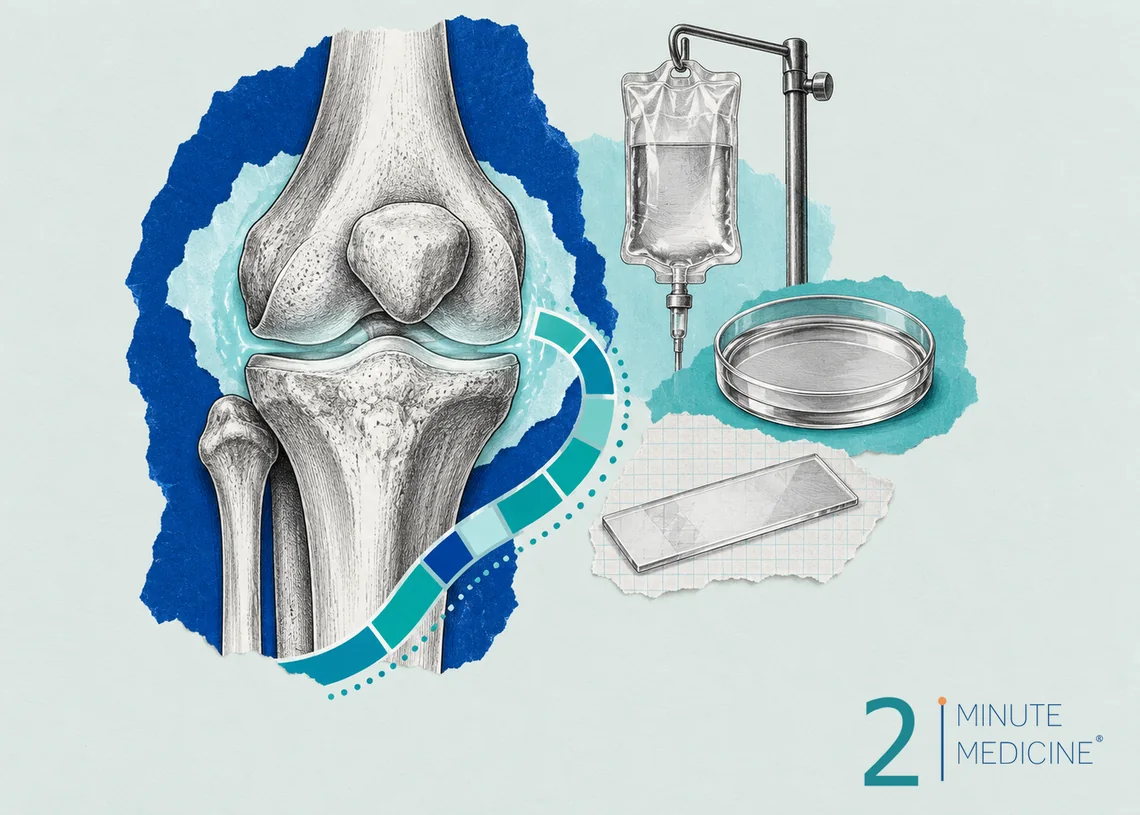
Infectious arthritis is a joint infection caused by bacteria, a virus or, rarely, a fungus. When bacteria are the cause, doctors call it septic arthritis, and the joint can be badly damaged within days. A hot, swollen, painful joint that came on fast, especially with a fever, needs care the same day.
Key points
- Bacteria cause the most serious type. It usually affects one large joint, most often the knee.
- The main test is drawing fluid out of the joint with a needle and sending it to a lab.
- Bacterial joint infections need antibiotics, often first through a vein, and the joint must be drained of pus.
- People with an artificial joint, diabetes, rheumatoid arthritis or a weak immune system are at higher risk.
- Viral arthritis usually goes away on its own in a few weeks.
What causes infectious arthritis
Germs most often reach the inside of a joint through the blood, from a skin infection, a urinary tract infection or another source. Less often they get in directly, through a deep cut, an animal bite, joint surgery or a shot into the joint, or they spread from an infected bone next to it.
Bacteria
- Staph bacteria (Staphylococcus aureus), including the drug-resistant type called MRSA, cause most bacterial joint infections in adults.
- Strep bacteria are the next most common.
- Gonorrhea, a sexually transmitted infection (STI), is a common cause in younger adults who are sexually active. It often causes joint pain that moves from joint to joint (migrating arthritis), tender tendons in the wrists or ankles, and a few small skin spots.
- Lyme disease, spread by deer ticks, can cause a swollen knee weeks or months after the bite.
Viruses
Several viruses can attack the joints. They include parvovirus B19 (the cause of fifth disease in children), hepatitis B and C, rubella, HIV and chikungunya, a virus spread by mosquitoes in tropical areas. Viral arthritis tends to cause aching and stiffness in several joints on both sides of the body, often the hands, wrists and knees. A rash and fever may come with it. Tuberculosis and fungi are rare causes that bring slow, lasting swelling.
Who is at higher risk
- Adults over 80 and young children
- People with an artificial joint or recent joint surgery
- People with rheumatoid arthritis, gout or other joint damage
- People with diabetes, kidney or liver disease, HIV or cancer, or who take medicines that weaken the immune system
- People who inject drugs, or who have skin ulcers that let germs in
Symptoms
- A joint that becomes painful, swollen, warm and red over hours to a day or two
- Pain so strong that moving the joint is hard
- Fever and chills, though some people, especially older adults, don’t have a fever
A knee infection is the most common form, making up about half of cases. The hip, shoulder, ankle and wrist are next. In babies and toddlers, the hip is often involved, and a child may refuse to walk or crawl or cry when a diaper is changed. An infected artificial joint can cause sudden pain and swelling, or a slow ache and loosening that builds over months.
How doctors find it
- Joint fluid test. The doctor numbs the skin and uses a needle to draw fluid from the joint (joint aspiration). The lab counts white blood cells, looks for bacteria and crystals, and grows any germs to find out which antibiotic works best.
- Blood tests look for signs of infection and inflammation. Blood cultures check whether bacteria are in the bloodstream.
- Imaging. X-rays show bone damage. Ultrasound can find fluid in deep joints like the hip. MRI can show infection in the bone nearby.
- Other tests may include a swab or urine test for gonorrhea, and blood tests for Lyme disease or viruses.
Gout and pseudogout can look the same as an infection. The joint fluid test tells them apart, and in rare cases a person has both.
How infectious arthritis is treated
Antibiotics
Doctors usually start antibiotics through a vein (IV) right after the joint fluid is taken, before the lab results come back. There’s no single best antibiotic for a knee joint infection. Doctors often start with one that also covers MRSA, such as vancomycin, sometimes with a second drug such as ceftriaxone. Once the lab names the germ, they switch to the drug that works best against it. Many people move to antibiotic pills after the first week or two. Treatment often lasts a few weeks in total, and longer for an infected artificial joint.
Draining the joint
Pus inside a joint damages the cartilage. Doctors remove it with a needle, sometimes more than once, or by washing out the joint through a thin scope and small cuts (arthroscopy). Open surgery is often needed for the hip or when other methods don’t work. An infected artificial joint usually needs surgery to clean it and swap some parts, or to remove the implant and put in a new one later.
Lyme arthritis
Lyme arthritis often comes and goes in flare-ups of knee swelling that last days to weeks. It is treated with antibiotic pills, such as doxycycline, for about a month.
Viral arthritis
Viral arthritis usually needs only rest and pain relief, such as acetaminophen or ibuprofen. It tends to clear up in a few weeks. Joint pain after chikungunya can last months.
Recovery
Pain and fever often start to ease within a few days of treatment. A splint can rest the joint early on, and physical therapy then helps bring back strength and movement. Most people recover well when treatment starts quickly. Delays raise the risk of lasting stiffness, early arthritis in that joint, or damage to the growth plate in children.
Lowering your risk
- Get prompt care for skin infections, especially near a joint, and keep diabetes under control.
- If you have an artificial joint, tell every doctor and dentist who treats you.
- Use condoms to lower the risk of gonorrhea and other STIs.
- Check for ticks after time outdoors where Lyme disease is common.
- If you inject drugs, use new, sterile needles each time. For help with drug use, call the SAMHSA helpline at 1-800-662-4357.
When to see a doctor
Get medical care the same day for a joint that is suddenly hot, swollen and very painful, or one you can’t move. This is even more urgent if you have a fever, an artificial joint or a weak immune system. Take a child who suddenly won’t use an arm or leg to a doctor right away.
Common questions about infectious arthritis
Is infectious arthritis contagious?
The joint infection itself doesn’t pass from person to person. The germ behind it sometimes can, such as gonorrhea through sex or parvovirus B19 through coughs and sneezes. Ask your doctor whether a partner or family member needs testing or treatment.
What is the difference between infectious arthritis and reactive arthritis?
In infectious arthritis, germs are inside the joint. Reactive arthritis is joint swelling that starts a few weeks after an infection somewhere else, such as food poisoning or chlamydia, while the joint itself stays free of germs. It usually settles with anti-inflammatory medicine and doesn’t need the joint drained.
Can Lyme disease cause rheumatoid arthritis?
Not directly. Lyme disease causes its own type of arthritis, usually attacks of knee swelling that come and go, and antibiotics clear most cases. In a small number of people the swelling lasts after treatment, and a rheumatologist may then use the same medicines that treat rheumatoid arthritis.
Can antibiotics cause rheumatoid arthritis?
No one has shown that antibiotics cause rheumatoid arthritis. A few large studies found that people who later got it had used more antibiotics in earlier years, but the infections themselves may explain that link. Never skip antibiotics you need for a joint infection.
Questions to ask your doctor
- Which germ caused the infection?
- How long will I need antibiotics, and when can I switch to pills?
- Will the joint need to be drained again?
- When can I start putting weight on the joint or using it normally?
- Is there any lasting damage to the joint?
Learn more
- Septic arthritis (MedlinePlus, U.S. National Library of Medicine)
This guide is general information and doesn’t replace advice from your own doctor. Last updated October 2026.






 Get the app