

Patient Basics: Laparoscopy and Laparoscopic Surgery
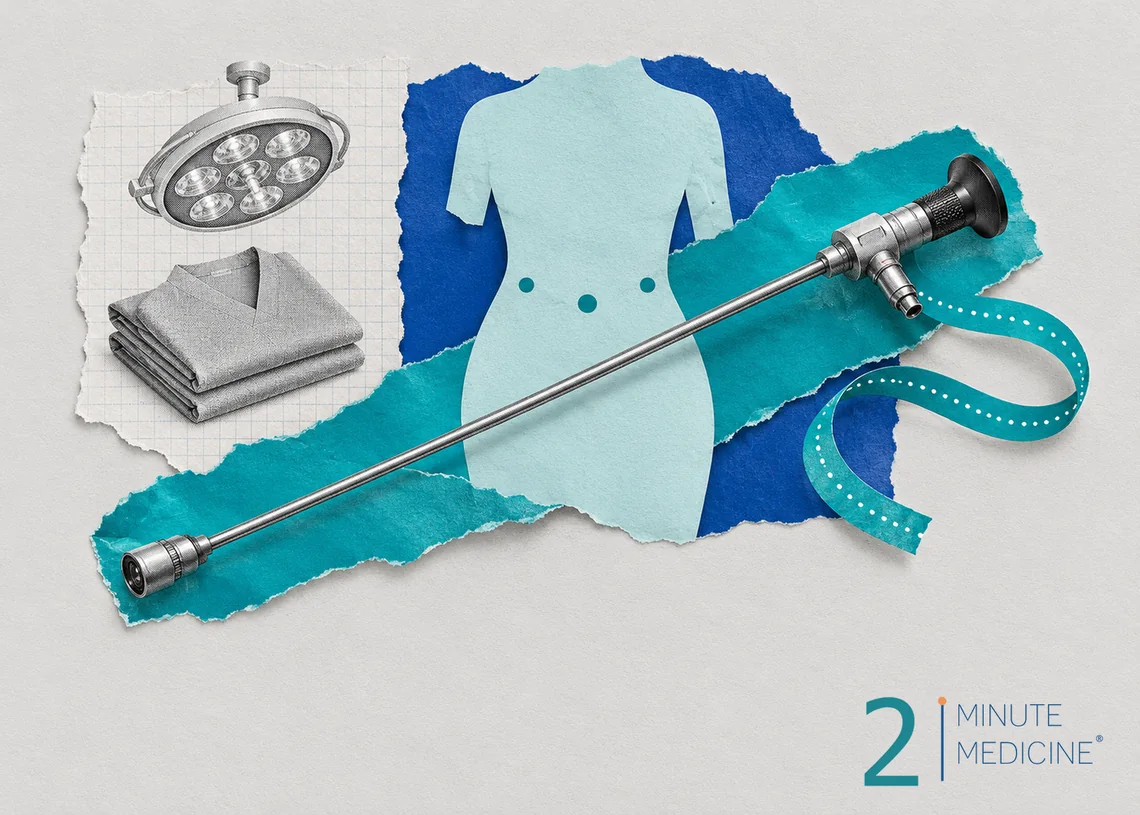
Laparoscopy is a way to look inside the belly and pelvis, and often to operate there, through a few small cuts instead of one large one. The surgeon uses a laparoscope, a thin tube with a light and camera that shows the organs on a screen. Most people go home the same day or the next, with less pain and a faster recovery than after open surgery.
Key points
- Laparoscopic surgery is also called keyhole or minimally invasive surgery. Robotic surgery is a type of laparoscopy.
- It’s used to find the cause of pain or infertility, and for operations such as removing the gallbladder, appendix or uterus.
- You’re usually asleep under general anesthesia, and the belly is filled with carbon dioxide gas so the surgeon can see.
- Shoulder pain and bloating for a day or two afterward are common and come from the gas.
- Serious problems such as injury to the bowel or a blood vessel are rare.
Why laparoscopy is done
To find a problem
A diagnostic (exploratory) laparoscopy lets a surgeon look directly at the organs when scans and blood tests haven’t given an answer. It’s often used for:
- Pelvic pain, painful periods or pain with sex, often to check for endometriosis
- Trouble getting pregnant
- An ovarian cyst or a suspected pregnancy outside the uterus (ectopic pregnancy)
- Belly pain without a clear cause
- Checking whether a cancer has spread, and taking tissue samples (biopsies)
If the surgeon finds something that can be fixed, it can often be treated during the same operation.
Types of laparoscopic surgery
- Digestive system: gallbladder removal, appendix removal, hernia repair, colon surgery, and surgery for reflux (fundoplication)
- Weight-loss surgery: sleeve gastrectomy and gastric bypass, which make the stomach smaller
- Gynecology: removing endometriosis, fibroids, ovarian cysts or the uterus (hysterectomy), and treating an ectopic pregnancy
- Birth control: tubal sterilization
- Urology: removing a kidney or the prostate, often with robotic help
Laparoscopy for endometriosis and fertility
Endometriosis is tissue like the lining of the uterus growing outside it. Scans often miss small patches. Laparoscopy lets the surgeon see them, take a sample to confirm it, and cut out or burn away the patches in the same procedure.
In a fertility workup, the surgeon may do a dye test called chromopertubation. A blue dye is gently pushed through the cervix. If it spills out of the ends of the fallopian tubes, the tubes are open. This is often combined with hysteroscopy, where a thin scope passes through the vagina and cervix to look inside the uterus without any cuts. Your urine or discharge may look blue or green for a day afterward.
Laparoscopic tubal sterilization
Tubal sterilization (tubal ligation, or “getting your tubes tied”) is permanent birth control. Through one or two small cuts, the surgeon closes each fallopian tube with clips or rings, or seals it. Many surgeons now remove the tubes completely (salpingectomy), which also lowers the risk of ovarian cancer. You usually go home the same day.
It doesn’t change your hormones, periods or sex drive. It doesn’t protect against STIs. Pregnancy afterward is rare, but if it happens, it’s more likely to be outside the uterus. Because reversal is difficult, think it through carefully, especially if you’re under 30.
Before the procedure
- Don’t eat or drink for the number of hours your surgical team tells you.
- Bring a list of all your medicines. You may need to pause blood thinners, some diabetes medicines, or weight-loss shots such as semaglutide.
- Some bowel operations need a bowel-cleansing drink the day before.
- If you could be pregnant, you’ll have a pregnancy test that day.
- Arrange a ride home and someone to stay with you the first night.
During laparoscopic surgery
- You get general anesthesia, so you’re asleep and feel nothing.
- The surgeon makes a small cut, often in or near the belly button.
- Carbon dioxide gas fills the belly and lifts the wall away from the organs, creating room to see and work.
- The laparoscope goes in, and the organs appear on a large screen.
- The surgeon makes one to four more small cuts for thin instruments. In robotic surgery, the surgeon moves the instruments from a console nearby.
- At the end, the gas is let out and the cuts are closed with stitches, skin glue or tape strips.
A diagnostic laparoscopy often takes 30 to 60 minutes. Larger operations take longer. Sometimes the surgeon needs to switch to open surgery (laparotomy) for safety, such as when there is heavy scar tissue or bleeding.
Recovery after laparoscopy
- Gas pain. Leftover gas can irritate the nerves under the diaphragm, which you feel as pain in the shoulder tip. It usually fades in 1 to 3 days. Walking helps.
- Other effects. Bloating, mild belly pain, nausea, and a sore throat from the breathing tube are common.
- Wound care. Keep the small cuts clean and dry as your team instructs. Most heal within a week or two.
- Activity. After a diagnostic laparoscopy, most people return to normal activity within a week. After a larger operation, such as a hysterectomy, it can take 2 to 6 weeks. Ask how long to avoid heavy lifting.
Possible risks
- Bleeding, or infection at a cut
- Injury to the bowel, bladder or a blood vessel, which is rare but may need more surgery
- A hernia at a cut site later on
- Blood clots in the legs or lungs
- Reactions to anesthesia
Laparoscopy or laparotomy?
Laparotomy is open surgery through one longer cut. Laparoscopy usually means less pain, less blood loss, a shorter hospital stay, smaller scars and a faster return to normal life. Open surgery may still be better for very large tumors, some emergencies, or a belly with a lot of scar tissue from past operations. Your surgeon will explain which is best for you.
When to call your doctor
- Fever over 100.4°F (38°C)
- Pain that gets worse instead of better, or isn’t eased by your pain medicine
- Redness, swelling, pus or bleeding at a cut
- Vomiting that won’t stop, or you can’t pass gas or stool
- Pain or swelling in one leg
Call 911 for chest pain, trouble breathing, or severe belly pain with a swollen, hard belly.
Common questions about laparoscopy
Is laparoscopy major surgery?
It depends on what is done. A diagnostic laparoscopy is a minor operation, and most people go home the same day. Removing an organ through small cuts is still major surgery inside the body, even though the scars are small. Recovery depends more on the operation than on the size of the cuts.
How long does laparoscopy take?
A diagnostic laparoscopy usually takes 30 to 60 minutes. Gallbladder removal often takes about an hour, and a hysterectomy or bowel surgery can take 2 to 4 hours. Add time before and after for anesthesia and waking up. Most people spend several hours in the hospital in total.
Will I have scars after laparoscopy?
Yes, but they are small. Each cut is usually less than half an inch to about an inch long, and one is often hidden in the belly button. The scars tend to fade to thin, pale lines over a year. Keeping them out of the sun while they heal can help.
Questions to ask your doctor
- What are you looking for, and what might you treat during the procedure?
- Will I go home the same day?
- What are the chances you’ll need to switch to open surgery?
- When can I drive, work and exercise again?
- When will I get the results of any biopsies?
Learn more
- Laparoscopy (keyhole surgery) (NHS)
- Diagnostic laparoscopy (MedlinePlus, U.S. National Library of Medicine)
This guide is general information and doesn’t replace advice from your own doctor. Last updated October 2026.
RelatedReports






 Get the app