

Patient Basics: Lumbar Puncture (Spinal Tap)
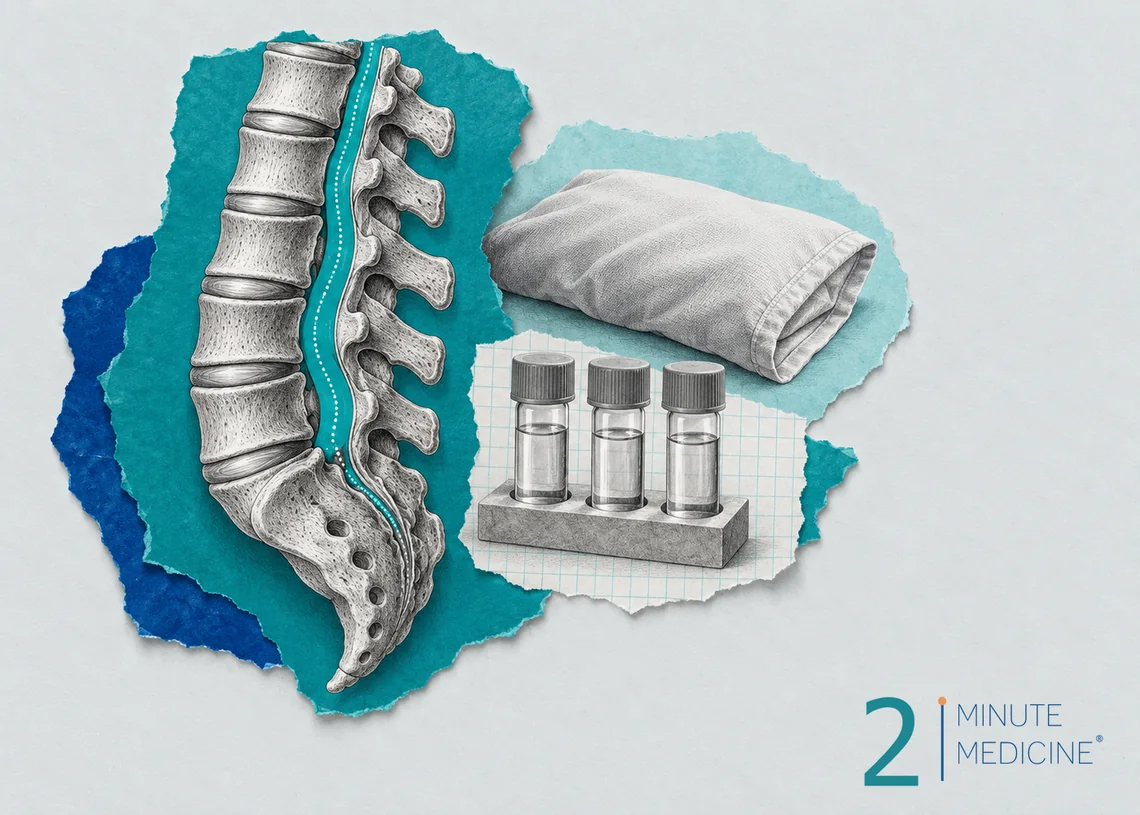
A lumbar puncture, also called a spinal tap, is a test that takes a small sample of the fluid around the brain and spinal cord (cerebrospinal fluid, or CSF). A doctor collects it with a thin needle placed between two bones in the lower back. The needle goes in below the point where the spinal cord ends, so it doesn’t touch the cord. The procedure takes about 30 minutes, and most people go home the same day.
Key points
- It is used to check for infections such as meningitis, bleeding around the brain, multiple sclerosis and other nerve conditions.
- Numbing medicine is used, so most people feel pressure more than pain.
- A headache that gets worse when you sit or stand is the most common side effect. It usually goes away on its own.
- Tell your doctor beforehand if you take a blood thinner.
- Some results are ready within hours. Others take days or weeks.
Spinal tap anatomy
The brain and spinal cord float in clear, watery CSF, which cushions them and carries away waste. The fluid fills a space inside the membranes that wrap the brain and spinal cord. In adults, the spinal cord ends around the bottom of the ribs, at the first or second lumbar bone (vertebra). Below that, the space holds only fluid and loose nerve roots that move aside from a needle. That is why the needle goes in lower, usually between the third and fourth or fourth and fifth lumbar vertebrae, near the level of the top of your hip bones.
What a lumbar puncture tests for
- Infections: meningitis (infection of the membranes around the brain) and encephalitis (infection of the brain) from bacteria, viruses or fungi
- Bleeding around the brain (subarachnoid hemorrhage) when a CT scan doesn’t show it but symptoms suggest it
- Multiple sclerosis and other inflammatory diseases of the brain and nerves
- Guillain-Barré syndrome, in which the immune system attacks the nerves
- Pressure problems, such as too much fluid pressure around the brain (idiopathic intracranial hypertension) or normal pressure hydrocephalus, a buildup of fluid that affects walking and memory
- Some cancers that spread to the brain or spinal fluid, such as leukemia and lymphoma
- Alzheimer’s disease, by measuring the proteins amyloid and tau
The same approach is also used to give treatment: spinal anesthesia for surgery, chemotherapy into the spinal fluid, or contrast dye for a special X-ray (myelogram). Removing fluid can relieve headaches from high pressure.
How to prepare for a lumbar puncture
- Tell your doctor about all your medicines, especially blood thinners such as warfarin, apixaban, rivaroxaban or clopidogrel. You may need to pause them for a few days, but only with your doctor’s guidance.
- Mention any bleeding problems, allergies to numbing medicine or iodine, back surgery, or pregnancy.
- You may need blood tests to check clotting and platelets.
- Some people first have a CT scan or MRI of the head to make sure there is no pressure or mass that would make a tap unsafe.
- You can usually eat and drink normally. Empty your bladder just before.
- Arrange a ride home if you’ll get medicine to relax.
The lumbar puncture procedure
You’ll lie on your side with your knees pulled up toward your chest and your chin tucked down, or sit on the edge of the bed leaning forward over a table. Both positions curve the lower back and open the spaces between the bones.
- The doctor feels for the right spot and cleans the skin with an antiseptic that feels cold.
- A small needle injects numbing medicine, which stings for a few seconds.
- The doctor slides in the spinal needle, which is thin and hollow. You’ll feel pressure. Try to stay still and breathe normally.
- The doctor may measure the fluid pressure with a thin tube attached to the needle.
- Clear fluid drips into 3 or 4 small tubes, a few teaspoons in all. Your body makes new fluid quickly.
- The needle comes out and a bandage goes on.
A brief zing or shooting feeling down one leg can happen if the needle brushes a nerve root. Tell the doctor, and it usually stops at once. If the spaces are hard to reach, for example after back surgery or with arthritis of the spine, the procedure may be done with X-ray guidance.
Afterward
You may rest lying down for a short time before going home. Drink fluids and take it easy for the rest of the day. Your lower back may be sore where the needle went in for a day or two. Most people can return to normal activities the next day.
Possible risks
- Headache. Fluid can leak from the needle hole, causing a headache that is worse when you sit or stand and better when you lie flat. It may start hours to a few days later. Lying down, drinking fluids, caffeine and pain relievers help. A very thin needle with a rounded tip makes it less likely. If it lasts more than a few days, a doctor can seal the leak with a small injection of your own blood (an epidural blood patch).
- Back soreness at the needle site.
- Bleeding near the spine, which is rare and more likely in people taking blood thinners.
- Infection, which is very rare.
- Brain shifting (herniation) when pressure in the skull is very high. This is very rare, and checking with a scan first helps prevent it.
Spinal tap results
Normal CSF is clear and colorless, with very few cells and set levels of protein and sugar. The lab looks at:
- Pressure and appearance. Cloudy fluid suggests infection. Pink or yellow fluid can mean bleeding.
- Cell counts. More white blood cells point to infection or inflammation.
- Protein and sugar. High protein and low sugar often mean bacterial infection.
- Germs. A stain may show bacteria within an hour. Cultures take 2 to 3 days. Tests for viral DNA come back in hours to days.
- Special tests for multiple sclerosis, cancer cells or Alzheimer’s proteins can take a week or longer.
When to call your doctor
- A headache that lasts more than a day or two, or is severe
- Fever, a stiff neck, or redness or drainage at the needle site
- Numbness, weakness or tingling in your legs
- Trouble urinating or controlling your bowels (call 911)
Common questions about lumbar punctures
Does a spinal tap hurt?
Most people say it is less painful than they expected. The numbing shot stings briefly, and then you mostly feel pressure. A quick shooting feeling down a leg can happen if the needle brushes a nerve. Afterward, the lower back may feel sore for a day or two.
Can a lumbar puncture damage the spinal cord?
Not in adults when done at the usual level. The needle goes in below where the spinal cord ends, and the nerve roots there float in fluid and move out of the way. Lasting nerve damage is very rare.
How big is the needle for a spinal tap?
The spinal needle is thin, about the width of a needle used for blood tests or thinner, but longer, so it can reach the fluid space. Doctors often choose a very fine needle with a rounded tip, which lowers the chance of a headache afterward.
Questions to ask your doctor
- What are you testing my spinal fluid for?
- Do I need to stop any medicines before the test?
- Will I need a scan first?
- When will each result be ready?
- What should I do if I get a headache afterward?
Learn more
- Cerebrospinal fluid (CSF) collection (MedlinePlus, U.S. National Library of Medicine)
- Lumbar puncture (NHS)
This guide is general information and doesn’t replace advice from your own doctor. Last updated October 2026.






 Get the app