

Patient Basics: Myelodysplastic Syndromes
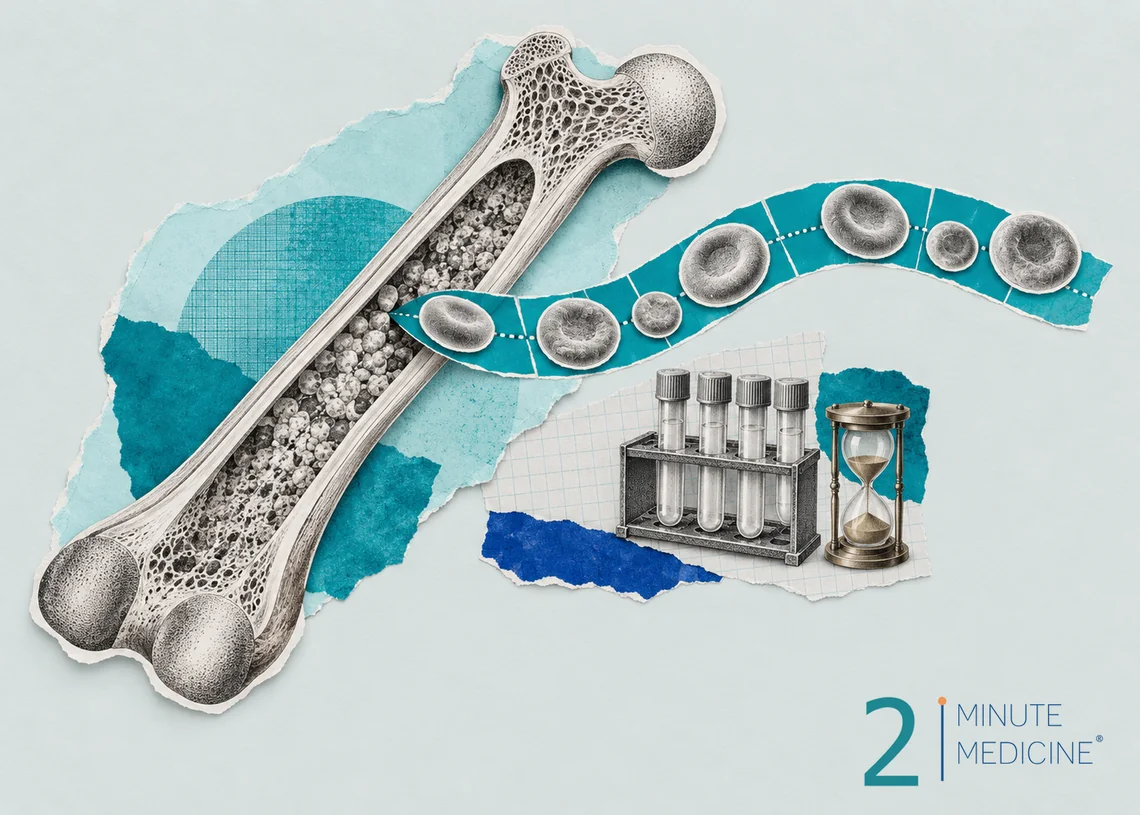
Myelodysplastic syndromes (MDS) are a group of blood cancers in which the bone marrow makes blood cells that don’t form properly. Many of these faulty cells die before they reach the blood, so blood counts drop. MDS mostly affects people over 65. Some types stay mild for years, while others can turn into acute leukemia, so your risk group shapes your treatment.
Key points
- MDS starts with gene changes in the stem cells that make blood. It can lower red cells, white cells, platelets, or all three.
- Most people are over 70 when it’s found. Past chemotherapy or radiation and smoking raise the risk.
- Tiredness, frequent infections and easy bruising are common. Many people learn they have it from a routine blood test.
- A bone marrow biopsy with gene tests confirms MDS and shows whether it is lower or higher risk.
- A stem cell transplant is the only cure. Other treatments raise blood counts, ease symptoms and can slow the disease.
What happens in MDS
Bone marrow is the soft, spongy tissue inside your bones. Its stem cells make three kinds of blood cells. Red cells carry oxygen, white cells fight germs, and platelets help blood clot. In MDS, a stem cell picks up gene damage and starts making copies of itself that grow in odd shapes (dysplasia). These cells don’t work well, and many die early.
Doctors count MDS as a cancer, and newer guides call it myelodysplastic neoplasms. In about 1 in 3 people, it changes over time into acute myeloid leukemia (AML), a faster-growing blood cancer.
What causes myelodysplastic syndromes
Most of the time there is no clear cause. Gene changes in blood stem cells build up with age. Things that raise the risk include:
- Older age. MDS is rare before 50.
- Past cancer treatment. Some chemotherapy drugs and radiation can cause MDS, often several years later. Doctors call this therapy-related MDS.
- Chemicals. Long-term contact with benzene, and tobacco smoke.
- Rare inherited conditions, such as Fanconi anemia, or gene changes that run in a few families.
MDS is not contagious, and it usually isn’t passed from parent to child.
Symptoms of MDS
- Low red cells (anemia): tiredness, weakness, pale skin, a fast heartbeat, or getting out of breath with light activity
- Low white cells: infections that keep coming back or take a long time to clear, and fevers
- Low platelets: easy bruising, nosebleeds, bleeding gums, or tiny red or purple dots on the skin
Some people have no symptoms at all. Their doctor notices low counts on a blood test done for another reason.
Blood test results that can point to MDS
A complete blood count (CBC) is often the first clue. These results on their own don’t mean you have MDS. Most have more common causes.
- High mean corpuscular volume (MCV). This means your red cells are larger than usual. A high mean corpuscular hemoglobin (MCH) often goes with it. Low vitamin B12 or folate, heavy drinking, liver disease, an underactive thyroid and some medicines are more common causes than MDS.
- Low monocytes. Monocytes are white cells that fight germs and clear away dead cells. A low count often follows steroid medicines, a recent infection or chemotherapy. It can also happen in MDS and other marrow problems.
- High monocytes. A short rise is common during an infection. A high count that lasts for months can point to chronic myelomonocytic leukemia (CMML), a condition closely related to MDS.
- Low red and white counts together. Causes include vitamin shortages, viral infections, medicines, an enlarged spleen, autoimmune disease, aplastic anemia, leukemia and MDS.
How MDS is diagnosed
- Blood tests. A repeat CBC, a look at the cells under a microscope, and tests for vitamin B12, folate, copper, thyroid problems and infections that can mimic MDS.
- Bone marrow biopsy. A doctor numbs the skin over the back of the hip bone and uses a needle to take a small sample of marrow. This is the test that confirms MDS.
- Gene and chromosome tests. These look for changes in the marrow cells. They help predict how the disease will behave and which drugs may work.
Doctors then use a scoring system (IPSS-R, or the newer IPSS-M) to sort MDS into lower risk or higher risk.
How myelodysplastic syndromes are treated
Lower-risk MDS
The aim is to keep blood counts up and help you feel well. Options include:
- Regular blood tests with no treatment, if counts are only a little low
- Red cell or platelet transfusions
- Shots that help the marrow make red cells, such as epoetin alfa or darbepoetin
- Luspatercept or imetelstat, which can reduce the need for transfusions
- Lenalidomide, for a type of MDS with a missing piece of chromosome 5
- Iron-removing medicine (chelation), if many transfusions have caused iron to build up
Higher-risk MDS
- Azacitidine or decitabine. These drugs can improve blood counts and delay the change to leukemia. They are given in monthly cycles for as long as they help. Decitabine also comes as a pill combined with cedazuridine.
- Stem cell transplant. High-dose treatment clears the marrow, and stem cells from a donor replace it. It can cure MDS, but it carries serious risks, so it suits people who are fit enough. Some people in their 70s can have one.
- Targeted drugs for certain gene changes, and clinical trials of new treatments.
Support at every stage
Palliative care teams treat symptoms such as tiredness and breathlessness at any stage, alongside other treatment. Your team may suggest vaccines, antibiotics during low white counts, and avoiding aspirin or ibuprofen when platelets are low.
When to see a doctor
See a doctor if you feel tired all the time, bruise easily, or keep getting infections. If you have MDS, ask your team which symptoms to report.
Get care right away for a fever of 100.4°F (38°C) or higher, chills, bleeding that won’t stop, chest pain, severe shortness of breath or sudden confusion. Call 911 in an emergency.
Common questions about MDS
Is MDS a type of cancer?
Yes. MDS is a blood cancer that starts in the bone marrow. It often grows slowly, and many people with lower-risk MDS live for years with treatment that keeps their counts up. Some types are more aggressive and can turn into acute myeloid leukemia.
Is MDS curable?
A stem cell transplant is the only treatment that can cure MDS. It has serious risks, so it isn’t right for everyone. Other treatments can’t cure MDS, but they can raise blood counts, cut down on transfusions, ease symptoms and help many people live longer.
Can someone in their 80s be treated for MDS?
Yes. MDS is common at this age, and treatment is planned around a person’s overall health and wishes. Transfusions, drugs that boost red cells and azacitidine are all options for many older adults. A transplant is rarely offered after the mid-70s.
What happens in the late stages of MDS?
As MDS advances, blood counts fall further and transfusions are needed more often. Most deaths from MDS come from infection, bleeding or a change to leukemia. Palliative care and hospice teams can keep a person comfortable and support their family.
Questions to ask your doctor
- Is my MDS lower risk or higher risk?
- Which gene changes were found, and do they change my treatment?
- What is the main goal of treatment for me?
- Could a stem cell transplant be an option?
- Which symptoms should make me call you right away?
Learn more
- Myelodysplastic syndromes (MedlinePlus, U.S. National Library of Medicine)
- Myelodysplastic syndromes treatment (National Cancer Institute)
This guide is general information and doesn’t replace advice from your own doctor. Last updated October 2026.
RelatedReports







 Get the app