• About
  • Masthead
  • License Content
  • Advertise
  • Press Releases
  • Newsroom
  • RSS/Email List
  • 2MM Podcast
  • Write for us
  • Contact Us
2 Minute Medicine
No Result
View All Result

No products in the cart.

Sign in
SUBSCRIBE
  • About
  • Specialties
    • All Specialties, All Recent Reports
    • Cardiology
    • Chronic Disease
    • Dermatology
    • Emergency
    • Endocrinology
    • Gastroenterology
    • Imaging and Intervention
    • Infectious Disease
    • Nephrology
    • Neurology
    • Obstetrics
    • Oncology
    • Ophthalmology
    • Pediatrics
    • Pharma
    • Preclinical
    • Psychiatry
    • Public Health
    • Pulmonology
    • Rheumatology
    • Surgery
    • Rewinds
    • The Scan
  • EvidencePulse™
  • HypeCheck™
  • AI News
  • Classics™
    • 2MM+ Online Access
    • Paperback and Ebook
  • Tools
    • NPI Registry Lookup
    • RVU Search
    • Physician Pay by Specialty
    • ICD-10 Code Lookup
    • FDA Drug Approvals
    • Drug Safety for Breastfeeding/Pregnancy
    • Clinical Guidelines
    • Medical Calculators
    • ECG Reference
      • QTc Calculator
      • Sgarbossa Criteria
      • ECG Axis Calculator
      • AV Block Helper
  • Rankings
    • Medical School Rankings
    • Residency Rankings
  • Partners
    • License Content
    • Advertise with Us
2 Minute Medicine
  • About
  • Specialties
    • All Specialties, All Recent Reports
    • Cardiology
    • Chronic Disease
    • Dermatology
    • Emergency
    • Endocrinology
    • Gastroenterology
    • Imaging and Intervention
    • Infectious Disease
    • Nephrology
    • Neurology
    • Obstetrics
    • Oncology
    • Ophthalmology
    • Pediatrics
    • Pharma
    • Preclinical
    • Psychiatry
    • Public Health
    • Pulmonology
    • Rheumatology
    • Surgery
    • Rewinds
    • The Scan
  • EvidencePulse™
  • HypeCheck™
  • AI News
  • Classics™
    • 2MM+ Online Access
    • Paperback and Ebook
  • Tools
    • NPI Registry Lookup
    • RVU Search
    • Physician Pay by Specialty
    • ICD-10 Code Lookup
    • FDA Drug Approvals
    • Drug Safety for Breastfeeding/Pregnancy
    • Clinical Guidelines
    • Medical Calculators
    • ECG Reference
      • QTc Calculator
      • Sgarbossa Criteria
      • ECG Axis Calculator
      • AV Block Helper
  • Rankings
    • Medical School Rankings
    • Residency Rankings
  • Partners
    • License Content
    • Advertise with Us
Sign in
SUBSCRIBE
2 Minute Medicine
Sign in
Subscribe
2 Minute MedicineFree on Google PlayGet
✦EvidencePulse™by 2 Minute Medicine3 reportsYou askedtop stroke trials 2026Synthesizing medical evidence...Top 2026 stroke trial results:OCEANIC — ischemic stroke: 6.2% vs 8.4%OPTION* — mRS 0–1: 43.6% vs 34.2%ORIENTAL* — mRS 0–2: 58.6% vs 46.6%*Higher sICH in intervention armsParticipants randomizedNOCEANIC12,327OPTION570ORIENTAL564Ask about guidelines or landmark trials...↑Try EvidencePulse™Ask the evidence. Get the signal.Try it now →
Home Health A to Z

Patient Basics: Pacemaker
by2 Minute Medicine
October 30, 2026
in Health A to Z
Reading Time: 5 mins read
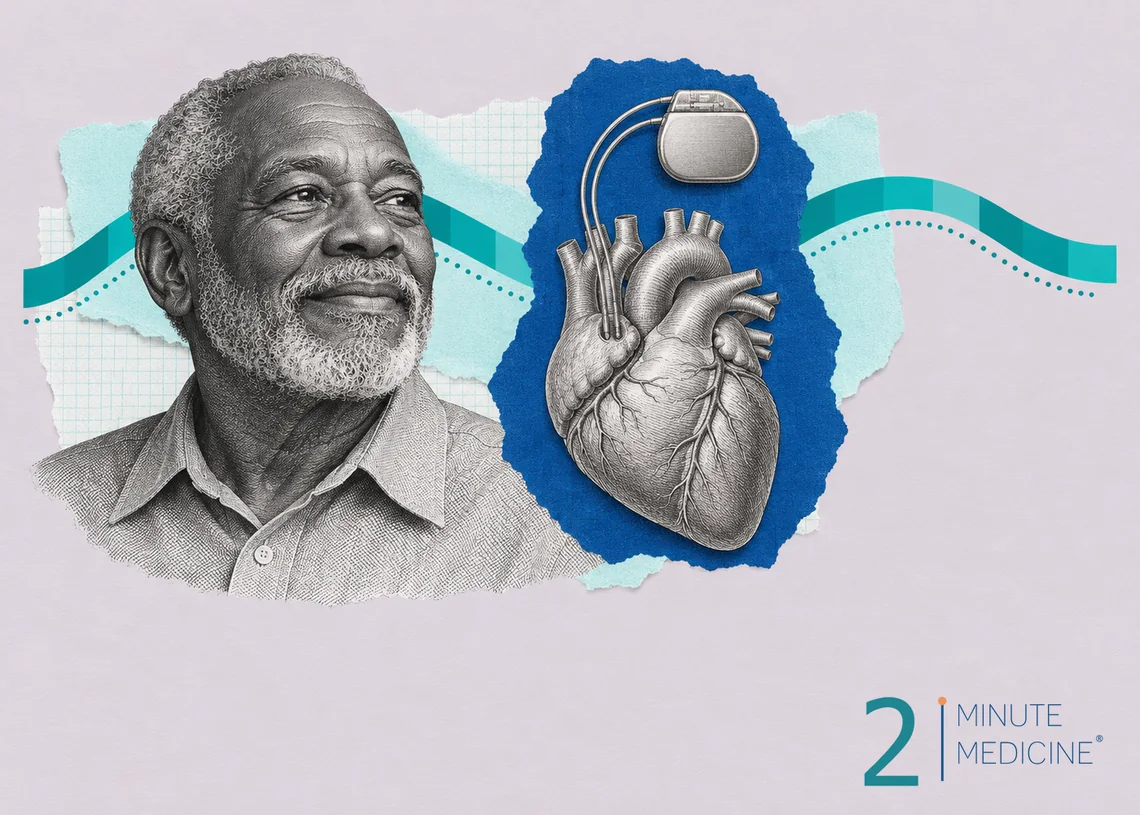
Collage of an older man beside an engraved heart with a small pacemaker and its thin wires, and a steady teal ribbon
Share on FacebookShare on TwitterShare on LinkedIn

A pacemaker is a small device that keeps your heart from beating too slowly. It sits under the skin below the collarbone, and thin wires carry tiny electrical pulses to the heart when it needs them. Putting one in is usually a short procedure, and most people go home the same day or the next.

Key points

  • Pacemakers mainly treat slow or paused heartbeats that cause tiredness, dizziness or fainting.
  • The device watches your heart all the time and sends a pulse only when the heart needs one.
  • For several weeks after the procedure, avoid raising the arm on that side above your shoulder.
  • The battery lasts many years. Replacing it is a smaller procedure than the first one.
  • Keep cell phones and other items with strong magnets at least 6 inches from the pacemaker.

Why you might need a pacemaker

Your heartbeat is set by the heart’s own natural pacemaker, the sinus node, which sends an electrical signal through the heart with each beat. You may need a pacemaker when:

  • The sinus node fires too slowly or pauses, which often comes with age (sick sinus syndrome)
  • The signal gets blocked on its way from the upper to the lower chambers (heart block)
  • A slow heartbeat follows heart surgery, a heart attack or a heart valve procedure
  • Atrial fibrillation comes with a slow heart rate, or medicine needed for another heart problem slows the heart too much
  • Certain kinds of fainting keep happening
  • Heart failure has weakened the heart’s pumping. A special pacemaker (cardiac resynchronization therapy, or CRT) helps both sides of the heart squeeze together.

A heart that beats too slowly can cause tiredness, dizziness, fainting, shortness of breath, confusion and trouble exercising.

Types of pacemaker

  • Single-chamber pacemakers use one wire, usually placed in the lower right chamber.
  • Dual-chamber pacemakers use two wires, in the upper and lower right chambers, to keep them in step.
  • Biventricular (CRT) pacemakers use three wires and are used for heart failure.
  • Leadless pacemakers are tiny capsules, about the size of a large vitamin pill, placed directly inside the heart through a vein in the groin. They need no wires and no pocket under the skin.

An implantable cardioverter-defibrillator (ICD) looks similar, but it can also shock the heart out of a dangerous fast rhythm. Some devices do both jobs.

Before the procedure

  • You’ll likely have an ECG, a heart monitor, blood tests and sometimes an ultrasound of the heart (echocardiogram).
  • Ask whether to stop or change blood thinners or diabetes medicine beforehand.
  • Follow the instructions about when to stop eating and drinking.
  • Arrange for someone to drive you home.

How a pacemaker is put in

It’s done in a hospital procedure room and usually takes about an hour. You’ll be awake but given medicine to help you relax, and the area below your collarbone, usually on the left, is numbed. The doctor makes a small cut, guides the wires through a vein into the heart using X-ray pictures, and tests them. The wires are then connected to the pacemaker, which is tucked into a small pocket under the skin. You’ll get antibiotics to prevent infection.

Afterward

  • Many people go home the same day or the next morning after the device is checked and a chest X-ray is done.
  • The area will be sore and bruised for a few days.
  • For about 4 to 6 weeks, don’t raise the arm on the pacemaker side above your shoulder, and avoid heavy lifting, pushing or pulling with that arm. This lets the wires settle in place.
  • Keep the cut clean and dry as instructed.
  • Ask when you can drive. It’s often about a week, and longer for commercial drivers.

After a leadless pacemaker, there are no arm limits, but you’ll need to keep the leg still for a few hours.

RELATED REPORTS

Use of colchicine is not associated with reduced cardiovascular events among Chinese adults starting urate-lowering therapy

ARO-DIMER-PA can Significantly Lower LDL-C and Triglycerides in Patients with Mixed Hyperlipidemia

Possible risks

  • Bleeding or bruising, including a pool of blood in the pocket
  • Infection, which may mean the device has to be removed
  • A wire shifting out of place, which needs another procedure
  • A collapsed lung, which is rare
  • A hole in the heart wall, which is rare

Living with a pacemaker

  • Carry your device ID card. Show it to every doctor, dentist and security screener.
  • Keep up with checks. Your clinic will check the device a few weeks after it’s placed, then about once or twice a year. Most pacemakers also send readings from home through a bedside monitor or a phone app.
  • Battery life. Batteries usually last about 5 to 15 years, depending on how much pacing you need. Your team tracks it closely. Replacing it means swapping only the device, and the wires usually stay in place.
  • Phones and magnets. Keep cell phones, earbuds and other items with magnets at least 6 inches away. Don’t carry a phone in a shirt pocket over the device, and hold it to the ear on the other side.
  • Everyday appliances such as microwaves, TVs and computers are safe to use.
  • Airport security. Walk through the metal detector at a normal pace, and ask that a handheld wand not be held over your device.
  • MRI scans. Many newer pacemakers are safe in an MRI under special settings. Always tell the staff you have one.
  • Exercise. Most people can stay active. Avoid contact sports that could strike the device.

When to call your doctor

  • Redness, swelling, warmth or drainage at the pacemaker site, or a fever
  • Swelling in the arm on the pacemaker side
  • Dizziness or the symptoms you had before you got the pacemaker
  • Hiccups that won’t stop, or twitching chest muscles

Call 911 for chest pain, severe shortness of breath or fainting.

Common questions about pacemakers

What is the natural pacemaker of the heart?

It’s the sinus node (sinoatrial or SA node), a small cluster of cells in the wall of the upper right chamber. It sends out the electrical signal that starts each heartbeat, usually 60 to 100 times a minute at rest. A pacemaker device steps in when this system fires too slowly or its signal gets blocked.

What does a pacemaker look like?

A standard pacemaker is a smooth, rounded metal case a little smaller than a matchbox, with 1 to 3 thin, flexible wires. Under the skin it shows as a small bump below the collarbone. A leadless pacemaker is a tiny capsule about the size of a large vitamin pill.

Does a pacemaker control every heartbeat?

Not usually. It checks your heart rhythm all the time and sends a pulse only when your own heartbeat is too slow or pauses. Some people, such as those with complete heart block, need pacing for most beats, while others use it only now and then. Most people can’t feel it working.

Questions to ask your doctor

  • Why do I need a pacemaker, and which type is best for me?
  • Could a leadless pacemaker work for me?
  • Which arm and activity limits should I follow, and for how long?
  • How will my pacemaker be checked from home?
  • Are there any devices or activities I should avoid?

Learn more

  • What are pacemakers? (National Heart, Lung, and Blood Institute)
  • Pacemakers and implantable defibrillators (MedlinePlus, U.S. National Library of Medicine)

This guide is general information and doesn’t replace advice from your own doctor. Last updated October 2026.

Previous Post

Patient Basics: PET Scan (Positron Emission Tomography)

Next Post

Patient Basics: Magnetic Resonance Imaging (MRI)

RelatedReports

Heart attack collage: a coronary artery ring of layered teal and blue paper with a pale plaque crescent and a ribbon through
Cardiology

Use of colchicine is not associated with reduced cardiovascular events among Chinese adults starting urate-lowering therapy

November 11, 2026
Lipoprotein(a) treatment collage: an engraved double strand of RNA above dotted lipoprotein spheres fading into the distance
Cardiology

ARO-DIMER-PA can Significantly Lower LDL-C and Triglycerides in Patients with Mixed Hyperlipidemia

November 11, 2026
Angioplasty collage: a heart with coronary arteries, a balloon catheter with a mesh stent, pill organizer and older woman
Cardiology

CCTA-guided PCI noninferior to IVUS-guided PCI for target-vessel failure

November 11, 2026
A female medical resident reviews documents with a clock showing the passage of time in a hospital setting, symbolizing long duty hours.
All Specialties

Lower resident board pass rates in private-equity backed emergency physician groups

November 11, 2026
Next Post
Collage for an MRI: an engraved scanner with an empty table, foam earplugs, a call button and a tray of keys and a watch

Patient Basics: Magnetic Resonance Imaging (MRI)

Mammogram collage: an empty mammography machine, a clinic gown on a hook, a teal ribbon and a blank calendar

Patient Basics: Mammography

Hernia repair collage of an engraved belly wall diagram with a small mesh patch, a soft pillow and a pair of walking shoes

Patient Basics: Hernia Repair

✦ EvidencePulse™ by 2 Minute Medicine 3 reports You asked top stroke trials 2026 Synthesizing medical evidence... Top 2026 stroke trial results: OCEANIC — ischemic stroke: 6.2% vs 8.4% OPTION* — mRS 0–1: 43.6% vs 34.2% ORIENTAL* — mRS 0–2: 58.6% vs 46.6% *Higher sICH in intervention arms Participants randomizedN OCEANIC 12,327 OPTION 570 ORIENTAL 564 Ask about guidelines or landmark trials... Try EvidencePulse™ Get the signal. Try it now → Physician-trained medical AI by 2 Minute Medicine

2MM+ All Access

Full details →
$4.99 /month

3-day free trial · cancel anytime

  • ✓100+ physician-written reports
  • ✓EvidencePulse™ + HypeCheck™
  • ✓Ad-free reading + newsletters
Start 3-day free trial

Then $4.99/month. Manage renewal in your account.

2 Minute Medicine® is an award winning, physician-run, expert medical media company. Our content is curated, written and edited by practicing health professionals who have clinical and scientific expertise in their field of reporting. Our editorial management team is comprised of highly-trained MD physicians. Join numerous brands, companies, and hospitals who trust our licensed content.

Recent Reports

  • Use of colchicine is not associated with reduced cardiovascular events among Chinese adults starting urate-lowering therapy
  • ARO-DIMER-PA can Significantly Lower LDL-C and Triglycerides in Patients with Mixed Hyperlipidemia
  • CCTA-guided PCI noninferior to IVUS-guided PCI for target-vessel failure
License Content
Terms of Use | Disclaimer
Cookie Policy

Get the app

Read 2 Minute Medicine on iPhone, iPad and Android.

Download on the App StoreGet it on Google Play
QR code for www.2minutemedicine.com/app
On a computer? Scan this with your phone’s camera.
2MM+ All Access Full details →

The medical literature, distilled daily.

Monthly plan selected: $4.99 /month.

$4.99/month

3-day free trial · cancel anytime

Start 3-day free trial

Then $4.99/month. Manage renewal in your account.

Yearly plan selected: $49.90 /year.

$49.90/year

2 months free

Start 3-day free trial

Then $49.90/year.

Membership benefits

  • ✓100+ new physician-written study summaries monthly, 12,000+ searchable
  • ✓AI EvidencePulse™ + HypeCheck™
  • ✓Ad-free reading + newsletters
  • ✓FDA drug approvals + clinical calculators

Already a member? Sign in

  • Get the app
  • About
  • Specialties
    • All Specialties, All Recent Reports
    • Cardiology
    • Chronic Disease
    • Dermatology
    • Emergency
    • Endocrinology
    • Gastroenterology
    • Imaging and Intervention
    • Infectious Disease
    • Nephrology
    • Neurology
    • Obstetrics
    • Oncology
    • Ophthalmology
    • Pediatrics
    • Pharma
    • Preclinical
    • Psychiatry
    • Public Health
    • Pulmonology
    • Rheumatology
    • Surgery
    • Rewinds
    • The Scan
  • EvidencePulse™
  • HypeCheck™
  • AI News
  • Classics™
    • 2MM+ Online Access
    • Paperback and Ebook
  • Tools
    • NPI Registry Lookup
    • RVU Search
    • Physician Pay by Specialty
    • ICD-10 Code Lookup
    • FDA Drug Approvals
    • Drug Safety for Breastfeeding/Pregnancy
    • Clinical Guidelines
    • Medical Calculators
    • ECG Reference
      • QTc Calculator
      • Sgarbossa Criteria
      • ECG Axis Calculator
      • AV Block Helper
  • Rankings
    • Medical School Rankings
    • Residency Rankings
  • Partners
    • License Content
    • Advertise with Us
No Result
View All Result

© 2026 2 Minute Medicine, Inc. - Physician-written medical news.